

E135: The Yoga of Wisdom—The Path to Liberation
Jnana Yoga is the path of wisdom through which one contemplates the vastness of creation until the personal mind dissolves into the infinite. God is seen as conscious energy (Chit Shakti) manifesting the entire universe. Interestingly, scientists see the entire physical universe as emanating from an omnipresent quantum field. Despite this knowledge, we suffer. The cause of suffering is that our individual rays of consciousness are distracted by, and identify with, the objects they are aware of. This creates the ego, the false sense of “I”. with all its personal struggles. Through the practices of surrender, witness consciousness, and letting go, one’s consciousness can rise again into divine union and eternal bliss.
© Sounds True Inc. Episodes: © 2025 Michael A. Singer. All Rights Reserved.

Opening The Body, Freeing The Spirit: Yoga Flows To En...
Our bodies are messengers. They hold memory, emotion, resistance, and longing. With gentle attention, movement becomes more than physical; it becomes a sacred practice of release and reconnection. Through yoga for flexibility, we begin to soften the places we once braced, breathe into the spaces we once ignored, and return to ourselves with greater compassion and clarity. This kind of movement is not about performance. It is about presence. It is about remembering that each time we stretch or reach or fold, we are participating in something deeper than exercise; we are engaging in spiritual care.
For more than 40 years, Sounds True has been devoted to honoring the living transmission of spiritual wisdom in its most authentic form. Through audio teachings, online programs, and embodied practices, we’ve created a living library where seekers can connect with trusted guides, deepen their path, and awaken the body as a vessel for truth. Our programs support the whole being, mind, body, and spirit, with offerings that are both grounded and transformational.
In this piece, we will be exploring how yoga for flexibility can support emotional release, inner spaciousness, and embodied freedom, while offering spiritual connection through conscious movement.
Key Takeaways:
- Practice Philosophy: Flexibility is not a physical achievement, but a spiritual practice rooted in softness, self-trust, and inner spaciousness.
- Emotional Release Connection: Yoga for flexibility can support deep emotional healing through intuitive movement and embodied awareness.
- Supportive Resources: Sounds True offers tools like mood-based yoga decks and guided rest practices that nurture both body and spirit.
Opening The Body, Freeing The Spirit: A Sacred Invitation To Move
At Sounds True, we understand that the journey of awakening often begins not in the mind, but in the body. When we create space within our physical form, we also open the door to greater emotional and spiritual freedom. This is the deeper invitation behind yoga for flexibility, not simply to stretch or lengthen, but to soften, surrender, and become present with what lives within us.
Flexibility is not a goal to be achieved; it is a process of unbinding. Each breath, each movement, becomes a conversation with the parts of ourselves that may have been holding on, protecting, or retreating. With gentle, intentional practice, the body begins to respond. Muscles lengthen, joints open, breath deepens. And with that softening, something profound happens: the spirit begins to speak more clearly.
This is not performance. It is presence. As we move through postures designed to increase mobility and ease, we are also cultivating spaciousness in our inner world. We learn how to stay with sensation, to breathe through resistance, to meet ourselves exactly where we are. In doing so, we align with the deeper rhythm of life itself.
Yoga for flexibility, at its core, is an act of trust. Trusting the body’s wisdom, trusting the spirit’s timing, and trusting that healing and transformation do not require force, only attention.

Releasing The Grip Of Expectation
Many of us come to the mat with unconscious goals: touch the toes, hold the pose longer, go deeper into the stretch. But the moment we release those goals, we begin to enter into a different kind of relationship with the body, one built on listening instead of pushing. Flexibility, in this sense, becomes a byproduct of presence, not pressure.
Meeting Resistance With Compassion
Tightness in the body is often linked to protection, layers of stored emotion, memory, or trauma that manifest as tension. Yoga for flexibility teaches us to stay with those sensations rather than override them. In that space of patient attention, true healing begins to unfold.
Transforming Movement Into Prayer
As the body begins to open, a quiet spaciousness arises. Each posture becomes less about form and more about feeling, less about shape and more about truth. Movement is no longer mechanical; it becomes an intimate, sacred act of returning to self.
Bringing Depth To Your Practice
If you’re called to explore the union of movement and inner work, the Yoga and Movement collection at Sounds True offers a wide range of teachings that support both physical exploration and spiritual connection. Guided by trusted voices in the field, these resources invite you to move with reverence, depth, and presence.
How Yoga For Flexibility Cultivates Inner Spaciousness
Flexibility is not just something we practice in the muscles; it is something we invite into our inner world. When we soften the body with intention, we create the conditions for breath, energy, and awareness to move more freely. This inner spaciousness is what allows stillness, clarity, and spiritual insight to arise naturally:
Letting Go Of Held Tension
Many of us carry layers of unconscious tension in the body, shoulders that subtly hunch, hips that grip, jaws that tighten. Through yoga for flexibility, we begin to unravel these habitual contractions. With each exhale, the body remembers it does not need to hold so tightly.
Creating Room For The Breath
As the body opens, breath begins to move more freely. In flexibility-focused postures, we naturally access deeper, more rhythmic breathing. This expanded breath becomes a bridge between the physical and the subtle, helping us drop into a state of greater awareness and peace.
Supporting Emotional Release
Flexibility is not only physical, it’s emotional. Movements that open the hips, heart, or spine often invite feelings to surface. This is where the practice of free your body yoga becomes essential: we are not forcing anything out, but allowing what is ready to move to move.
Choosing Sequences That Match Your Mood
The body does not need the same thing every day. Some days call for a slow, restorative sequence; others for something more dynamic. The Yoga for your mood deck supports this intuitive listening with practices designed to meet you where you are, emotionally and energetically.

Spiritual Flow Sequences To Deepen Connection And Clarity
Some yoga practices emphasize precision, repetition, or performance. But when we orient the body toward spiritual presence, flow becomes something else entirely. These spiritual flow sequences are not about choreography; they are about communion, with breath, with energy, with something greater than ourselves:
Returning To The Wisdom Of Rhythm
Spiritual flow sequences invite us to move in cycles rather than in a straight line. Each posture leads gently into the next, forming an unbroken thread of movement and awareness. Over time, this rhythm becomes a reminder that healing is not linear, and awakening happens in waves.
Letting Intuition Lead The Way
Rather than following a rigid script, these sequences encourage us to listen inwardly. How does the body want to move? What pace feels true today? This kind of freedom allows yoga for flexibility to become a tool not only for physical expansion, but for spiritual self-trust.
Tapping Into Collective Energy
There is a power in shared practice. Each year, the International Day of Yoga reminds us of the global community of seekers, healers, and movers who are using yoga to awaken the body and nourish the spirit.
Free Your Body Yoga As A Gentle Path To Emotional Release
The body remembers everything. Long before we have words, we store experiences, grief in the chest, worry in the belly, fear in the jaw. The beauty of free your body yoga is that it offers a loving, embodied way to meet those memories and begin to soften their hold:
Listening To What The Body Has Been Holding
We often think of emotional work as mental, but many feelings live beneath thought. In this kind of practice, we approach the body with tenderness, using mindful movement to reveal where something might be asking for release. This is where the deeper work of yoga for flexibility unfolds, through presence rather than pressure.
Gentle Sequences As Invitations, Not Instructions
Free your body yoga does not ask the body to perform. It asks the body to speak. Through slow, fluid sequences, we create a compassionate container in which feelings can move without being forced. The mat becomes a place not for fixing, but for feeling.
Rest As Integration
Once emotion has been stirred or released, the body needs stillness to absorb the shift. Practices like restorative yoga, seated breathwork, or guided rest are essential parts of this process. The Yoga Nidra —The Sleep Yoga podcast offers a space to fully let go, gently supporting the nervous system as it rebalances.
Energizing Yoga Routines To Awaken And Restore Vitality
Some days, the spirit calls for stillness. Other days, it asks to move, shake, and come alive. Energizing yoga routines can be a vital part of a spiritual practice, not to burn out or push harder, but to activate energy pathways, lift mood, and restore vibrancy from within.
These sequences are not necessarily fast; they are intentional. They often begin with breathwork or gentle movement that slowly builds momentum. This supports circulation, clears mental fog, and invites more presence into the body.
When practiced mindfully, energizing yoga routines help move stagnant emotions and stimulate joy. They can clear heaviness from the heart or dullness from the mind. As the body warms and opens, it becomes easier to access lightness, both physically and emotionally.
Vitality does not come from intensity alone; it comes from harmony. These practices are most effective when they leave you feeling both awake and grounded. That’s why many yoga for flexibility sequences include elements of both strength and softness, building energy without depleting it.

Final Thoughts
Flexibility is often misunderstood as something you have or do not have, but in the spiritual sense, flexibility is not a trait; it is a way of being. It is the willingness to soften, to stay present, and to allow life to move through you with grace.
The practice of yoga for flexibility teaches us more than how to move our bodies; it teaches us how to live with openness. It shows us that growth happens not in the push, but in the pause. And it invites us to trust that even the subtlest shift in breath or posture can begin to unlock something sacred within.
Free your body yoga is not a destination. It is a lifelong conversation between the physical and the spiritual, a return to self through movement, stillness, and compassion. In every stretch, there is a chance to release. In every flow, a moment to remember who you are beneath the noise.
And through each of these practices, Sounds True remains devoted to supporting that remembering, with teachings, tools, and sacred space to help you return home to yourself, again and again.
Read also:
- Showing Up For Each Other” | Tami Simon & Tara Brach on the Intersection of Spirituality & Therapy
- From Stress Relief to Inner Growth: Exploring the Benefits of Meditation
- What Is Spirituality? A Simple Guide to Meaning, Purpose, and Connection
Frequently Asked Questions About Bridging Movement And Stillness
What is the best time of day to practice yoga for flexibility?
The best time to practice yoga for flexibility is when your body feels warm and responsive, often in the late morning or early evening. However, consistency matters more than the exact time.
Can older adults safely start yoga for flexibility with no experience?
Yes, older adults can begin yoga for flexibility with gentle, beginner-friendly classes focused on breath, joint support, and mindful movement. It’s wise to consult a healthcare provider before starting.
How long does it take to improve flexibility through yoga?
Results vary, but many practitioners notice an increased range of motion within 4–6 weeks of consistent practice, especially when combined with breathwork and relaxation.
Does yoga for flexibility also help with joint pain or stiffness?
Yes, regular yoga practice can help reduce stiffness and improve joint mobility by increasing circulation, strengthening supporting muscles, and relieving tension.
What types of yoga are most effective for improving flexibility?
Styles like Yin, Vinyasa, and Hatha are particularly helpful for flexibility. Each targets different muscle groups and allows varying levels of intensity and stillness.
Do I need yoga props to work on flexibility?
Props like blocks, straps, and bolsters can greatly support safe alignment and deeper release. They are especially helpful for beginners or those working with tight areas.
Is yoga for flexibility different from yoga for strength?
Yes, yoga for flexibility emphasizes lengthening and release, while strength-based yoga focuses on muscle engagement and stability. Both can be integrated into a balanced practice.
How can I stay motivated in a long-term flexibility practice?
Set small goals, journal your progress, and connect with teachers or online communities. Listening to your body’s needs can keep the practice meaningful and sustainable.

Michelle Cassandra Johnson is an author, activist, spiritual teacher, racial equity consultant, and intuitive healer. She is the author of six books, including Skill in Action and Finding Refuge. Amy Burtaine is a leadership coach and racial equity trainer. With Robin DiAngelo, she is the coauthor of The Facilitator’s Guide for White Affinity Groups. For more, visit https://www.michellecjohnson.com/wisdom-of-the-hive.

Bridging Movement And Stillness: Exploring The Union O...
There is a moment, just after a posture ends and just before stillness settles in, where something shifts. The body softens, the breath deepens, and awareness begins to rise, not from effort, but from quiet. This is the space where yoga and meditation meet. For many of us, yoga begins with movement, and meditation begins with silence. But over time, these practices become less separate and more like two currents of the same river. Together, they help us remember what stillness feels like, not as emptiness, but as something alive and full of presence. This union is not about achieving perfect form or mastering silence. It’s about returning to yourself, again and again, through breath, movement, and listening.
For more than 40 years, Sounds True has offered a living library of spiritual wisdom, featuring the voices of teachers like Eckhart Tolle, Pema Chödrön, and Tara Brach. We were founded with a single intention: to preserve the authentic energy of spiritual transmission in real time, through courses, audio programs, podcasts, and events that honor each teacher’s unscripted voice. Our yoga and meditation offerings are crafted to support not just practice, but transformation. We don’t just deliver teachings, we invite you into an experience of awakening.
In this piece, we’ll be discussing how yoga and meditation come together as a path to inner stillness, and the deeper benefits of yoga when practiced as both movement and mindfulness.
Key Takeaways:
- Embodied Presence: Yoga is more than movement; it’s a daily return to inner awareness and emotional grounding.
- Union In Practice: The combination of yoga and meditation forms a spiritual path that strengthens resilience and compassion.
- Support Through Tools: Programs like Sounds True’s Yoga for Your Mood Deck and Yoga Nidra podcast offer guided ways to deepen stillness.
The Sacred Bridge Between Movement And Stillness
In many traditions, the body is seen as a gateway, not an obstacle. Yoga invites us to meet our physical selves with presence, while meditation welcomes us inward, toward silence, awareness, and deeper being. At the heart of these practices lies the yoga and meditation union, a sacred convergence where motion softens into stillness, and stillness begins to move from within.
When we step onto the mat, we often begin with movement, stretching, strengthening, and breathing. But in time, we may notice that the external gestures echo something more subtle. The rise and fall of breath. The space between thoughts. The quiet that blooms at the end of a pose. Here, yoga is no longer just a physical practice; it becomes a preparation for entering stillness fully.
This union is not about doing more; it’s about becoming more aware. By anchoring attention in the body, we start to feel the mind settle. Through mindful movement, we open the door to a quieter interior landscape. Yoga becomes not just a practice of form, but a devotional act of listening. And meditation, once reserved for the cushion, begins to live in the body itself.

The Profound Benefits Of Yoga As A Daily Practice
The most transformative rewards of yoga often emerge not in the big breakthroughs, but in the quiet, daily returns. When practiced consistently, yoga becomes more than a physical discipline; it becomes a gentle companion in emotional resilience, spiritual grounding, and embodied awareness:
Building Trust Through Repetition
One of the lesser-discussed benefits of yoga is the emotional steadiness that comes from simply showing up. Daily practice builds a relationship with the self, one grounded in trust, consistency, and care. Over time, this rhythm strengthens our ability to remain present even when life becomes unpredictable.
Emotional Clarity And Energetic Balance
Yoga gently creates space for emotion to move through the body. It offers practices that can stabilize energy, soften emotional turbulence, and restore clarity. Tools like the Yoga for your mood deck provide inspiration and support for selecting postures and breathwork based on how you’re feeling, making the practice deeply personal and responsive.
The Power Of A Yoga Mindfulness Practice
At its heart, yoga is a mindfulness practice, a way to train both body and attention to exist in the same moment. Through this integrated awareness, we learn to witness our experience with kindness and curiosity. It becomes easier to feel the breath without chasing it, to notice thoughts without becoming entangled in them, and to trust the body’s wisdom as a source of inner guidance.
How Meditation Deepens The Yoga Mindfulness Practice
Yoga and meditation are often seen as separate tracks on the same path, but when they meet, something profound shifts. Together, they become a mirror for awareness itself. This section explores how meditation enriches what we experience on the mat, transforming yoga from movement alone into a fuller field of conscious presence:
Refining Attention Through Breath And Stillness
Meditation invites us to notice what we might otherwise rush past, the pause at the top of the inhale, the subtle tension in a shoulder, the moment before the mind wanders. When we bring this quiet observation into yoga, the practice slows down and deepens. This is the essence of the yoga mindfulness practice: using the body as a ground for present-moment awareness.
The Meditation And Yoga Connection As Inner Listening
At a certain point, movement becomes internal. The meditation and yoga connection reveals itself most clearly in these moments, when breath leads movement, and movement dissolves into silence. By practicing this connection regularly, we begin to listen more deeply to the body’s cues and the heart’s quieter truths.
Rest As Integration
Sometimes, the deepest breakthroughs in practice happen during rest. Practices like Yoga Nidra, available through Sounds True’s Yoga Nidra —The Sleep Yoga podcast, offer a doorway into the subtler layers of awareness. As the body softens, the mind learns to settle without effort. Meditation, here, becomes less about doing and more about receiving.

Discovering Inner Stillness Through Yoga And Breath
The breath is both a guide and a gateway. As we follow it inward, we begin to discover a spaciousness that doesn’t depend on external conditions. This is where inner stillness through yoga reveals itself, not as a goal to chase, but as something we return to, breath by breath:
Breath As Anchor For Inner Awareness
In yoga, the breath is more than a physiological process. It becomes a teacher, helping us soften the edges of our thinking and rest in the present moment. Inner stillness through yoga begins here, in the pause between inhales and exhales, in the soft surrender that comes when we allow the breath to lead the way.
Stillness Is Not Absence, But Presence
Often, we confuse stillness with emptiness. But what yoga reveals is that true stillness is rich with awareness. It is not the absence of thought, but the presence of quiet attention. By practicing regularly, we start to sense the aliveness beneath the surface of stillness itself.
A Collective Invitation To Pause
While this journey inward is deeply personal, it is also shared. Events like the International Day of Yoga remind us that stillness, too, can be a communal act. Practicing together, even across distances, strengthens our sense of belonging, not only to each other but to the silence we all carry within.
Embracing The Meditation And Yoga Connection In Daily Life
For many, yoga and meditation remain practices reserved for specific times, on the mat, or on the cushion. But their deepest transformation unfolds when we carry them with us into the ordinary. The meditation and yoga connection becomes not just a routine, but a rhythm that lives in how we walk, listen, and respond:
Making Practice A Living Presence
It’s one thing to practice mindfulness in stillness; it’s another to remain present in motion. By embracing the meditation and yoga connection throughout the day, we turn waiting in line into a breath practice, or a difficult conversation into an opportunity to stay rooted in awareness. Over time, these moments create a quiet thread of groundedness that runs through our daily life.
Mindfulness In Everyday Movements
The yoga mindfulness practice doesn’t require a studio. Washing dishes, walking the dog, or opening a window to feel the breeze, all of these can become invitations into embodied awareness. Through consistent attention, even the most routine acts can reconnect us with the inner calm we cultivate on the mat.
A Path That Meets You Where You Are
This isn’t about perfection. It’s about remembering. Returning. Whether you’re moving through grief, joy, or uncertainty, both yoga and meditation offer you something steady to lean on, a breath, a pause, a small space of stillness that reminds you you’re not alone.
Honoring The Yoga And Meditation Union As A Spiritual Path
Over time, the practice shifts. What may have begun as a way to relieve stress or stretch the body slowly becomes something deeper, something sacred. The yoga and meditation union reveals itself not just as a blend of techniques, but as a path of devotion, inquiry, and awakening:
A Practice Of Listening To The Heart
The more we listen within, the more we discover how movement and stillness serve the same purpose: to bring us home to ourselves. The yoga and meditation union makes this return possible. It invites us to slow down, to hear the quiet voice beneath thought, and to respond with compassion.
Inner Stillness Through Yoga As Devotion
In this context, inner stillness through yoga is not a performance or achievement. It becomes a devotional act, an offering of attention, breath, and presence. By meeting ourselves in this space day after day, we begin to recognize the sacred not as something outside of us, but as something we touch through awareness.
Deepening The Journey With Sounds True
For those ready to explore this path more fully, Sounds True offers a rich selection of teachings through their Yoga and Movement programs. These offerings support the spiritual dimension of practice, guiding seekers toward a more integrated and heart-centered experience of body and being.

Final Thoughts
Stillness is not a destination; it’s a remembering. A return. The practices of yoga and meditation continue to call us back to that quiet center within, no matter how far we may feel from it.
Whether through movement, breath, or silence, we learn that the real gifts of practice live in the subtleties: the way we respond to discomfort, the gentleness we offer ourselves, the breath we return to when words fall short. These are the moments that change us, not suddenly, but steadily.
And in these moments, we discover inner stillness through yoga as something that doesn’t need to be chased or earned. It is already here, waiting in the pause, the exhale, the soft opening of presence.
Read also:
- What Is Spirituality? A Simple Guide to Meaning, Purpose, and Connection
- Meditation Mindfulness From Stress Relief to Inner Growth: Exploring the Benefits of Meditation
- Showing Up For Each Other” | Tami Simon & Tara Brach on the Intersection of Spirituality & Therapy
Frequently Asked Questions About Bridging Movement And Stillness
What are the mental benefits of yoga for older adults?
Yoga supports memory, focus, and emotional regulation in older adults. It also reduces stress-related cognitive fog by calming the nervous system.
Can I experience the benefits of yoga without being flexible?
Yes. Flexibility is not a prerequisite. The benefits of yoga arise from breath awareness, consistency, and alignment with your current body and abilities.
How long does it take to feel the benefits of yoga?
Some effects, like reduced tension or improved mood, can be felt after one session. Deeper benefits, such as resilience and self-awareness, build over weeks or months.
Is it better to do yoga before or after meditation?
It depends on your intention. Yoga before meditation can prepare the body to sit comfortably; meditation before yoga can help anchor presence in movement.
What role does breath play in experiencing the benefits of yoga?
Breath links body and mind. Conscious breathing enhances circulation, soothes anxiety, and grounds attention, deepening the impact of each posture.
How does yoga affect emotional healing?
Yoga creates space for emotional release through mindful movement and breathwork. It supports trauma healing by restoring a sense of agency and inner safety.
Can yoga replace other forms of exercise?
For many, yes. Yoga can improve strength, flexibility, and cardiovascular health. However, it can also complement other activities like walking or swimming.
What type of yoga is best for cultivating stillness?
Gentle styles such as Hatha, Yin, or Restorative Yoga are ideal for cultivating inner stillness. These styles emphasize slow movement and extended holds.
Are there specific yoga poses that support better meditation?
Yes. Poses that open the hips, lengthen the spine, and stabilize the pelvis, like Sukhasana, Padmasana, or supported forward folds, can enhance seated meditation.
Can the benefits of yoga be maintained without daily practice?
Absolutely. While consistency helps, even a few mindful sessions per week can maintain key benefits. The body and mind remember intentional presence.
Michelle Cassandra Johnson is an author, activist, spiritual teacher, racial equity consultant, and intuitive healer. She is the author of six books, including Skill in Action and Finding Refuge. Amy Burtaine is a leadership coach and racial equity trainer. With Robin DiAngelo, she is the coauthor of The Facilitator’s Guide for White Affinity Groups. For more, visit https://www.michellecjohnson.com/wisdom-of-the-hive.

Caroline Myss: The Power of Holy Language
Caroline Myss is a five-time New York Times bestselling author and a leading voice in the field of human consciousness, spirituality, mysticism, energy medicine, and the science of medical intuition. A long-time friend of Tami and Sounds True, Caroline has created more than 20 audio learning programs with us. Her latest audio program is called The Power of Holy Language to Change Your Life, which is the topic of this episode of Insights at the Edge. Tami and Caroline talk about how our souls will literally starve without holy language, and how it can both transform us and our understanding of our experiences. They also discuss how prayer, outside of any religious institutions, is the ultimate form of holy language. Finally, Tami and Caroline explore how we can open ourselves to the field of light and grace that is all around us and within us at all times.
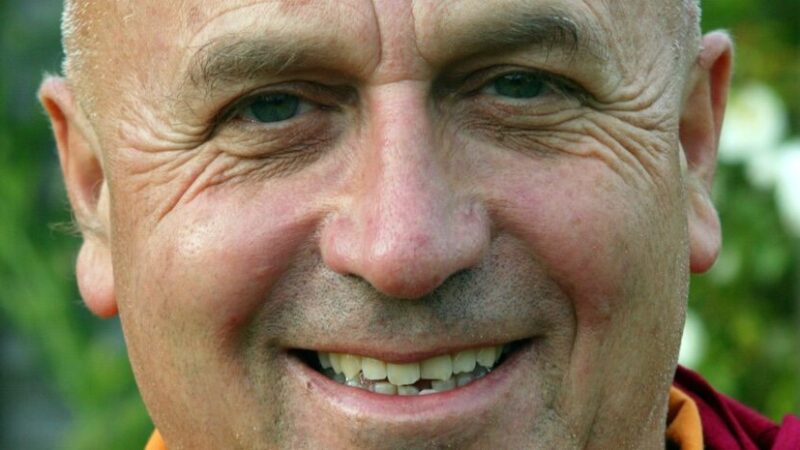
Matthieu Ricard: Finding Inner Freedom
Matthieu Ricard is a French author, photographer, translator, and Buddhist monk. With Sounds True, he has joined with coauthors Christophe André, a well-known French psychiatrist, and Swiss philosopher Alexandre Jollien to create two books: In Search of Wisdom: A Monk, a Philosopher, and a Psychiatrist on What Matters Most and, most recently, Freedom for All of Us: A Monk, a Philosopher, and a Psychiatrist on Finding Inner Peace. In this episode of Insights at the Edge, Tami Simon speaks with Matthieu about the path to inner freedom. They discuss the obstacles we encounter on the path, such as addiction or confusing our willpower with true freedom. Matthieu also explores what supports inner freedom, the nature of optimism, and the training we must go through. Finally, they move into the “harvest” that comes from cultivating deep and lasting inner freedom.

Life After Awakening, with Adyashanti
Friends, I wanted to share with you a free chapter from Adyashanti‘s inspiring (and very provocative) book The End of Your World: Uncensored Straight Talk on the Nature of Enlightenment.
More and more people are waking up spiritually. And for many of them, the question becomes: Now what? “Information about life after awakening is usually not made public,” explains Adya. “It’s most often shared only between teachers and their students.” The End of Your World is his response to a growing need for direction on the spiritual path. Consider this Adya’s personal welcome to “a new world.”
Here is the excerpt, entitled “Exploring Life After Awakening.”
There’s a phenomenon happening in the world today. More and more people are waking up—having real, authentic glimpses of reality. By this I mean that people seem to be having moments where they awaken out of their familiar senses of self, and out of their familiar senses of what the world is, into a much greater reality—into some- thing far beyond anything they knew existed.
These experiences of awakening differ from person to person. For some, the awakening is sustained over time, while for others the glimpse is momentary—it may last just a split second. But in that instant, the whole sense of “self ” disap- pears. The way they perceive the world suddenly changes, and they find themselves without any sense of separation between themselves and the rest of the world. It can be likened to the experience of waking up from a dream—a dream you didn’t even know you were in until you were jolted out of it.
In the beginning of my teaching work, most of the people who came to me were seeking these deeper realizations of spirituality. They were seeking to wake up from the limiting and isolated senses of self they had imagined themselves to be. It’s this yearning that underpins all spiritual seeking: to discover for ourselves what we already intuit to be true— that there is more to life than we are currently perceiving.
But as time has passed, more and more people are coming to me who have already had glimpses of this greater reality. It is because of them that I am giving the teachings in this book.
The Dawning of Awakening
This discovery I’m talking about is traditionally referred to as spiritual awakening, because one awakens from the dream of separation created by the egoic mind. We realize—often quite suddenly—that our sense of self, which has been formed and constructed out of our ideas, beliefs, and images, is not really who we are. It doesn’t define us; it has no center. The ego may exist as a series of passing thoughts, beliefs, actions, and reactions, but in and of itself it has no identity. Ultimately all of the images we have about ourselves and the world turn out to be nothing but a resistance to things as they are. What we call ego is simply the mechanism our mind uses to resist life as it is. In that way, ego isn’t a thing as much as it is a verb. It is the resistance to what is. It is the pushing away or pulling toward. This momentum, this grasping and rejecting, is what forms a sense of a self that is distinct, or separate, from the world around us.
But with the dawn of awakening, this outside world begins to collapse. Once we lose our sense of self, it’s as if we have lost the whole world as we knew it. At that moment— whether that moment is just a glimpse or something more sustained—we suddenly realize with incredible clarity that what we truly are is in no way limited to the small sense of self that we thought we were.
Awakening to truth or reality is something that is very hard to talk about because it is transcendent of speech. It is helpful, nevertheless, to work with some sort of a guidepost. The simplest thing one can say about the experiential knowledge of awakening is that it is a shift in one’s perception. This is the heart of awakening. There is a shift in perception from seeing oneself as an isolated individual to seeing oneself, if we have a sense of self at all after this shift, as something much more universal—everything and everyone and every- where at the same time.
This shift is not revolutionary; it’s the same as looking in the mirror in the morning and having an intuitive sense that the face you are looking at is yours. It is not a mystical experience; it is a simple experience. When you look in the mirror, you experience the simple recognition, “Oh, that’s me.” When the shift of perception that’s called awakening happens, whatever our senses come into contact with is experienced as ourselves. It’s as if we think with everything we encounter, “Oh, that’s me.” We don’t experience ourselves in terms of our ego, in terms of a separate someone or separate entity. It’s more a feeling of the One recognizing itself, or Spirit recognizing itself.
Spiritual awakening is a remembering. It is not becoming something that we are not. It is not about transforming ourselves. It is not about changing ourselves. It is a remembering of what we are, as if we’d known it long ago and had simply forgotten. At the moment of this remembering, if the remembering is authentic, it’s not viewed as a personal thing. There is really no such thing as a “personal” awakening, because “personal” would imply separation. “Personal” would imply that it is the “me” or the ego that awakens or becomes enlightened.
But in a true awakening, it is realized very clearly that even the awakening itself is not personal. It is universal Spirit or universal consciousness that wakes up to itself. Rather than the “me” waking up, what we are wakes up from the “me.” What we are wakes up from the seeker. What we are wakes up from the seeking.
The problem with defining awakening is that upon hear- ing each of these descriptions, the mind creates another image, another idea of what this ultimate truth or ultimate reality is all about. As soon as these images are created, our perception is distorted once again. In this way, it’s really impossible to describe the nature of reality, except to say that it’s not what we think it is, and it’s not what we’ve been taught it is. In truth, we are not capable of imagining what it is that we are. Our nature is literally beyond all imagination. What we are is that which is watching—that consciousness which is watching us pretending to be a separate person. Our true nature is continually partaking of all experience, awake to every instant, to each and every moment.
In awakening, what’s revealed to us is that we are not a thing, nor a person, nor even an entity. What we are is that which manifests as all things, as all experiences, as all personalities. We are that which dreams the whole world into existence. Spiritual awakening reveals that that which is unspeakable and unexplainable is actually what we are.
Abiding and Nonabiding Awakening
As I’ve mentioned, this experience of awakening can be just a glimpse, or it can be sustained over time. Now, some would say that if an awakening is momentary, it is not a real awakening. There are those who believe that, with authentic awakening, your perception opens up to the true nature of things and never closes back down again. I can understand this perspective, since ultimately the whole spiritual journey does lead us to a full awakening. Full awakening simply means that we perceive from the perspective of Spirit—from the view of oneness—all the time.
From this awakened perspective, there isn’t any separation anywhere—not in the world, not in the universe, not in all the universes everywhere. The truth is anywhere and everywhere, at all times, in all dimensions, for all beings. It is a truth that is the source of everything that will ever be experienced—in life, after life, in this dimension or any other dimension.
From the perspective of the ultimate, literally every- thing—be it at a higher or lower dimension, here or there, yesterday, today, or tomorrow, everything—is but a manifestation of Spirit. It is Spirit itself that wakes up. So, ultimately, the trajectory every being is on, whether they know it or not, is a trajectory toward full awakening—toward a full knowing, toward a full experiential knowledge of what they are, toward unity, toward oneness.
But the moment of awakening may or may not result in a permanent seeing. As I said, some people will tell you that unless it’s permanent, the awakening is not real. What I’ve seen as a teacher is that the person who has a momentary glimpse beyond the veil of duality and the person who has a permanent, “abiding” realization are seeing and experiencing the same thing. One person experiences it momentarily; another experiences it continually. But what is experienced, if it is true awakening, is the same: all is one; we are not a particular thing or a particular someone that can be located in a particular space; what we are is both nothing and every- thing, simultaneously.
So, as I see it, it doesn’t really matter whether an awakening is instantaneous or continuous. It matters in the sense that there is a trajectory—nobody’s heart will be totally fulfilled until that perceiving from the point of view of truth is continuous—but what is seen is an awakening, whether it is sustained or not.
This glimpse of awakening, which I call nonabiding awakening, is becoming more and more common. It happens for a moment, an afternoon, a day, a week—maybe as long as a month or two. Awareness opens up, the sense of the separate self falls away—and then, like the aperture on a camera lens, awareness closes back down. All of a sudden that person who had previously perceived true nonduality, true oneness, is quite surprisingly now perceiving back in the dualistic “dream state.” In the dream state, we’re back in our conditioned sense of self—in a limited, isolated sense of being.
The good news is that once a moment of this clear seeing has actually taken place, the aperture of our awareness can never completely close down again. It may seem like it has closed down completely, but it never quite does. In the deep- est part of yourself, you don’t ever forget. Even if you’ve only glimpsed reality for a moment, something within you is changed forever.
Reality is nuclear; it’s incredibly powerful. It’s unimaginably potent. People can experience a f lash of reality in the time it takes to snap your fingers, and the energy and the force that enters into them as a result is life altering.
Just one moment of awakening begins the dissolution of one’s false sense of self and, subsequently, the dissolution of one’s whole perception of the world.
Awakening Is Not What You Imagine It to Be
In a very real sense, it is much more accurate to talk about what we lose upon awakening rather than what we gain. We not only lose ourselves—who we thought we were—but we also lose our entire perception of the world. Separation is only a perception; in fact, when it comes to our world, there is nothing but perception. “Your world ” is not your world; it is only your perception. So while it may seem negative at first, I think it’s much more useful to talk about spiritual awakening in terms of what we lose—what we awaken from. This means we’re talking about the dissolution of the image we have of ourselves, and it’s this dismantling of who we thought we were that is so startling when one wakes up.
And it is indeed startling: it’s not what we think it’s going to be like at all. I’ve never had a single student come back and say, “You k now, Adya, I peered through the veil of separation, and it’s pretty much what I thought it would be. It measures up pretty closely to what I’ve been told.” Usually they come back and say, “This is nothing like what I imagined.”
This is especially interesting since many of the people I teach have been studying spirituality for many years, and they often have very intricate ideas about what awakening is going to be like. But when it happens, it is always different from their expectations. In many ways, it is grander, but also in many ways, it is simpler. In truth, if it is to be true and real, awakening must be different from what we imagine it to be. This is because all of our imaginings about awakening are happening within the paradigm of the dream state. It is not possible to imagine something outside of the dream state when our consciousness is still within it.
How Does Your Life Change after Awakening ?
With awakening there also comes a total reorganization of the way we perceive life—or at least the beginning of a reorganization. This is because awakening itself, while beautiful and amazing, often brings with it a sense of disorientation. Even though you as the One have awakened, there is still your whole human structure—your body, your mind, and your personality. Awakening can often be experienced as very disorienting to this human structure.
So it is the process that happens after awakening that I want to explore. As I’ve said, for a very few people, the moment of awakening will be complete. It will be final in a certain sense, and there will be no need for a continuing process. We might say that such people had an extraordinarily light karmic load; even though they may have experienced extreme suffering before awakening, one can see that their karmic inheritance, the conditioning that they were dealing with, wasn’t too deep. This is very rare. Only a few people in a given generation may wake up in such a way that there’s no further process to undergo.
What I always tell people is this: don’t count on that person being you. Better to count on being like everyone else, which means that you will undergo a process after an initial awakening. It won’t be the end of your journey. What I will attempt to do here is to point you in a direction that may be useful and orienting as you embark on that journey. As my teacher used to say, it’s like getting your foot in the front door. Just because you’ve gotten your foot in the front door doesn’t mean you have turned the lights on; it doesn’t mean you have learned to navigate in that different world that you’ve awakened to.
I’m very happy that this book, which is based on a series of talks I’ve given, offers me the opportunity to address this subject—the question of what happens after awaken- ing. The information that exists on life after awakening is not usually made public. It’s most often shared only between spiritual teachers and their students. The problem with that approach is that, as I’ve said, a lot of people are now having these moments of awakening, and there is very little coher- ent teaching available for them. In that sense, this book is meant to be a welcoming to that new world, that new state of oneness.
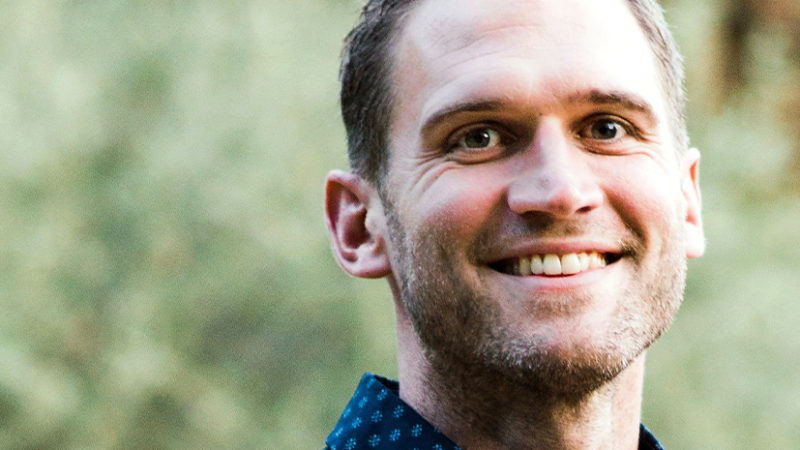
Lance Allred: The New Alpha Male
Lance Allred is a former NBA player (who was the first legally deaf player in the league), public speaker, and author. With Sounds True, he has published The New Alpha Male: How to Win the Game When the Rules Are Changing. In this episode of Insights at the Edge, Tami Simon speaks with Lance about the experiences he had in professional sports that led him to reevaluate what it means to be a man in contemporary society. Lance explains how his upbringing in a rural, polygamous commune informed his original ideas about masculinity, highlighting the subconscious assumptions about money and power that affect American men’s self-worth. Tami and Lance also discuss the roles of emotional vulnerability and surrender in the lives of modern men. Finally, they talk about the principle of perseverance and the increasingly urgent need for all cultures to reexamine their assumptions and core values.(63 minutes)
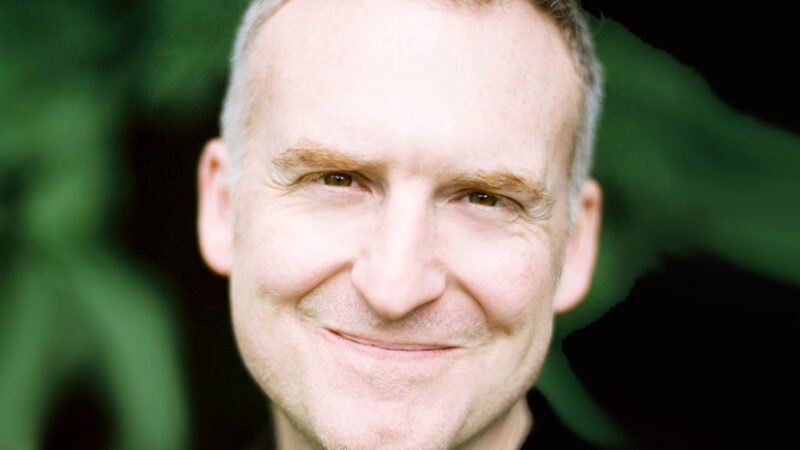
Micah Mortali: Rewilding
Micah Mortali is the director of the Kripalu School, a certified yoga teacher, and a longtime wilderness guide. With Sounds True, he has published Rewilding: Meditations, Practices, and Skills for Awakening in Nature. In this episode of Insights at the Edge, Tami Simon speaks with Micah about humanity’s growing disconnection from the earth and how “rewilding” can help slow that trend. They talk about rewilding both as individuals and as part of whole ecosystems. Micah also shares the story of an intense, revelatory trail encounter with a bear and comments on the “species loneliness” of urban environments. Mulling the sense of grief they have for humankind’s effects on the environment, Tami and Micah consider how modern people can grapple with being in exile from the natural world. Finally, they discuss the barriers many have to reentering nature, as well as ways to initiate your own rewilding experience no matter where you are.(64 minutes)
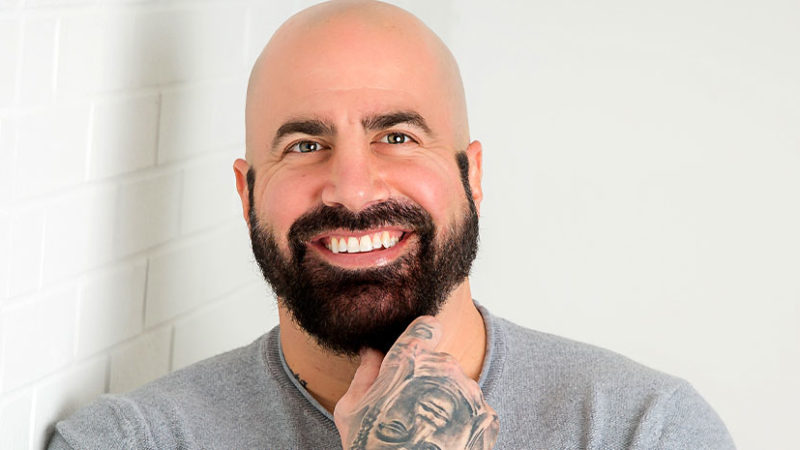
Christian Conte: Healing Conflict: Listen, Validate, a...
Christian Conte, PhD, is a mental health specialist and leading authority on anger management. With Sounds True, Christian has published Walking Through Anger: A New Design for Confronting Conflict in an Emotionally Charged World. In this episode of Insights at the Edge, Tami Simon talks with Christian about his Yield Theory of emotional management, focusing on the process of “listen, validate, explore options.” Christian explains the events that led to his interest in anger management, as well as the origins of Yield Theory. He emphasizes the importance of meeting others where they are, giving them the opportunity to drain anger’s charge from their limbic system. Christian and Tami discuss why it’s necessary to cultivate humility and how Yield Theory might be applied to our currently divisive culture. Finally, they speak on “the cartoon world” that angry responses often create, as well as the importance of watching what we add to our minds.(63 minutes)
