
Just One Question | Craig Foster: Why am I Afraid of Nature?

    —
July 9, 2026

Just One Question | Craig Foster: Why am I Afraid of Nature?

Craig Foster July 9, 2026


We’ve all felt it: the excitement of heading out into nature, followed almost immediately by “wow, that’s a lot of bugs” energy. Turns out, that’s not just you being an urban dweller — it’s a genuine evolutionary paradox, and this week’s guest has spent his whole career living inside it.

Craig Foster is the filmmaker and naturalist behind My Octopus Teacher, and in this episode he tackles a question Tami poses about her own experience: why can she melt into a deep, connected feeling about nature from the safety of meditation, but feel completely terrified and separate the moment she’s actually standing in a wilderness with wolves, cougars, or sharks nearby?

Craig’s answer reframes the whole thing. He explains that we’re each carrying millions of years of “wild” memory, hardwired into who we are, while our conscious, modern selves have only had a few generations to adjust to industrial life. The fix isn’t a heroic leap into the deep wild — it’s small, steady reconnection.

A few takeaways from Craig’s answer:

  • We’re designed for wildness — our discomfort with it is a mismatch, not a flaw
  • Reconnection starts small: get to know the trees, insects, and animals right around your house
  • Comfort with the wild builds faster than you’d expect — sometimes in a matter of months
  • Even one backyard animal can teach you something profound about yourself and the natural world

If this got you thinking about your own relationship with the wild, you’ll want to hear the whole conversation — Craig and Tami go even deeper into what it means to live an amphibious life, split between our tame and wild selves.

Taken from the full Insights at the Edge conversation with Craig Foster. Find the complete interview in this feed or at soundstrue.com.

This episode is sponsored by Omega Institute, a global gathering hub for lifelong learning and spiritual exploration. Omega offers weekend workshops, special events, rest and rejuvenation retreats, professional training, online learning, and more. Discover what calls to you at eomega.org/true.

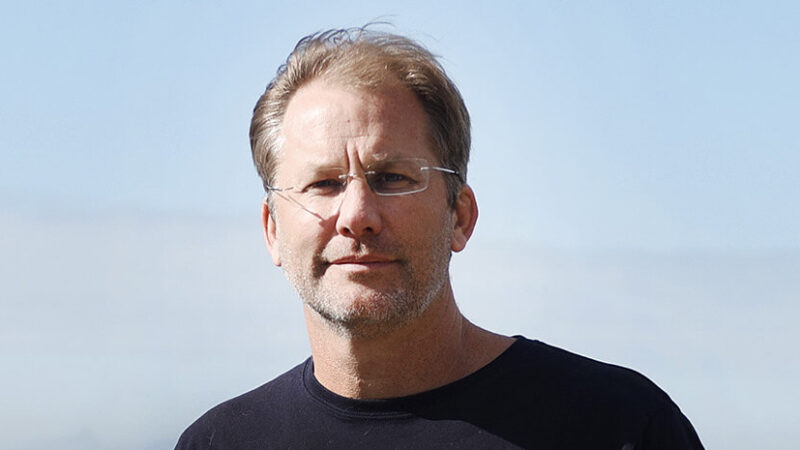
Craig Foster is one of the world’s leading natural history filmmakers and co-founder of the Sea Change Project. His he the creator of the Academy Award for Best Documentary My Octopus Teacher and has created over 100 films and documentaries in addition to his photography. He is the author of Amphibious Soul: Finding the Wild in a Tame World. He lives in South Africa. More at https://seachangeproject.com/about/

600 Podcasts and Counting…

Subscribe to Insights at the Edge to hear all of Tami’s interviews (transcripts available too!), featuring Eckhart Tolle, Caroline Myss, Tara Brach, Jack Kornfield, Adyashanti, and many more.

Meet Your Host: Tami Simon

Founded Sounds True in 1985 as a multimedia publishing house with a mission to disseminate spiritual wisdom. She hosts a popular weekly podcast called Insights at the Edge, where she has interviewed many of today's leading teachers. Tami lives with her wife, Julie M. Kramer, and their two spoodles, Rasberry and Bula, in Boulder, Colorado.

Photo © Jason Elias

Also By Author

Just One Question | Craig Foster: Why am I Afraid of N...


We’ve all felt it: the excitement of heading out into nature, followed almost immediately by “wow, that’s a lot of bugs” energy. Turns out, that’s not just you being an urban dweller — it’s a genuine evolutionary paradox, and this week’s guest has spent his whole career living inside it.

Craig Foster is the filmmaker and naturalist behind My Octopus Teacher, and in this episode he tackles a question Tami poses about her own experience: why can she melt into a deep, connected feeling about nature from the safety of meditation, but feel completely terrified and separate the moment she’s actually standing in a wilderness with wolves, cougars, or sharks nearby?

Craig’s answer reframes the whole thing. He explains that we’re each carrying millions of years of “wild” memory, hardwired into who we are, while our conscious, modern selves have only had a few generations to adjust to industrial life. The fix isn’t a heroic leap into the deep wild — it’s small, steady reconnection.

A few takeaways from Craig’s answer:

  • We’re designed for wildness — our discomfort with it is a mismatch, not a flaw
  • Reconnection starts small: get to know the trees, insects, and animals right around your house
  • Comfort with the wild builds faster than you’d expect — sometimes in a matter of months
  • Even one backyard animal can teach you something profound about yourself and the natural world

If this got you thinking about your own relationship with the wild, you’ll want to hear the whole conversation — Craig and Tami go even deeper into what it means to live an amphibious life, split between our tame and wild selves.

Taken from the full Insights at the Edge conversation with Craig Foster. Find the complete interview in this feed or at soundstrue.com.

This episode is sponsored by Omega Institute, a global gathering hub for lifelong learning and spiritual exploration. Omega offers weekend workshops, special events, rest and rejuvenation retreats, professional training, online learning, and more. Discover what calls to you at eomega.org/true.

Craig Foster: Belonging to the Wild


All of the myriad forms of life on our planet, whether plant or animal, predator or prey, contribute to our survival. And when any one of the fragile threads of the web of life begins to fray, all of us are threatened. Craig Foster—the Academy Award–winning creator of My Octopus Teacher—has since the age of three spent his life intimately connected to the natural world, in particular the Earth’s endangered marine ecosystems such as the Great African Seaforest. In this podcast, Tami Simon speaks with Craig about his ongoing mission to reawaken humanity to our interconnectedness—and our interdependence—with each and every living being, seen and unseen. 

Tune in now to a fascinating conversation about: the community of activists behind the Sea Change Project; being part of the Great Mother; the extraordinary biodiversity we depend on; attuning to the “forest mind”; establishing a comfortable connection with the wild of nature “that your whole being is craving”; balancing the tame and the wild aspects of ourselves; getting to know the natural environment through places close to home; therianthropes and other mind-boggling images enshrined in the rock art of Indigenous peoples; the healing power of the cold; underwater tracking and learning “the oldest language on Earth”; staying relaxed in dangerous natural settings; a new understanding of the impacts of species extinction; appreciating the vast intelligence and awareness of the creatures who share our world; what nature can teach us about death and dying; the great potential for rebirth and regeneration at this time; and more.

Note: This episode originally aired on Sounds True One, where these special episodes of Insights at the Edge are available to watch live on video and with exclusive access to Q&As with our guests. Learn more at join.soundstrue.com.

You Might Also Enjoy

Just One Question | Craig Foster: Why am I Afraid of N...


We’ve all felt it: the excitement of heading out into nature, followed almost immediately by “wow, that’s a lot of bugs” energy. Turns out, that’s not just you being an urban dweller — it’s a genuine evolutionary paradox, and this week’s guest has spent his whole career living inside it.

Craig Foster is the filmmaker and naturalist behind My Octopus Teacher, and in this episode he tackles a question Tami poses about her own experience: why can she melt into a deep, connected feeling about nature from the safety of meditation, but feel completely terrified and separate the moment she’s actually standing in a wilderness with wolves, cougars, or sharks nearby?

Craig’s answer reframes the whole thing. He explains that we’re each carrying millions of years of “wild” memory, hardwired into who we are, while our conscious, modern selves have only had a few generations to adjust to industrial life. The fix isn’t a heroic leap into the deep wild — it’s small, steady reconnection.

A few takeaways from Craig’s answer:

  • We’re designed for wildness — our discomfort with it is a mismatch, not a flaw
  • Reconnection starts small: get to know the trees, insects, and animals right around your house
  • Comfort with the wild builds faster than you’d expect — sometimes in a matter of months
  • Even one backyard animal can teach you something profound about yourself and the natural world

If this got you thinking about your own relationship with the wild, you’ll want to hear the whole conversation — Craig and Tami go even deeper into what it means to live an amphibious life, split between our tame and wild selves.

Taken from the full Insights at the Edge conversation with Craig Foster. Find the complete interview in this feed or at soundstrue.com.

This episode is sponsored by Omega Institute, a global gathering hub for lifelong learning and spiritual exploration. Omega offers weekend workshops, special events, rest and rejuvenation retreats, professional training, online learning, and more. Discover what calls to you at eomega.org/true.
Marisa Renee Lee: Making A Stubborn Commitment to Hope


Hope isn’t a feeling that arrives and stays—it’s a commitment you make, over and over, even when you’re in bed crying, even when you can’t stand up long enough to take a shower.

This week, Tami Simon speaks with Marisa Renée Lee—award-winning author, Harvard graduate, former Obama White House deputy director, and CEO of Beacon Advisors—about her new book, Waiting for Dawn: Living with Uncertainty. Drawing on her own two-year journey through long COVID and the lessons she has gathered as an advocate for grief and social healing, Marisa offers a clear-eyed, deeply personal guide to enduring the unwanted seasons of life.

Join Tami and Marisa to explore:

  • Why uncertainty isn’t a crisis to be solved but a season to be navigated—with honesty, self-compassion, and the courage to ask for help
  • How long COVID stripped away Marisa’s surface-level identity and forced her to discover what was truly immutable in her
  • The science and spirituality of hope—and why a ruthless commitment to it requires both trust and action
  • “Inherited hope”: drawing on the courage of ancestors and those who came before us
  • Why meaning-making isn’t required—and the harm in pressuring people to turn their worst pain into a lesson
  • The role of endurance, humility, and impermanence (from the 23rd Psalm to Buddhist teaching) in waiting for dawn
  • How to identify your own “arbiters of hope” when doubt and hope are running neck and neck

Whether you’re in the thick of a hard season right now or supporting someone who is, Marisa’s wisdom—earned the hard way—will help you find your footing.

Listen now and make your commitment to hope. →

This conversation offers genuine transmission—not just concepts about awakening, but the palpable presence of realized teachers exploring the growing edge of spiritual understanding together. Originally aired on Sounds True One.

Insights at the Edge is supported by Magic Hour, a house of ceremonial teas that offer you daily invitations to ritual. Get 20% off your first order at ClubMagicHour.com with the code TRUE. And enter to win a Monthly Magic Subscription Journey at ClubMagicHour.com/TRUE. Worth $673, this subscription includes 12 months of tea, a loose leaf starter kit, monthly virtual classes, and free shipping.

Just One Question | Martha Beck: What Do I Do At Three...


Three in the morning. Brain already running. Every unfinished thing in your life suddenly very urgent. Sound familiar?

We pulled this week’s question because when Tami asked Martha Beck what to actually do in that moment, her answer was genuinely not what we were expecting. No breathwork protocol. No journaling prompt. What Martha offers is something way simpler — and honestly, kind of revolutionary in how low the bar is.

Martha Beck is a Harvard-trained sociologist, bestselling author, and one of the sharpest minds out there on anxiety and how we actually heal it. She’s been working through her own anxiety since childhood, and she’s arrived somewhere really good. (Spoiler: it involves audiobooks, furry blankets, and thinking like a golden retriever.)

Here’s some of what she gets into:

  • Why she plays Sounds True audiobooks at half-speed in the middle of the night — and why slowing down is the whole point
  • The self-kindness practice she uses when her brain won’t quit, including the exact question she asks herself
  • A story from Liz Gilbert’s Eat, Pray, Love about a two-word message that Martha keeps coming back to — it’s a good one
  • How decades of anxiety can actually rewire into something peaceful, and why what fires together really does wire together

Honestly, this one left us wanting to go take a nap. In the best way.

Taken from the full Insights at the Edge conversation with Martha Beck. Find the complete interview in this feed or at soundstrue.com.

This episode is sponsored by Omega Institute, a global gathering hub for lifelong learning and spiritual exploration. Omega offers weekend workshops, special events, rest and rejuvenation retreats, professional training, online learning, and more. Discover what calls to you at eomega.org/true.
