

Just One Question | Adyashanti: Is It an Awakening If ...
Is a spiritual awakening only real if it completely rearranges your life? That’s the question Tami Simon puts to Adyashanti in this episode, and his answer digs into something a lot of seekers wrestle with: the gap between a powerful glimpse of clarity and the ongoing work of actually living from it.
Adya, the American-born teacher behind books like The End of Your World and Falling into Grace, walks through why those temporary tastes of awakening are real, even when they fade, and offers a surprisingly practical way to hold onto what they revealed without grasping at them. Then he does something rare: he tells the story of his own first major awakening, a moment he describes as feeling like a nuclear explosion going off inside him.
Here’s what we cover:
- Why a fleeting shift still counts as a real awakening, even if it doesn’t stick
- The two (seemingly contradictory) pieces of advice Adya gives people chasing a past peak experience
- How the first awakening can feel like a “freebie,” while everything after asks you to participate consciously
- Adya’s own account of the night everything fell away and the still, small voice that told him, “This isn’t all of it. Keep going.”
And there’s so much more. Listen to the entire conversation from this Insights At the Edge episode, “Waking Up: What Does It Really Mean?”

E221: The True Meaning of Witness Consciousness
True witness consciousness is not willfully watching, analyzing, or trying to let go of thoughts and emotions; it is the effortless state of simply seeing whatever arises without touching it. There is a vast difference between passive “seeing” and intentional “looking.” If you catch a thought or emotion to decide whether it is good or bad, you are using your mind as a “gatekeeper” rather than experiencing true witness consciousness. As you evolve spiritually, thoughts, emotions, and other inner experiences simply pass through like writing on water, there is no need to touch them. You can reach this state when you are willing to go through life’s experiences. You become increasingly able to simply flow with life, serve what is in front of you, and eventually experience the deep spiritual state of liberated consciousness.
© Sounds True Inc. Episodes: © 2026 Michael A. Singer. All Rights Reserved.

Kimberly Ann Johnson: “Becoming a Sexual Alchemi...
What if aging isn’t the slow closing of your erotic life, but the doorway into its most alive season?
This week, Tami Simon speaks with Kimberly Ann Johnson—sexological body worker, somatic experiencing practitioner, birth doula, and author of the new Sounds True book Erotic Seasons: Tuning In to the Rhythms of Women’s Sexuality and Spirituality—about what she calls erotic sovereignty, and the sentence that closes her book: the female body is its own spiritual path.
Join Tami and Kimberly to explore:
- Erotic sovereignty—your relationship to your own life force, and why it stays with you across every season
- Why the goal isn’t a more regulated nervous system, but a more responsive one, and what it means to run more charge
- The four erotic seasons—maiden, mother, virgin, crone—and the surprising reason virgin comes after mother
- Why hormonal transitions are “wet clay”: golden opportunities for repatterning that our culture teaches us to rush past
- Menopause as a death rehearsal, and the life review that arrives decades before we expect it
- Hot sex and warm sex—widening the range beyond adrenaline, and learning the language of the pause
- “Hormones are gods”: the collective endocrine system, and why living intergenerationally may be the original hormone therapy
- Becoming a sexual alchemist—arousal as healing energy, and why care is the whole ethic
Whether you are 25 or 75, Kimberly offers a map for meeting your body’s changes as thresholds rather than losses.
Please note: this episode includes candid discussion of sexual abuse and sexual wounding, including Kimberly Ann Johnson’s own experience.
Listen now, and meet your body as the path. →
This conversation offers genuine transmission, not just concepts about awakening, but the palpable presence of realized teachers exploring the growing edge of spiritual understanding together, and it originally aired on Sounds True One.
Get a FREE month of membership at https://bit.ly/STOne-Free-Month.

Melissa Brown: Nourishing Your Nervous System
When was the last time you felt truly relaxed, present, and at peace with everything going on in your life and in our world? In this podcast, Tami Simon speaks with Melissa Brown about her new audio learning program, Nourishing Your Nervous System, and how we can begin to empower ourselves to choose the state of regulation over dysregulation. Give a listen to this practical and inspiring discussion of the ventral vagal branch of the parasympathetic nervous system—and how we can access it for calm, joy, and vitality; co-regulation with others as a means to move out of dorsal depression; productive thinking versus rumination and other forms of unhealthy thinking; the elongated breath as a tool for shifting out of sympathetic arousal (or the “fight, flight, freeze” response); improving your “vagal tone”; doom-scrolling, binge-watching, and other ways we distract ourselves from what we don’t want to feel—and how we can learn to hold a state of vitality and a state of tension at the same time; the psoas muscles and their connection to nervous system activation; the benefits of “constructive rest pose”; “fixed action patterns” and how the psoas muscles store trauma; attuning to your heart; and more.

Joanna Macy: We Belong: Hope, Choice, and Our Relation...
Dr. Joanna Macy is an ecophilosopher, activist, and Buddhist scholar who has been at the forefront of movements for social justice and environmentalism for more than five decades. She founded the Work That Reconnects Network and has written many books, including World as Lover, World as Self. In this episode of Insights at the Edge, Tami Simon speaks with Joanna about hope in times of chaos and dissolution, as well as how hope is something we do rather than just feel. Joanna and Tami discuss apathy as a refusal to face the inevitability of suffering and why the state of the environment can be especially heartbreaking. Finally, Tami and Joanna talk about our relationship with the earth as a natural birthright—one that is actually the source of all our energy and joy.

Life After Awakening, with Adyashanti
Friends, I wanted to share with you a free chapter from Adyashanti‘s inspiring (and very provocative) book The End of Your World: Uncensored Straight Talk on the Nature of Enlightenment.
More and more people are waking up spiritually. And for many of them, the question becomes: Now what? “Information about life after awakening is usually not made public,” explains Adya. “It’s most often shared only between teachers and their students.” The End of Your World is his response to a growing need for direction on the spiritual path. Consider this Adya’s personal welcome to “a new world.”
Here is the excerpt, entitled “Exploring Life After Awakening.”
There’s a phenomenon happening in the world today. More and more people are waking up—having real, authentic glimpses of reality. By this I mean that people seem to be having moments where they awaken out of their familiar senses of self, and out of their familiar senses of what the world is, into a much greater reality—into some- thing far beyond anything they knew existed.
These experiences of awakening differ from person to person. For some, the awakening is sustained over time, while for others the glimpse is momentary—it may last just a split second. But in that instant, the whole sense of “self ” disap- pears. The way they perceive the world suddenly changes, and they find themselves without any sense of separation between themselves and the rest of the world. It can be likened to the experience of waking up from a dream—a dream you didn’t even know you were in until you were jolted out of it.
In the beginning of my teaching work, most of the people who came to me were seeking these deeper realizations of spirituality. They were seeking to wake up from the limiting and isolated senses of self they had imagined themselves to be. It’s this yearning that underpins all spiritual seeking: to discover for ourselves what we already intuit to be true— that there is more to life than we are currently perceiving.
But as time has passed, more and more people are coming to me who have already had glimpses of this greater reality. It is because of them that I am giving the teachings in this book.
The Dawning of Awakening
This discovery I’m talking about is traditionally referred to as spiritual awakening, because one awakens from the dream of separation created by the egoic mind. We realize—often quite suddenly—that our sense of self, which has been formed and constructed out of our ideas, beliefs, and images, is not really who we are. It doesn’t define us; it has no center. The ego may exist as a series of passing thoughts, beliefs, actions, and reactions, but in and of itself it has no identity. Ultimately all of the images we have about ourselves and the world turn out to be nothing but a resistance to things as they are. What we call ego is simply the mechanism our mind uses to resist life as it is. In that way, ego isn’t a thing as much as it is a verb. It is the resistance to what is. It is the pushing away or pulling toward. This momentum, this grasping and rejecting, is what forms a sense of a self that is distinct, or separate, from the world around us.
But with the dawn of awakening, this outside world begins to collapse. Once we lose our sense of self, it’s as if we have lost the whole world as we knew it. At that moment— whether that moment is just a glimpse or something more sustained—we suddenly realize with incredible clarity that what we truly are is in no way limited to the small sense of self that we thought we were.
Awakening to truth or reality is something that is very hard to talk about because it is transcendent of speech. It is helpful, nevertheless, to work with some sort of a guidepost. The simplest thing one can say about the experiential knowledge of awakening is that it is a shift in one’s perception. This is the heart of awakening. There is a shift in perception from seeing oneself as an isolated individual to seeing oneself, if we have a sense of self at all after this shift, as something much more universal—everything and everyone and every- where at the same time.
This shift is not revolutionary; it’s the same as looking in the mirror in the morning and having an intuitive sense that the face you are looking at is yours. It is not a mystical experience; it is a simple experience. When you look in the mirror, you experience the simple recognition, “Oh, that’s me.” When the shift of perception that’s called awakening happens, whatever our senses come into contact with is experienced as ourselves. It’s as if we think with everything we encounter, “Oh, that’s me.” We don’t experience ourselves in terms of our ego, in terms of a separate someone or separate entity. It’s more a feeling of the One recognizing itself, or Spirit recognizing itself.
Spiritual awakening is a remembering. It is not becoming something that we are not. It is not about transforming ourselves. It is not about changing ourselves. It is a remembering of what we are, as if we’d known it long ago and had simply forgotten. At the moment of this remembering, if the remembering is authentic, it’s not viewed as a personal thing. There is really no such thing as a “personal” awakening, because “personal” would imply separation. “Personal” would imply that it is the “me” or the ego that awakens or becomes enlightened.
But in a true awakening, it is realized very clearly that even the awakening itself is not personal. It is universal Spirit or universal consciousness that wakes up to itself. Rather than the “me” waking up, what we are wakes up from the “me.” What we are wakes up from the seeker. What we are wakes up from the seeking.
The problem with defining awakening is that upon hear- ing each of these descriptions, the mind creates another image, another idea of what this ultimate truth or ultimate reality is all about. As soon as these images are created, our perception is distorted once again. In this way, it’s really impossible to describe the nature of reality, except to say that it’s not what we think it is, and it’s not what we’ve been taught it is. In truth, we are not capable of imagining what it is that we are. Our nature is literally beyond all imagination. What we are is that which is watching—that consciousness which is watching us pretending to be a separate person. Our true nature is continually partaking of all experience, awake to every instant, to each and every moment.
In awakening, what’s revealed to us is that we are not a thing, nor a person, nor even an entity. What we are is that which manifests as all things, as all experiences, as all personalities. We are that which dreams the whole world into existence. Spiritual awakening reveals that that which is unspeakable and unexplainable is actually what we are.
Abiding and Nonabiding Awakening
As I’ve mentioned, this experience of awakening can be just a glimpse, or it can be sustained over time. Now, some would say that if an awakening is momentary, it is not a real awakening. There are those who believe that, with authentic awakening, your perception opens up to the true nature of things and never closes back down again. I can understand this perspective, since ultimately the whole spiritual journey does lead us to a full awakening. Full awakening simply means that we perceive from the perspective of Spirit—from the view of oneness—all the time.
From this awakened perspective, there isn’t any separation anywhere—not in the world, not in the universe, not in all the universes everywhere. The truth is anywhere and everywhere, at all times, in all dimensions, for all beings. It is a truth that is the source of everything that will ever be experienced—in life, after life, in this dimension or any other dimension.
From the perspective of the ultimate, literally every- thing—be it at a higher or lower dimension, here or there, yesterday, today, or tomorrow, everything—is but a manifestation of Spirit. It is Spirit itself that wakes up. So, ultimately, the trajectory every being is on, whether they know it or not, is a trajectory toward full awakening—toward a full knowing, toward a full experiential knowledge of what they are, toward unity, toward oneness.
But the moment of awakening may or may not result in a permanent seeing. As I said, some people will tell you that unless it’s permanent, the awakening is not real. What I’ve seen as a teacher is that the person who has a momentary glimpse beyond the veil of duality and the person who has a permanent, “abiding” realization are seeing and experiencing the same thing. One person experiences it momentarily; another experiences it continually. But what is experienced, if it is true awakening, is the same: all is one; we are not a particular thing or a particular someone that can be located in a particular space; what we are is both nothing and every- thing, simultaneously.
So, as I see it, it doesn’t really matter whether an awakening is instantaneous or continuous. It matters in the sense that there is a trajectory—nobody’s heart will be totally fulfilled until that perceiving from the point of view of truth is continuous—but what is seen is an awakening, whether it is sustained or not.
This glimpse of awakening, which I call nonabiding awakening, is becoming more and more common. It happens for a moment, an afternoon, a day, a week—maybe as long as a month or two. Awareness opens up, the sense of the separate self falls away—and then, like the aperture on a camera lens, awareness closes back down. All of a sudden that person who had previously perceived true nonduality, true oneness, is quite surprisingly now perceiving back in the dualistic “dream state.” In the dream state, we’re back in our conditioned sense of self—in a limited, isolated sense of being.
The good news is that once a moment of this clear seeing has actually taken place, the aperture of our awareness can never completely close down again. It may seem like it has closed down completely, but it never quite does. In the deep- est part of yourself, you don’t ever forget. Even if you’ve only glimpsed reality for a moment, something within you is changed forever.
Reality is nuclear; it’s incredibly powerful. It’s unimaginably potent. People can experience a f lash of reality in the time it takes to snap your fingers, and the energy and the force that enters into them as a result is life altering.
Just one moment of awakening begins the dissolution of one’s false sense of self and, subsequently, the dissolution of one’s whole perception of the world.
Awakening Is Not What You Imagine It to Be
In a very real sense, it is much more accurate to talk about what we lose upon awakening rather than what we gain. We not only lose ourselves—who we thought we were—but we also lose our entire perception of the world. Separation is only a perception; in fact, when it comes to our world, there is nothing but perception. “Your world ” is not your world; it is only your perception. So while it may seem negative at first, I think it’s much more useful to talk about spiritual awakening in terms of what we lose—what we awaken from. This means we’re talking about the dissolution of the image we have of ourselves, and it’s this dismantling of who we thought we were that is so startling when one wakes up.
And it is indeed startling: it’s not what we think it’s going to be like at all. I’ve never had a single student come back and say, “You k now, Adya, I peered through the veil of separation, and it’s pretty much what I thought it would be. It measures up pretty closely to what I’ve been told.” Usually they come back and say, “This is nothing like what I imagined.”
This is especially interesting since many of the people I teach have been studying spirituality for many years, and they often have very intricate ideas about what awakening is going to be like. But when it happens, it is always different from their expectations. In many ways, it is grander, but also in many ways, it is simpler. In truth, if it is to be true and real, awakening must be different from what we imagine it to be. This is because all of our imaginings about awakening are happening within the paradigm of the dream state. It is not possible to imagine something outside of the dream state when our consciousness is still within it.
How Does Your Life Change after Awakening ?
With awakening there also comes a total reorganization of the way we perceive life—or at least the beginning of a reorganization. This is because awakening itself, while beautiful and amazing, often brings with it a sense of disorientation. Even though you as the One have awakened, there is still your whole human structure—your body, your mind, and your personality. Awakening can often be experienced as very disorienting to this human structure.
So it is the process that happens after awakening that I want to explore. As I’ve said, for a very few people, the moment of awakening will be complete. It will be final in a certain sense, and there will be no need for a continuing process. We might say that such people had an extraordinarily light karmic load; even though they may have experienced extreme suffering before awakening, one can see that their karmic inheritance, the conditioning that they were dealing with, wasn’t too deep. This is very rare. Only a few people in a given generation may wake up in such a way that there’s no further process to undergo.
What I always tell people is this: don’t count on that person being you. Better to count on being like everyone else, which means that you will undergo a process after an initial awakening. It won’t be the end of your journey. What I will attempt to do here is to point you in a direction that may be useful and orienting as you embark on that journey. As my teacher used to say, it’s like getting your foot in the front door. Just because you’ve gotten your foot in the front door doesn’t mean you have turned the lights on; it doesn’t mean you have learned to navigate in that different world that you’ve awakened to.
I’m very happy that this book, which is based on a series of talks I’ve given, offers me the opportunity to address this subject—the question of what happens after awaken- ing. The information that exists on life after awakening is not usually made public. It’s most often shared only between spiritual teachers and their students. The problem with that approach is that, as I’ve said, a lot of people are now having these moments of awakening, and there is very little coher- ent teaching available for them. In that sense, this book is meant to be a welcoming to that new world, that new state of oneness.
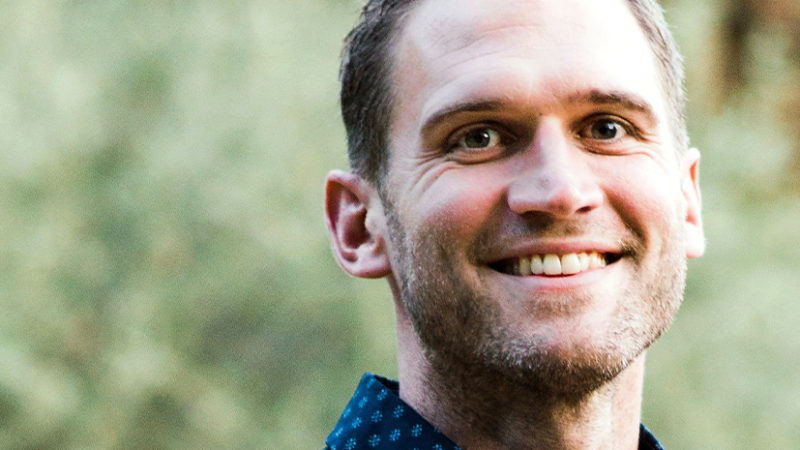
Lance Allred: The New Alpha Male
Lance Allred is a former NBA player (who was the first legally deaf player in the league), public speaker, and author. With Sounds True, he has published The New Alpha Male: How to Win the Game When the Rules Are Changing. In this episode of Insights at the Edge, Tami Simon speaks with Lance about the experiences he had in professional sports that led him to reevaluate what it means to be a man in contemporary society. Lance explains how his upbringing in a rural, polygamous commune informed his original ideas about masculinity, highlighting the subconscious assumptions about money and power that affect American men’s self-worth. Tami and Lance also discuss the roles of emotional vulnerability and surrender in the lives of modern men. Finally, they talk about the principle of perseverance and the increasingly urgent need for all cultures to reexamine their assumptions and core values.(63 minutes)
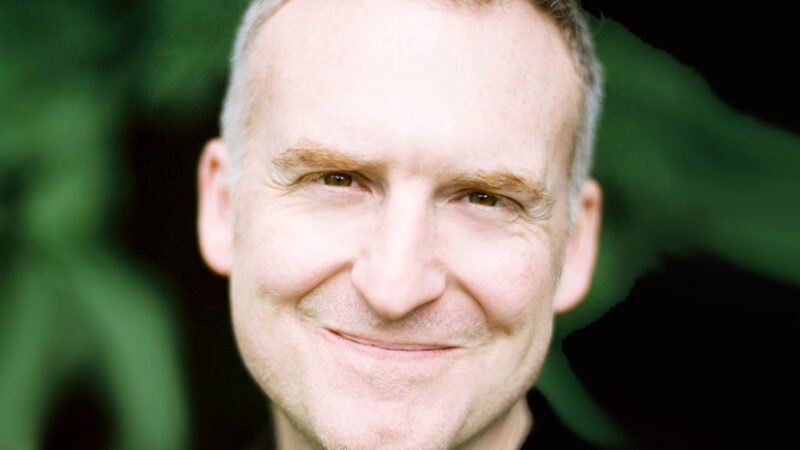
Micah Mortali: Rewilding
Micah Mortali is the director of the Kripalu School, a certified yoga teacher, and a longtime wilderness guide. With Sounds True, he has published Rewilding: Meditations, Practices, and Skills for Awakening in Nature. In this episode of Insights at the Edge, Tami Simon speaks with Micah about humanity’s growing disconnection from the earth and how “rewilding” can help slow that trend. They talk about rewilding both as individuals and as part of whole ecosystems. Micah also shares the story of an intense, revelatory trail encounter with a bear and comments on the “species loneliness” of urban environments. Mulling the sense of grief they have for humankind’s effects on the environment, Tami and Micah consider how modern people can grapple with being in exile from the natural world. Finally, they discuss the barriers many have to reentering nature, as well as ways to initiate your own rewilding experience no matter where you are.(64 minutes)
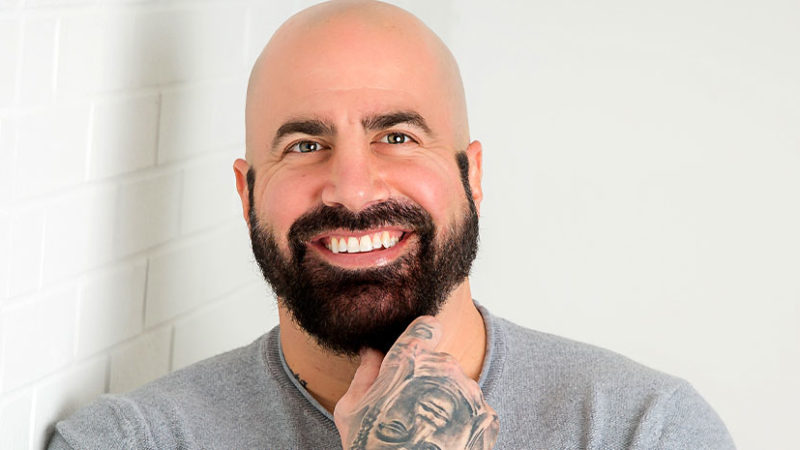
Christian Conte: Healing Conflict: Listen, Validate, a...
Christian Conte, PhD, is a mental health specialist and leading authority on anger management. With Sounds True, Christian has published Walking Through Anger: A New Design for Confronting Conflict in an Emotionally Charged World. In this episode of Insights at the Edge, Tami Simon talks with Christian about his Yield Theory of emotional management, focusing on the process of “listen, validate, explore options.” Christian explains the events that led to his interest in anger management, as well as the origins of Yield Theory. He emphasizes the importance of meeting others where they are, giving them the opportunity to drain anger’s charge from their limbic system. Christian and Tami discuss why it’s necessary to cultivate humility and how Yield Theory might be applied to our currently divisive culture. Finally, they speak on “the cartoon world” that angry responses often create, as well as the importance of watching what we add to our minds.(63 minutes)
