David Steindl-Rast: Grateful Living in the ‘Double Realm’

December 24, 2019

David Steindl-Rast: Grateful Living in the ‘Double Realm’

David Steindl-Rast December 24, 2019

Brother David Steindl-Rast is an internationally renowned author, lecturer, and pivotal member of the monastic renewal movement. A monk in the Benedictine tradition, Brother David is also an expert in Zen Buddhism and a tireless advocate for building bridges between Eastern and Western religious traditions. With Sounds True, Brother David created the audio program The Grateful Heart. In this episode of Insights at the Edge, Tami Simon and Brother David talk about the innate longing that drives spiritual study and is the impetus for seeking out a monastic life. Tami and Brother David explore the concept of the “Double Realm” that lies beyond standard concepts of time and existence, as well as how practicing gratitude can be a doorway to that realm. Finally, Brother David considers the future of religion and spirituality as he enters his nineties.(61 minutes)

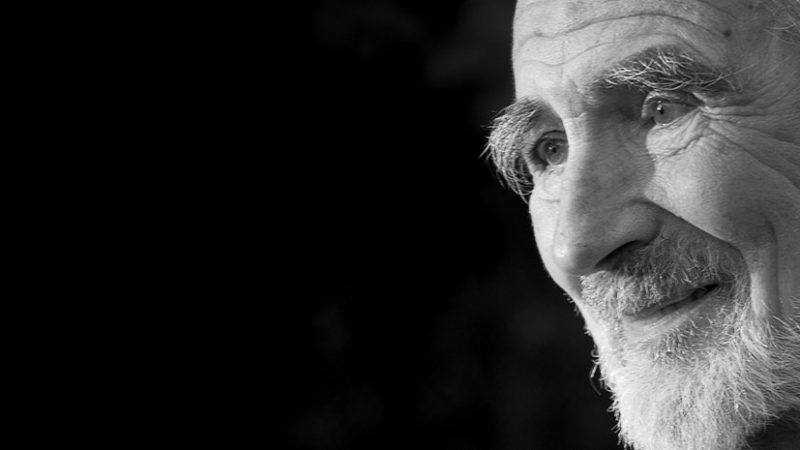
Photo of ()\

Brother David Steindl-Rast was born in Vienna, Austria, and holds a PhD from the Psychological Institute at the University of Vienna. After 12 years of training in the 1,500-year-old Benedictine monastic tradition, Brother David received permission to practice Zen with Buddhist masters. An international lecturer and author, Brother David is a leader in the monastic renewal movement as well as the dialogue between Eastern and Western religions. His most recent book is Gratefulness, the Heart of Prayer.

Author photo © DiegoOrtizMugica-2017

Listen to Tami Simon's interview with David Steindl-Rast: Grateful Living in the “Double Realm”»

600 Podcasts and Counting…

Subscribe to Insights at the Edge to hear all of Tami’s interviews (transcripts available too!), featuring Eckhart Tolle, Caroline Myss, Tara Brach, Jack Kornfield, Adyashanti, and many more.

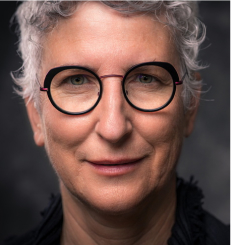
Meet Your Host: Tami Simon

Founded Sounds True in 1985 as a multimedia publishing house with a mission to disseminate spiritual wisdom. She hosts a popular weekly podcast called Insights at the Edge, where she has interviewed many of today's leading teachers. Tami lives with her wife, Julie M. Kramer, and their two spoodles, Rasberry and Bula, in Boulder, Colorado.

Photo © Jason Elias

Also By Author

Memories of Cats I Loved: Brother David Steindl-Rast


Mietzi, 1980s, New York City

For millennia, humans have speculated why some of us are born into riches, others into rags. If
we can’t answer this question for humans, how shall we answer it for cats? Bad karma, you
say? If so, Mietzi must have misbehaved quite badly in a previous incarnation to be born in a
flooded basement this time around. No one knows. What we do know, however, is that the most
disadvantaged pull most strongly on our heartstrings, and so someone rescued Mietzi and her
siblings from their sunless island of soggy rags. No one ever mentioned the mother cat, and I
don’t know what happened to the other kittens of that litter. All I know is that little Lisa
persuaded her reluctant grandmother, and so Mietzi became my mother’s cat.

After that deluged basement, even a tenth-floor New York apartment that was never designed
for pets must have appeared like paradise to the poor kitten. Or so we were hoping. Lisa
delivered Mietzi in a soft-cushioned basket, and the cat was still sitting in that basket when, after
an elaborate farewell from the cat, Lisa kissed her grandmother goodbye at the door. The door
closed, Mother turned around, and the basket was empty.

That the cat was gone was bad enough, but her pitiful meow was not gone. It kept haunting the
apartment for the next hour, while Mother, eventually with the help of her neighbors on both
sides, searched every corner so methodically that Scotland Yard would have been proud of that
job. The voice, unaccountably, always seemed to come from nowhere; yet it persisted.
When the ladies finally dismantled the Sony radio and hi-fi record player my mother won at a
raffle, Mietzi emerged from the only place where she could have gotten as covered with dust as

she did: one of the loudspeaker boxes. A bad start, especially since Mother felt that the kitten
needed a bath. (There must have been lots of water signs in Mietzi’s natal chart.)
No cat could have been more loved, more talked about in telephone conversations with children
and grandchildren, more lovingly reported on at length in every letter.

Mietzi wasn’t young anymore when Mother was diagnosed with leukemia. Mother was still at
home, and I was with her during the decisive days when the doctor was testing whether or not
medication could help her. I was sitting by Mother’s bed then, when Mietzi seemed to get ready
for an acrobatic stunt. Balancing on the back of the rocking chair, she was clearly considering
jumping from there onto a high chest of drawers.
Never before had she tried this. Ears laid back, Mietzi was measuring the distance. “Is she
going to make it?” I asked—and the moment the words were out, I realized that this was the
question my brothers and I were anxiously asking about Mother at that time. “Let’s see,” Mother
replied. Nothing else was said—neither then nor later—but both of us knew what was at stake.
There was no tinge of superstition about this. Everything hangs together with everything; we
know that. In principle then, we may look at one event and find in it a clue for quite a different
one, unconnected though they may appear to be. Some try this with tea leaves or planets;
others think that, in practice, this is too complex an art. There are moments, however, when an
omen lights up with such clarity that it would be difficult to deny its foreboding. Not wanting this
to be true, Mother and I knew, nevertheless, what was going on here.
Mietzi steadied herself on the back of the rocking chair, crouched, jumped, and missed. Have
you ever noticed the embarrassment of a cat when something like this happens? We tried to
console Mietzi, Mother and I, but we couldn’t quite console ourselves that evening.
The verdict was in. What was not decided was how we would handle it, and that is what really
matters.

Mother handled it with grace. Two days later, she was in the hospital again, never to return
home to Mietzi. Her mind was clear to the last, as she took care of unfinished business calmly
and efficiently. She knew in which folder important papers were kept, in which dresser; she
handed my brother the keys with a smile. Only once did she break down and cry: when Mietzi’s
future was to be decided. But a solution was found: since Mother’s apartment was at the same
time the office for her charitable work, which my brother would continue, Mietzi could stay where
she was. The “super” of the building, who was fond of Mietzi anyway, would look after her when
my brother wasn’t there.

Mother was at peace.
I sat next to her bed holding her hand, and she said, “This is how I’d like to die. You ought to sit
there holding my hand and I’d just fall asleep.”

“Well,” I said, “I’d like that, too, but we can’t plan it with such precision.” Not many hours later, I
was sitting in that very spot holding Mother’s hand when she went to sleep for good. So
peacefully did she breathe her last that there was no telling exactly when she passed from time
into the great Now.

Mietzi outlived her by a year or two, mercifully among her accustomed surroundings: the potted
plants on which she nibbled once in a while, the old rugs of which she knew every square inch
by their smell, and my mother’s empty armchair on which she curled up when she got lonely.

This is an excerpt from a story written by Brother David Steindl-Rast and featured in The Karma
of Cats: Spiritual Wisdom from Our Feline Friends, a compilation of original stories by Kelly
McGonigal, Alice Walker, Andrew Harvey, and many more!

Brother David Steindl-Rast was born in Vienna, Austria, and holds a PhD from the
Psychological Institute at the University of Vienna. After 12 years of training in the 1,500-year-
old Benedictine monastic tradition, Brother David received permission to practice Zen with
Buddhist masters. An international lecturer and author, Brother David is a leader in the monastic
renewal movement as well as the dialogue between Eastern and Western religions. His most
recent book is i am through you so i. He is the founder of A Network for Grateful Living. Learn
more at gratefulness.org.


Read The Karma of Cats today!

Sounds True | Amazon | Barnes&Noble | IndieBound


David Steindl-Rast: Grateful Living in the ‘Double R...

Brother David Steindl-Rast is an internationally renowned author, lecturer, and pivotal member of the monastic renewal movement. A monk in the Benedictine tradition, Brother David is also an expert in Zen Buddhism and a tireless advocate for building bridges between Eastern and Western religious traditions. With Sounds True, Brother David created the audio program The Grateful Heart. In this episode of Insights at the Edge, Tami Simon and Brother David talk about the innate longing that drives spiritual study and is the impetus for seeking out a monastic life. Tami and Brother David explore the concept of the “Double Realm” that lies beyond standard concepts of time and existence, as well as how practicing gratitude can be a doorway to that realm. Finally, Brother David considers the future of religion and spirituality as he enters his nineties.(61 minutes)

You Might Also Enjoy

Michael Singer: The Pain That Ends All Pain

What if the pain you’ve been avoiding is actually the thing that could set you free?

This week, Tami Simon speaks with Michael Singer, beloved wisdom teacher, founder of the Temple of the Universe, and author of The Untethered Soul, The Surrender Experiment, Living Untethered, and his newest book, Wisdom Untethered: The Time for Questions. Drawn from 1,200 reader questions distilled into 200 essential ones, the conversation keeps returning to a single teaching Singer once received from a saint: “It’s the pain that ends all pain.”

Join Tami and Michael to explore:

  • Why “letting go” is an inner practice, not spiritual bypassing or passivity
  • What samskaras are, and why blocked energy—not memory—is the real source of inner darkness
  • Why the willingness to feel disturbance, rather than suppress it, is the actual path of purification
  • The practice of “falling behind” resistance, and other techniques for letting stuck energy move and release
  • The difference between preferences and fears, and why the Buddha named preference as the root of suffering
  • How to face real-world injustice with clarity instead of ego-driven reactivity
  • Why the true motive of spiritual practice is simply to let go of what’s in the way

Whether you’ve read The Untethered Soul a dozen times or are new to Michael Singer’s teachings, this conversation offers both the practical tools and the felt experience of what it means to stop blocking the shakti that’s already flowing within you.

Listen now, and discover why the pain you’ve been running from might be exactly what ends it. →

This conversation offers genuine transmission—not just concepts about awakening, but the palpable presence of realized teachers exploring the growing edge of spiritual understanding together. Originally aired on Sounds True One.

Enter for a chance to win the Monthly Magic Subscription Journey. It includes 12 months of tea, a loose leaf starter kit, monthly virtual classes, and free shipping worth $673. Learn more at ClubMagicHour.com/TRUE (no purchase required). Get 20% off your first order of Magic Hour tea at ClubMagicHour.com with the code TRUE.

Just One Question | Connie Zweig: What Does It Mean to...

You know the object of your addiction is bad for you. So why can’t you stop? Dr. Connie Zweig has spent decades working with people who feel stuck in exactly that gap between knowing and changing.

Zweig is a retired Jungian therapist and the author of the newly republished Meeting the Shadow and Romancing the Shadow — the books that helped launch the shadow-work movement, and the reason a new generation is now discovering it on TikTok.

In this clip, she walks Tami through her method step by step, using the story of a client who couldn’t stop eating ice cream every night while waiting for an unavailable boyfriend to call. Awareness alone, Zweig explains, is never enough. You have to name the shadow character, trace it back to where it was first modeled, and uncover the valid need hiding underneath it.

What you’ll take away from this clip:

  • Why awareness of a compulsive pattern rarely changes it on its own
  • How to identify a “shadow character” through its recurring thoughts, feelings, and body sensations
  • Why every addictive or compulsive behavior is protecting a valid, hidden need
  • Zweig’s own story of discovering her “judge” shadow character — inherited from her father

This clip is taken from the full Insights at the Edge conversation with Connie Zweig: “Meeting One of the World’s Leading Experts on the Shadow.” 

This episode is sponsored by Omega Institute, a global gathering hub for lifelong learning and spiritual exploration. Omega offers weekend workshops, special events, rest and rejuvenation retreats, professional training, online learning, and more. Discover what calls to you at eomega.org/true.

Caroline Myss: Breaking Through Fear—Welcome to Spir...

Why does the world feel so unstable right now—and why does the fear so many of us are feeling seem to have no clear target?

In this special episode, Tami Simon shares an excerpt from medical intuitive and New York Times bestselling author Caroline Myss’s opening presentation for Spiritual Home Base, the new online community where Caroline serves as spiritual director. In her session, “Breaking Through Fear,” Caroline offers a wide-lens view of this moment in human evolution—and closes with a live Q&A drawn directly from program participants.

Join Caroline to explore:

  • Why humanity appears to be moving through a collective “download” in consciousness—and why so much of today’s fear doesn’t seem to have a clear target
  • The real difference between what causes us pain and what causes us to suffer or break down
  • How our relationship to time, technology, and attention is reshaping our sense of personal power
  • Why an old, punishing image of God is giving way to a more expansive understanding rooted in love, light, and law
  • A practical teaching on staying “impersonal” with fear and old stories—without becoming uncaring
  • Live questions from program participants on grief, loneliness, faith, and staying spiritually grounded amid world events

Whether you’re feeling the weight of the world or searching for steadier ground, this excerpt offers both a map for making sense of the moment and practical tools for meeting it with more trust and less fear. 

Learn more and join at myss.com/spiritual-homebase.

Listen now, and step into Spiritual Home Base. →

This conversation offers genuine transmission—not just concepts about awakening, but the palpable presence of realized teachers exploring the growing edge of spiritual understanding together. Originally aired on Sounds True One.