Jack Kornfield and Tara Brach: Big Insights: The Power of Awareness to Change Your Life

May 23, 2017

Jack Kornfield and Tara Brach: Big Insights: The Power of Awareness to Change Your Life

Jack Kornfield & Tara Brach May 23, 2017

Jack Kornfield and Tara Brach are two of the leading authorities on mindfulness and meditation in the West. Jack is the bestselling author and teacher widely credited with combining mindfulness with modern western psychology. Tara has been teaching meditation for more than four decades and is the author of Radical Acceptance and True Refuge. In this special edition of Insights at the Edge originally recorded in 2015, Tami Simon sits down with both Jack and Tara to discuss the big insights that form the foundation of mindfulness practice. They speak on the concept of awareness itself and how to distinguish “awareness” from “thinking.” Tara and Jack share some of the everyday benefits of a meditation practice, including personal clarity and more conscious relationships. Finally, Jack, Tara, and Tami have a frank conversation on how awareness training could affect the state of the world. (60 minutes)

Jack Kornfield, PhD, trained as a Buddhist monk in Thailand, Burma, and India and has taught worldwide since 1974. He is one of the key teachers to introduce Buddhist mindfulness practices to the West. He is the co-founder of the Insight Meditation Society and of Spirit Rock Center in Woodacre, California. He is a husband, grandfather, and activist and holds a PhD in clinical psychology. He has written more than fifteen books including The Wise Heart; A Path with Heart; After the Ecstasy, the Laundry; and more. For more, visit jackkornfield.com.

Listen to Tami Simon's in-depth audio podcast interviews with Jack Kornfield:
Big Insights: The Power of Awareness to Change Your Life »
Difficult Times & Liberation »

Tara Brach has been practicing and teaching meditation since 1975, as well as leading workshops and meditation retreats at centers throughout North America and Europe. She has a PhD in clinical psychology, is the founder of the Insight Meditation Community of Washington (IMCW), and is the author of Radical Acceptance, True Refuge, Radical Compassion, and Trusting the Gold. Tara’s weekly podcasts of talks and meditations are downloaded more than three million times each month. For more, visit tarabrach.com.

Author photo © Jonathan Foust

600 Podcasts and Counting…

Subscribe to Insights at the Edge to hear all of Tami’s interviews (transcripts available too!), featuring Eckhart Tolle, Caroline Myss, Tara Brach, Jack Kornfield, Adyashanti, and many more.

Meet Your Host: Tami Simon

Founded Sounds True in 1985 as a multimedia publishing house with a mission to disseminate spiritual wisdom. She hosts a popular weekly podcast called Insights at the Edge, where she has interviewed many of today's leading teachers. Tami lives with her wife, Julie M. Kramer, and their two spoodles, Rasberry and Bula, in Boulder, Colorado.

Photo © Jason Elias

Also By Author

3 Simple Habits of a Loving Kindness Practice

3 Simple Habits of a Loving Kindness Practice Header Image

Are you interested in studying loving kindness more in-depth? Check out Jack Kornfield and Tara Brach’s The Power of Awareness, a 7-week mindfulness training and community mentoring program beginning February 18, 2020. Can’t wait? Take advantage of the free video teachings.


“A little kingdom I possess, where thoughts and feelings dwell; and very hard the task I find of governing it well.”
—Louisa May Alcott

In his video Seeing the Goodness, Jack Kornfield refers to the practice of loving kindness as “seeing the original innocence, dignity, and beauty of another.”

At first glance, this might sound like a simple thing to do. But what makes loving kindness (also known as lovingkindness) a practice rather than a feeling?

I believe we all have the capacity to embrace loving kindness in our daily lives. Of course, that doesn’t mean it’s an easy task. When I sat down to do one of Jack Kornfield’s loving kindness meditations (find it here), I found it surprisingly difficult. Cross-legged on the carpet, I pushed my headphones into my ears and listened carefully to every word—until I couldn’t anymore, and I turned it off.

For the rest of the day, I wondered, why? I think of myself as a kind person. Plus, I meditate fairly regularly. So what was it about this practice I found so difficult?

I ruminated and ruminated. Finally, as I lay in bed drifting off to sleep the other night, the answer came to me at once. My whole life, I’ve been doing it backward—extending love to others and then, only at the end, if there was space left, extending it out to myself. And there isn’t always space left.

WHAT IS LOVING KINDNESS?

loving kindness practice hand

Loving kindness is not just about empathy, presence, and listening in regards to others. It is part of the difficult inner work we all face. This is the work of finding self-forgiveness, releasing shame and guilt, and loving ourselves for exactly who we are. Loving kindness is kind of like looking at ourselves and expressing love—then letting that love reverberate, like two mirrors reflecting one another into infinity.

“Everything has beauty, but not everyone sees it.”
—Confucius

It’s a practice of recognizing our own inner beauty and watching it manifest as love and healthy attachment in our relationships. It’s about embracing compassion as a state of enlightenment, as the highest nature of ourselves and the true nature of God. It’s about seeing beyond guilt and shame to the fundamental, universal innocence of all beings.

The origins of the word innocent are various. They are even more fascinating when taken together. In the 12th century, the word inocent (Old French) meant simply “harmless; not guilty; pure.” The prefix, in, meaning not or un-, is attached to the suffix nocere (Latin), meaning “to harm.” Nocere itself originated from the root nek-, meaning “death.” In that regard, we can read innocence as meaning not harmful or not deathful; not yielding death. Infinite.

GENTLE HABITS FOR CULTIVATING LOVING KINDNESS

loving kindness practice habitsI don’t think I’m alone in finding it easier to extend compassion to others than to myself. And I don’t think I’m alone in experiencing repeated bouts of resentment and sadness toward people I love—probably partly from expecting to receive my self-worth from them.

So, how do you get started on something that seems so simple, but isn’t?

Here are three small, but profound, ways to gently maintain a lovingkindness practice.

GROUNDING

What helps you relax? Write down a list of things that help you feel calm, creative and focused. Maybe you feel better after a long shower or bath. I know people who absolutely love puzzling, coloring and Sodoku for this. It can be talking to a good friend, taking a walk, spending some time in nature, or curling up with a good book, watching television, meditating, or yoga. The list can be as long as you want!

As you practice loving kindness, begin to recognize whenever you feel uprooted: instead of compassionate, you might feel irritated, resentful, or bitter. You might feel afraid instead of loving. You might feel defensive instead of communicative. Hold these grounding practices close to your heart and use them whenever needed. They are for you.

SELF-COMPASSION

Jack Kornfield writes in A Path with Heart: A Guide Through the Perils and Promises of Spiritual Life, “Much of spiritual life is self-acceptance, maybe all of it.” One of the things that’s hard about lovingkindness, I think, is that it’s possible to feel loving of others while quietly holding onto self-doubt. Whether it’s daily, weekly, or multiple times a day, make a plan for checking in with yourself: How are those inner voices speaking to you right now?

Once you do this enough, it becomes a habit, maybe even automatic. You can get to know these voices, and they can get to know you. They will learn what can and cannot be tolerated and that you value being treated gently, just as you wish to treat others. It is a vital first step on the path toward loving kindness—one that, for many, is the most difficult, but affects our spiritual practice from every direction.

GRATITUDE

Gratitude is like an orb of everything you want from loving kindness. It is a way to thank yourself, others, and the Universe all at once.  The closest to real peace I’ve ever felt was in a moment of gratitude. I felt suspended in the air.

In a grateful space of consciousness, it is much easier to have compassion for others. We can see further into different perspectives. We can have mercy on ourselves. Gratitude is not about removing boundaries, but about understanding this moment as an irreplaceable one. It’s about comprehending that each person is infinitely unique, including you.


ABOUT JACK KORNFIELD

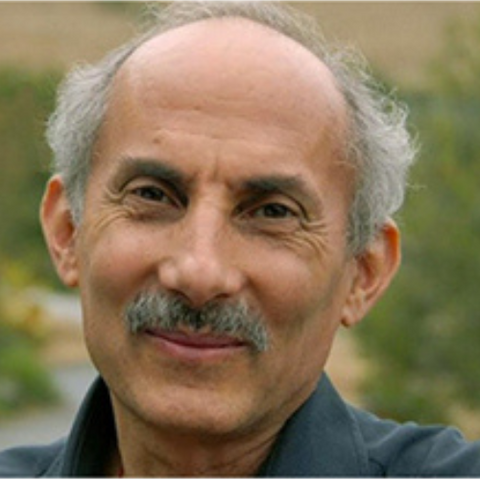
Jack Kornfield Author Photo
Jack Kornfield, PhD, trained as a Buddhist monk in Thailand, Burma, and India and has taught worldwide since 1974. He is one of the key teachers to introduce Buddhist mindfulness practices to the West. He holds a PhD in clinical psychology and is the co-founder of the Insight Meditation Society and of Spirit Rock Center in Woodacre, California. He has written more than a dozen books including The Wise Heart; A Path With HeartAfter the Ecstasy, the Laundry; and more.

ABOUT THE AUTHORDani Ferrara Blogger Author Photo

When she isn’t writing, playing music or teaching, Dani Ferrara blogs at Sounds True and researches the alchemy of healing. Explore her art at daniferrarapoet.com.

Jack Kornfield and Tara Brach: Big Insights: The Power...

Jack Kornfield and Tara Brach are two of the leading authorities on mindfulness and meditation in the West. Jack is the bestselling author and teacher widely credited with combining mindfulness with modern western psychology. Tara has been teaching meditation for more than four decades and is the author of Radical Acceptance and True Refuge. In this special edition of Insights at the Edge originally recorded in 2015, Tami Simon sits down with both Jack and Tara to discuss the big insights that form the foundation of mindfulness practice. They speak on the concept of awareness itself and how to distinguish “awareness” from “thinking.” Tara and Jack share some of the everyday benefits of a meditation practice, including personal clarity and more conscious relationships. Finally, Jack, Tara, and Tami have a frank conversation on how awareness training could affect the state of the world. (60 minutes)

Jack Kornfield: Difficult Times & Liberation

Jack Kornfield is a world-renowned teacher and one of the key figures to introduce Buddhist mindfulness practice to the West. He is the author of many books and audio programs, including The Wise Heart and After the Ecstasy, the Laundry. In this episode of Insights at the Edge, Jack and Tami Simon discuss Buddhist views of how best to navigate periods of difficulty and heartache. Jack reflects on four decades of personal meditation practice and how this has informed how he works with students. Jack and Tami also explore insights into the nature of suffering, whether or not it is possible to be liberated even in spite of our neuroses, and what is meant by ”the crystal of liberation.”
(49 minutes)

You Might Also Enjoy

Tara Brach: Choosing to Love in Perilous Times


What if the bravest thing you can do right now is refusing to close your heart?

This week, Tami Simon speaks with Tara Brach—beloved meditation teacher, clinical psychologist, and bestselling author of Radical Acceptance and Trusting the Gold—about her new inner workbook with Sounds True, The Courageous Heart: Choosing to Love in Perilous Times. At a moment when so many people feel pulled between despair and action, Tara offers a grounded path through both.

Join Tami and Tara to explore:

  • How to stay spiritually engaged—without burning out or spiritually bypassing the reality of suffering
  • The bodhisattva path as a living practice: what it means to be an “awakening being” in ordinary, everyday life
  • Why grief is often covered over by anger—and how moving through grief unlocks the capacity for love and action
  • The RAIN practice (Recognize, Allow, Investigate, Nurture) for working with armoring, fear, and excruciating pain in the heart
  • The shift from head space to heart space—and a brief guided meditation to experience it directly
  • How aspiration becomes the fuel for the spiritual path—and why Tara “sandwiches” her day with it
  • The practice of seeing basic goodness in others—including stories of Father Gregory Boyle and John Lewis that illuminate how this changes everything
  • What to do when you feel alone, disconnected, and uncertain where to start

Whether you’re overwhelmed by current events or searching for a more engaged and openhearted way to meet this moment, Tara Brach offers both the courage and the practical tools to begin.

Listen now and choose to love. →

This conversation offers genuine transmission—not just concepts about awakening, but the palpable presence of realized teachers exploring the growing edge of spiritual understanding together. Originally aired on Sounds True One.

Just One Question | Thích Nhất Hạnh: What Is the ...


What if the root cause of every social problem — starvation, ecological destruction, violence — wasn’t a broken system or a corrupt institution, but a collective state of unawareness? And what if the most powerful act of social change available to you today happened in your own mind?

That’s the territory Tami Simon explores in this remarkable exchange with Thich Nhat Hanh, the Vietnamese Zen master who founded Plum Village, pioneered engaged Buddhism, and became one of the most influential spiritual teachers of the twentieth century. Recorded more than two decades ago beneath a willow tree, this conversation feels astonishingly present.

Thích Nhất Hạnh’s answer to Tami’s question doesn’t point outward to policy or protest — it points inward, then ripples out. Individual awakening, he says, is collective awakening. Your practice is social action. Your light is contagious.

What you’ll hear in this exchange:

  • Why individual mindfulness practice is inseparable from social transformation
  • How collective enlightenment spreads — and how it already has, in ways we don’t always recognize
  • The role artists, teachers, economists, and politicians all play in the work of awakening
  • How to stay rooted in hope — and action — without being swallowed by despair

This is a short clip, but it carries the full weight of a lifetime of practice and teaching. It may change how you think about what you’re doing every time you sit down to meditate.

This clip is taken from the full Insights at the Edge conversation with Thích Nhất Hạnh. Find the complete interview in this feed or at soundstrue.com.

This episode is sponsored by Omega Institute, a global gathering hub for lifelong learning and spiritual exploration. Omega offers weekend workshops, special events, rest and rejuvenation retreats, professional training, online learning, and more. Discover what calls to you at eomega.org/true.

Lodro Rinzler: Basic Goodness in a World on Fire


How do you hold true to your convictions to be good in a world that’s on fire?

This week, Tami Simon speaks with Lodro Rinzler—Buddhist meditation teacher, founder of the Basic Goodness Collective, and author of seven books including the international bestseller The Buddha Walks into a Bar—about his new book, You Are Good. You Are Enough: Free Yourself from the Trap of Doubt and Return to Basic Goodness. Together, they move through the book’s three arcs: seeing the goodness in ourselves, in others, and in society itself.

Join Tami and Lodro to explore:

  • The concept of basic goodness—what it actually means, where it comes from in the Tibetan Buddhist tradition, and why you don’t have to be a Buddhist to recognize it in yourself
  • How capitalism profits from the lie of not-enoughness—and what it would mean to collectively stop believing it
  • The “trap of doubt”: that insidious inner voice that keeps us striving, comparing, and withholding self-acceptance
  • How to extend compassion toward people who drive us crazy—including world-threatening politicians—without excusing harm or collapsing into Pollyanna thinking
  • The parrot and the forest fire: a jataka tale about what it means to name what’s broken and show up anyway
  • Chögyam Trungpa Rinpoche’s teaching that seeing the phenomenal world as sacred is “the first and last practice of all”
  • A closing guided meditation to help listeners touch basic goodness in their own direct experience

Whether you’ve been carrying shame for decades or are simply exhausted by a world that feels on fire, Lodro offers something rare: not a pep talk, but a genuine shift in view.

Listen now and find your way back to what was always there. →

This conversation offers genuine transmission—not just concepts about awakening, but the palpable presence of realized teachers exploring the growing edge of spiritual understanding together. Originally aired on Sounds True One.