Led by Spirit

    —
December 29, 2015

Alice Walker is a poet, essayist, and New York Times-bestselling author who has won both the Pulitzer Prize and National Book Award. With Sounds True, Alice has released the audio program My Life As My Self, which vividly recounts her personal, professional, and spiritual journeys. In this episode of Insights at the Edge, Alice and Tami Simon speak on what it means to step into the line of fire and receive criticism for what one believes. In this vein, Alice explains her role as an activist in locations such as Gaza and the Congo—and how standing up for one’s principles brings an ineffable lightness to the heart. Finally, Alice and Tami discuss stepping into the role of a societal elder and why it is imperative that we reconnect with the whole of the Earth. (55 minutes)

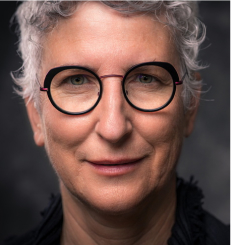
Photo of ()\

Winner of both the Pulitzer Prize and the American Book Award in 1983, Alice Walker is recognized as one of the major writers of our time. Her novels include The Third Life of Grange Copeland; Meridian; The Temple of My Familiar; and Possessing the Secret of Joy. The Color Purple spent more than a year on the New York Times bestseller list and was made into a film directed by Steven Spielberg. An essayist, poet, short story writer, and children's book author, Alice Walker has taught at Wellesley College, Brown, Sarah Lawrence College, and Harvard, and was an associate professor of English at Yale.

Author photo © ScottCampbell-2017

600 Podcasts and Counting…

Subscribe to Insights at the Edge to hear all of Tami’s interviews (transcripts available too!), featuring Eckhart Tolle, Caroline Myss, Tara Brach, Jack Kornfield, Adyashanti, and many more.

Meet Your Host: Tami Simon

Founded Sounds True in 1985 as a multimedia publishing house with a mission to disseminate spiritual wisdom. She hosts a popular weekly podcast called Insights at the Edge, where she has interviewed many of today's leading teachers. Tami lives with her wife, Julie M. Kramer, and their two spoodles, Rasberry and Bula, in Boulder, Colorado.

Photo © Jason Elias

Also By Author

Led by Spirit

Alice Walker is a poet, essayist, and New York Times-bestselling author who has won both the Pulitzer Prize and National Book Award. With Sounds True, Alice has released the audio program My Life As My Self, which vividly recounts her personal, professional, and spiritual journeys. In this episode of Insights at the Edge, Alice and Tami Simon speak on what it means to step into the line of fire and receive criticism for what one believes. In this vein, Alice explains her role as an activist in locations such as Gaza and the Congo—and how standing up for one’s principles brings an ineffable lightness to the heart. Finally, Alice and Tami discuss stepping into the role of a societal elder and why it is imperative that we reconnect with the whole of the Earth. (55 minutes)

In Conversation: Pema Chödrön and Alice Walker

What happens when a beloved spiritual teacher and a brilliant author come together to talk about the most tender, compelling aspects of our human experience? The following exchange, excerpted from Pema Chödrön and Alice Walker in Conversation, offers some unexpected answers—and an introduction to the healing practice that has transformed both women’s hearts and lives.

Alice Walker: About four years ago I was having a very difficult time. I had lost someone I loved deeply and nothing seemed to help. Then a friend sent me a tape set by Pema Chödrön called Awakening Compassion. I stayed in the country and I listened to you, Pema ,every night for the next year. I studied lojong mind training, and I practicedtonglen. It was tonglen, the practice of taking in people’s pain and sending out whatever you have that is positive that helped me through this difficult passage.

I want to thank you so much and to ask you a question. In my experience suffering is perennial; there is always suffering. But does suffering really have a use? I used to think there was no use to it, but now I think that there is.

Pema Chödrön: Is there any use in suffering? I think the reason I am so taken by these teachings is that they are based on using suffering as good medicine. It’s as if there’s a moment of suffering that occurs over and over and over again in every human life. What usually happens in that moment is that it hardens us; it hardens the heart because we don’t want any more pain.

But the lojong teachings say we can take that very moment and flip it. The very thing that causes us to harden and our suffering to intensify can soften us and make us more decent and kinder people. That takes a lot of courage. This is a teaching for people who are willing to cultivate their courage.

What’s wonderful about it is that you have plenty of material to work with. If you’re waiting for only the high points to work with, you might give up, but there’s an endless succession of suffering.

Alice Walker: I was surprised how the heart literally responds to this practice. You can feel it responding physically. As you breathe in what is difficult to bear, there is initial resistance, which is the fear, the constriction. That’s the time when you really have to be brave. But if you keep going and doing the practice, the heart actually relaxes. That is quite amazing to feel.

Pema Chödrön: When we start out on a spiritual path, we often have ideals we think we’re supposed to live up to. We feel we’re supposed to be better than we are in some way. But with this practice you take yourself completely as you are. Then ironically, taking in pain—breathing it in for yourself and all others in the same boat as you are—heightens your awareness of exactly where you’re stuck. Instead of feeling you need some magic makeover so you can suddenly become some great person, there’s much more emotional honesty about where you’re stuck.

Alice Walker: I remember the day I really got it that we’re not connected as human beings because of our perfection, but because of our flaws. That was such a relief.

Pema Chödrön: Rumi wrote a poem called “Night Travelers.” It’s about how all the darkness of human beings is a shared thing from the beginning of time, and how understanding that opens up your heart and opens up your world. You begin to think bigger. Rather than depressing you, it makes you feel part of the whole.

Alice Walker: … Everybody is in that boat sooner or later, in one form or other. It’s good to feel that you’re not alone.

Pema Chödrön: I want to ask you about joy. It’s all very well to talk about breathing in the suffering and sending out relief and so forth, but did you find any joy coming out of this practice?

Alice Walker: Oh, yes! Even just not being so miserable. Part of the joyousness was knowing we have help. It was great to know that this wisdom is so old. That means people have had this pain for a long time; they’ve been dealing with it, and they had the foresight to leave these practices for us to use. I’m always supported by spirits and ancestors and people in my tribe, whomever they’ve been and however long ago they lived. So it was like having another tribe of people, of ancestors, come to the rescue with this wisdom that came through you and your way of teaching.

Pema Chödrön: I think the times are ripe for this kind of teaching.

Alice Walker: Oh, I think it’s just the right medicine for today. You know, the other really joyous thing is that I feel more open, I feel more openness toward people in my world. It’s what you have said about feeling more at home in your world. I think this is the result of going the distance in your own heart—really being disciplined about opening your heart as much as you can.

pemaalice

You Might Also Enjoy

Just One Question | Osho Zenju Earthlyn Manuel: How Ca...

When we heard Osho Zenju Earthlyn Manuel share her story of a terrifying night she couldn’t breathe, it was eerily similar to a personal experience—and helpful too. We knew we had to share this moment from her conversation with Tami Simon on Insights at the Edge, in which she tells the story of the night she nearly died from a severe anaphylactic reaction and how she got through it not by searching for light at the end of the tunnel, but by staying present with the darkness itself. 

Zenju, a poet and ordained Zen Buddhist priest, challenges the instinct most of us have to fear darkness, rush out of it, or wait for a gift on the other side. Instead, she describes an experience of profound non-struggle — a moment of near-death where she wasn’t afraid, didn’t fight, and somehow found a way to keep breathing by trusting her body completely.

Key themes from this episode:

  • Why darkness — and even light — may be far more unknown and unknowable than we assume
  • How struggling against a frightening experience can make it worse, while staying present with it can be transformative
  • A firsthand account of surviving a full-blown anaphylactic shock without fear
  • Rethinking our cultural instinct to rush ourselves and others out of difficult emotional or physical states
  • Why “the absence of light” might be less about despair and more about a different kind of awakening

Taken from the full Insights at the Edge conversation with Zenju Earthlyn Manuel “Opening to Darkness,” which is also the title of her book. Find the complete interview in this feed or at soundstrue.com.

This episode is sponsored by Omega Institute, a global gathering hub for lifelong learning and spiritual exploration. Omega offers weekend workshops, special events, rest and rejuvenation retreats, professional training, online learning, and more. Discover what calls to you at eomega.org/true.

Michael A. Singer: The Pain That Ends All Pain


What if the pain you’ve been avoiding is actually the thing that could set you free?

This week, Tami Simon speaks with Michael A. Singer, beloved wisdom teacher, founder of the Temple of the Universe, and author of The Untethered Soul, The Surrender Experiment, Living Untethered, and his newest book, Wisdom Untethered: The Time for Questions. Drawn from 1,200 reader questions distilled into 200 essential ones, the conversation keeps returning to a single teaching Michael once received from a saint: “It’s the pain that ends all pain.”

Join Tami and Michael to explore:

  • Why “letting go” is an inner practice, not spiritual bypassing or passivity
  • What samskaras are, and why blocked energy, not memory, is the real source of inner darkness
  • Why the willingness to feel disturbance, rather than suppress it, is the actual path of purification
  • The practice of “falling behind” resistance, and other techniques for letting stuck energy move and release
  • The difference between preferences and fears, and why the Buddha named preference as the root of suffering
  • How to face real-world injustice with clarity instead of ego-driven reactivity
  • Why the true motive of spiritual practice is simply to let go of what’s in the way

Whether you’ve read The Untethered Soul a dozen times or are new to Michael’s teachings, this conversation offers both the practical tools and the felt experience of what it means to stop blocking the shakti that’s already flowing within you.

Listen now, and discover why the pain you’ve been running from might be exactly what ends it. →

This conversation offers genuine transmission, not just concepts about awakening, but the palpable presence of realized teachers exploring the growing edge of spiritual understanding together, and originally aired on Sounds True One.

Insights at the Edge is supported by Magic Hour, whose ceremonial teas carry more presence, beauty, and ritual into ordinary days. Magic Hour draws its leaves and botanicals from regenerative small farms around the world, in blends made to nourish the body and open the mind.

Explore their teas, matchas, and herbal rituals at clubmagichour.com. Get 20% off your first order with the code TRUE.

Just One Question | Connie Zweig: What Does It Mean to...

You know the object of your addiction is bad for you. So why can’t you stop? Dr. Connie Zweig has spent decades working with people who feel stuck in exactly that gap between knowing and changing.

Zweig is a retired Jungian therapist and the author of the newly republished Meeting the Shadow and Romancing the Shadow — the books that helped launch the shadow-work movement, and the reason a new generation is now discovering it on TikTok.

In this clip, she walks Tami through her method step by step, using the story of a client who couldn’t stop eating ice cream every night while waiting for an unavailable boyfriend to call. Awareness alone, Zweig explains, is never enough. You have to name the shadow character, trace it back to where it was first modeled, and uncover the valid need hiding underneath it.

What you’ll take away from this clip:

  • Why awareness of a compulsive pattern rarely changes it on its own
  • How to identify a “shadow character” through its recurring thoughts, feelings, and body sensations
  • Why every addictive or compulsive behavior is protecting a valid, hidden need
  • Zweig’s own story of discovering her “judge” shadow character — inherited from her father

This clip is taken from the full Insights at the Edge conversation with Connie Zweig: “Meeting One of the World’s Leading Experts on the Shadow.” 

This episode is sponsored by Omega Institute, a global gathering hub for lifelong learning and spiritual exploration. Omega offers weekend workshops, special events, rest and rejuvenation retreats, professional training, online learning, and more. Discover what calls to you at eomega.org/true.