Kelly Wendorf: Flying Lead Change and Our Evolutionary Kinship with Horses

    —
October 6, 2020

Kelly Wendorf: Flying Lead Change and Our Evolutionary Kinship with Horses

Kelly Wendorf October 6, 2020

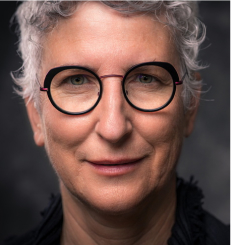
Kelly Wendorf is an executive and personal development certified master coach, educator, spiritual mentor, and socially responsible entrepreneur. She is the founding partner of EQUUS, a leadership development organization that works with high-performing individuals, groups, and thought leaders. Her evidence-based approach to creating conditions for breakthrough transformative learning has earned her worldwide acclaim. In this podcast, Kelly joins Tami Simon to talk about her new book, Flying Lead Change: 56 Million Years of Wisdom for Leading and Living, and the unique evolutionary relationship between human beings and horses. Kelly and Tami also discuss the five central values of equine culture (safety, connection, peace, joy, and freedom), the community we share with the larger natural world, and much more.

Kelly Wendorf is an executive and personal development certified master coach, educator, spiritual mentor, and socially responsible entrepreneur. She is founding partner of EQUUS, a leadership development organization that works with high-performing individuals, groups, and thought leaders. Her evidence-based approach to creating conditions for breakthrough transformative learning has earned her worldwide acclaim. She lives in Santa Fe, New Mexico. For more, visit equusinspired.com.

Author photo © Laura Cockfield

600 Podcasts and Counting…

Subscribe to Insights at the Edge to hear all of Tami’s interviews (transcripts available too!), featuring Eckhart Tolle, Caroline Myss, Tara Brach, Jack Kornfield, Adyashanti, and many more.

Meet Your Host: Tami Simon

Founded Sounds True in 1985 as a multimedia publishing house with a mission to disseminate spiritual wisdom. She hosts a popular weekly podcast called Insights at the Edge, where she has interviewed many of today's leading teachers. Tami lives with her wife, Julie M. Kramer, and their two spoodles, Rasberry and Bula, in Boulder, Colorado.

Photo © Jason Elias

Also By Author

Kelly Wendorf: Flying Lead Change and Our Evolutionary...

Kelly Wendorf is an executive and personal development certified master coach, educator, spiritual mentor, and socially responsible entrepreneur. She is the founding partner of EQUUS, a leadership development organization that works with high-performing individuals, groups, and thought leaders. Her evidence-based approach to creating conditions for breakthrough transformative learning has earned her worldwide acclaim. In this podcast, Kelly joins Tami Simon to talk about her new book, Flying Lead Change: 56 Million Years of Wisdom for Leading and Living, and the unique evolutionary relationship between human beings and horses. Kelly and Tami also discuss the five central values of equine culture (safety, connection, peace, joy, and freedom), the community we share with the larger natural world, and much more.

You Might Also Enjoy

Parker J. Palmer On The Undivided Life: Living With In...

Most people know the quiet exhaustion of being one version of themselves at work and another at home, though few have the language to describe why that gap feels so costly. Parker J. Palmer spent much of his career giving that experience a name, calling it the divided life, and spent decades more teaching people how to close it.

At Sounds True, we have built a library of more than 3,000 titles over four decades precisely because conversations like this one, patient and unhurried, are what our founder set out to preserve back when Sounds True was one woman and a tape recorder.

In this piece, we will look at Palmer’s background, his central idea, and what living undivided actually looks like day to day.

Key Takeaways:

  • A Familiar Tension: Learn why Parker Palmer named the gap between our inner and outer lives so precisely.
  • Soul Meets Role: Understand what it actually means to live in alignment with soul and role.
  • Integrity in Practice: See how small daily choices build toward what Palmer calls an undivided life.

Meet Your Sorrow with Kindness. Learn Practices for Self-Compassion with Sounds True.

Who Is Parker J. Palmer

Parker Palmer holds a PhD in sociology from the University of California, Berkeley, and has spent decades writing at the intersection of education, community, and spiritual life. He is the founder and senior partner emeritus of the Center for Courage & Renewal, an organization dedicated to helping people integrate their inner and outer lives across fields such as education, healthcare, and ministry. 

As a member of the Religious Society of Friends, Palmer draws heavily on Quaker practices of silence and reflection in both his writing and his teaching. His work sits comfortably among the many respected voices featured across our All Teachers & Authors page.

Defining the Undivided Life

Palmer’s term for wholeness, the undivided life, describes a state where a person’s inner convictions and outward actions are no longer at odds with each other. He has written candidly about his own experience with depression, describing it as part of what eventually taught him the difference between living from an authentic center and simply performing a role assigned by circumstance. Palmer often puts it plainly: before people can tell their lives what they want to do with them, they first have to listen to what their lives are already telling them.

The Courage to Teach and Beyond

Palmer’s influence in education runs especially deep. His book, Courage to Teach, argues that good teaching cannot be reduced to technique, since it flows instead from the identity and integrity of the teacher standing in front of a classroom. That idea proved durable enough that the Accreditation Council for Graduate Medical Education has given annual Courage to Teach and Courage to Lead awards to medical education program directors for more than twenty years. A few themes recur throughout this body of work:

  • Institutions often demand a version of us that conflicts with our deepest convictions.
  • Teaching, leadership, and caregiving all suffer when soul and role stay separated.
  • Reconnecting the two requires ongoing practice, not a single decision made once.

Build Relationships That Nourish And Sustain

Rosa Parks and the Undivided Life in Action

Palmer frequently points to Rosa Parks as the most vivid icon of the undivided life. Her decision to remain seated was not, in his reading, a sudden act of defiance but the result of a long inner alignment finally showing up in a single outward choice. This example matters because it moves Palmer’s idea out of the realm of private self-improvement and into something with real social weight. Readers drawn to this kind of everyday courage may find our Relationships collection worth exploring, since so much of living undivided plays out in how we show up for others.

Inner Life as the Foundation for Outer Work

Much of Palmer’s teaching insists that the inner life must come first, not as an escape from responsibility but as the only stable foundation for it. He argues that people who skip this inner work tend to burn out or grow cynical, mistaking exhaustion for commitment. 

Conversations exploring how contemplative practice supports sustained, meaningful work often appear on our Insights at the Edge Podcast, where guests describe similar patterns across very different fields.

Living with Integrity in Everyday Choices

Living with integrity, in Palmer’s framework, rarely announces itself with drama. It shows up in smaller decisions, choosing honesty over convenience, or admitting uncertainty rather than pretending confidence. He has written that our deepest calling is to grow into authentic selfhood regardless of whether it matches some external image of who we ought to be.

For readers who want to sit with these ideas through guided audio rather than reading alone, our Spirituality & Awakening collection carries Palmer’s own recorded teaching alongside work from many other voices exploring similar questions.

Authentic Leadership and Palmer’s Wider Legacy

The reach of authentic leadership, as Parker Palmer helped popularize, extends well beyond his own books. A 1998 national survey of 10,000 educators named him one of the 30 most influential senior leaders in higher education, and the Utne Reader later included him among 25 visionaries changing the world. His books, including Let Your Life Speak and A Hidden Wholeness, have sold more than two million copies and been translated into a dozen languages, numbers that reflect how widely this framework of soul and role has resonated across very different professions and life stages.

Center Yourself With Meditative Teachings by Sounds True

Final Thoughts

Parker Palmer’s teaching does not promise an end to the tension between who we are and what the world asks of us. It simply insists the tension is worth naming honestly, and worth working with rather than around. At Sounds True, our mission has always been to wake up the world, and Palmer’s decades of patient, grounded work are exactly the kind of teaching that mission was built to carry forward. We keep sharing his ideas because integrity, done quietly and consistently, tends to outlast anything louder. If his words landed for you, there is more of his teaching waiting in our library.

Frequently Asked Questions About Parker Palmer On The Undivided Life

What does Parker Palmer mean by an undivided life?

It means aligning inner convictions with outer actions so soul and role no longer conflict with each other.

Is Parker Palmer a religious teacher?

He is a Quaker whose teachings draw on that tradition, though his work reaches secular and interfaith audiences alike.

What is the Center for Courage & Renewal?

It’s a nonprofit Palmer co-founded to help people integrate their inner and outer lives across various professions.

What is Palmer’s most well-known book?

The Courage to Teach is widely considered his most influential work, especially within education.

Has Parker Palmer discussed his own struggles publicly?

Yes, he has written openly about depression and how it shaped his understanding of authentic living.

Why does Palmer use Rosa Parks as an example?

He views her choice as a moment of long inner alignment surfacing in a single undivided outward action.

Where can I learn more about Parker Palmer’s teachings?

Sounds True offers audio programs and books featuring Parker Palmer alongside other teachers on integrity and purpose.

Michelle Cassandra Johnson is an author, activist, spiritual teacher, racial equity consultant, and intuitive healer. She is the author of six books, including Skill in Action and Finding Refuge. Amy Burtaine is a leadership coach and racial equity trainer. With Robin DiAngelo, she is the coauthor of The Facilitator's Guide for White Affinity Groups. For more, visit https://www.michellecjohnson.com/wisdom-of-the-hive.

Chip Conley On Becoming A Modern Elder In The Workplac...

At fifty-two, having already built and sold a hospitality company, a man walked into a young tech startup and found himself the oldest person in nearly every room, reporting to someone twenty-one years his junior.

That experience became the foundation of Chip Conley’s most widely known idea. At Sounds True, we share the ways it reshaped how he, and eventually many others, thought about what older workers actually bring to a rapidly changing workplace.

In this piece, we’ll look at who Chip Conley is, what it means to become a modern elder, and how intergenerational workplace wisdom might matter more than most organizations currently realize.

Key Takeaways:

  • Age Can Be An Asset At Work: Chip Conley’s concept of the modern elder reframes older workers as sources of wisdom rather than obstacles to innovation.
  • Mentorship And Learning Can Go Both Ways: Intergenerational workplace wisdom flows most naturally when older and younger colleagues teach each other simultaneously.
  • Reinvention Doesn’t Require Starting Over Completely: Conley’s own career shows that past experience can transfer meaningfully into an entirely new industry.

From Hotel Rooms To Boardrooms: Chip Conley’s Career In Brief

Chip Conley spent decades in hospitality, founding Joie de Vivre Hospitality at just twenty-seven and eventually growing it into one of the largest boutique hotel operators in the country. Along the way, he became known as a leading voice at the intersection of business and psychology, authoring several books exploring meaning, purpose, and profit in the workplace. After selling the company, he could easily have stepped into a quieter chapter of his career.

Instead, he accepted an invitation from Airbnb cofounder Brian Chesky to join the company as head of global hospitality and strategy, stepping into a fast-moving tech culture that operated nothing like the industry he’d spent his career mastering. This unlikely pivot became the experience that shaped nearly everything he wrote and taught afterward. 

Center Yourself With Meditative Teachings by Sounds True

What Is A Modern Elder?

Conley coined the term modern elder to describe someone who brings decades of hard-won wisdom into a new environment while remaining genuinely willing to learn, particularly from people much younger than themselves. It’s a deliberate blend of two roles rarely paired together: the seasoned mentor and the humble intern.

This reframe pushes back directly against a common workplace assumption that older employees inevitably become less relevant as industries evolve. Conley’s own experience suggested the opposite could be true, provided the person was willing to trade ego for curiosity. Listeners who want to hear him describe this concept firsthand can find a full conversation on our Insights at the Edge podcast, recorded with Sounds True founder Tami Simon.

Chip Conley’s Unlikely Chapter At Airbnb

Conley has described his early days at Airbnb candidly, admitting he initially felt out of place surrounded by unfamiliar technology and workplace norms shaped by a much younger generation. Rather than resist the discomfort, he leaned into it, treating his own steep learning curve as valuable data rather than a source of embarrassment. He has spoken about journaling his weekly accomplishments during this period, a small practice that helped him track genuine progress even when the day-to-day felt disorienting.

At the same time, his decades of hospitality experience proved essential to helping a fast-growing platform mature into a globally trusted brand. This dual position, learning constantly while also mentoring the company’s leadership, became the lived example behind everything he later wrote about modern elders in the workplace.

Awaken Something Greater Within You. Find Teachings that Speak to You With Sounds True.

Building Intergenerational Workplace Wisdom On Purpose

Intergenerational workplace wisdom doesn’t develop automatically just because employees of different ages happen to work together. Conley suggests it requires intentional structures, mentorship relationships, honest conversations about generational assumptions, and a culture that treats experience and fresh perspective as equally valuable rather than competing forces.

Organizations that get this right often discover something Conley calls collective effervescence, a shared energy that emerges when people across different life stages feel genuinely engaged with each other’s contributions rather than competing over relevance. This kind of culture doesn’t happen by accident. It requires leadership willing to model curiosity and humility themselves, rather than simply asking employees to demonstrate those qualities. Readers interested in exploring these ideas further may also value related teachings available through Sounds True One, which offers access to a wide range of programs on purposeful work and personal growth.

Why Every Workplace Needs Both Mentors And Interns

Conley’s modern elder framework ultimately rests on holding two roles simultaneously, something most workplace cultures rarely encourage anyone to attempt.

The Mentor Role

This involves offering hard-earned judgment, emotional steadiness, and pattern recognition built from years of experience navigating situations younger colleagues may not have encountered yet.

The Intern Mindset

This means staying genuinely curious about new tools, norms, and perspectives, even when it requires admitting confusion or asking questions that might otherwise feel uncomfortable to voice. Conley’s continued writing on this balance is explored further throughout our Chip Conley author collection.

Meet Your Sorrow with Kindness. Learn Practices for Self-Compassion with Sounds True.

Final Thoughts

Chip Conley’s journey suggests that age and relevance aren’t necessarily in conflict, provided older workers remain willing to learn as openly as they teach. Becoming a modern elder isn’t about clinging to authority or fading quietly into the background. It’s about bringing both wisdom and humility into the same room, often at the same time, and trusting that the resulting exchange benefits everyone involved.

Frequently Asked Questions About Chip Conley

Who is Chip Conley?

Chip Conley is a hospitality entrepreneur, founder of Joie de Vivre Hospitality, and former head of global hospitality and strategy at Airbnb, known for coining the term modern elder.

What does modern elder mean?

A modern elder is someone who brings decades of experience into a new environment while remaining genuinely open to learning from younger colleagues, blending the roles of mentor and intern.

Why did Chip Conley join Airbnb at fifty-two?

He accepted an invitation from cofounder Brian Chesky to bring his hospitality expertise into a fast-growing tech company, despite having no prior experience in the tech industry himself.

What is intergenerational workplace wisdom?

It refers to the shared knowledge and perspective that emerges when employees across different generations intentionally mentor and learn from one another within an organization.

What is collective effervescence?

Collective effervescence describes a shared sense of energy and engagement that develops when people across different backgrounds and life stages feel genuinely connected to shared work.

Can older workers really benefit from acting like interns?

Conley’s experience suggests that approaching new environments with humility and curiosity, rather than assumed authority, can make older workers more effective and better respected.

Is the modern elder concept only relevant to older workers?

No. Younger workers benefit as well, since intergenerational mentorship works best when both older and younger employees see each other as valuable teachers.

Where can I hear Chip Conley discuss becoming a modern elder directly?

Sounds True’s Insights at the Edge podcast features a full conversation between Chip Conley and Tami Simon exploring what it means to become a modern elder at work.

Michelle Cassandra Johnson is an author, activist, spiritual teacher, racial equity consultant, and intuitive healer. She is the author of six books, including Skill in Action and Finding Refuge. Amy Burtaine is a leadership coach and racial equity trainer. With Robin DiAngelo, she is the coauthor of The Facilitator's Guide for White Affinity Groups. For more, visit https://www.michellecjohnson.com/wisdom-of-the-hive.

How To Lead With Purpose Without Burning Out

Leading with purpose can make work more meaningful, but constant responsibility can also drain a leader’s energy. Learning how to lead a business with purpose without burnout means pursuing meaningful goals while protecting your well-being.

At Sounds True, we have shared transformational teachings since 1985, helping people bring greater awareness, purpose, and wisdom into their lives and work. Our decades of experience inform our approach to conscious leadership and meaningful business.

In this piece, we will discuss purpose-driven leadership, avoiding leadership burnout, and practical ways to lead with purpose sustainably.

Key Takeaways:

  • Purpose in Practice: Meaningful leadership connects organizational values with everyday decisions, relationships, and long-term priorities.
  • Sustainable Leadership: Healthy boundaries, realistic capacity, and shared responsibility can help leaders pursue meaningful goals over time.
  • Well-Being Matters: Supporting personal well-being can strengthen a leader’s ability to remain engaged, thoughtful, and connected to the work.

Center Yourself With Meditative Teachings by Sounds True

What Purpose Driven Leadership Looks Like in Business

Purpose-driven leadership means letting a clear sense of purpose guide priorities, decisions, and communication. It also shapes how people are treated. By listening to different perspectives and making thoughtful choices, leaders can create a culture where employees see how their work contributes to a shared purpose. 

How Purpose Driven Leadership Supports Sustainable Growth

Sustainable growth requires leaders to consider the health of the organization alongside financial and operational goals. Purpose-driven leadership provides a framework for making choices that support long-term value instead of continually pursuing short-term results at the expense of people.

Leaders can strengthen this approach by developing greater awareness of how their decisions affect employees, customers, communities, and themselves. Exploring resources such as Sounds True’s conscious business courses offers perspectives on bringing greater awareness and purpose into professional life.

Avoiding Leadership Burnout While Pursuing Meaningful Goals

Avoiding leadership burnout means recognizing that commitment does not require constant availability. Setting boundaries, delegating responsibilities, and adjusting priorities can give leaders time to recover while staying connected to their purpose.

Awaken Something Greater Within You. Find Teachings that Speak to You With Sounds True.

Practical Strategies for Avoiding Leadership Burnout

Small, consistent practices can make leadership more sustainable. Reviewing priorities, delegating tasks, and setting realistic workloads can reduce pressure. Leaders should also recognize signs of burnout, such as fatigue or difficulty concentrating, and make time for rest, reflection, and supportive relationships.

Balancing Purpose Driven Leadership With Personal Well-Being

Purpose-driven leadership is more sustainable when personal well-being remains a priority. By setting boundaries, sharing responsibilities, and respecting their capacity, leaders can pursue meaningful work without sacrificing their health or sense of purpose. 

Meet Your Sorrow with Kindness. Learn Practices for Self-Compassion with Sounds True.

Final Thoughts

Purposeful leadership is most sustainable when well-being remains part of the work. By setting clear priorities, sharing responsibility, and respecting personal limits, leaders can stay connected to what matters while building a healthier approach to long-term impact.

The path is not a straight line; there will be seasons of intensity and seasons of renewal. What distinguishes leaders who endure is not the absence of difficulty, but the presence of practices and self-awareness that help them navigate it. When leaders model sustainable habits, they permit their teams to do the same. Protecting your well-being is not a distraction from your purpose. It is what makes your purpose possible.

Frequently Asked Questions About Leading With Purpose Without Burning Out

Can a business purpose change as the company grows?

Yes. A business purpose can evolve as the organization gains experience, serves new communities, or develops a clearer understanding of the impact it wants to make.

How can leaders tell if their purpose is influencing business decisions?

Leaders can review whether major decisions consistently reflect the organization’s stated values, priorities, and intended contribution rather than relying on purpose only in messaging.

Does purpose driven leadership work for small businesses?

Yes. Small businesses can apply purpose-driven leadership by connecting everyday decisions, customer relationships, and workplace practices to clearly defined values.

How often should leaders revisit their business purpose?

Leaders can revisit their purpose during periods of significant growth, organizational change, or shifting priorities to confirm that it remains relevant and meaningful.

Can a strong business purpose improve employee engagement?

A clear purpose can help employees understand the significance of their contributions. Engagement also depends on factors such as communication, trust, recognition, and working conditions.

What is the difference between business purpose and company culture?

Business purpose explains why an organization exists beyond its immediate operations. Company culture reflects the behaviors, expectations, and relationships that shape how people work together.

How can leaders communicate purpose without sounding performative?

Connect purpose to specific decisions and actions. Employees and customers are more likely to understand a company’s values when they can see how those values influence actual practices.

Should business purpose influence hiring decisions?

Purpose can help leaders identify candidates who understand and support the organization’s values while still considering experience, skills, perspective, and role requirements.

Can avoiding leadership burnout improve decision-making?

Adequate recovery and manageable demands can give leaders more space for reflection and thoughtful judgment, especially when navigating complex or consequential decisions.

How can leaders measure progress toward a business purpose?

Leaders can identify indicators connected to their mission, such as employee experience, customer outcomes, community impact, responsible practices, or other relevant measures.

Michelle Cassandra Johnson is an author, activist, spiritual teacher, racial equity consultant, and intuitive healer. She is the author of six books, including Skill in Action and Finding Refuge. Amy Burtaine is a leadership coach and racial equity trainer. With Robin DiAngelo, she is the coauthor of The Facilitator's Guide for White Affinity Groups. For more, visit https://www.michellecjohnson.com/wisdom-of-the-hive.