Sound Healing & Meditation: How Vocal Toning Can Deepen Your Practice

    —
January 12, 2023

Have you ever sat down to meditate and found it nearly impossible to relax and find the stillness you were hoping for?  There’s a little known sound healing secret that may just help you to overcome the initial restlessness when starting your practice.

The secret can actually be found in the opposite of silence, by using the sound of your voice and vocal toning to ground yourself, calm your nervous system, and clear your mind. 

How Sound Deepens the Silence

Chanting, mantra, and vocal toning have long been practiced in tandem with silent sitting meditation by both ancient and modern yogis and buddhists.  You may have experienced this yourself in a yoga class meditation that starts with three AUM’s.  There are different reasons why various types of voice are incorporated into the practice, but when it comes to preparing for silence, knowing this one concept can make all the difference.  

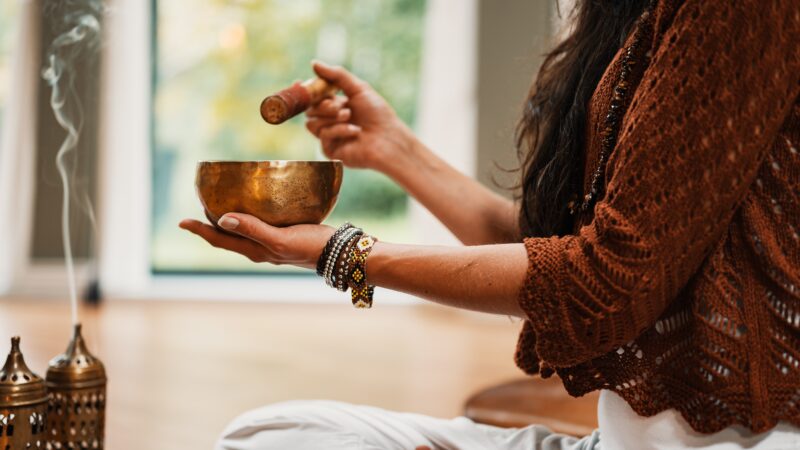
When we begin a practice by filling our bodies and our meditation environment with sound, whether that be our own voice, the sound of a singing bowl, gong, harmonium, or other instrument, it creates contrast with silence when the sound is gone.  There is a big difference in how we experience silence when the silence is preceded by sound, and once the sound is taken away, the silence can be experienced much more deeply.  

Peace Is A Stable Consistent Vibration

The foundational practice here is to use your own voice to create a stable consistent vibration within your body.  By repeatedly toning a vowel sound such as Eh, Ah, Oh, Uh, or AUM, on the same note, your body and mind will automatically begin to relax and become more calm and focused.  The vagus nerve, which runs through your neck, is right next to your vocal chords, and the effect of the voice on nervous system regulation is well studied.  

Vocal toning and humming increases nitric oxide, which can reduce blood pressure, slow the heart rate, and slow brain wave speeds from high functioning beta to slower meditative states of alpha, theta, delta.  You can even literally sing yourself to sleep (I know because I’ve done this myself by accident while toning!)

Singing IS Breathwork – Breathing IS Sound Healing  

Sound healing is not just about audible frequencies, but also about rhythms and the frequency of rhythms within the body.  The breath is one of the most fundamental rhythms we can access for reducing stress and restoring peace within the body.  

It is well known that extending an exhale longer than the length of the inhale will slow down the heart rate and calm the nervous system.  When we’re singing, toning, humming, and extending the length of that sound, we are essentially extending the length of the exhale to be longer than the inhale.  

This is why singing IS breathwork taken to the next level with the sound of your voice.  While it may seem a bit awkward at first, your body LOVES the sound of your own voice, and you can nourish your body in profound ways using the gift of this internal instrument.

How to Practice Vocal Toning Before Meditation

Go ahead and get into your meditative position, whether sitting or laying down.  For best results, I recommend at least 3-5 minutes of toning or humming to really give yourself time to get lost in the sound.  

  1. Using your voice, find a note that feels comfortable in the moment.  This will likely be a lower note in your normal speaking range, or maybe even slightly lower than your normal speaking voice.  It should be a note that doesn’t create any strain or tension in your voice, and can allow you to relax while maintaining the pitch.  
  2. Find a vowel sound that feels good to you.  For the most grounding and calming effect use Ah, Oh, Uh, or a combination of all three such as AUM (Ah, Oh, Um).  For more “clearing effect” EE, and Eh sounds can be effective for releasing stuck and negative thoughts or emotions.  Humming with the mouth closed is also a very effective method that can be thought of as singing down into your own body by keeping the sound inside rather than projecting it out.  
  3. At the beginning of each cycle of toning, take a long deep breath through the nose to receive as much breath as you can, and then begin to let the sound emerge from your voice in a slow and controlled manner.  Try to extend the length of your sound by releasing only enough breath to create the sound.  You may find that after a few rounds of toning you are able to take in more breath and extend your sound for longer periods of time.  
  4. If you feel any self-consciousness, awkwardness, embarrassment coming up, this is totally normal, even for experienced singers!  Let it be an opportunity for letting go of any self-judgment and try to stick with the practice.  You will find that these feelings will soon go away and will be replaced with feelings of peace and even the experience of timelessness.
  5. See if you can feel the subtle vibrations traveling through your body.  You will likely find that you can feel the sound traveling all the way to your toes, fingers, the hair on your head, various parts of your skin.  Just notice where the sound is traveling.
  6. To take things even deeper, bring in the emotions/intentions of gratitude or love and visualize those positive feelings riding on the sound waves from your voice to every cell of your body, filling yourself with beautiful vibrations.  
  7. Practice for 3-5 minutes or however long feels most comfortable to you, and when you are ready, let your final sounds dissipate into silence.  Continue to breathe normally and take notice of how much deeper the silence now feels.  You may continue your silent meditation practice from there for however long you desire.

Finding Your Homenote and Balancing Energy with the Voice

If you’re enjoying the use of your voice for stress relief and for starting your meditation practice, there are ways to get even more intentional with the voice.  We have the amazing ability to clear energetic blockages, restore balance to energetic deficiencies, and return to a state of peace using our own voices.  You can learn more on my website 1:11 Sound Healing.  

Nicholas Penn

Nicholas Penn, 1:11 Sound Healing

Nicholas Penn is a life-long musician, producer, and sound therapist with a certification in Sound Healing through Globe Sound Healing Institute.  Nicholas is passionate about educating and empowering individuals to access the gift of their own voice to restore peace and improve wellness for themselves and loved ones.  He is also a producer for Sounds True and leads strategy and content creation for the Sounds True YouTube channel and Eckhart Tolle Spotify Channel.  Learn more at 111soundhealing.com   

Author Info for Nicholas Penn Coming Soon

Also By Author

Sound Healing & Meditation: How Vocal Toning Can ...

Have you ever sat down to meditate and found it nearly impossible to relax and find the stillness you were hoping for?  There’s a little known sound healing secret that may just help you to overcome the initial restlessness when starting your practice.

The secret can actually be found in the opposite of silence, by using the sound of your voice and vocal toning to ground yourself, calm your nervous system, and clear your mind. 

How Sound Deepens the Silence

Chanting, mantra, and vocal toning have long been practiced in tandem with silent sitting meditation by both ancient and modern yogis and buddhists.  You may have experienced this yourself in a yoga class meditation that starts with three AUM’s.  There are different reasons why various types of voice are incorporated into the practice, but when it comes to preparing for silence, knowing this one concept can make all the difference.  

When we begin a practice by filling our bodies and our meditation environment with sound, whether that be our own voice, the sound of a singing bowl, gong, harmonium, or other instrument, it creates contrast with silence when the sound is gone.  There is a big difference in how we experience silence when the silence is preceded by sound, and once the sound is taken away, the silence can be experienced much more deeply.  

Peace Is A Stable Consistent Vibration

The foundational practice here is to use your own voice to create a stable consistent vibration within your body.  By repeatedly toning a vowel sound such as Eh, Ah, Oh, Uh, or AUM, on the same note, your body and mind will automatically begin to relax and become more calm and focused.  The vagus nerve, which runs through your neck, is right next to your vocal chords, and the effect of the voice on nervous system regulation is well studied.  

Vocal toning and humming increases nitric oxide, which can reduce blood pressure, slow the heart rate, and slow brain wave speeds from high functioning beta to slower meditative states of alpha, theta, delta.  You can even literally sing yourself to sleep (I know because I’ve done this myself by accident while toning!)

Singing IS Breathwork – Breathing IS Sound Healing  

Sound healing is not just about audible frequencies, but also about rhythms and the frequency of rhythms within the body.  The breath is one of the most fundamental rhythms we can access for reducing stress and restoring peace within the body.  

It is well known that extending an exhale longer than the length of the inhale will slow down the heart rate and calm the nervous system.  When we’re singing, toning, humming, and extending the length of that sound, we are essentially extending the length of the exhale to be longer than the inhale.  

This is why singing IS breathwork taken to the next level with the sound of your voice.  While it may seem a bit awkward at first, your body LOVES the sound of your own voice, and you can nourish your body in profound ways using the gift of this internal instrument.

How to Practice Vocal Toning Before Meditation

Go ahead and get into your meditative position, whether sitting or laying down.  For best results, I recommend at least 3-5 minutes of toning or humming to really give yourself time to get lost in the sound.  

  1. Using your voice, find a note that feels comfortable in the moment.  This will likely be a lower note in your normal speaking range, or maybe even slightly lower than your normal speaking voice.  It should be a note that doesn’t create any strain or tension in your voice, and can allow you to relax while maintaining the pitch.  
  2. Find a vowel sound that feels good to you.  For the most grounding and calming effect use Ah, Oh, Uh, or a combination of all three such as AUM (Ah, Oh, Um).  For more “clearing effect” EE, and Eh sounds can be effective for releasing stuck and negative thoughts or emotions.  Humming with the mouth closed is also a very effective method that can be thought of as singing down into your own body by keeping the sound inside rather than projecting it out.  
  3. At the beginning of each cycle of toning, take a long deep breath through the nose to receive as much breath as you can, and then begin to let the sound emerge from your voice in a slow and controlled manner.  Try to extend the length of your sound by releasing only enough breath to create the sound.  You may find that after a few rounds of toning you are able to take in more breath and extend your sound for longer periods of time.  
  4. If you feel any self-consciousness, awkwardness, embarrassment coming up, this is totally normal, even for experienced singers!  Let it be an opportunity for letting go of any self-judgment and try to stick with the practice.  You will find that these feelings will soon go away and will be replaced with feelings of peace and even the experience of timelessness.
  5. See if you can feel the subtle vibrations traveling through your body.  You will likely find that you can feel the sound traveling all the way to your toes, fingers, the hair on your head, various parts of your skin.  Just notice where the sound is traveling.
  6. To take things even deeper, bring in the emotions/intentions of gratitude or love and visualize those positive feelings riding on the sound waves from your voice to every cell of your body, filling yourself with beautiful vibrations.  
  7. Practice for 3-5 minutes or however long feels most comfortable to you, and when you are ready, let your final sounds dissipate into silence.  Continue to breathe normally and take notice of how much deeper the silence now feels.  You may continue your silent meditation practice from there for however long you desire.

Finding Your Homenote and Balancing Energy with the Voice

If you’re enjoying the use of your voice for stress relief and for starting your meditation practice, there are ways to get even more intentional with the voice.  We have the amazing ability to clear energetic blockages, restore balance to energetic deficiencies, and return to a state of peace using our own voices.  You can learn more on my website 1:11 Sound Healing.  

Nicholas Penn

Nicholas Penn, 1:11 Sound Healing

Nicholas Penn is a life-long musician, producer, and sound therapist with a certification in Sound Healing through Globe Sound Healing Institute.  Nicholas is passionate about educating and empowering individuals to access the gift of their own voice to restore peace and improve wellness for themselves and loved ones.  He is also a producer for Sounds True and leads strategy and content creation for the Sounds True YouTube channel and Eckhart Tolle Spotify Channel.  Learn more at 111soundhealing.com   

You Might Also Enjoy

Just One Question | Craig Foster: Why am I Afraid of N...


We’ve all felt it: the excitement of heading out into nature, followed almost immediately by “wow, that’s a lot of bugs” energy. Turns out, that’s not just you being an urban dweller — it’s a genuine evolutionary paradox, and this week’s guest has spent his whole career living inside it.

Craig Foster is the filmmaker and naturalist behind My Octopus Teacher, and in this episode he tackles a question Tami poses about her own experience: why can she melt into a deep, connected feeling about nature from the safety of meditation, but feel completely terrified and separate the moment she’s actually standing in a wilderness with wolves, cougars, or sharks nearby?

Craig’s answer reframes the whole thing. He explains that we’re each carrying millions of years of “wild” memory, hardwired into who we are, while our conscious, modern selves have only had a few generations to adjust to industrial life. The fix isn’t a heroic leap into the deep wild — it’s small, steady reconnection.

A few takeaways from Craig’s answer:

  • We’re designed for wildness — our discomfort with it is a mismatch, not a flaw
  • Reconnection starts small: get to know the trees, insects, and animals right around your house
  • Comfort with the wild builds faster than you’d expect — sometimes in a matter of months
  • Even one backyard animal can teach you something profound about yourself and the natural world

If this got you thinking about your own relationship with the wild, you’ll want to hear the whole conversation — Craig and Tami go even deeper into what it means to live an amphibious life, split between our tame and wild selves.

Taken from the full Insights at the Edge conversation with Craig Foster. Find the complete interview in this feed or at soundstrue.com.

This episode is sponsored by Omega Institute, a global gathering hub for lifelong learning and spiritual exploration. Omega offers weekend workshops, special events, rest and rejuvenation retreats, professional training, online learning, and more. Discover what calls to you at eomega.org/true.

What Is Reverse Meditation? A Counterintuitive Path to...

Many people begin meditation hoping to quiet the mind, reduce stress, or create a sense of inner peace. Reverse meditation takes a different approach by encouraging people to turn toward the thoughts, emotions, and experiences they usually avoid. Instead of escaping discomfort, the practice invites awareness of it. Although this approach may feel unfamiliar at first, it can lead to deeper self-understanding, emotional honesty, and presence.

At Sounds True, we have spent decades sharing wisdom from leading spiritual teachers, meditation practitioners, and contemplative voices through books, audio programs, podcasts, and transformational learning experiences. Our mission has always been to support meaningful inner growth through teachings that are grounded, compassionate, and accessible.

Here, we discuss what reverse meditation is, how it differs from traditional mindfulness practices, and how it can support awakening through awareness, shadow work, and emotional openness.

Key Takeaways:

  • Emotional Awareness: Reverse meditation encourages people to stay present with difficult emotions instead of avoiding them.
  • Spiritual Insight: The practice helps uncover unconscious patterns that shape fear, identity, and emotional reactions.
  • Inner Freedom: Reverse meditation and shadow meditation support greater compassion, honesty, and emotional resilience.

Discover the Power of Daily Meditation and Inner Stillness

What Is Reverse Meditation and Why Is It So Counterintuitive?

Reverse meditation challenges the привычка to avoid discomfort during spiritual practice. Instead of trying to quiet difficult emotions or achieve constant calm, practitioners learn how to stay present with fear, uncertainty, and emotional tension. Thoughts and uncomfortable feelings are not treated as distractions but as part of the practice itself.

This counterintuitive approach encourages greater self-awareness and emotional honesty. Rather than chasing ideal spiritual states, reverse meditation focuses on presence, openness, and a deeper relationship with inner experience.

The Origins of Reverse Meditation in Spiritual and Contemplative Traditions

Reverse meditation draws from contemplative traditions that emphasize awareness without resistance. Although the language surrounding the practice may vary, the central principle remains similar across many teachings. Freedom develops when people stop struggling against their inner experience.

Ancient Teachings on Turning Toward Experience

Many contemplative traditions teach practitioners to observe thoughts and emotions without immediately reacting to them. In Tibetan Buddhism and nondual teachings, awareness is seen as spacious enough to include discomfort, confusion, and emotional intensity.

Rather than viewing difficult emotions as obstacles, these traditions suggest they can lead to deeper understanding. Reverse meditation reflects this approach by encouraging awareness of the emotions and patterns people usually avoid.

Why Modern Practitioners Are Drawn to Reverse Meditation

Many people are drawn to meditation practices that feel emotionally honest and grounded. While traditional mindfulness can be meaningful, some practitioners realize they are using meditation to avoid discomfort instead of understanding it.

Reverse meditation creates space for vulnerability, uncertainty, and difficult emotions without judgment. Rather than pretending discomfort does not exist, the practice encourages a more open and honest relationship with inner experience.

Andrew Holecek Reverse Meditation Teachings on Awareness and Awakening

The growing conversation around reverse meditation has been influenced by Andrew Holecek, whose teachings combine Tibetan Buddhism, dream yoga, and nondual contemplative wisdom. His work often focuses on the patterns people use to avoid discomfort and reinforce identity.

Reversing Habitual Patterns of Avoidance

Andrew Holecek reverse meditation teachings emphasize how deeply conditioned people are to seek comfort and avoid emotional pain. Fear, anxiety, and uncertainty are usually treated as problems that need immediate resolution.

Reverse meditation interrupts this pattern. Instead of escaping difficult emotions, practitioners learn how to remain present with them long enough to observe what exists beneath the surface. Fear may reveal vulnerability. Anger may uncover grief. Emotional resistance may expose attachment to control.

The practice does not encourage emotional overwhelm. Instead, it develops the capacity to remain aware without immediately turning away from discomfort.

Awakening Through Openness and Curiosity

A central insight within reverse meditation is that awakening begins through openness rather than control. Many people spend years trying to perfect themselves spiritually while remaining disconnected from unresolved emotional experience.

Reverse meditation shifts that orientation. Curiosity replaces judgment. Awareness becomes less focused on fixing experience and more focused on understanding it directly.

This creates a different relationship with meditation itself. Practitioners stop measuring progress according to how peaceful they feel. Instead, they begin developing the ability to remain present with changing emotional states without becoming consumed by them.

Over time, this openness can create greater emotional resilience, compassion, and clarity.

How a Reverse Meditation Practice Changes Your Relationship With Fear

Fear often becomes one of the central doorways within a reverse meditation practice. Most people instinctively move away from emotional discomfort as quickly as possible. Reverse meditation asks practitioners to slow down and examine that impulse instead of following it automatically.

Learning to Stay Present With Discomfort

One of the first things practitioners notice is how quickly the mind reaches for distraction. Restlessness, analysis, and mental storytelling often appear when vulnerability begins surfacing.

Reverse meditation encourages practitioners to remain present with those reactions rather than immediately escaping them. Fear is no longer treated as something that must disappear before peace can emerge.

This shift can feel uncomfortable at first. Yet many practitioners discover that difficult emotions become less overwhelming once they are approached with awareness instead of resistance.

Fear as a Gateway to Deeper Insight

Fear often protects deeper emotional experiences that have not been fully acknowledged. Beneath anxiety, there may be grief, loneliness, uncertainty, or attachment to identity and control.

A reverse meditation practice creates space to observe these hidden layers more clearly. Instead of reacting automatically, practitioners begin recognizing how much emotional energy is spent avoiding vulnerability.

This awareness can gradually transform the relationship with fear itself. Fear becomes less of an enemy and more of a signal pointing toward areas that require compassion, honesty, and attention.

Awaken Your Inner Healing Power: Your Wellness Journey Starts Now

Why Counterintuitive Meditation Challenges Traditional Mindfulness

Counterintuitive meditation often challenges familiar ideas about what meditation is supposed to accomplish. Many people begin meditation expecting calmness, focus, or emotional relief. Reverse meditation introduces another possibility by encouraging awareness of all experience, including discomfort.

  • Traditional mindfulness practices often emphasize concentration on the breath or bodily sensations, while counterintuitive meditation opens awareness toward thoughts, emotions, and emotional tension.
  • Counterintuitive meditation encourages practitioners to notice resistance itself rather than immediately trying to eliminate uncomfortable feelings.
  • Emotional difficulty is not viewed as failure within the practice. Difficult emotions become opportunities for deeper awareness and self-understanding.
  • The practice shifts attention away from spiritual achievement and toward emotional honesty.
  • Practitioners learn how to remain present with uncertainty instead of constantly seeking resolution or control.
  • Counterintuitive meditation encourages greater compassion by helping people recognize the shared vulnerability within human experience.

Although this approach may feel challenging, many practitioners eventually develop a more grounded relationship with meditation. Awareness becomes less dependent on achieving ideal states and more connected to direct experience as it unfolds naturally.

The practice reminds people that awakening does not require perfection. It begins through willingness to remain present with reality in all its complexity.

The Connection Between Shadow Meditation and Reverse Meditation

Shadow meditation and reverse meditation encourage awareness of the hidden parts of the self, including fear, grief, shame, anger, and emotional pain. These emotions often surface during meditation through thoughts, physical sensations, or emotional reactions that are usually avoided.

Instead of suppressing those experiences, reverse meditation invites practitioners to meet them with compassion and curiosity. Over time, this process can reduce emotional resistance and create a greater sense of wholeness, honesty, and self-understanding.

Common Challenges That Arise During a Reverse Meditation Practice

A reverse meditation practice can feel emotionally intense, especially for people who are accustomed to avoiding vulnerability through distraction or control. Difficult emotions may become more visible once awareness slows down and becomes more attentive.

One common challenge involves expectations. Many people believe meditation should always feel peaceful or calming. Reverse meditation asks practitioners to reconsider that assumption. Emotional discomfort does not necessarily mean something is wrong. In many cases, it reflects a growing willingness to encounter inner experience honestly.

Impatience can also become part of the process. People often want immediate transformation or clarity, yet reverse meditation unfolds gradually through consistent awareness and self-compassion.

Support can be valuable during this process. Teachers, contemplative communities, and trusted spiritual resources can help practitioners navigate emotionally complex experiences with steadiness and care.

How Reverse Meditation and Shadow Meditation Support Inner Freedom

Reverse meditation and shadow meditation encourage a more compassionate relationship with difficult emotions and inner experiences. Instead of resisting fear, vulnerability, or uncertainty, practitioners learn how to remain present with them in a more open and grounded way.

Over time, this awareness can create greater emotional freedom and self-understanding. Rather than escaping pain or discomfort, reverse meditation supports a deeper sense of clarity, steadiness, and connection with human experience.

Discover how your mind really works

Final Thoughts

Reverse meditation offers a different relationship with awareness. Instead of moving away from discomfort, practitioners learn how to meet fear, uncertainty, and emotional complexity with openness and compassion. Through this counterintuitive practice, difficult experiences become opportunities for greater clarity rather than obstacles to awakening.

By turning gently toward the parts of ourselves we often resist, reverse meditation and shadow meditation can support a deeper sense of presence, honesty, and inner freedom.

Frequently Asked Questions About What Is Reverse Meditation?

Can reverse meditation help with emotional overwhelm?

Reverse meditation may help people develop a healthier relationship with overwhelming emotions by encouraging awareness instead of immediate avoidance. The practice focuses on observing emotional experiences with patience and compassion.

Is reverse meditation suitable for daily practice?

Yes. Many practitioners incorporate reverse meditation into daily routines through short periods of self-inquiry, mindful observation, or reflective awareness. Consistency is often more important than duration.

Does reverse meditation require silence?

Not necessarily. While quiet environments can support concentration, reverse meditation can also involve awareness during ordinary daily experiences, emotional reactions, or moments of discomfort.

How is reverse meditation different from positive thinking?

Positive thinking often focuses on replacing difficult thoughts with encouraging ones. Reverse meditation does not attempt to replace or fix emotions. Instead, it encourages awareness of experience exactly as it appears.

Can reverse meditation improve self-awareness?

Yes. The practice can deepen self-awareness by helping practitioners notice unconscious habits, emotional patterns, and reactions that often operate automatically.

Is reverse meditation connected to nondual teachings?

Many reverse meditation teachings share similarities with nondual traditions because both emphasize direct awareness and reduced identification with thoughts and emotions.

What role does the body play in reverse meditation?

The body often becomes an important source of awareness during reverse meditation. Emotional tension, fear, and stress frequently appear as physical sensations that practitioners learn to observe more consciously.

Can reverse meditation support spiritual growth without religion?

Yes. Although some teachings draw from Buddhist and contemplative traditions, reverse meditation can be practiced in a nonreligious way focused on awareness, emotional honesty, and inner reflection.

Why do some people resist reverse meditation at first?

The practice challenges the instinct to avoid discomfort. Remaining present with difficult emotions can initially feel unfamiliar, especially for people accustomed to distraction or emotional suppression.

How long does it take to understand reverse meditation?

Understanding develops gradually through experience rather than intellectual study alone. Many practitioners notice subtle shifts in awareness over time as they continue practicing with openness and consistency.


Michelle Cassandra Johnson is an author, activist, spiritual teacher, racial equity consultant, and intuitive healer. She is the author of six books, including Skill in Action and Finding Refuge. Amy Burtaine is a leadership coach and racial equity trainer. With Robin DiAngelo, she is the coauthor of The Facilitator's Guide for White Affinity Groups. For more, visit https://www.michellecjohnson.com/wisdom-of-the-hive.

Compassion as a Superpower: How Loving-Kindness Medita...

Compassion is not only an emotional response but also a skill that can grow through practice. During moments of stress or emotional exhaustion, compassion meditation offers a way to respond with greater patience, balance, and connection. Practices like loving kindness meditation and metta meditation are also gaining attention for their potential impact on emotional resilience and overall well-being.

At Sounds True, we have spent decades sharing the teachings of meditation practitioners, neuroscientists, psychologists, and spiritual teachers devoted to emotional healing and inner transformation.

Below, we discuss compassion meditation benefits, how loving kindness meditation may influence the brain, and the role self and other compassion can play in emotional well-being and human connection.

Key Takeaways:

  • Brain and Compassion: Compassion meditation may support emotional regulation and strengthen neural pathways connected to empathy and resilience.
  • Everyday Emotional Health: Loving kindness meditation can help reduce self-criticism, stress, and emotional reactivity in daily life.
  • Relationships and Connection: Practicing self and other compassion may encourage healthier communication, patience, and deeper human connection.

Awaken Your Inner Healing Power: Your Wellness Journey Starts Now

Compassion Meditation Benefits for Emotional and Physical Well-Being

Compassion is more than a feeling. It is a practice that helps us relate to ourselves and others with greater patience and care. Many people begin meditation to manage stress or emotional overwhelm, yet over time, compassion practices can also reshape how we respond to pain, conflict, and connection.

By encouraging emotional awareness and presence, compassion meditation helps build resilience in everyday life, from relationships and work to the way we speak to ourselves during difficult moments.

What Loving Kindness Meditation Reveals About Human Connection

Loving kindness meditation is one of the most accessible compassion practices because it begins with a simple intention: wishing well-being for ourselves and others. Rooted in the Buddhist tradition of metta, this practice helps soften habitual patterns of judgment and separation while strengthening feelings of care and interconnectedness.

The Foundations of Loving Kindness Meditation

In loving kindness meditation, practitioners silently repeat phrases of goodwill such as “May I be safe,” “May I be healthy,” or “May I live with ease.” These phrases are first directed inward before gradually expanding outward toward loved ones, strangers, and even difficult people.

While the practice appears simple, many people notice how challenging it can feel to offer compassion to themselves. This awareness is part of the process. Loving kindness meditation gently reveals the places where the heart has become guarded and invites greater openness over time.

Why Connection Matters for Emotional Health

Human beings are wired for connection. Research continues to show that supportive relationships influence emotional well-being, physical health, and longevity. Compassion meditation helps nurture these connections by increasing empathy and reducing reactive emotional patterns.

As people deepen their practice, they often report feeling less isolated in their struggles. Compassion creates space for shared humanity. Instead of seeing suffering as a personal failure, we begin recognizing that vulnerability belongs to everyone.

How Compassion Meditation Brain Research Is Changing Neuroscience

Modern neuroscience has opened an important conversation around how meditation changes the brain. Studies focused on compassion practices suggest that intentional emotional training can influence neural pathways connected to empathy, emotional regulation, and attention.

What Compassion Meditation Brain Studies Show

Brain imaging research has found that compassion meditation activates areas associated with emotional processing and positive social connection. Some studies also suggest increased activity in regions linked to empathy and caregiving responses.

This matters because the brain remains adaptable throughout life. Neuroplasticity allows repeated experiences to strengthen certain pathways over time. Compassion meditation becomes a form of mental training that supports healthier emotional habits rather than reinforcing fear or self-criticism.

Emotional Regulation and Nervous System Support

Many people carry tension without fully noticing it. Compassion meditation helps create a sense of emotional steadiness by teaching us to meet difficult emotions with awareness and care rather than avoidance. Over time, this practice may reduce emotional reactivity and help people feel more grounded, patient, and balanced.

Metta Meditation Benefits for Stress, Anxiety, and Emotional Healing

Metta meditation benefits extend into many areas of emotional health because the practice directly addresses patterns of fear, shame, and disconnection. Rather than forcing positivity, metta creates a supportive inner environment where healing becomes more possible.

Reducing Self-Criticism Through Metta Practice

For many people, the harshest voice they encounter is their own inner dialogue. Metta meditation helps interrupt cycles of self-judgment by introducing language rooted in care and acceptance.

Over time, these repeated phrases begin influencing how people relate to themselves during moments of failure or uncertainty. Self-compassion does not remove accountability. Instead, it creates the emotional safety needed for growth and honest reflection.

How Compassion Supports Recovery From Emotional Exhaustion

Stress and burnout often leave people emotionally numb or disconnected from their inner lives. Compassion practices can help restore emotional sensitivity without becoming overwhelming.

By slowing down and intentionally practicing care, individuals often reconnect with feelings they had learned to avoid. This process may feel tender at first, yet many practitioners find that compassion gives them greater strength to face life with openness rather than withdrawal.

Discover how your mind really works

Understanding Self and Other Compassion Through Meditation Practice

Compassion meditation helps strengthen awareness of both personal suffering and the struggles carried by others. Over time, this awareness creates meaningful shifts in how people relate within families, friendships, and communities.

  • Self and other compassion encourages emotional honesty without shame.
  • Compassion practices help people listen more fully during difficult conversations.
  • Meditation can reduce reactive patterns rooted in fear or defensiveness.
  • Greater empathy often leads to healthier relationship boundaries.
  • Practicing compassion regularly may support forgiveness and reconciliation.
  • Compassion helps people remain connected without absorbing every emotional burden around them.

As these qualities deepen, compassion becomes less of an isolated meditation exercise and more of a lived experience. Small moments of patience, understanding, and kindness begin shaping everyday interactions in lasting ways.

Loving Kindness Meditation Practices That Support Lasting Change

Consistency matters more than perfection in meditation practice. Many people believe they need long periods of silence or complete emotional calm before beginning. In reality, loving kindness meditation often works best when approached gently and without pressure.

A simple daily practice of five or ten minutes can gradually reshape emotional habits. Some practitioners begin each morning with a few compassionate phrases before moving into the rest of the day. Others return to the practice during stressful moments as a reminder to pause and reconnect with themselves.

The heart responds to repetition. Just as self-criticism becomes stronger through constant reinforcement, compassion also grows stronger through practice. Over time, these small moments accumulate into meaningful emotional change.

The Link Between Compassion Meditation Brain Activity and Resilience

Resilience is often misunderstood as emotional toughness or the ability to avoid pain. Compassion meditation offers another perspective. True resilience develops through the capacity to remain present with difficulty while responding with care instead of fear.

Research surrounding compassion meditation brain activity suggests that emotional resilience can be cultivated intentionally. Meditation appears to strengthen regions associated with emotional regulation while reducing patterns connected to chronic stress responses. Although the science continues evolving, many practitioners already recognize these changes through lived experience.

People who engage regularly in compassion practices often describe recovering more quickly from emotional setbacks. They may still experience grief, frustration, or uncertainty, yet these emotions become easier to navigate without spiraling into overwhelm. Compassion creates inner steadiness that supports healing rather than resistance.

How Metta Meditation Benefits Daily Relationships and Inner Awareness

One of the most meaningful aspects of metta meditation benefits is the way the practice extends beyond formal meditation sessions. Compassion begins influencing ordinary interactions, including how we respond to stress, disagreement, disappointment, and emotional vulnerability.

People often notice subtle changes first. Conversations may feel less reactive. Moments of frustration may soften more quickly. There can also be a growing awareness of shared humanity, especially during difficult encounters. Compassion does not require perfection or constant emotional warmth. Instead, it asks us to remain present enough to respond with care when it matters most.

Over time, loving kindness meditation can deepen inner awareness in profound ways. Many practitioners begin recognizing emotional patterns they previously ignored or suppressed. This awareness creates opportunities for healing because it replaces automatic judgment with curiosity and gentleness.

Compassion becomes a practice of remembering that every person, including ourselves, carries unseen struggles. From that understanding, relationships often become more honest, patient, and grounded in genuine connection.

Discover the Power of Daily Meditation and Inner Stillness

Final Thoughts

Compassion is not a fixed trait reserved for a few people. It is a practice that can be strengthened over time through patience, awareness, and intentional care. Loving kindness meditation offers a way to reconnect with ourselves and others with greater openness, even during difficult moments.

As research into compassion meditation brain activity continues to grow, many people are also experiencing its effects firsthand through deeper emotional resilience, healthier relationships, and a stronger sense of connection. Small moments of compassion practiced consistently can create meaningful shifts that extend far beyond meditation itself.

Frequently Asked Questions About Compassion Meditation Benefits

What is the difference between compassion meditation and loving kindness meditation?

Compassion meditation focuses on recognizing suffering and responding with care, while loving kindness meditation centers on offering goodwill and positive intentions toward ourselves and others. The practices often overlap and support one another.

Can compassion meditation help with loneliness?

Many people find that compassion practices reduce feelings of isolation by strengthening emotional connection and shared humanity. The practice can help create a greater sense of belonging and openness toward others.

Is loving kindness meditation connected to Buddhism?

Yes, loving kindness meditation comes from Buddhist teachings and is traditionally known as metta practice. Today, people from many backgrounds use the practice for emotional well-being and mindfulness.

How long does it take to notice compassion meditation benefits?

Some people notice emotional shifts after a few sessions, while deeper changes often develop through consistent practice over time. Even short daily sessions may gradually support emotional awareness and resilience.

Can beginners practice loving kindness meditation?

Yes, loving kindness meditation is often recommended for beginners because the practice is simple and flexible. There is no need for previous meditation experience to begin.

Why do some people feel emotional during compassion meditation?

Compassion practices can bring attention to emotions that have been ignored or suppressed. Feeling emotional during meditation is common and may reflect the process of reconnecting with inner experiences gently and honestly.

Does compassion meditation require repeating phrases?

Many forms of compassion meditation include repeated phrases, but some practices focus on visualization, breath awareness, or emotional reflection instead. Different approaches work for different people.

Can compassion meditation improve workplace relationships?

Compassion practices may help people respond with greater patience, empathy, and emotional steadiness during stressful interactions, which can support healthier communication at work.

Is there scientific evidence behind compassion meditation brain research?

Research in neuroscience continues to examine how compassion practices affect emotional processing, empathy, and stress regulation in the brain. Findings suggest meditation may influence neural activity connected to emotional well-being.

Can self and other compassion exist at the same time?

Yes, self-compassion and compassion for others often strengthen together. Learning to respond kindly to personal struggles can make it easier to extend understanding and care toward other people as well.

Michelle Cassandra Johnson is an author, activist, spiritual teacher, racial equity consultant, and intuitive healer. She is the author of six books, including Skill in Action and Finding Refuge. Amy Burtaine is a leadership coach and racial equity trainer. With Robin DiAngelo, she is the coauthor of The Facilitator's Guide for White Affinity Groups. For more, visit https://www.michellecjohnson.com/wisdom-of-the-hive.

Leave a Reply

Your email address will not be published. Required fields are marked *