

Author Info for Lise Van Susteren, MD Coming Soon

Stacey Colino

STACEY COLINO is an award-winning writer specializing in health and psychology. Her work appears in U.S. News & World Report, Prevention, Family Circle, Parade, and Parents. She lives in Chevy Chase, MD.

Photo © Judy Licht

Also By Author

A Doctor’s Simple Tips on How to Get Better Sleep

Thanks to groundbreaking research, we have recently learned that every cell has its own timekeeper that can be thought of as a local clock. Deep within the brain, in the hypothalamus, lies a master clock that regulates all the local clocks, making sure that each one is set to the same time. This complex, coordinated process is in sync with the alternating cycles of day and night and with all the degrees of changing light that occur in a 24-hour period as Earth rotates on its axis. Called the “circadian rhythm”—from the Latin words circa, which means “going around,” and diem, meaning “day”—this internal process regulates the human body’s sleep-wake cycle, among many other functions. 

The master clock (think of it as circadian rhythm central) sends hormonal and nerve signals throughout the body, synchronizing the cells’ clocks to the day-night, light-dark cycle of life. On a continuous basis, the master clock can determine what time it is based on messages from photoreceptor cells in the retina that register light conditions outside and report these to the brain via specialized pathways. 
Meanwhile, the cellular clocks keep local time, making sure that various activities locally are timed right and are appropriately coordinated with other cells and organs. This is why, for example, key enzymes are produced at certain times, blood pressure and body temperature are controlled, hormones are secreted, the gut microbiome is populated with the right balance of bacteria, and gut motility is appropriate for the hour. 

Living in harmony with the way we have evolved brings physiological and emotional balance, creating a good fit between our bodies and minds, between what we’re doing and how we’re designed to function. Honoring our body’s natural rhythms helps stabilize our mood, become more resistant to stress, feel less physical pain, and generally feel and function better physically and mentally. It’s an essential step in cooling and calming emotional inflammation. 

The following are some ways you can adjust your habits so that they support your body’s inherent rhythms: 

  • Put yourself on a sleep schedule. Establish a regular sleep-wake schedule so that you go to bed at approximately the same time each night and wake up at the same time each morning. It’s fine to vary your bedtime by an hour or two occasionally, but don’t sleep in more than an extra hour on the weekends (unless you’re sick); otherwise, you will end up disrupting your sleep pattern for the next night. 
  • Identify your slumber sweet spot. Most adults need seven to nine hours of sleep per night to feel and function at their best. Once you figure out how much you need, determine what time you need to get up in the morning and work backward to set an appropriate bedtime; or, you can identify what time of night you typically feel sleepy and then set a wake-up time accordingly. 
  • Brighten your mornings. When you get up in the morning, expose yourself to bright, natural light to stimulate alertness, enhance your mood, and help calibrate your circadian rhythms. Take a brisk walk outside or have breakfast in a sunny spot. If you struggle to reset your internal clock to the “awake” setting in the morning, consider buying a commercial light box that emits 10,000 lux, which mimics a bright, sunny day. Sitting in front of such a light box for 30 minutes in the morning, perhaps while you have breakfast or read the newspaper or newsfeeds, has been found to stimulate alertness and improve mood. Alternatively, you could opt for a desk-lamp-style light box for your desk at work. 
  • Adjust your indoor lighting. Fascinating research has found that office workers who are exposed to greater amounts of light in the morning fall asleep more quickly at night. They also have better sleep quality and better moods, including less depression and stress, than those who are exposed to low light in the morning. 
  • Darken your evenings. There is another good reason to make sure that your bedroom (or wherever you sleep) is dark: When people are exposed to light during the night, their total daily melatonin production is suppressed dramatically, by as much as 50 percent. In other words, that nighttime light exposure throws the body’s 24-hour hormone production schedule off-kilter. It’s also wise to install a dimmer switch on the overhead light in the bathroom—or use a dim night-light—so that bright vanity lights don’t stimulate your senses and alertness while you’re taking care of bathroom business before hitting the sack or if you get up during the night.

Ultimately, honoring your body’s natural rhythms requires taking back control of your nights and days. It’s about putting time on your side and making conscious choices about the way you want to live so that you can restore your internal equilibrium, physiologically and psychologically. 

Yes, changing your behavior requires giving up the patterns you chose, consciously or not, in the past, and making the switch does take some effort and resolve. But if you make it a priority to stop upsetting your body’s internal rhythms and start living in sync with your body’s inherent needs, the payoffs will be well worth the effort. Your mood is likely to end up on a more even keel, and your energy will increase. Your physical health will probably improve and your emotional equilibrium will, too. Think of it this way: By respecting your body’s rhythms and doing whatever you can to maintain their regularity, you’ll be resetting your internal emotional thermostat, which will improve the way you react to and deal with the stresses and strains that are unavoidable in our modern world.

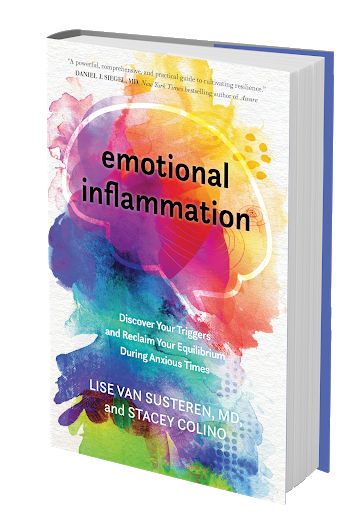
This is an excerpt from Emotional Inflammation: Discover Your Triggers and Reclaim Your Equilibrium During Anxious Times by Lise Van Susteren, MD, and Stacey Colino.

A Music Playlist for Better Sleep

To help you achieve the best night of rest, we recommend falling asleep to this relaxing music playlist, Music for Better Sleep, available through Sounds True on Spotify.


Lise Van Susteren, MD, previously served as a clinical professor of psychiatry at Georgetown University. She is a go-to commentator about anxiety and trauma for television (including CNN, Good Morning America, NBC, VOA, and Fox News), radio (NPR, Minnesota Public Radio, and others), print media (including the Washington Post, the Wall Street Journal, Newsweek, the Huffington Post, and CQ Magazine), and online outlets (such as Live Science, U.S. News & World Report, Global Health NOW, and many others).

As a thought leader and activist, Dr. Van Susteren addresses issues related to trauma and emotional inflammation through her roles at the Earth Day Network and Physicians for Social Responsibility. She is considered an expert in the psychological effects of climate change.

Stacey Colino is an award-winning writer specializing in health and psychology. In addition to her work as a book collaborator, she is a regular contributor to U.S. News & World Report and AARP.org. Her work has appeared in the Washington Post Health section, Newsweek, Parade, Cosmopolitan, Real Simple, Health, Prevention, Woman’s Day, Harper’s Bazaar, Parents, and Good Housekeeping, among other magazines and newspapers.

Buy your copy of Emotional Inflammation at your favorite bookseller!

Sounds True | Amazon | Barnes & Noble | Bookshop
You Might Also Enjoy

Stephen Cope on How Yoga Changes Your Brain and Emotio...

Have you ever noticed how quickly your mind reacts to stress, emotion, or even a passing thought? Many of these responses feel automatic, as if they happen before we have a chance to choose. Yoga offers another way of meeting these moments. Through breath, movement, and attention, we begin to slow down and notice what is happening within us. With practice, this awareness creates space, allowing for more clarity, steadiness, and a deeper connection to our emotional life.

At Sounds True, we have spent decades sharing the living wisdom of transformational teachers in their own authentic voice. Our work is rooted in making these teachings accessible and meaningful for everyday life. Through conversations with teachers like Stephen Cope, we bring forward insights that bridge ancient practice with modern understanding of the mind.

Here, we look at how yoga brain science shapes emotional health through Stephen Cope’s teachings on awareness, neuroplasticity, and mental well-being.

Key Takeaways:

  • Neuroplasticity in Action: Yoga brain science shows that repeated awareness and breathwork can reshape neural pathways over time.
  • Emotional Awareness: Yoga’s psychological benefits include recognizing and responding to emotions with greater clarity and steadiness.
  • Mind-Body Connection: Practices rooted in yoga and mental health strengthen the relationship between physical sensations and emotional experience.

Awaken Your Inner Healing Power with Guided Practices by Sounds True

Stephen Cope on Yoga Brain Science and Emotional Transformation

In conversation with Stephen Cope, yoga brain science is not a general idea, but something lived and felt in the body and mind. Cope draws from decades of practice to highlight a simple truth: the brain is shaped by where we place our attention. Through yoga, we begin to notice our patterns, how reactions form, and how awareness can gently shift them.

Many of us move through life on autopilot, reacting quickly to stress and emotion. Yoga invites a slower pace. It encourages us to pause, feel, and stay present. Over time, this creates space between impulse and action, allowing for new ways of responding.

This transformation is not about becoming someone else. It is about becoming more aware of our own experience. Yoga brain science helps us understand this process, but the real change happens through practice, moment by moment.

Yoga Neuroplasticity: How Practice Rewires the Brain

Yoga offers a direct experience of neuroplasticity, showing us that change is not only possible but natural. Through steady practice, the brain begins to reorganize in response to new patterns of attention and presence.

Repetition and Awareness in Yoga Neuroplasticity

In yoga, repetition is not about perfection. It is about returning. Each time we bring awareness back to the breath or body, we are strengthening pathways in the brain that support presence. These moments may seem small, yet they accumulate in meaningful ways. Over time, the familiar pull of distraction or reactivity begins to shift.

This is how yoga neuroplasticity unfolds. The brain learns from experience. When we repeatedly choose awareness, the brain adapts to that choice. Patterns of calm, clarity, and steadiness become more accessible. What once required effort begins to feel more natural.

From Conditioned Patterns to Conscious Choice

Many of our emotional habits are deeply conditioned. They arise quickly and often without conscious awareness. Yoga creates an opportunity to see these patterns more clearly. As awareness deepens, we begin to recognize the early signs of reaction. A tightening in the body, a shift in breath, a familiar thought pattern.

In that recognition, there is a pause. That pause is significant. It allows for choice. Instead of being carried forward by habit, we can respond with intention. Cope points to this as a turning point in practice. It reflects a movement toward greater freedom, supported by the brain’s inherent capacity to change.

Yoga Psychological Benefits for Emotional Awareness and Resilience

The psychological benefits of yoga are grounded in the development of awareness and the cultivation of a steady relationship with inner experience. Through practice, we begin to understand our emotions in a more direct and embodied way.

Developing Emotional Awareness Through Practice

Yoga invites us to listen closely to what is happening within. Emotions are not abstract ideas. They are felt experiences that move through the body. By paying attention to sensations, breath, and subtle shifts, we begin to recognize emotional states as they arise.

This awareness changes our relationship with emotion. Instead of being swept away, we learn to stay present. We can name what is happening without becoming overwhelmed by it. This creates a sense of clarity that supports emotional balance.

Building Resilience Through Presence

Resilience is often thought of as strength in the face of difficulty. In yoga, resilience is cultivated through presence. When discomfort arises in practice, we are invited to stay with it, to observe it without immediately trying to change it.

This builds capacity. Over time, we develop the ability to remain steady even when emotions are intense. This steadiness carries into daily life. Challenges are still present, yet our way of meeting them shifts. There is more space, more patience, and a deeper sense of grounding.

Stephen Cope on Yoga and Mental Health in Daily Life

For Stephen Cope, yoga and mental health are inseparable. Practice is not limited to a specific time or place. It is woven into the fabric of daily living.

Attention as a Tool for Mental Health

Attention shapes experience. When attention is scattered or pulled into repetitive thought patterns, the mind can feel unsettled. Yoga trains attention in a gentle and consistent way. By returning to the breath or body, we begin to anchor awareness in the present moment.

This shift has a meaningful impact on mental health. Patterns of rumination begin to soften. The mind becomes less caught in loops of worry or self-judgment. There is a growing sense of stability that comes from being present with what is here.

Integrating Practice Into Daily Living

Integration is at the heart of yoga. The insights gained in practice are meant to be lived. This can be as simple as pausing before responding in a conversation or noticing the breath during a moment of stress.

These small moments matter. They reinforce the same patterns of awareness cultivated during practice. Over time, yoga becomes less about doing and more about being. Mental health is supported not through isolated efforts, but through a continuous relationship with awareness.

Discover the Hidden Power of Daily Meditation

How Yoga Brain Science Supports Mental Health and Well-Being

Yoga brain science offers a grounded understanding of how practice supports well-being on multiple levels. It reflects the connection between body, mind, and attention, showing how each influences the other.

  • Yoga supports the regulation of the nervous system by encouraging slower, more conscious breathing
  • It brings awareness to habitual thought patterns, allowing for a different relationship with them
  • It creates space for emotional processing by inviting presence rather than avoidance
  • It strengthens the capacity for focused attention, which supports clarity and stability
  • It deepens the connection between body and mind, helping us recognize early signals of stress

These elements work together to support mental health in a way that feels both practical and accessible. As practice continues, many people notice a shift toward greater balance. There is a growing sense of ease in how emotions are experienced and expressed.

This is not about removing difficulty from life. It is about developing the capacity to meet life as it unfolds. Yoga brain science helps us understand how this capacity is built through consistent, mindful engagement with our inner world.

Exploring Yoga Neuroplasticity and Long-Term Habit Change

Habit change is often seen as effort-driven, but yoga offers another approach. Through yoga neuroplasticity, habits are shaped and reshaped by attention and repetition.

Each moment of awareness, whether noticing the breath or a reactive thought, supports new patterns. These small shifts build over time, creating lasting change.

As practice continues, old habits loosen, and the mind becomes more flexible, allowing for greater freedom in how we respond.

The Psychological Benefits of Yoga for Stress and Emotional Balance

Stress is part of life, but yoga can change how we relate to it. By grounding attention in the body and breath, we create an anchor that helps us stay steady during intense or uncertain moments.

Instead of reacting automatically, we learn to remain present. This builds a sense of balance where emotions can move without overwhelming us. Over time, this steadiness becomes more natural, rooted in a deeper connection to awareness.

Integrating Yoga and Mental Health Practices Through Stephen Cope’s Teachings

Through the teachings of Stephen Cope, yoga and mental health become a lived practice grounded in both tradition and modern insight. He encourages approaching experience with curiosity rather than judgment, creating space for meaningful change.

Through attention, breath, and presence, yoga offers tools to meet ourselves more fully and support greater clarity, connection, and emotional well-being.

Learn How your Mind Really Works with Sounds True

Final Thoughts

Yoga brain science reminds us that meaningful change begins with awareness. Through the teachings of Stephen Cope, we see how steady practice can reshape the way we meet our thoughts, emotions, and daily experiences. At Sounds True, we hold this work as a living process, one that invites patience, presence, and a deeper relationship with ourselves over time.

Frequently Asked Questions About Yoga, Brain Science, and Emotional Health

What is yoga brain science in simple terms?

Yoga brain science refers to how yoga practices like breathing, movement, and meditation influence brain function. It explains how consistent practice can shape attention, emotional patterns, and overall mental well-being.

How long does it take for yoga to affect the brain?

Changes can begin with a single session, especially in stress reduction. However, lasting shifts in brain patterns and emotional responses typically develop through consistent practice over weeks or months.

Can yoga replace therapy for mental health concerns?

Yoga can support mental health, but it is not a replacement for therapy. It works well alongside professional care by helping individuals build awareness, regulate emotions, and stay grounded.

Is yoga effective for anxiety and overthinking?

Yes, many people find yoga helpful for anxiety. Practices that focus on breath and body awareness can calm the nervous system and reduce cycles of overthinking.

Do you need physical flexibility to gain mental benefits from yoga?

No. The mental and emotional benefits of yoga come from awareness and attention, not physical ability. Anyone can experience these benefits regardless of flexibility.

What type of yoga is best for brain and emotional health?

Slower, mindful practices such as Hatha, restorative, or gentle flow yoga tend to support emotional regulation and awareness. The key factor is consistency and presence, not intensity.

How does breathing in yoga affect the brain?

Breathing practices influence the nervous system by signaling safety to the body. Slow, steady breathing can reduce stress responses and support clearer thinking.

Can yoga help with emotional burnout?

Yoga can help individuals reconnect with their body and internal state, which is often disconnected during burnout. This reconnection supports recovery and emotional balance over time.

Is meditation necessary to experience yoga’s brain benefits?

Meditation can deepen the effects, but it is not required. Many of the benefits come from mindful movement and breath awareness practiced during yoga itself.

How often should someone practice yoga for mental health support?

Even a few minutes daily can be helpful. Regular, consistent practice tends to be more beneficial than occasional longer sessions.

Michelle Cassandra Johnson is an author, activist, spiritual teacher, racial equity consultant, and intuitive healer. She is the author of six books, including Skill in Action and Finding Refuge. Amy Burtaine is a leadership coach and racial equity trainer. With Robin DiAngelo, she is the coauthor of The Facilitator's Guide for White Affinity Groups. For more, visit https://www.michellecjohnson.com/wisdom-of-the-hive.

Richard Schwartz on IFS: Why There Are No Bad Parts In...

Many people experience moments of inner conflict. One part may want to take action, while another feels cautious or protective. Internal Family Systems offers a way to understand these experiences by recognizing that the mind is made up of different parts, each shaped by life experiences and emotional needs.

At Sounds True, we are dedicated to sharing transformational teachings from leading spiritual teachers in their authentic voices. Through our books, audio programs, and podcasts, we help bring wisdom from teachers such as Richard Schwartz to people seeking deeper self-understanding and personal growth.

Here, we discuss Richard Schwartz’s perspective on Internal Family Systems and the idea that there are no bad parts within us.

Key Takeaways:

  • The Core Idea of IFS: Internal Family Systems explains the mind as a system of inner parts that influence thoughts, emotions, and behaviors.
  • The Meaning of No Bad Parts: Richard Schwartz teaches that every part develops for a reason and often serves a protective role within a person’s inner system.
  • The Purpose of Parts Work Therapy: IFS therapy helps people build awareness and compassion toward their inner parts, supporting emotional healing and self-understanding.

Learn How your Mind Really Works with Sounds True

What Is Internal Family Systems and How Does It Work

Internal Family Systems is a therapeutic model developed by Richard Schwartz that views the mind as made up of different inner parts, each with its own perspective, emotions, and intentions. Instead of seeing these parts as problems, IFS therapy understands them as meaningful aspects of our inner world that developed to help us navigate life. Many people recognize this experience in moments of inner conflict, when one part of them wants to move forward while another part feels afraid or hesitant. In parts work therapy, these inner dynamics are approached with curiosity and compassion. By learning to listen to and understand these parts, people can begin to relate to themselves with greater awareness and balance.

Richard Schwartz and the Origins of Internal Family Systems

Internal Family Systems grew out of the work of family therapist Richard Schwartz. While listening to clients describe their inner struggles, he noticed that many spoke about different parts of themselves with distinct voices and roles.

How Richard Schwartz Developed IFS Therapy

During his clinical work in the 1980s, Schwartz began inviting clients to speak directly with these inner parts. He observed that the parts often had clear intentions and were trying to help in some way. This insight became the foundation of IFS therapy.

The Insight Behind “No Bad Parts”

Over time, Schwartz realized that even the most difficult reactions were protective in nature. This understanding led to the core idea in Internal Family Systems that there are no bad parts, only parts that need understanding and care.

The Core Idea Behind IFS Therapy and Inner Parts

Internal Family Systems teaches that the mind contains different parts, each shaped by life experiences. IFS therapy views these parts as meaningful aspects of the inner system that try to help a person cope, protect themselves, or manage emotional pain.

How Inner Parts Form in IFS Therapy

In parts work therapy, inner parts often develop during difficult or overwhelming experiences. These parts adopt roles that help a person handle stress, avoid pain, or maintain stability.

The Role of the Self in Internal Family Systems

IFS also describes a core presence called the Self. When people connect with the Self, they can approach their parts with calmness and compassion, allowing the inner system to move toward greater balance.

Why Richard Schwartz Says There Are No Bad Parts

Richard Schwartz teaches that many reactions we judge harshly are actually parts trying to protect us. In Internal Family Systems, these behaviors are understood as strategies that formed in response to difficult experiences. The idea of “no bad parts” invites people to look at their inner world with curiosity rather than criticism.

Why Protective Parts Form

Protective parts develop to help manage emotional pain or prevent past wounds from being triggered again. They step in to keep the person safe, even if their methods later create tension.

Seeing Difficult Reactions Through the Lens of IFS Therapy

IFS therapy encourages people to understand the intention behind their reactions. When parts are approached with compassion, it becomes easier to build trust within the inner system and support healing.

Awaken Your Inner Healing Power with Guided Practices by Sounds True

Understanding the Roles of Parts in Parts Work Therapy

In Internal Family Systems, parts are often grouped into different roles based on how they try to protect a person’s emotional system. Richard Schwartz observed that these roles help explain why certain thoughts, reactions, and behaviors appear in stressful situations. In parts work therapy, recognizing these roles helps people understand how their inner system has been working to keep them safe.

Common Roles in Internal Family Systems

  • Managers Managers try to keep life organized and under control. These parts often focus on planning, perfectionism, or staying responsible so that painful emotions do not surface.
  • Firefighters Firefighters react quickly when emotional pain breaks through. They try to stop overwhelming feelings by distracting, numbing, or pushing their minds away from distress.
  • Exiles Exiles carry deeper emotional wounds, often connected to past hurt, rejection, or shame. Because these feelings can be intense, other parts work hard to keep them hidden or protected.

In IFS therapy, these roles are not viewed as problems. Each part was developed to help the system survive difficult experiences. As people begin to understand these roles with curiosity and compassion, they can start building a healthier relationship with every part of their inner world.

Understanding the Roles of Parts in Parts Work Therapy

In Internal Family Systems, parts take on different roles to protect a person from emotional pain. Richard Schwartz identified three common roles in IFS therapy: managers, firefighters, and exiles.

Managers try to keep life organized and controlled, often pushing people to perform well or avoid situations that may trigger painful emotions. Firefighters respond when distress surfaces and attempt to quickly reduce emotional intensity through distraction or other coping behaviors. Exiles carry deeper emotional wounds, such as shame, fear, or sadness that formed during difficult experiences.

In parts work therapy, healing begins when people approach these parts with curiosity and compassion, allowing the inner system to gradually move toward balance.

How IFS Therapy Helps You Build a Relationship With Your Parts

IFS therapy teaches people to relate to their inner parts with curiosity rather than judgment. Instead of trying to control or silence difficult reactions, Internal Family Systems encourages listening to what each part is trying to communicate.

Through this process, people begin to recognize the concerns and intentions behind their parts. As trust develops within the inner system, protective parts can relax and allow deeper healing to take place. This relationship between the Self and the parts is a central element of growth in parts work therapy.

Healing Through Internal Family Systems and the “No Bad Parts” Principle

A key teaching in Internal Family Systems is the understanding that every part has a positive intention. Richard Schwartz describes this idea as the principle of “no bad parts.” In IFS therapy, even reactions that seem unhelpful are viewed as protective strategies that developed in response to pain or stress.

By approaching these parts with compassion instead of criticism, people can begin to understand their purpose. As trust grows within the inner system, these parts often relax their roles, creating space for healing and greater inner balance.

Why Parts Work Therapy Is Transforming Modern Psychology

Parts work therapy has gained widespread attention because it offers a compassionate way to understand inner conflict. Instead of viewing difficult emotions as problems to eliminate, Internal Family Systems helps people recognize the protective roles behind their reactions. Through the teachings of Richard Schwartz and the principle of “no bad parts,” many individuals are finding a more respectful and healing relationship with their inner world. This approach continues to influence therapists, researchers, and people seeking deeper self-understanding.

Discover the Hidden Power of Daily Meditation

Final Thoughts

Internal Family Systems offers a compassionate way to understand our inner world. Through the work of Richard Schwartz and the practice of IFS therapy, many people are learning that the thoughts and reactions they struggle with are parts that formed to protect them. The principle of “no bad parts” invites a shift from self-judgment to curiosity and care. As people begin to listen to their inner system with respect, parts work therapy can open the door to deeper healing and a more balanced relationship with themselves.

Frequently Asked Questions About Internal Family Systems

What is the main goal of Internal Family Systems therapy?

The main goal of Internal Family Systems is to help individuals develop a healthier relationship with their inner parts. IFS therapy encourages people to approach their thoughts and emotions with curiosity so they can better understand the intentions behind them and create more balance within their internal system.

Who created Internal Family Systems?

Internal Family Systems was developed by Richard Schwartz, a family therapist who began noticing that clients often described their inner experiences as different parts interacting with one another. His observations led to the development of IFS therapy as a structured approach to understanding and healing these inner dynamics.

How is IFS therapy different from traditional talk therapy?

IFS therapy focuses on direct communication with inner parts rather than only discussing experiences at a surface level. This approach helps people understand the roles their parts play and encourages internal dialogue that can lead to deeper emotional insight and healing.

What does the phrase “no bad parts” mean in Internal Family Systems?

The phrase “no bad parts” reflects the belief that every part of the mind developed for a reason. Even parts that lead to difficult behaviors are often trying to protect a person from emotional pain or past experiences.

Can Internal Family Systems be practiced outside of therapy?

Many people apply principles of Internal Family Systems in their daily lives by paying attention to their thoughts and emotional reactions. While professional guidance can be helpful, practicing awareness and curiosity about inner parts can support personal reflection and growth.

Is Internal Family Systems useful for personal development?

Yes. Beyond clinical therapy, Internal Family Systems is widely used for personal growth. The model helps people understand their emotional patterns, strengthen self-awareness, and develop a more compassionate relationship with themselves.

Why do people experience internal conflict, according to IFS?

In IFS, internal conflict happens when different parts of the mind have competing goals or fears. One part may want safety and stability, while another may seek change or expression. Understanding these differences can help people respond to conflict with greater clarity.

Is Internal Family Systems supported by modern psychology?

Internal Family Systems has gained increasing recognition among therapists and mental health professionals. Many practitioners integrate parts work therapy into their practice because it provides a structured way to understand complex emotional patterns.

What role does self-awareness play in IFS therapy?

Self-awareness allows people to notice when different parts are active. By observing these inner reactions without immediate judgment, individuals can begin to understand the needs and motivations of their parts more clearly.

Who can benefit from Internal Family Systems therapy?

IFS therapy can benefit a wide range of people, including those interested in emotional healing, mindfulness, and personal insight. It is often helpful for individuals who want to better understand their inner experiences and build a more compassionate relationship with themselves.

Michelle Cassandra Johnson is an author, activist, spiritual teacher, racial equity consultant, and intuitive healer. She is the author of six books, including Skill in Action and Finding Refuge. Amy Burtaine is a leadership coach and racial equity trainer. With Robin DiAngelo, she is the coauthor of The Facilitator's Guide for White Affinity Groups. For more, visit https://www.michellecjohnson.com/wisdom-of-the-hive.

Serene older woman in nature with hand on heart

What does it mean to listen to the soul when it feels most exposed? In Marion Woodman’s teachings, moments of vulnerability are not interruptions but invitations to pay attention. Soul vulnerability often shows up through the body, through emotion, or through a quiet sense that something within us is asking to be heard. When we stay present, these experiences begin to reveal deeper meaning through the Jungian feminine, aging wisdom, and Jungian psychology depth.

For decades, we have been devoted to sharing the living wisdom of transformative teachers, preserving their voices in ways that remain true to their depth and presence. Our work brings forward teachings from leading spiritual visionaries, offering guidance that supports inner growth, emotional honesty, and a more embodied way of being .

Here, we look at Marion Woodman on the soul’s vulnerability and how listening to our deepest wisdom can guide a more grounded and aware life.

Key Takeaways:

  • Embodied Wisdom: Soul vulnerability reveals insight through the body, emotions, and inner experience.
  • Feminine Awareness: The Jungian feminine supports deeper listening, intuition, and connection to the psyche.
  • Aging Insight: Aging wisdom deepens reflection and helps integrate life experiences with greater clarity.

Discover the Hidden Power of Daily Meditation

Marion Woodman on Soul Vulnerability, Jungian Feminine, Aging Wisdom, and Jungian Psychology Depth

What does it mean to truly listen to the soul, especially in moments when we feel most exposed or uncertain? In the teachings of Marion Woodman, soul vulnerability is not something to avoid or overcome. It is a vital expression of the psyche asking for our attention. At Sounds True, we have long been devoted to sharing living wisdom in the authentic voices of transformative teachers, preserving insights that invite us into deeper presence and self-understanding. Woodman’s work within Jungian psychology offers a compassionate and embodied path toward this kind of listening. She reminds us that the Jungian feminine lives not in abstraction but in the body, in feeling, and in the rhythms of lived experience. As we grow and change, aging wisdom begins to shape how we meet our vulnerability. Rather than turning away, we are invited to stay, to sense, and to trust that something meaningful is unfolding within us.

Understanding Soul Vulnerability Through Jungian Feminine, Aging Wisdom, and Jungian Psychology Depth

Soul vulnerability often appears at the edges of our comfort. It may arise through loss, illness, transition, or moments when our usual ways of coping no longer hold. Within Jungian psychology, these moments are not seen as failures. They are invitations into a deeper relationship with the psyche.

Soul Vulnerability as an Opening to the Jungian Feminine

The Jungian feminine speaks in a language that is often quiet and symbolic. It is present in dreams, in bodily sensations, and in the subtle shifts of emotion that move through us. When we allow ourselves to experience soul vulnerability, we begin to soften the barriers that keep us disconnected from this inner voice. Woodman taught that the body is not separate from the psyche. It carries memory, truth, and intelligence. When we listen closely, we begin to recognize how the Jungian feminine guides us toward wholeness through feeling and presence rather than force or control.

Aging Wisdom and the Deepening of Jungian Psychology Depth

With time, our relationship to vulnerability changes. Aging wisdom brings perspective, allowing us to see how earlier experiences have shaped our inner life. Within Jungian psychology, this is part of the individuation process, a gradual unfolding of the self. Soul vulnerability becomes less overwhelming and more meaningful. We begin to trust that even difficult experiences carry insight. This trust does not remove pain, but it creates space for reflection and integration.

Soul Vulnerability and the Jungian Feminine in Aging Wisdom and Jungian Psychology Depth

As these elements come together, we begin to sense a different way of being with ourselves. There is less urgency to fix and more willingness to understand.

The Body as a Guide in Soul Vulnerability

Woodman’s work consistently returns to the body as a source of wisdom. Physical sensations, fatigue, or tension can reflect deeper emotional truths. When we approach these experiences with curiosity, we open a pathway into soul vulnerability. The Jungian feminine supports this process by inviting us to feel rather than analyze. Aging wisdom allows us to recognize patterns and respond with greater care. Over time, we learn that the body is not an obstacle but a guide.

Integrating Experience Through Jungian Psychology Depth

Integration within Jungian psychology depth involves holding complexity. We are not asked to eliminate contradiction but to remain present with it. Soul vulnerability allows us to acknowledge both strength and fragility. The Jungian feminine encourages us to stay connected to our inner experience, while aging wisdom reminds us that understanding unfolds gradually. This integration creates a sense of groundedness that supports authentic living.

Exploring Soul Vulnerability, Jungian Feminine, Aging Wisdom, and Jungian Psychology Depth

There is a natural rhythm to inner work that cannot be rushed. Woodman’s teachings invite us to honor that rhythm and to trust the unfolding process of the psyche.

The Role of Relationship in Soul Vulnerability

Relationships often bring our vulnerability into focus. They reflect aspects of ourselves that may remain hidden when we are alone. Through connection, we encounter both our capacity for love and our fears of being seen. The Jungian feminine encourages openness in these moments, while aging wisdom helps us respond with patience and understanding. Within Jungian psychology, depth and relationships are understood as essential to growth, offering mirrors that reveal where healing is needed.

Trusting the Unfolding of the Psyche

The psyche moves in cycles rather than straight lines. There are times of clarity and times of uncertainty. Soul vulnerability is part of this movement. The Jungian feminine invites us to remain present with what is emerging, even when it feels unclear. Aging wisdom supports a longer view, helping us recognize that meaning often appears over time. Within Jungian psychology, this unfolding is part of becoming more fully ourselves.

Learn How your Mind Really Works with Sounds True

The Jungian Feminine, Soul Vulnerability, Aging Wisdom, and Jungian Psychology Depth in Practice

Bringing these insights into daily life can begin with small, intentional shifts in attention. We do not need to change everything at once. We can begin by listening more closely.

  • Take time for quiet reflection each day, allowing space for inner awareness to arise naturally
  • Notice bodily sensations without judgment, recognizing them as expressions of the psyche
  • Record dreams or images that stay with you, honoring their symbolic meaning
  • Engage in creative practices that allow feeling and imagination to take form
  • Reflect on life experiences and how they have contributed to your growing aging wisdom

These practices are gentle invitations. They support a relationship with soul vulnerability that is rooted in care rather than pressure. Over time, they help cultivate a deeper connection to the Jungian feminine and the insights of Jungian psychology depth.

Aging Wisdom, Soul Vulnerability, Jungian Feminine, and Jungian Psychology Depth in Inner Work

Inner work asks for honesty and patience. It is not always comfortable, yet it is deeply meaningful. Aging wisdom brings a willingness to reflect rather than react. Soul vulnerability becomes a guide, pointing toward areas that call for attention. The Jungian feminine supports a compassionate approach, one that honors both the body and the emotions that arise. Within the depth of Jungian psychology, this work is essential to individuation. It invites us to engage with unconscious material and bring it into awareness. As we do so, we begin to experience a sense of coherence within ourselves. We are no longer divided between what we show and what we hide. Instead, we move toward a more integrated way of being.

Soul Vulnerability and Aging Wisdom Through the Lens of Jungian Feminine and Jungian Psychology Depth

As we continue to listen to the soul, vulnerability begins to feel less threatening. It becomes a source of guidance. Aging wisdom allows us to recognize patterns and approach them with greater openness. The Jungian feminine deepens our connection to feeling and intuition, helping us navigate the complexities of inner life. Within Jungian psychology, this transformation reflects a growing relationship with the self. Soul vulnerability is no longer something to resist. It is something to honor.

Integrating Soul Vulnerability, Jungian Feminine, Aging Wisdom, and Jungian Psychology Depth

Integration is a living process that unfolds over time. It asks for attention, patience, and a willingness to remain open. Soul vulnerability remains at the center, inviting us to stay connected to our experience. The Jungian feminine offers a way of understanding the body, emotion, and imagination as sources of wisdom. Aging wisdom deepens our capacity to reflect and integrate what we have lived. Within Jungian psychology depth, this movement toward wholeness is ongoing. As we continue to listen, we begin to sense a quiet alignment within ourselves. It is not something we force. It emerges through presence, through care, and through a growing trust in the intelligence of the soul.

Awaken Your Inner Healing Power with Guided Practices by Sounds True

Final Thoughts

Soul vulnerability invites us to stay present with our inner experience, even when it feels uncertain. Through the lens of the Jungian feminine, aging wisdom, and Jungian psychology depth, we begin to recognize this vulnerability as a source of insight rather than something to overcome.

Over time, this way of listening deepens our connection to ourselves, shaping a more grounded and attentive way of being.

Frequently Asked Questions About Marion Woodman and Soul Vulnerability

What is Marion Woodman best known for in spiritual psychology?

Marion Woodman is known for her work in analytical psychology, particularly her focus on embodiment, the feminine psyche, and the relationship between psyche and soma.

How does Marion Woodman define the soul in her teachings?

She often describes the soul as a living presence expressed through the body, dreams, and emotions rather than something abstract or separate from daily life.

What role does the body play in Jungian psychology depth?

The body is seen as an essential messenger of the unconscious, offering signals that reflect deeper psychological and emotional realities.

How is the Jungian feminine different from traditional ideas of femininity?

The Jungian feminine refers to an archetypal energy present in all people, emphasizing receptivity, intuition, and connection to inner life rather than gender roles.

Why is aging wisdom important in inner development?

Aging wisdom brings perspective, helping individuals reflect on life experiences and integrate lessons that support emotional and spiritual maturity.

How can someone begin studying Jungian psychology depth?

Many begin through books, guided courses, therapy, or lectures that introduce core concepts like archetypes, dreams, and the unconscious.

What makes Marion Woodman’s teachings relevant today?

Her emphasis on embodiment and emotional honesty resonates in a time when many feel disconnected from their inner lives and physical experience.

Can soul vulnerability support creative expression?

Yes, being open to vulnerability often allows deeper emotional material to surface, which can enrich creative practices like writing, art, or movement.

How do dreams relate to soul vulnerability?

Dreams can reveal hidden emotions and symbolic messages, offering insight into areas where the psyche seeks attention or healing.

Is Jungian psychology’s depth connected to spiritual practice?

While rooted in psychology, it often intersects with spirituality by addressing meaning, purpose, and the experience of the inner self.

Michelle Cassandra Johnson is an author, activist, spiritual teacher, racial equity consultant, and intuitive healer. She is the author of six books, including Skill in Action and Finding Refuge. Amy Burtaine is a leadership coach and racial equity trainer. With Robin DiAngelo, she is the coauthor of The Facilitator's Guide for White Affinity Groups. For more, visit https://www.michellecjohnson.com/wisdom-of-the-hive.

