Customer Favorites

Compassion for the Self-Critic – with Kristin Ne...

As part of The Self-Acceptance Project, Tami spoke with Dr. Kristin Neff, pioneering researcher in the area of self-compassion, from the University of Texas-Austin. Kristin is the author of the Sounds True audio learning series, “Self-Compassion Step by Step: The Proven Power of Being Kind to Yourself,” a six-hour course on transforming self-criticism into genuine compassion.

Enjoy this video dialogue with Kristin and Tami, which opened the Self-Acceptance Project, a free, multi-week video series featuring psychotherapists, authors, neuroscientists, and spiritual teachers, exploring the importance of bringing kindness and compassion to ourselves in service of others.

Topophilia: A Love and Appreciation for Where We Live

Topophilia

Rewilding allows you to see your environment with new eyes, sometimes as if for the very first time. You become more intimate with all its life-forms and sometimes see beyond the visible, connecting with a greater spirit, or presence. In his book The Nature Principle, Richard Louv discusses “place blindness,” which afflicts people who live so much of their lives indoors or in front of screens that they do not look up to see the land they live on. As with a psychological state such as inattentional blindness or perceptual blindness, these people do not perceive what is right in front of them, whether that is a horizon, a rock, a landscape, or a tree. Whether they are overwhelmed, overstressed, or preoccupied by other stimuli, in effect they become sealed off from the elements, the seasons, and the real world of the living earth, and they lose out on the benefits of a vibrant and reciprocal relationship with nature.

Because place blindness inevitably leads to a disconnection with the living earth, it also leads to a lack of caring and interest in the planet’s well-being. Future generations will not value and care for the earth if they have little or no actual relationship with it. People will not work to reverse climate change if they are so rarely outside that they have no embodied experience of its reality. So how do we overcome place blindness? We embrace mindfulness and take it outside with us. The more time we spend out on the land, exploring and learning about the different plants and animals, the natural history and ecology, and simply enjoying and getting to know the contours of the living earth, the more bonded we’ll feel to the places we call home. The more intimate we become with the land, the more we’ll grow to love and cherish it. The word land can be a vague, general term, but as you get to know a place, you discover its individuality, its individual trees, stones, birds, and landmarks. Walking along a favorite trail as the months and years go by, I watch little saplings grow. As you walk, I encourage you to bring your full, penetrating awareness to the reality of life as it is. This kind of intimacy with place is as natural as can be. We’ve lost it only in the last hundred or so years. But we can get it back and be enriched again.

Some call this love of land topophilia. Every spot on a map has a unique quality and personality. Bioregionalism is a movement that seeks to understand the watersheds, geography, ecology, natural history, human history, and other layers of knowledge that make up the richness of a place. Climate change compels us to become more bioregional so that we can address some of the nasty repercussions of a society crumbling under the compounding costs of extreme weather events, food production problems, mass migrations, rampant pollution, and social strife.

Stewardship begins with you and me.

Tips for Overcoming Place Blindness

  • Walk outside. Whether you live in a populated neighborhood or in a more isolated area, walk outside every day. While you walk, open your senses, connect with your breath, and pay attention to movement on the land and in the sky.
  • Become an amateur naturalist. Learn about the trees, plants, animals, insects, and other features of the land where you live. Use field guides to learn what trees grow near your home. Learn about the wild edibles that grow near you. Pay attention to the birds. Are there watersheds nearby? Where does the water flow from? Where does it flow to?
  • Join local organizations that support the land. Make friends with local conservation, land management, and other environmental organizations that are active in your area. Perhaps there are walking or hiking groups, foraging clubs, craftspeople, or other groups you can learn and explore with.
  • Limit your screen time. When you are outdoors, set a strong intention to experience the earth directly through your own senses. Silence your phone and put it away. Resist the urge to capture everything with a picture and instead take mental pictures of what you see. Practice letting go of the need to document every experience. See if you can reconnect with what it is like to experience life. Slow down and notice, as if for the very first time.

This is an excerpt from Rewilding: Meditations, Practices, and Skills for Awakening in Nature by Micah Mortali.

RITUAL: Making Magic in Your Kitchen

RITUAL: Making Magic in Your Kitchen Blog Header ImageTHE HUMAN WORLD AND THE NATURAL WORLD: ONE AND THE SAME

Nowhere is the apparent rift between the everyday and the extraordinary more evident than in the way we regard the relationship between the human world and the world of nature. The rift is ultimately rooted in the opinions and beliefs about these two realms. The natural world is full of surprises, and perhaps the greatest is the discovery that nature is everywhere. The common way nature and humans are regarded in belief and opinion does not match up with the reality. The two worlds are, in fact, one world, interpenetrated by diverse and powerful elements—not only physical forces but also holy helpers and native capacities like memory and sacred imagination. Sooner or later the search for magic brings us face to face with a reality beyond the apparent rift between the everyday and the extraordinary, as we explore not only the verdure of our interior life but also our actual relationship with the surrounding world.

Learning how to speak to these holy helpers means learning the language of nature. This is the language of the wild and natural world, the language of the wind through trees and birdsong at dawn. But it is also and equally the language of that wondrous creature called Homo sapiens sapiens, for in knowing nature, we also come to know ourselves.

All magic originates in the natural world. From the ingredients used in ritual and ceremony, to the clothing worn, the talismans treasured, the foods eaten, and the medicines taken—all of them begin among plant and fungi, animal and mineral, as do we. The role that nature plays in magic cannot be overstated, but it can be misunderstood. Magic is like a wild animal, but in the common understanding, what wild actually means tends to be a pale and shadowy reflection of what it really is.

FIELD NOTES FROM THE EVERYDAY

The experience of nature does not begin in a wild forest or rushing river valley. It begins right here. If we cannot discover the materials we need for magic already present in the everyday, then we will not find them at all, no matter how far we journey, no matter how breathtaking the scenery along the way. Noticing is a lifetime of work. For most of us, noticing will not happen in a pure and unpolluted wild place, for these places are few and far between and often hold secrets that are not meant for us. It will instead happen in our kitchens and front yards, where nature is just as present.

What is entirely familiar and known, hidden in plain sight? Where might nature be found? One answer is the kitchen and the cupboard. These are the spaces where nature has made herself most at home within the home itself. In folk traditions, magic was made in the kitchen—through cooking and making use of the ingredients found within the kitchen—from the spice cabinet to the pantry, and since the advent of the icebox and refrigeration, the fridge. For it is here in the kitchen, even within the simplest and most stripped-down kitchen, that we routinely come into contact with some of the most tangible elements of the natural world—animals, plants, minerals, earth and air, fire and water.

Go into your kitchen and pick one area: the spice drawer, the cupboard, your refrigerator. Pull everything out and set it on the counter. What comes from animals? What comes from plants? From fungi and bacteria? From minerals? Don’t limit this inquiry. Glass is formed from silica and fire. Plastic is a petroleum by-product, and what is petroleum but a product mined from the earth? Paper wrappings started off as trees. Metal appliances were once veins of ore buried within the dark ground. Dare to find one item that did not begin its life firmly rooted in nature; it is not possible. You needn’t go into a nature preserve to come into contact with the whiskers and muddy paw prints of magic. There it is, padding across the stovetop and through the pantry.

As you go through the above process in your kitchen, certain ingredients will stand out above all the others. They seem to have vibrancy, an attraction. They feel potent. As a root doctor or cunning woman might say, they have mojo.

When it comes to working, wandering, and wondering through the wilds of the kitchen, it is important to heed your own personal responses and impressions, and not be overly concerned with conforming your taste to dictionaries and lists of correspondences compiled by various sources. Meanings and interpretations are best grown from the soil of your direct experience; these are the meanings and interpretations that are just right.

A sacred artist who knows ten different ways to work with a single ingredient will make more effective magic than one who has the wherewithal to buy ten different exotic ingredients. Why? Because in the former case, there is a real relationship. In the latter, there is merely acquisition, and they are not the same. So start where you are and with what you have.

RITUAL—KITCHEN MAGIC

In response to the increasing tempo of modern life, many wonderful grocery stores offer prepared foods as a convenience. When cooking is outsourced regularly, however, we become detached from the necessities of food preparation, from the ingredients of the food, from the nature of the food, as well as from the space or nexus that holds the cooking and food in the home. We lose a sense of the alchemy inherent in all of these things. So, given this newfound knowledge based on our own experience and a desire to explore kitchen magic a little further, it is time to cook something up!

This ritual is not about releasing the inner Julia Child (although if you feel called to do so, then by all means do). It is about taking time to connect with nature hidden in plain sight, in your own dwelling space, and coming to know one aspect of it as well as possible.

TIME

  • 1 hour

MATERIALS

  •  a simple recipe
  • your Making Magic journal, or your favorite personal journal
  • a door (optional)
  • a special talisman (optional)
  • a candle (optional)
  • incense (optional)

PROCESS

Cultivate calmness both within and without. See, sense, touch, know, hear, and feel your relationship to the otherworld and your holy helpers that reside there.

Incorporate any other pieces of ritual you would like: open your “door;” touch your talisman, sharing with it your desire for this ritual; or light the candle or incense, as you like.

Begin to prepare the recipe. Take time for and give attention to each step. Pause and feel into the ingredients you are working with—where they came from, how they arrived in your home. Even boiling spaghetti in water can become a springboard. The spaghetti was once wheat in a field—where? What did its life cycle look like? What animals and plants depended on it?

Record your impressions in your Making Magic journal.

Make the serving and eating of the food a ritual as well, allowing yourself to fully savor the entire experience. When you are attentive and open to what the ingredients actually feel and taste like—and not just the idea you have of them—you discover their essence or inherent properties, qualities that can’t be taken away. Be open and curious about the differences that make garlic garlic or an apple apple.

This is an excerpt from Making Magic: Weaving Together the Everyday and the Extraordinary by Briana Henderson Saussy.


Download a free Making Magic journal here.


Briana Saussy HeadshotMaking Magic BookBriana Saussy is a teacher, spiritual counselor, and founder of the Sacred Arts Academy, where she teaches tarot, ceremony, alchemy, and other sacred arts for everyday life. She lives in San Antonio, Texas. For more, visit brianasaussy.com.

Buy your copy of Making Magic at your favorite bookseller!

Sounds True | Amazon | Barnes & Noble | Indiebound


Making Magic in the Kitchen Blog Pinterest

Cynthia Bourgeault: When Two Become One: Love Beyond D...

Tami Simon speaks with Reverend Cynthia Bourgeault, an Episcopal priest, author, and teacher of prayer in the contemplative Christian tradition. She is the principal teacher and advisor to the Contemplative Society and a passionate teacher of Centering Prayer. Cynthia is the author of Love Is Stronger than Death and The Meaning of Mary Magdalene, and with Sounds True she has created the audio learning course Encountering the Wisdom Jesus and the audio program Singing the Psalms. In this episode, Tami and Cynthia speak about new insights on the relationship between Jesus and Mary Magdalene, and the concept of the “abler soul”—when two souls come together to form something greater. (64 minutes)

Being Mindful of Not Being Mindful

Modern life is chock-full of habits of mind that get in the way of mindfulness. Be on the lookout for them in your own life. Steering clear of them will be part of practicing mindfulness.

Here are some of the most common things that pull people out of mindfulness:

  • Thinking about the past (literally taking you out of the moment)
  • Thinking about the future (ditto)
  • Multitasking
  • Judging, analyzing, criticizing, or evaluating
  • Attaching to thoughts or observations
  • Pushing away thoughts or observations
  • Having a lack of intention
  • Having a lack of compassion
  • Being in denial


WISE MIND LIVING PRACTICE

Catch Yourself Being Judge-y

Judgment is one of the most common ways to pull yourself out of mindfulness. Whether you are judging your experience as good, bad, or ugly, it’s an obstacle to be fully present in the moment. And you do it all the time. Everyone does. The way to do it less — the way to not let judging interfere with your ability to be mindful — is to increase your awareness of when you are judging.

Try spending a few days noticing all the judgments you make throughout the day. About anything and everything: “What the hell is that lady wearing?” “Yuck, this food is gross!” “I should not be the one handling this!” Any time you catch yourself playing Judge Judy, notice it, label it as a judgment, and resist the temptation to judge yourself for being judgmental. Then try to tell yourself the same story but with neutral (nonjudgmental) language: “Her shirt is bright.” “Oh, that is bitter.” “I have a task that I do not like.” With enough practice, you’ll begin to make that kind of switch automatically — in mindfulness practice as well as in life.


Looking for more great reads?


Excerpted from Wise Mind Living by Erin Olivo

Erin Olivo, PhD, MHD, is a licensed clinical psychologist and an assistant clinical professor of medical psychology at Columbia University. She has a psychotherapy practice in New York City. See erinolivo.com.

From Our Shadow and Into the Light

In its role as protector, the Shadow of the Mind instills fear when adversity strikes or when we try to grow beyond what we are used to, even if we are stepping into something we have long dreamed of. To the Shadow of the Mind, expansion means risking harm and hurt. In its great valor, it tries to override our aspirations by berating and belittling us or by keeping us caught up in anxiety-producing thoughts. It does this in an attempt to keep us safe. It will try to stop us from evolving and changing. It will do whatever it can to prevent us from following through with our deepest calls and dreams.

When we are not aware of the shadow’s ways, we can become its captive and find it hard to move freely in our lives. Kim, a student of mine, told me that when lying on the floor for meditation, she would often feel overwhelmingly vulnerable. Being undefended, open, and receptive was so difficult. She recognized all the ways her body was contracting in “an effort at self-defense.”

The revelation both startled and humbled her. Before this moment, she hadn’t seen how her shadow was holding dominance over her body, but once aware, she was able to release it. This brought her to tears. Kim, like so many of us, was operating under the force of this shadow, and did not even realize its grip. We do not realize we are in an almost constant state of bracing ourselves, rather than opening up to our life.

When something in our life falls, ruptures, or shifts; when challenge or change sprawls forward; when a condition isn’t met; or our perceived safety and comforts are threatened, the Shadow of the Mind rises up and assumes dominance. It rises up when grief knocks on our door. When we sit down to meditate and breathe and feel fear coming to the surface as we begin to meet ourselves. When life says that the ground you are standing on is not as solid as you thought. When a lover leaves, or a trust is betrayed; when an angry or harsh word guts us. Even when a love is realized, when dreams manifest, the Shadow of the Mind shows up to maintain safety and order. It tries to divert us from touching down in these places. It is what we hide behind most days and what stops us from living an emboldened life.

But here’s the thing: you have the ultimate say. You get to say no, I am ready to face all the risks in order to live a more fully embodied and alive life.

It’s worth pausing here to recognize that you have always held this power. The Body of Light has been there all along. But you need to relieve the shadow of its duty before you can give the wheel to your Body of Light and let it steer the ship.

Join Sarah in a guided practice to find your Body of Light in this video, From Shadow to Light.

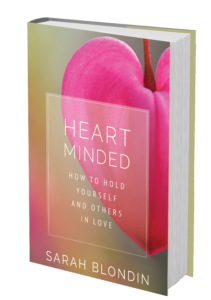
This is an adapted excerpt from Heart Minded: How to Hold Yourself and Others in Love by Sarah Blondin.

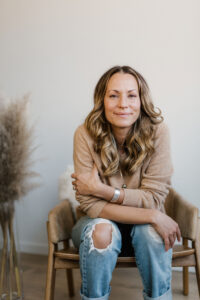
Sarah BlondinSarah Blondin is an internationally beloved spiritual teacher. Her guided meditations on the app InsightTimer have received nearly 10 million plays. She hosts the popular podcast Live Awake, as well as the online course Coming Home to Yourself. Her work has been translated into many languages and is in use in prison, recovery, and wellness programs. For more, visit sarahblondin.com.


book cover

Learn More

Sounds True | Amazon | Barnes & Noble | Bookshop