Guy Shahar and Melinda Edwards, MD: Sensitivity Is at ...
Autism is so often described in terms of what seems to be missing: eye contact, small talk, the expected social rhythms most people move through without thinking. This two-part conversation asks a different question entirely: what if the very traits read as absence are actually signs of a deeper, more intense form of connection than most neurotypical people ever access. It’s a reframing that asks listeners to set aside a familiar deficit lens and try on a considerably more generous one.
Sounds True brought Guy Shahar and Dr. Melinda Edwards together for this special episode of our Being Open series precisely because both speak from lived experience rather than from clinical distance alone, one as a father and later as a self-identified autistic adult, the other as a psychiatrist and mother of an autistic daughter. Their combined perspective reflects something Sounds True has believed since 1985: that the most transformative teaching often comes from people who have lived the question, not simply studied it.
In this piece, we look at what each of them learned, how their perspectives echo and diverge, and what it might mean to depathologize neurodiversity rather than simply manage it.
Key Takeaways:
- A Late Discovery: Learn how Guy Shahar found out at age forty-six that he is autistic himself.
- Connection, Not Absence: Understand why Dr. Melinda Edwards challenges the idea that autism means disconnection.
- Three Practical Keys: See the approach Shahar offers parents and caregivers for genuinely connecting.
A Conversation in Two Parts
This episode unfolds across two connected conversations, each offering a different vantage point on the same central idea. Guy Shahar, author of Transforming Autism, opens the discussion focused on parenting and connection.
- Part One: Shahar discusses educating caregivers, flexibility, and the intuitive capacity many autistic children show toward reading energy and intention. Full details appear in Guy Shahar and Melinda Edwards, MD: Sensitivity Is at the Heart of Autism.
- Part Two: Dr. Edwards continues the conversation, focusing on the overlooked spiritual gifts and interconnection autism can reveal.

Guy Shahar: A Discovery That Reframed His Own Life
Shahar’s path into this work began with his son, whose autism led the family to unconventional and unusually effective treatments detailed in Transforming Autism. His son, once written off by parts of the medical establishment as severely disabled, went on to thrive in a mainstream school by age six, an outcome Shahar attributes to focusing on inherent strengths rather than symptom correction. What makes his perspective unusual is what came next: at age forty-six, Shahar discovered he was autistic himself, a revelation that suddenly explained decades of experiences he had never quite understood, from communication struggles to a persistent sense of not fitting expected molds.
This late discovery reshaped how Shahar approaches his own book’s central argument. Rather than treating autism as a problem requiring correction, Transforming Autism proposes understanding the inherent characteristics of autistic children and bringing out their natural strengths instead, a philosophy Shahar later carried into founding a charity dedicated to the same principle.
Autism Sensitivity: What Looks Like Withdrawal Often Isn’t
A central theme threading through both conversations is autism sensitivity, the idea that heightened perception, not deficit, sits at the core of many autistic experiences. What often reads to outside observers as withdrawal or overwhelm may actually reflect a nervous system taking in far more information than a typical environment accounts for.
- Overwhelm as Overload: Shutdown often signals sensory flooding rather than disinterest in connection.
- Intuitive Attunement: Many autistic children show unusual sensitivity to the emotional energy of people around them.
- Idealism and Values: Shahar notes a strong pull toward altruism and idealistic values among many autistic individuals he has met.
Three Keys to Connecting with Autistic Children
Rather than offering another behavioral checklist, Shahar frames connection around three keys that emerged from years of trial, error, and eventual breakthrough with his own son:
- Flexibility Over Correction: Meeting a child’s actual state rather than insisting on typical behavior first.
- Play as a Bridge: Following a child’s own interests as the doorway into shared connection.
- Presence Over Performance: Showing up authentically, since autistic children often sense forced or anxious energy quickly.

Dr. Melinda Edwards: Connection Where Others See Its Absence
Dr. Edwards approaches the same territory as both a psychiatrist and the mother of an autistic daughter, and her central claim reframes the entire conversation. Rather than reading her daughter’s symptoms as disconnection, Dr. Edwards has come to understand them as reflections of a connection so deep it exceeds what conventional language typically describes. Her clinical training and personal experience together let her speak to something rarely voiced this plainly: that autism may offer neurotypical people a glimpse of interconnection they have simply lost access to.
Dr. Edwards’s perspective carries particular weight because it bridges two worlds that don’t often speak to each other candidly: the clinical framework she was trained in and the lived reality of raising a daughter whose experience didn’t fit neatly into that framework. Rather than discarding one for the other, she has spent years holding both, letting each inform and complicate the other.
From Anxiety to Faith
Both guests describe a similar arc within their own families: an initial period defined by anxiety, fear about diagnosis, fear about the future, gradually giving way to something closer to faith. This shift doesn’t erase real challenges, but it does change how those challenges are met, with curiosity rather than dread, and with trust that difficulty can carry its own unexpected gift.
Shahar describes this shift as one of the hardest and most necessary parts of his own journey, since fear tends to narrow attention exactly when openness is most needed. Faith, in the way both guests use the term, isn’t about certainty that things will turn out fine. It’s closer to a willingness to stay present with a child, or with oneself, without needing to fix everything first.
Spiritual Gifts and Evolutionary Guides
One of the more striking claims in this conversation is the idea that autistic individuals may serve as spiritual and evolutionary guides for the wider human community. Rather than framing this as a burden placed on autistic people to be exceptional, both guests present it as an invitation for neurotypical listeners to notice qualities, sensitivity, intuitive attunement, and resistance to social pretense that the broader culture has undervalued for generations.

Final Thoughts
Guy Shahar and Dr. Melinda Edwards offer something rarer than advice: two honest accounts of watching a label reorganize itself into something closer to reverence. Neither pretends the path is simple, but both suggest that sensitivity itself, so often treated as a burden, may be the very quality worth protecting and learning from. What lingers longest from this conversation may be the quiet suggestion that connection was never actually missing, only expressed in a register most of us were never taught to hear.
Sounds True shares conversations like this one because waking up the world sometimes means waking up to the people already sitting closest to us. If this conversation moved you, Guy Shahar’s book and the broader Being Open series carry it further.
Frequently Asked Questions About Guy Shahar
Who is Guy Shahar?
He is the author of Transforming Autism and co-founder of a charity supporting autistic children and their families.
When did Guy Shahar learn he was autistic?
He discovered his own autism at age forty-six, years after his son’s diagnosis.
What is the Being Open podcast series?
A special Insights at the Edge series exploring connection, consciousness, and openness across different life experiences.
Is Dr. Melinda Edwards a parent of an autistic child?
Yes, she is a psychiatrist and the mother of an autistic daughter, informing her perspective directly.
Does this conversation offer parenting techniques?
Yes, Shahar outlines three practical keys for connecting more effectively with autistic children.
What is Transforming Autism about?
It follows Shahar’s family journey as they support their son and reframes autism around inherent strengths.
Where can I find more Sounds True content on neurodiversity?
Related conversations continue throughout our Insights at the Edge Podcast archive and Relationships collection.
Is this conversation only relevant to parents?
No, its themes of sensitivity and connection speak to caregivers, clinicians, and curious listeners alike.
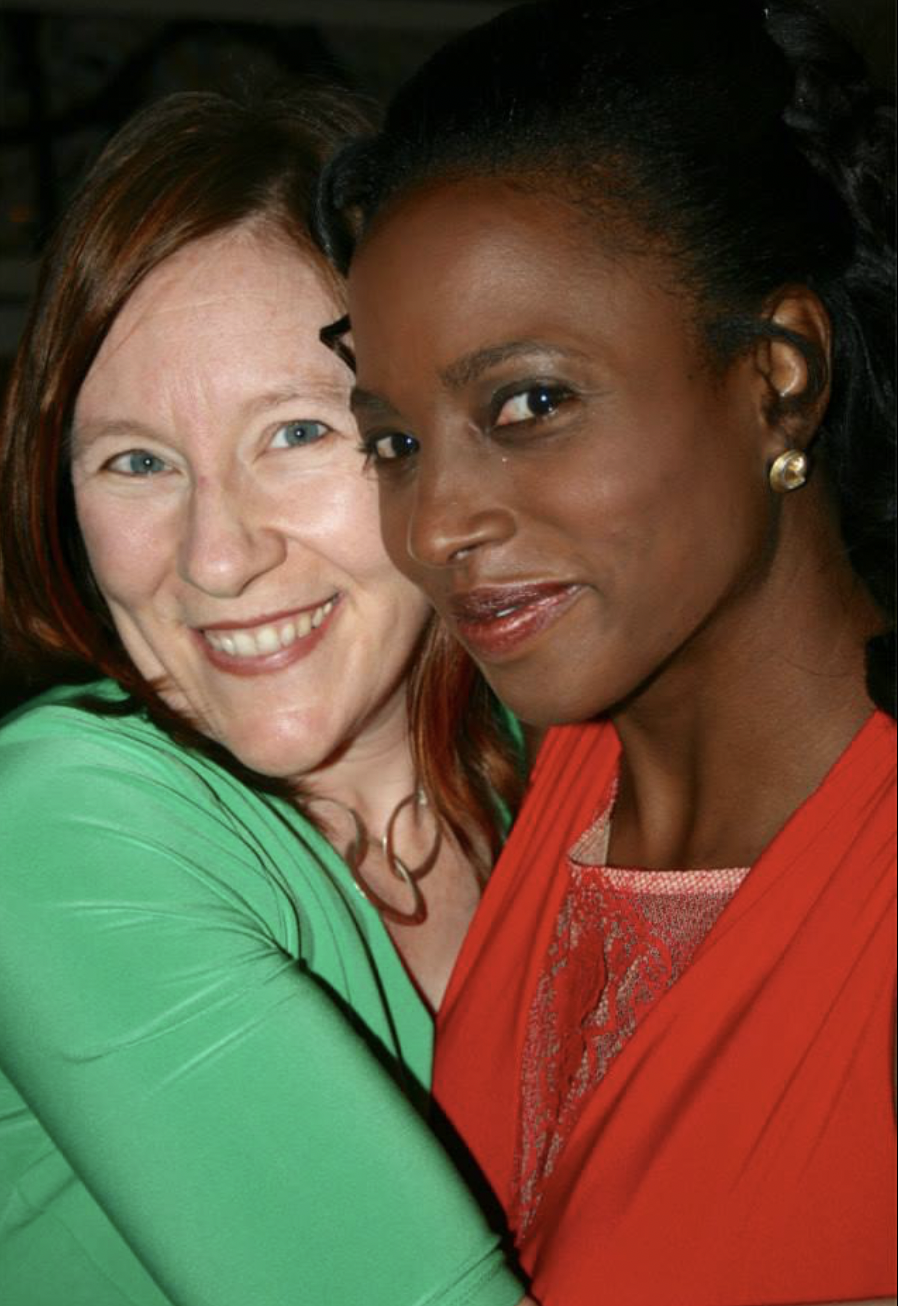
Michelle Cassandra Johnson is an author, activist, spiritual teacher, racial equity consultant, and intuitive healer. She is the author of six books, including Skill in Action and Finding Refuge. Amy Burtaine is a leadership coach and racial equity trainer. With Robin DiAngelo, she is the coauthor of The Facilitator’s Guide for White Affinity Groups. For more, visit https://www.michellecjohnson.com/wisdom-of-the-hive.