In this thought-provoking episode of Insights at the Edge, Tami Simon sits down with Maggie Jackson, acclaimed journalist and author of “Uncertain: The Wisdom and Wonder of Being Unsure.” Together, they delve into the emerging science of uncertainty, discussing how our discomfort with not knowing can actually be a source of growth, creativity, and resilience. Maggie shares practical strategies for cultivating a healthy tolerance for uncertainty, explains the difference between fear and uncertainty, and highlights the power of curiosity, mindfulness, and adaptive expertise in navigating today’s unpredictable world. Whether you struggle with anxiety about the unknown or want to harness uncertainty as a tool for personal and professional development, this conversation offers wisdom and actionable insights for embracing life’s many mysteries.
Note: This interview originally aired on Sounds True One, where these special episodes of Insights at the Edge are available to watch live on video and with exclusive access to Q&As with our guests. Learn more at join.soundstrue.com.
We create tremendous suffering by shrinking our world to the narrow confines of our personal preferences. They have the effect of locking us in a house of our own building wherein we don’t realize there is a whole universe outside that house. Through sincere inner work, we can expand our awareness beyond the limits of ourselves into a world of peace, clarity, and selfless giving.
Deep spiritual growth is not about collecting more techniques but about releasing the inner disturbances we have stored from our past. These suppressed energies—called samskaras—remain inside, continuing to influence and limit our lives. Instead of struggling to cope with life’s experiences, we can learn to welcome them as opportunities to release these past blockages. Over time, this leads to purification of the heart and the ability to remain undisturbed, even in the face of intense experiences. Our natural state is one of unconditional joy, love, and divine energy—reclaim it!
Few luminaries in modern times have opened the doors to the spiritual dimensions of who we are, why we are here, and how we heal and evolve more profoundly than Caroline Myss. In this podcast, Tami Simon speaks with the longtime Sounds True author and renowned medical intuitive about her new online program, The Way of Guardians and Grace, where Caroline shares for the first time an intimate account of her relationship with unseen allies and the energetic realms they opened to her.
Listen now as the inimitable Caroline Myss tells us how these turning-point events in her life can inform your own greater path and calling. She and Tami discuss and illuminate: accessing our latent mystical intelligence; forging a partnership with the Divine; how your biography becomes your biology; life—a sacred spiritual adventure; wisdom, faith, love, and light; shifting from the love of power to the power of love; humanity’s collective shadow at this time; cultivating a high-voltage moral conscience; making grace-filled choices; what to pray for (and what not to); turning on your light in service of the world—and keeping it on; and more.
Note: This episode originally aired on Sounds True One, where these special episodes of Insights at the Edge are available to watch live on video and with exclusive access to Q&As with our guests. Learn more at join.soundstrue.com.
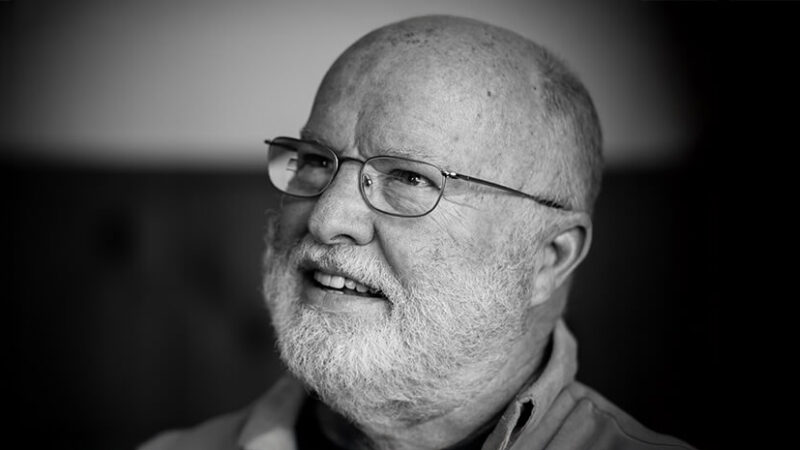
The prophets and mystics of the Judeo-Christian tradition each had their ways of bringing attention to the hypocrisies and injustices of their particular period in history. Here in the year 2025, as we navigate our own time of disruption and upheaval, how can we as individuals raise our voices and become the compassionate, conscious change agents our world so desperately needs? In this podcast, Tami Simon speaks with Franciscan friar and ecumenical teacher Richard Rohr about his new book, The Tears of Things, and what we can learn from the “sacred revolutionaries” who came before us.
Tune in to explore: the prophet’s mission and “making good trouble”; self-critical thinking (and how it’s unknown to most major institutions); sacred criticism and the revelation of the shadow; the paradigm of order, disorder, and reorder; outrage, cosmic sadness, and unlimited praise; using anger to cover up sadness; grief work and “getting to the hallelujah”; discovering the foundation of hope; contemplative thinking; conversion and transformation; opening to grace; letting go of control; why “what we don’t want to see is the problem”; waking up from our collective illusion (especially around power and control); living in a deceit-allowing culture; the word “evil”; an ever-present sense of goodness in the world; holding the tension of opposing truths; gratuitous goodness; realizing a joy that cannot be taken from you; the prophet Jeremiah and the Book of Lamentations; why the opposite of faith is not doubt but certainty; acting from the highest levels of motivation; and more.
Note: This episode originally aired on Sounds True One, where these special episodes of Insights at the Edge are available to watch live on video and with exclusive access to Q&As with our guests. Learn more at join.soundstrue.com.
Emotions are Vital Aspects of Thinking, Acting, and Working
People once believed that emotions were the opposite of rationality, or that they were lower than or inferior to our allegedly logical processes. But decades of research on emotions and the brain have overturned those outdated beliefs, and we understand now that emotions are indispensable parts of rationality, logic, and consciousness itself. In fact, emotions contain their own internal logic, and they help us orient ourselves successfully within our social environments. Emotions help us attach meaning to data, they help us understand ourselves and others, and they help us identify problems and opportunities. Emotions don’t get in the way of rationality; they lead the way, because they’re vital to everything we think and everything we do. Emotions aren’t the problem; they’re pointing to the problem, and they’re trying to bring us the precise intelligence and energy we need to deal with the problem.
In this book, we’ll learn how to listen to emotions as uniquely intelligent carriers of information, and how to build healthy and effective social and emotional environments at work – not by ignoring or silencing emotions (you can’t), but by listening to them closely, learning their language, and creating a communal set of emotional skills that everyone can rely on. This work is not difficult at all, but it can be unusual in an environment that wrongly treats emotions as soft, irrational, or unprofessional.
The serious problems we’ve baked into the workplace don’t come from any specific management style or ideology, so I won’t focus on managers or leaders as if they’re uniquely powerful or uniquely to blame. These problems also aren’t limited to specific occupations or income brackets (though low-wage work is regularly dehumanizing and hazardous); these are long-term, widespread problems based on a failed workplace model – and on an outdated social and emotional approach that does not support (or in many cases, even comprehend) human relationships and human needs.
This book is the result of decades of exploration and study into how the workplace got to be so unworkable, plus decades of experience in how to access the existing genius in people’s emotional responses (in surprisingly simple ways once you understand how emotions and empathy work). With the help of the genius in our emotions, we can create emotionally well-regulated and worthwhile places for all of us to earn our living and spend our lives.
Luckily, we don’t have to do anything special to welcome emotions into the workplace, or even to make room for them, because emotions are and always have been in the workplace. They’re in the responses people have to workplace abuses; they’re in disengaged workers; they’re in workers seeking other jobs while on the job; they’re in workers who rightly avoid communicating upward about serious problems; they’re in low-wage workers who learn how to survive in hellscapes like call centers, fast-food restaurants, gig work, and robot-like warehouse jobs; they’re in living-wage workers who tolerate unhealthy workplaces because they can’t afford to leave their health insurance behind; and they’re in high-wage workers who may have to bow down to their superiors and compete with their colleagues to be seen as “winners” – and whose experiences of workplace abuse may not be taken seriously because they make so much money and therefore have no right to complain.
We can also see the emotions in our responses to workplace successes; in our healthy working relationships; in the ways we gather together to solve problems; in the ways empathic workers and leaders empower everyone around them; in the ways our colleagues support us when we’re struggling; in the ways businesses step up in times of loss; in the ways we create open communication and humane workflows; in the ways we teach each other; in the benefits, support, flexibility, and living wages we provide for our workers; in the honest sharing of business difficulties or financial losses; and in the laughter we share on great days and rotten days.
Emotions are everywhere in the workplace because emotions are a central feature of human nature. They aren’t removable, and in fact, trying to remove them is a huge part of what created the failed workplace model we have today. Emotions are crucial to everything we do and to every aspect of our work; therefore, we’ll learn how to listen to emotions, work with them, and respect their intelligence. And in so doing, we’ll build a better workplace – and a better world – from the ground up.
Karla McLaren, M.Ed.
Karla McLaren, M.Ed., is an award-winning author, social science researcher, and empathy innovator. Explore her books and audios on the power of emotion and creativity here.
This is part of a Conscious Business series brought to you by The Inner MBA®. You can learn more about the program at Innermbaprogram.com