Few luminaries in modern times have opened the doors to the spiritual dimensions of who we are, why we are here, and how we heal and evolve more profoundly than Caroline Myss. In this podcast, Tami Simon speaks with the longtime Sounds True author and renowned medical intuitive about her new online program, The Way of Guardians and Grace, where Caroline shares for the first time an intimate account of her relationship with unseen allies and the energetic realms they opened to her.
Listen now as the inimitable Caroline Myss tells us how these turning-point events in her life can inform your own greater path and calling. She and Tami discuss and illuminate: accessing our latent mystical intelligence; forging a partnership with the Divine; how your biography becomes your biology; life—a sacred spiritual adventure; wisdom, faith, love, and light; shifting from the love of power to the power of love; humanity’s collective shadow at this time; cultivating a high-voltage moral conscience; making grace-filled choices; what to pray for (and what not to); turning on your light in service of the world—and keeping it on; and more.
Note: This episode originally aired on Sounds True One, where these special episodes of Insights at the Edge are available to watch live on video and with exclusive access to Q&As with our guests. Learn more at join.soundstrue.com.
He’s the son of Timothy Leary and one of today’s leading voices in the psychedelic renaissance of the 21st century. But Zach Leary’s journey hardly unfolded in the way you might expect. In this deeply informative and myth-busting podcast, Tami Simon speaks with Zach about his new book with Sounds True, Your Extraordinary Mind.
With a “friend to friend” approach to discussing the amazing potential for the safe use of psychedelics, Tami and Zach converse about: carrying forward the legacy of the front-runners of psychedelic exploration, including icons like Terence McKenna, Humphry Osmond, Dr. John C. Lilly, and of course, Zach’s father Timothy and Richard Alpert (Ram Dass); acknowledging the mistakes of the past and dispelling the myths and misconceptions about psychedelics; bringing legitimacy to the use of psychedelics for healing and insight; a review of the major compounds and their sources (natural and manmade), such as MDMA, psilocybin mushrooms, ayahuasca, LSD, and ketamine; the importance of the 3 S’s: set, setting, and sustainability; turning insights into action; challenging experiences (instead of “bad trips”); Carl Jung and shadow work; using psychedelics to overcome our fear of death; Zach’s personal battle with addiction and how psychedelics supported his recovery; the nature of consciousness; psychedelics as humanity’s evolutionary partner; and more.
Note: This episode originally aired on Sounds True One, where these special episodes of Insights at the Edge are available to watch live on video and with exclusive access to Q&As with our guests. Learn more at join.soundstrue.com.
Have you ever been ice-skating before? It sounds like a fun winter activity (especially if you enjoy the cold, like I do), but it can be frustrating and even downright scary if you’re new to it.
Picture this: I took my nephew ice-skating for the first time, full of excitement to see him experience some joy. At twelve years of age, he was already taller than me and had size thirteen feet thanks to his six-foot-eight-inch-tall dad (my brother). The biggest rental skates they had came with worn-out laces rather than the secure plastic bindings all of the other skates had. I could see that they were a little loose around the ankle, but we tied them as best we could and hit the ice.
If you’ve ever seen a newborn deer figuring out how to walk for the first time, you can picture my nephew’s first time on ice skates. His ankles kept knocking in, and he was reaching to hold onto anything for dear life as he wobbled around the perimeter of the rink. It was difficult to watch, not because it was embarrassing, but because I know how hard he is on himself when he’s not immediately good at new things. I wanted to see him having fun, and instead I saw him frustrated and discouraged as all he could do was attempt to remain vertical.
I figured it couldn’t get worse, so I suggested that we trade in his skates for a smaller pair with the more secure plastic buckles to see if that made any difference. He went along with it, probably just to humor me, and we stuffed his feet into some size twelves and made sure his ankle support was good as could be. When I tell you it was a night and day difference, I’m not exaggerating. Suddenly he was speeding around the ice like a pro, lapping past me and his sisters with the biggest smile on his face. He circled the rink over and over again; as his confidence grew, so did his joy, and he even began to try tricks and spins. All he had needed was one little adjustment to his foundation, and he suddenly felt safe enough to have fun.
Here’s the thing: most of us go around in our lives on rickety old skates with worn-out laces. When your only focus is doing your best to remain upright, there’s not much room for joy or play. The big shame in that is that play often is the medicine we most need.
In my experience, the crux of inner child work is reconnecting to the part of you who knows how to play. Sometimes you may first need to make some adjustments that allow you to feel safe enough to play, like practicing nervous system regulation and self-soothing. Once you’ve done that, though, your goal is to invite in as much play as possible. And not adult versions of play that are really just a facade for dissociative behaviors, but real, childlike wonder.
Invite in curiosity and awe and silliness and uninhibited joy. Start by returning to the things you loved to do when you were a kid. Maybe that means setting aside time each weekend for arts and crafts. Maybe it means participating in physical activities that feel like play, such as dancing, swimming, sports, or jumping on a trampoline. Maybe it just means giving yourself permission to skip while you walk or sing while you drive.
The point is, when you bring those younger versions of you into your present-day life, you not only have more fun, but you also experience more healing. We were never meant to lose touch with our inner child. Yes, it’s important to learn how to be self-sufficient and responsible, and aging is inevitable. But it’s equally important not to take yourself too seriously along the way.
Try This
Your homework is to set regular playdates with your inner child. Do things that sound like fun, even if they don’t make logical sense. Allow yourself to be as carefree and openhearted as possible, without judging the things that bring you joy. The sillier it feels, the more on point you likely are. Here are some examples to consider:
Take an afternoon off of work and go to an amusement park.
Schedule an evening of watching your favorite childhood movies.
Spend the weekend out in nature, frolicking with your imagination.
Try something brand new, like rock climbing or ice-skating, to tap into that feeling of beginner’s mind.
Play is an important part of our overall well-being. Consistently making time to get into that creative flow state will help you deepen your relationship with your inner child . . . and your adult self. I suggest checking in at least once per month, if not weekly, to see where you can fit more play into your life.
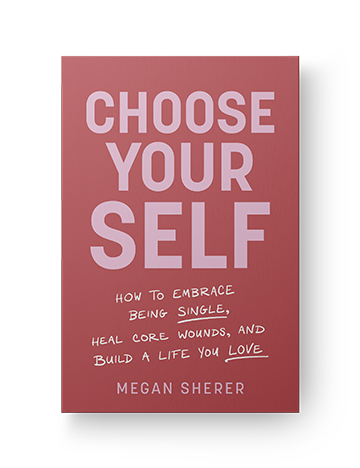
Excerpted from Choose Your Self: How to Embrace Being Single, Heal Core Wounds, and Build a Life You Love.
Megan Sherer
Megan Sherer is a certified somatic therapist and licensed hypnotherapist whose mission is to help others build healthy and fulfilling relationships, starting with self. She hosts the Well, Then podcast and founded the women’s therapy app The Self Care Space. For more, visit megansherer.com.
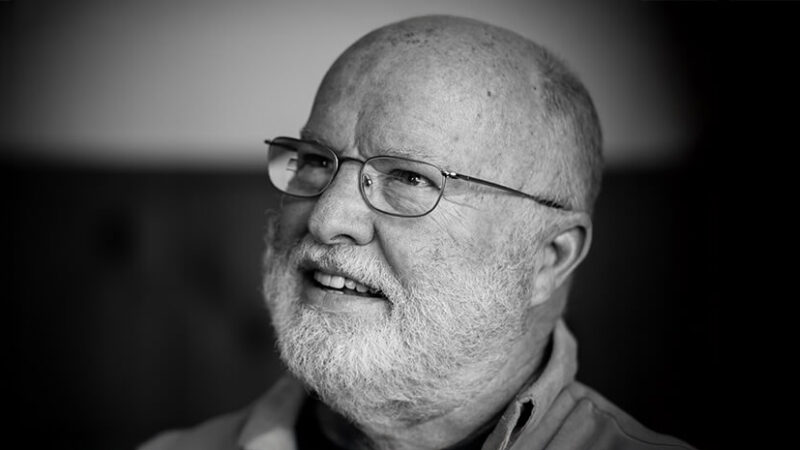
The prophets and mystics of the Judeo-Christian tradition each had their ways of bringing attention to the hypocrisies and injustices of their particular period in history. Here in the year 2025, as we navigate our own time of disruption and upheaval, how can we as individuals raise our voices and become the compassionate, conscious change agents our world so desperately needs? In this podcast, Tami Simon speaks with Franciscan friar and ecumenical teacher Richard Rohr about his new book, The Tears of Things, and what we can learn from the “sacred revolutionaries” who came before us.
Tune in to explore: the prophet’s mission and “making good trouble”; self-critical thinking (and how it’s unknown to most major institutions); sacred criticism and the revelation of the shadow; the paradigm of order, disorder, and reorder; outrage, cosmic sadness, and unlimited praise; using anger to cover up sadness; grief work and “getting to the hallelujah”; discovering the foundation of hope; contemplative thinking; conversion and transformation; opening to grace; letting go of control; why “what we don’t want to see is the problem”; waking up from our collective illusion (especially around power and control); living in a deceit-allowing culture; the word “evil”; an ever-present sense of goodness in the world; holding the tension of opposing truths; gratuitous goodness; realizing a joy that cannot be taken from you; the prophet Jeremiah and the Book of Lamentations; why the opposite of faith is not doubt but certainty; acting from the highest levels of motivation; and more.
Note: This episode originally aired on Sounds True One, where these special episodes of Insights at the Edge are available to watch live on video and with exclusive access to Q&As with our guests. Learn more at join.soundstrue.com.
Emotions are Vital Aspects of Thinking, Acting, and Working
People once believed that emotions were the opposite of rationality, or that they were lower than or inferior to our allegedly logical processes. But decades of research on emotions and the brain have overturned those outdated beliefs, and we understand now that emotions are indispensable parts of rationality, logic, and consciousness itself. In fact, emotions contain their own internal logic, and they help us orient ourselves successfully within our social environments. Emotions help us attach meaning to data, they help us understand ourselves and others, and they help us identify problems and opportunities. Emotions don’t get in the way of rationality; they lead the way, because they’re vital to everything we think and everything we do. Emotions aren’t the problem; they’re pointing to the problem, and they’re trying to bring us the precise intelligence and energy we need to deal with the problem.
In this book, we’ll learn how to listen to emotions as uniquely intelligent carriers of information, and how to build healthy and effective social and emotional environments at work – not by ignoring or silencing emotions (you can’t), but by listening to them closely, learning their language, and creating a communal set of emotional skills that everyone can rely on. This work is not difficult at all, but it can be unusual in an environment that wrongly treats emotions as soft, irrational, or unprofessional.
The serious problems we’ve baked into the workplace don’t come from any specific management style or ideology, so I won’t focus on managers or leaders as if they’re uniquely powerful or uniquely to blame. These problems also aren’t limited to specific occupations or income brackets (though low-wage work is regularly dehumanizing and hazardous); these are long-term, widespread problems based on a failed workplace model – and on an outdated social and emotional approach that does not support (or in many cases, even comprehend) human relationships and human needs.
This book is the result of decades of exploration and study into how the workplace got to be so unworkable, plus decades of experience in how to access the existing genius in people’s emotional responses (in surprisingly simple ways once you understand how emotions and empathy work). With the help of the genius in our emotions, we can create emotionally well-regulated and worthwhile places for all of us to earn our living and spend our lives.
Luckily, we don’t have to do anything special to welcome emotions into the workplace, or even to make room for them, because emotions are and always have been in the workplace. They’re in the responses people have to workplace abuses; they’re in disengaged workers; they’re in workers seeking other jobs while on the job; they’re in workers who rightly avoid communicating upward about serious problems; they’re in low-wage workers who learn how to survive in hellscapes like call centers, fast-food restaurants, gig work, and robot-like warehouse jobs; they’re in living-wage workers who tolerate unhealthy workplaces because they can’t afford to leave their health insurance behind; and they’re in high-wage workers who may have to bow down to their superiors and compete with their colleagues to be seen as “winners” – and whose experiences of workplace abuse may not be taken seriously because they make so much money and therefore have no right to complain.
We can also see the emotions in our responses to workplace successes; in our healthy working relationships; in the ways we gather together to solve problems; in the ways empathic workers and leaders empower everyone around them; in the ways our colleagues support us when we’re struggling; in the ways businesses step up in times of loss; in the ways we create open communication and humane workflows; in the ways we teach each other; in the benefits, support, flexibility, and living wages we provide for our workers; in the honest sharing of business difficulties or financial losses; and in the laughter we share on great days and rotten days.
Emotions are everywhere in the workplace because emotions are a central feature of human nature. They aren’t removable, and in fact, trying to remove them is a huge part of what created the failed workplace model we have today. Emotions are crucial to everything we do and to every aspect of our work; therefore, we’ll learn how to listen to emotions, work with them, and respect their intelligence. And in so doing, we’ll build a better workplace – and a better world – from the ground up.
Karla McLaren, M.Ed.
Karla McLaren, M.Ed., is an award-winning author, social science researcher, and empathy innovator. Explore her books and audios on the power of emotion and creativity here.
This is part of a Conscious Business series brought to you by The Inner MBA®. You can learn more about the program at Innermbaprogram.com
Our understanding of the severe scope of trauma in our world has greatly expanded in recent years. This includes intergenerational trauma, something that all of us likely carry within. In this episode of Insights at the Edge, Tami Simon speaks with Rabbi Tirzah Firestone about her book Wounds into Wisdom and our collective task to acknowledge, face, and work to heal our invisible wounds and break the cycle of intergenerational trauma.
Tami and Tirzah discuss: the concept of “image deposits” and “task deposits”; dreams containing real-life experiences of our ancestors, and how they are far more common than we might think; the shift from impotence to agency; harnessing our pain as a fuel for growth; how the human nervous system holds on to unresolved trauma despite the debilitating consequences; hypervigilance and the dangers of overactive stress hormones; overcoming self-blame, shame, unworthiness, and isolation; unlearning inherited beliefs that impair our well-being; choosing compassion instead of “othering”; the roots of anti-Semitism; kabbalah, the mystical branch of Judaism; disidentifying from victimhood; the power of being witnessed; why healing intergenerational trauma is a gift to both our ancestors and our descendants; self-regulation and coming back home to ourselves in nurturing ways; a guided practice for finding inner safety amid stressors; alchemizing pain into wisdom (instead of passing it on); and more.
Note: This episode originally aired on Sounds True One, where these special episodes of Insights at the Edge are available to watch live on video and with exclusive access to Q&As with our guests. Learn more at join.soundstrue.com.