Mark Wolynn is the director of The Family Constellation Institute, The Inherited Trauma Institute, and The Hellinger Institute of Northern California. His book It Didn’t Start With You: How Inherited Family Trauma Shapes Who We Are and How to End the Cycle was a Silver Nautilus award-winner in 2016. In this episode of Insights at the Edge, Tami Simon speaks with Mark about inherited trauma and how it can be the source of unexplained illnesses. Mark explains how the effects of deep trauma ripple across generations, citing the evidence of epigenetic changes following traumatic events. Mark and Tami discuss the work of Roger Woolger and the possibility of trauma descending from past lives. Finally, they talk about what it means to honor our ancestors’ pain while also healing and moving forward with our own lives. (70 minutes)
Dr. John Welwood is a clinical psychologist, psychotherapist, and practicing student of Buddhism and Eastern contemplative psychology. Dr. Welwood is an author whose books include Journey of the Heart and Perfect Love, Imperfect Relationships. With Sounds True, he has created the audio learning program Conscious Relationships. In this episode, Tami Simon speaks with Dr. Welwood about his understanding of the relationship between psychological work and the spiritual journey, as well as his view of the phenomenon of “spiritual bypassing.” He also talks about committed relationships and the most common issue that couples present in joint therapy. (60 minutes)
Eve Ekman, PhD, MSW, is a senior fellow at the Greater Good Science Center. A skilled speaker, researcher, and group facilitator with experience working in emergency rooms and other health-care settings, she brings a unique background ideally suited to training individuals and organizations in the science of resilience, compassion, mindfulness, and emotional awareness. With Sounds True, she is coauthor (with Dacher Keltner, PhD) of the online program The Greater Good Training for Health Professionals.
In this podcast, Sounds True founder Tami Simon speaks with Dr. Eve Ekman about deepening our emotional awareness and developing our capacity to keep our hearts open, especially when working with others. Their conversation explores why some people experience burnout while others do not in the same situation; Eve’s work with her father on the Atlas of Emotions and its goal to help us calm the mind; the concept of emotion granularity; the practice of decentering to diffuse the power of an emotional experience; interoception and how it relates to being present; “unhooking from the narrative” when we find an emotion has been re-triggered; emotions as timelines that tell a story; the ongoing debate about the nature of anger; using technology as a force for good; sustainable empathy; emotional resonance and cognitive appraisal, and how these become a crucial juncture for empathy; repairing our health-care system while empowering those who work in it; what the research tells us about the importance of finding meaning; and more.
Lisa Lahey, EdD, is an author, the codirector of the Minds at Work consulting firm, and a faculty member at Harvard University. She is a featured presenter for the Inner MBA program, a new Sounds True multimedia learning experience that explores how to bring principles of presence and conscious leadership to the business world. In this episode of Insights at the Edge, Tami Simon speaks with Lisa about the inherent difficulty of making large personal changes—especially when they are essential to the advancement of your career. They talk about the inherent human resistance to change and the need to be fully aware of our “inner landscapes.” Lisa explains how much of our resistance to change is rooted in self-protective patterns that need to be reckoned with before we can move forward. Tami and Lisa also discuss how to cultivate skills such as time management and communication, as well as what we can do to regulate work-based anxiety. Finally, Lisa details the three evolutionary steps for creating meaning and shares her hopes for the Inner MBA program.(67 minutes)
When things are at their darkest, what is it that “allows you to see promise and allows you to see beauty?” Joanna begins her exploration of some of the most difficult emotions and circumstances we face in a surprising place: with gratitude. This episode introduces the concept of the spiral, the basic structure of the Work That Reconnects.
In this episode:
Why it’s necessary to speak our darkest thoughts out loud
How to follow our fear and pain into a state of profound gratitude
The spiral of the Work That Reconnects: gratitude, honoring our pain, seeing with new eyes, and going forth
We recommend starting a podcast club with friends or family to do these practices together. Links and assets to help prompt reflection and build community can be found with every episode on WeAreTheGreatTurning.com.
Most people feel trapped in a thousand ways. But more often than not, this sense of entrapment us into putting our heads down and getting the things we are expected to get done, done. We can’t often see the entrapment, especially if it looks like the result of our own choices in life. But were they truly our own choices? What if some of the choices we made in life have never really been ours to begin with?
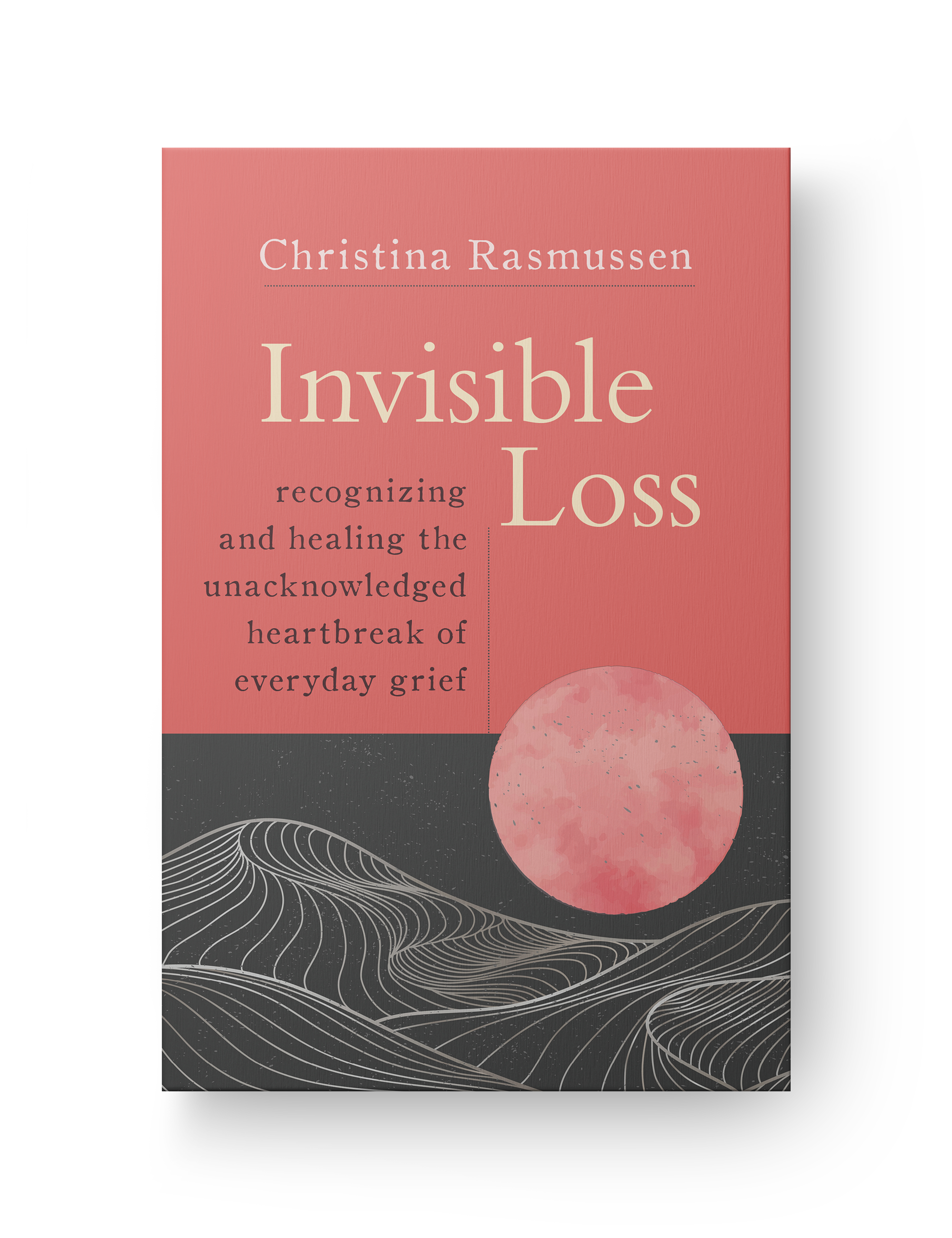
I want to take us back a little. Back to when we were younger. When we had to rely on the wisdom of our elders, and those who have been in this life much longer than us. In my upcoming book Invisible Loss, I write about that time in our lives when we were at our most rebellious:
Disobedience—as a child, as a teen, as an adult in the world of work and home—is an act that creates invisible suffering. We learn to survive that repeated pattern of being commanded by our elders to be “good.” In order to be good and obey, we may create a life closer to that command but further away from our Original Self. We may work hard trying to be good, trying to please and fit into the mold created for us, but that only helps to build our Waiting Room life.
But time in the Waiting Room doesn’t need to last forever. And you don’t have to die inside it. There are parts within you that can bring forth a life worthy of your human existence. Places within yourself that have no shame.
As long as we have been alive, creating a life that aligns closest to the wishes of our caregivers and protectors blinds us to the life that we could choose for ourselves. That life is completely hidden even if we think we know our wishes. Often, only when we go through tragic or invisible losses, do we start to question those choices. Dare I say, these moments are opportunities to exit the loop of being “good.”
It is time to interrupt our regular transmission. It is time to be clear when it comes to what it is we are trying to communicate to the people in our lives. It starts from no longer trying so hard to fit into the mold that was created for us. No matter how old we are, we can always break outside this mold and align our choices with our true values and desires.
This is not an easy task. I understand that. At the core of my book, Invisible Loss, I’ve created tjos easy practice to help set you on the right path to your Original Self. I call it Mental Stacking:
What Is Mental Stacking?
Mental Stacking is the ability to intentionally layer your thoughts to replace unconscious, Survivor-based
thinking with Wisdom-based thinking. In doing so, these Wisdom-based thoughts can more easily be converted into real-life action. This Stacking practice allows you to access your true and authentic self (your Original Self) and entrust it with the controls of your life. Here is what a basic Stack looks like:
The Cleanse:Transcribing the automatic, routine-based, unconscious thoughts. Write them down. Don’t stop writing until you feel you are done.
The Pattern:Subtracting from that first layer the thoughts of fear and doubt. Once you write everything you are feeling and thinking down, read it back to yourself and find a sentence or two that comes from a place of fear or doubt. For example, somewhere in your long cleanse you may find yourself saying: “I feel trapped in my marriage and I don’t dare tell anyone about it because he is the nicest guy. All of my friends always tell me how lucky I am to be married to someone who takes such good care of me.”
The Reframe: Writing the consciously reframed thought layer in the Stack. Take that sentence and reframe it. For example: “I feel trapped in my marriage and feel ashamed for feeling this way because my partner is such a good guy,” to, “even though I may feel shame about how I feel, I need to share these feelings with my partner even though it may not be expected or understood. This is my life, after all.”
The Plug-In: Translating the reframed thought into action. Once you have that reframed thought, think of a low-risk action you can take that can stem from that newly scripted thought. For example, you can suggest to your partner to go for dinner at a brand new place where you can bring up what is on your mind in a new environment. You can act on your right to express yourself regardless of what the response might be or how others view your situation.
Your Mental Stack leads you to a specific next step that may not always be easy to see without the power of each previous layer in the Stack.
Christina Rasmussen is an acclaimed grief educator and the author of Second Firsts and Where Did You Go? She is the founder of the Life Reentry Institute and has helped countless people break out of what she coined the “waiting room” of grief to rebuild their lives through her Life Reentry® Model, a new paradigm of grief, based on the science of neuroplasticity. She lives in Austin, Texas. For more, visit christinarasmussen.com.