Love is an inner energy that flows naturally when the heart is open, but people block it by holding onto past pain and resisting reality. The external world does...
Lorem ipsum dolor sit amet, consectetur adipiscing elit, sed do eiusmod tempor incididunt ut labore et dolore magna aliqua. Ut enim ad minim veniam, quis nostrud exercitation ullamco.
Tami Simon’s in-depth audio podcast interviews with leading spiritual teachers and luminaries. Listen in as they explore their latest challenges and breakthroughs - the leading edge of their work.
Join the New York Times bestselling author of The Untethered Soul, The Surrender Experiment, and Living Untethered for this free series of curated teaching sessions, recorded at his Temple of the Universe yoga and meditation center.
Spiritual liberation is not about rearranging the contents of the psyche but about stepping back and observing the psyche with clarity. If you do so, you will see that most emotional and mental suffering is rooted in fear: fear of failure, loss, and rejection. Spiritual freedom requires the courage to look upward toward truth, God, and the vastness of the universe while letting go of the deep internal fears that drive our actions. Liberation is not earned through outer success, control, or acceptance from others, but by choosing to be free from the tyranny of the personal self.
The mind and heart are vibrational fields shaped by past experiences we’ve clung to or suppressed, resulting in the reactive inner world we live in. Liberation begins by stepping back into witness consciousness, seeing that we are not our thoughts or emotions, but the awareness behind them. The path to freedom is through inner purification—letting go of stored impressions and no longer adding more disturbance by resisting or clinging to what life presents. Serve life, don’t fight it.
What if aging isn’t about decline, but about becoming brighter—like a meteor that grows more luminous even as it falls through the atmosphere?
Tami Simon speaks with beloved poet-philosopher Mark Nepo about his deeply moving new book, The Fifth Season: Creativity in the Second Half of Life. Drawing from Chinese wisdom traditions and his own journey through chronic pain and back surgery, Mark illuminates aging as the “heavenly pivot” (love that phrase) which is the transformative shift from living outwardly to inhabiting life from the inside out.
Join Mark and Tami for this episode to explore:
The meteor metaphor: how we grow brighter as our outer casing flakes away • “Entering time” versus moving through it—and why slowing down opens the eternal moment • The paradox of limitation: how loss simultaneously deepens and expands us • Breaking through to joy as the depth of being that holds all the waves • Why the heart, not the mind, must lead in the second half of life • Living with chronic pain and learning to let beauty in while suffering • The difference between being victims of life versus initiates into life • How grief changes everything and why we don’t get over it, we get under it • Being swift of heart—living without hesitation from the inside out
Mark’s wisdom arises from decades of spiritual practice, surviving cancer, and facing the inevitable losses that come with a long life—essential listening for anyone navigating aging, chronic pain, loss, or simply seeking to live more fully present to the life they have.
Listen now to discover how the second half of life can be your most luminous yet.
This conversation offers genuine transmission—not just concepts about awakening, but the palpable presence of realized teachers exploring the growing edge of spiritual understanding together. Originally aired on Sounds True One.
A filthy home is an open invitation for rats and roaches to move in. In the same way, Michael reveals that neglected thoughts and emotions attract destructive unconscious behaviors.
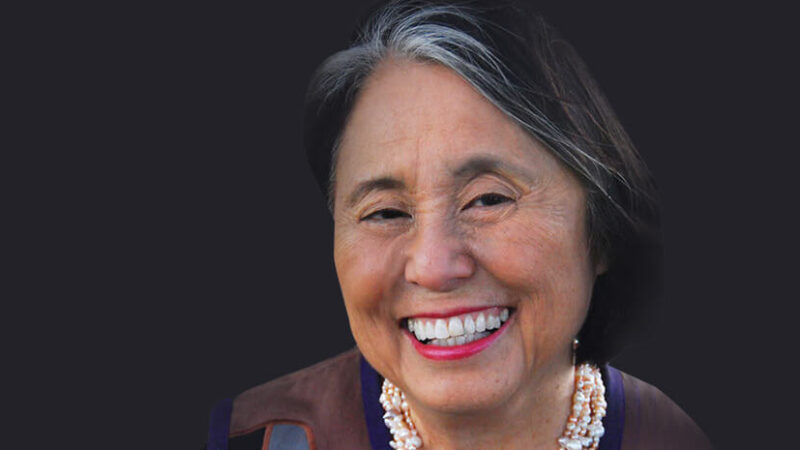
Jean Shinoda Bolen, MD, is a Jungian analyst and clinical professor of psychiatry at the University of California, San Francisco. An internationally renowned lecturer and workshop leader, she is author of The Tao of Psychology, Goddesses in Everywoman, Close to the Bone, Like a Tree, and more. She is also a fellow of the American Psychiatric Association (APA) and a past chairperson of the Council of National Affairs of the APA.
In this podcast, Dr. Bolen joins Sounds True founder Tami Simon to reflect on her many years as a writer, teacher, and activist, and how doing our “soul work” becomes the path to self-actualization, connection, and contribution throughout our lives. They also discuss our innate capacity for love and awe; becoming a whole-brain person; speaking up as a key aspect of individuation; gratitude and appreciation; the dandelion effect, or how seeds of beneficial ideas are carried to fertile ground; navigating liminal times; the predicament of “just doing time” with our lives; connecting with loved ones we’ve lost; becoming more familiar with your “dark side of the moon”; the metaphor of the millionth circle; and more.
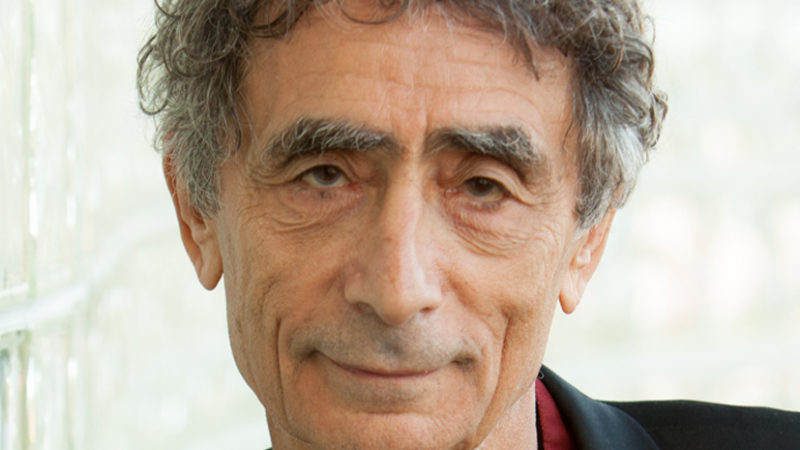
Dr. Gabor Maté is an author, speaker, and physician who specializes in addiction, stress, and childhood development. His many books include In the Realm of Hungry Ghosts and When the Body Says No. In this episode of Insights at the Edge, Tami Simon speaks with Dr. Maté about his views on modern mental health evaluation—specifically the widespread diagnoses of ADHD and depression. They discuss the connection between emotional expression and immune response, as well as how the body can be an effective teacher. Finally, Dr. Maté comments on how mental health issues can often be rooted in compensating behaviors from childhood and how healing can be approached from a bio-psycho-social perspective. (68 minutes)
The foundational flaw in human behavior is the belief that “I’m not okay.” What follows is the lifelong attempt to fix this through external achievements, relationships, and coping mechanisms. Spiritual growth begins by shifting from trying to fix one’s discomfort to inquiring why the discomfort exists in the first place. Life itself becomes the guru, revealing daily why we close our hearts. The only true practice is to let go of resistance in every moment, allowing life to sculpt us into our highest nature, which is already pure joy and love.
“Do you mind?” We “mind” everything, from traffic to childhood memories, and this habitual minding creates endless mental ripples that disturb our peace. Spiritual growth is not found through adding practices but through subtracting resistance, through relaxing and letting go of what disturbs us. Every moment becomes an opportunity to free ourselves by choosing not to mind, and over time this unlocks profound freedom and transformation.
The ego often says “I don’t care” as a defense mechanism to avoid pain or disappointment. Truly not caring isn’t about becoming indifferent, but about genuinely letting go of the need for things to be a certain way. When we stop resisting life and release our inner preferences, we experience a peaceful state where nothing has to change for us to be OK.
Resistance is the inner act of opposing what is, and it is the root cause of all suffering. Whether you are resisting emotions, thoughts, or life events, it is this opposition—not the events themselves—that causes disturbance. Spiritual freedom comes through a deep state of nonresistance: allowing reality to pass through you without blocking it. Once you reach this state, you are truly ready to interact with life instead of reacting to it.
Nonduality is not an abstract philosophy but a practical spiritual path rooted in everyday life. The Universe is one unified system, but we can’t see it that way because we need certain parts to be certain ways. This is because we don’t feel whole within ourselves, so we differentiate the outside based on what we think will make us feel better or worse. Once we feel whole and at peace inside, everything is free to be as it is—one nondual reality.
Spiritual growth begins not by seeking higher states, but by fully recognizing how we built the ego out of thoughts from our past and are now identified with it. Our resultant preferences and suppressed past experiences make us suffer and constrict our awareness to ourselves. True liberation comes not by spiritualizing the ego, but by relaxing behind it and allowing reality to pass through while remaining centered in our true nature as consciousness.
Spiritual growth is not separate from daily life but an integral part of it. It is about recognizing the sacredness of every moment and maintaining a divine state regardless of life’s circumstances. Life’s challenges and discomforts serve as opportunities to grow and evolve. The ultimate goal is to free yourself from attachments, expectations, and self-imposed limitations and return to the natural state of Self-Realization. By letting go of mental and emotional constraints, you can effortlessly ascend to a higher state of being.
True understanding of consciousness comes not through philosophical thinking or external experimentation but from the direct experience of Self. When awareness is no longer distracted by thoughts, emotions, and sensory inputs, you can remain in the seat of objective observation and directly experience the true nature of consciousness. Ancient yogis achieved this state through practices that quieted the mind and withdrew attention from external distractions. This led to a profound merger with the universal source of consciousness. True spiritual evolution involves turning inward to explore consciousness directly.
Life is fundamentally simple—we’re sitting on a tiny planet spinning through infinite space for a few years, and that’s it. We make it complicated by deciding how everything must be for us to be okay. This creates suffering, anxiety, and endless worries. Spirituality is about opening up, honoring, and appreciating life as it is. As we let go of ourselves, life becomes joyful, creative, and rich, not because it changed, but because we did.
Living in the present moment frees you from the burden of past experiences and anxieties about the future. Emotional and psychological blockages, formed by resistance to the past, will inevitably distort your mind’s view of reality and limit happiness. By practicing mindfulness, acceptance, and inner purification, you can learn to live in the present moment and embrace life’s challenges with enthusiasm and openness rather than fear and resistance.
Our lives are governed by the programming from our past experiences that create preferences, defenses, and closures which block the natural upward flow of shakti. Spiritual work is learning to not close—releasing stored disturbances, relaxing in the face of triggers, and practicing openness in ordinary situations until we experience unconditional well-being. Sustained openness liberates your inner energy, leading to overwhelming love, joy, and, ultimately, spiritual union.
There are two very different approaches to achieving a beautiful, love-filled life. The first is externally focused—seeking joy, love, and peace through outside circumstances, people, or actions. The second is inward, asking why these very natural states are blocked internally and taking responsibility for removing those blockages. Love and joy are inherent to everyone but are obscured by stored emotional pain, fears, and responses conditioned by past experiences. By letting go of these internal blockages and facing life’s challenges with openness rather than resistance, you can cultivate love and inner freedom as your unconditional state of being.
Spiritual growth is not about rising higher but about releasing the inner attachments and conditioning that hold you down. Your suffering comes from resisting reality and clinging to preferences formed by past experiences. By accepting life as it unfolds and letting go of inner resistance, you access natural peace, clarity, and eventually transcend the ego entirely.
Love is an inner energy that flows naturally when the heart is open, but people block it by holding onto past pain and resisting reality. The external world does not cause the absence of love—our internal reactions and stored past experiences do. By letting go, relaxing through discomfort, and accepting reality as it is, one can live in a continuous state of openness and unconditional love.
True spiritual growth comes from ceasing to constantly focus on yourself—I, me, and mine. Instead of getting caught up in personal likes and dislikes, you can learn to serve the moment in front of you with your full heart and soul, without expecting anything in return. To do this, you must gradually become comfortable with both positive and negative experiences by letting go of inner resistance. Understand that spiritual practice is not about seeking rewards, but about deep surrender to the present moment and serving that moment as your gift to God.
Once we realize that the higher self lies beyond our thoughts and emotions, we’ve taken an important first step. But anyone who’s had this insight knows that the journey has just begun. “If you think you can quickly free yourself from the power of the mind and the heart,” Michael Singer teaches, “you are in for a surprise.” Here, he guides us into the work of freeing ourselves through our choices and our continual commitment to spiritual practice.
Spiritual growth comes from treating daily life and spiritual practices as one and the same. To do this requires accepting reality and responding to life’s events with calm awareness rather than reacting out of desire or fear. By surrendering to the present moment and acting without personal motive, one can achieve true spiritual evolution and live in harmony with life as it unfolds.
What if the secret to happiness is not being somebody, but being willing to be nobody? Imagine living without the need to prove or protect yourself, without the constant drive for acceptance or the fear of failure. What if you could just be real? Life would become effortless, free from judgment, and full of peace. True liberation isn’t about escaping the world—it’s freeing yourself to live in harmony with it. Be done with ego and discover true peace.