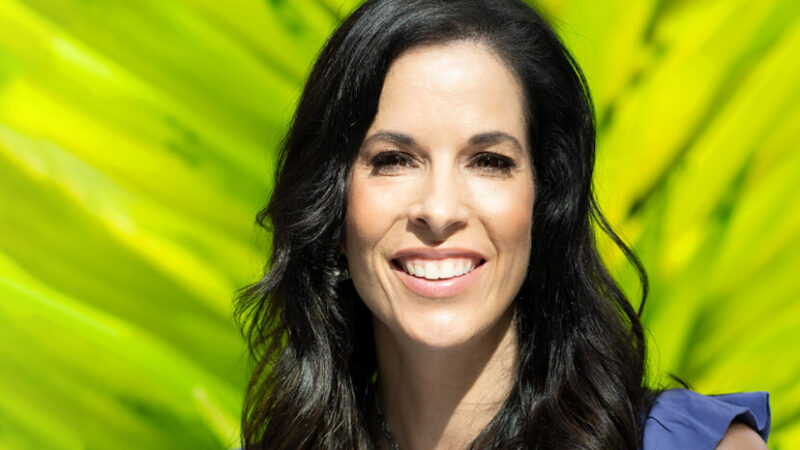
Be What You Want to Receive: Three Ways to Experiment with Microdosing Bravery

    —
July 12, 2022

At a time when we’re marinating in trauma and dealing with the test of a lifetime, we all wish things were different. When what we want from life is a million mile march from what it actually is, it can seem like we need a massive intervention to keep facing what’s at hand. 

But research shows that small things can make a big difference. Just like stress is cumulative, so are the daily steps we take to grow and give.

Microdoses of bravery add up. To start, consider moving from asking what will the world offer me, to what will I offer the world? Tiny bits of strategic courage are sources of nourishment that can help you become what you want to receive. 

Getting comfortable with the uncomfortable is a tall order, but worth doing. Microdosing bravery can help us build the strength and stamina that helps us heal, create, and liberate from fear, despair, and isolation. 

Here are three ways you can experiment with microdosing bravery including journal prompts for reflection.
Worth the Risk - Be What You Want to Receive


BE LOVE. 

Loneliness is being called “the new smoking,” a modern health risk. For some, the global pandemic has strengthened relationships, allowing for bonding and teamwork like never before. For others, it’s wreaked havoc: leading to feeling smothered and stuck. For those living alone, distancing has been brutal, making love feel far from reach. Loss, whether through death, divorce, breakups, or other factors, singes our hearts. We can become avoidant and skeptical of our future potential to love and be loved. 

When we strive to embody love, it’s essential to keep an open mind and heart. Loving connections are protective factors to our well-being. Consider these microdoses of bravery to strengthen your relationships, your sense of belonging, and the co-creation of new love paradigms in your life:

  • Get real. Go through your friends on social media and make a list of all the real people in your life with whom you can be yourself. Make a conscious effort to spend time outside of social media. Thank them for being so real to you and vow you’ll do the same.
  • Spark connection. Initiate a conversation with a partner or friend to see if you can build greater intimacy or camaraderie. To improve your connection, ask them what would mean a lot to them, and offer your own thoughts too.
  • Seek affinity relationships. Write a short poem or essay about yourself to clarify your various identities and then seek an affinity connection. Invite that person for coffee. Don’t shy away from sharing yourself and nudging them to do the same.
  • Be innovative. Create your own bravery microdose to help you be love.

Take note:

Write down what you chose to do and reflect on how it cultivated love in your life. Consider sharing this with someone you trust to help you maximize your efforts.

BE HEALING. 

The level of trauma at hand has ravaged our lives, making healing feel elusive on a good day, impossible on a bad. Given the magnitude of suffering at hand, healing should not be trivialized as a three-step process. Healing requires enormous courage. Microdosing bravery can help us reach out and tap in to the many forms of restoration available to us.  

Understanding how resilience works is a helpful way to begin healing. Gone are the days when it was viewed as a character trait—something you’re born with or not. There’s a lot of hype about being gritty and never letting anyone see you sweat that gets in the way of us finding the right support. Here are some ways to microdose bravery to foster healing and build resilience:

  • Recognize you’re not alone. The biggest lie our difficulties tell us is that we’re the only ones dealing with such intense suffering. All of us are living in a global mental health crisis, with exorbitant pressures and crushing circumstances. Suffering is part of our shared humanity. Finding solidarity and safe community can serve as a catalyst to healing. As we get traction in our own healing process, our acts of courage can be nourishing and healing to those around us.
  • Self-advocate. Healing requires intentional change in our communication. Many of us are comfortable and willing to give help, but few are asking for it. Identify one trusted person in your life that you know has the emotional maturity and skills to listen and support you. Tell them what you’re going through and work with them to identify potential roads toward healing, such as therapy, strategic behavioral change, and targeted self-care.
  • Set boundaries. Untreated trauma and unresolved issues can haunt us and impair the quality of our lives. By paying attention to what we say yes and no to, we can ensure we are leaving space for growth after we’ve gone through significant stressors. Find language to courageously share what you can commit to, and what you cannot. Enlist support to help you firmly protect your time so that you can devote attention to healing and restoration.
  • Identify resources. Take some time to scan your direct environment for things that nurture and sustain you. Select one or two things that can be microdosed to build your bravery.

Take note:

Write down things that help you experience healing. How can you continue to build off this?

BE A LIBERATOR. 

Society can project a lot onto us, caging us into patterns of conformity that can become harmful. Freedom to live as our truest selves isn’t something that comes with safety or ease. The work of unhooking from social prescriptions and ills can be fraught and exhausting. Still, when we find the courage to call out injustice and fight for a more humane world, we can experience exuberance and help change paradigms.

When we strive to liberate, we realize that we must dismantle oppression. That we must advocate for inclusivity and human reverence, particularly for social identities that are marginalized and harmed. Constrained living hinders human progress, individually and collectively. Consider these microdoses of bravery to liberate from social constructs that are harmful:

  • Let go. Take inventory of so-called social “norms” and become less apt to cower in the face of social impositions that are dismissive and destructive toward “difference.” Embrace your own multidimensionality, and that of humanity.
  • Speak up. We all have opportunities to be active contributors rather than passive bystanders in the world. Practicing accountability means that we call out injustice and work to eradicate forms of human suffering and imprisonment—whether based on race, gender, orientation, age, place of origin, or other social identity categories.
  • Practice human reverence. Move from me to we. See the glory and wonder across the human spectrum. Honor varied identities and perspectives. Work to find and engage in diverse relationships, rather than staying insular or spending time with those that look like, love like, and think like you. Become a liberator by standing fervently with those who’ve been marginalized, oppressed, or discriminated against. Seek ways to forge change, bit by bit.
  • Break Free. Create your own bravery microdose to help you liberate.

Take note:

What do you need to be liberated from? Do you know someone who is struggling in a similar way? How might you join forces and work together to become freer?
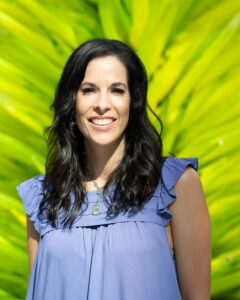
Author Kristen LeeKristen Lee, EdD, LICSW, is an award-winning Behavioral Science and Leadership professor, clinician, researcher, activist, comedian, author of Worth the Risk: How to Microdose Bravery to Grow Resilience, Connect More, and Offer Yourself to the World, and host of Crackin’ Up. She has over two decades of clinical experience in mental health, and twelve years of teaching and leadership roles in higher education, focusing on underserved populations. She leads the Behavior Science program at Northeastern University. For more, visit kristenlee.com.
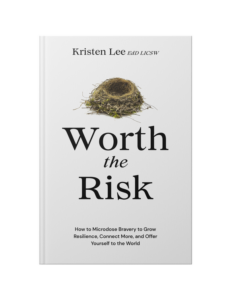


Book - Worth the Risk


Learn More

Amazon | Barnes & Noble | IndieBound | Bookshop | Sounds True

Kristen Lee

Kristen Lee, EdD, LICSW, is an award-winning Behavioral Science and Leadership professor, clinician, researcher, activist, comedian, author of Reset and Mentalligence, and host of Crackin’ Up. She has over two decades of clinical experience in mental health, and twelve years of teaching and leadership roles in higher education, focusing on underserved populations. She leads the Behavior Science program at Northeastern University. She lives in Boston, Massachusetts. For more, visit kristenlee.com.

Author photo © Priyantha Herath

Also By Author

Be What You Want to Receive: Three Ways to Experiment ...

At a time when we’re marinating in trauma and dealing with the test of a lifetime, we all wish things were different. When what we want from life is a million mile march from what it actually is, it can seem like we need a massive intervention to keep facing what’s at hand. 

But research shows that small things can make a big difference. Just like stress is cumulative, so are the daily steps we take to grow and give.

Microdoses of bravery add up. To start, consider moving from asking what will the world offer me, to what will I offer the world? Tiny bits of strategic courage are sources of nourishment that can help you become what you want to receive. 

Getting comfortable with the uncomfortable is a tall order, but worth doing. Microdosing bravery can help us build the strength and stamina that helps us heal, create, and liberate from fear, despair, and isolation. 

Here are three ways you can experiment with microdosing bravery including journal prompts for reflection.

Worth the Risk - Be What You Want to Receive


BE LOVE. 

Loneliness is being called “the new smoking,” a modern health risk. For some, the global pandemic has strengthened relationships, allowing for bonding and teamwork like never before. For others, it’s wreaked havoc: leading to feeling smothered and stuck. For those living alone, distancing has been brutal, making love feel far from reach. Loss, whether through death, divorce, breakups, or other factors, singes our hearts. We can become avoidant and skeptical of our future potential to love and be loved. 

When we strive to embody love, it’s essential to keep an open mind and heart. Loving connections are protective factors to our well-being. Consider these microdoses of bravery to strengthen your relationships, your sense of belonging, and the co-creation of new love paradigms in your life:

  • Get real. Go through your friends on social media and make a list of all the real people in your life with whom you can be yourself. Make a conscious effort to spend time outside of social media. Thank them for being so real to you and vow you’ll do the same.
  • Spark connection. Initiate a conversation with a partner or friend to see if you can build greater intimacy or camaraderie. To improve your connection, ask them what would mean a lot to them, and offer your own thoughts too.
  • Seek affinity relationships. Write a short poem or essay about yourself to clarify your various identities and then seek an affinity connection. Invite that person for coffee. Don’t shy away from sharing yourself and nudging them to do the same.
  • Be innovative. Create your own bravery microdose to help you be love.

Take note:

Write down what you chose to do and reflect on how it cultivated love in your life. Consider sharing this with someone you trust to help you maximize your efforts.

BE HEALING. 

The level of trauma at hand has ravaged our lives, making healing feel elusive on a good day, impossible on a bad. Given the magnitude of suffering at hand, healing should not be trivialized as a three-step process. Healing requires enormous courage. Microdosing bravery can help us reach out and tap in to the many forms of restoration available to us.  

Understanding how resilience works is a helpful way to begin healing. Gone are the days when it was viewed as a character trait—something you’re born with or not. There’s a lot of hype about being gritty and never letting anyone see you sweat that gets in the way of us finding the right support. Here are some ways to microdose bravery to foster healing and build resilience:

  • Recognize you’re not alone. The biggest lie our difficulties tell us is that we’re the only ones dealing with such intense suffering. All of us are living in a global mental health crisis, with exorbitant pressures and crushing circumstances. Suffering is part of our shared humanity. Finding solidarity and safe community can serve as a catalyst to healing. As we get traction in our own healing process, our acts of courage can be nourishing and healing to those around us.
  • Self-advocate. Healing requires intentional change in our communication. Many of us are comfortable and willing to give help, but few are asking for it. Identify one trusted person in your life that you know has the emotional maturity and skills to listen and support you. Tell them what you’re going through and work with them to identify potential roads toward healing, such as therapy, strategic behavioral change, and targeted self-care.
  • Set boundaries. Untreated trauma and unresolved issues can haunt us and impair the quality of our lives. By paying attention to what we say yes and no to, we can ensure we are leaving space for growth after we’ve gone through significant stressors. Find language to courageously share what you can commit to, and what you cannot. Enlist support to help you firmly protect your time so that you can devote attention to healing and restoration.
  • Identify resources. Take some time to scan your direct environment for things that nurture and sustain you. Select one or two things that can be microdosed to build your bravery.

Take note:

Write down things that help you experience healing. How can you continue to build off this?

BE A LIBERATOR. 

Society can project a lot onto us, caging us into patterns of conformity that can become harmful. Freedom to live as our truest selves isn’t something that comes with safety or ease. The work of unhooking from social prescriptions and ills can be fraught and exhausting. Still, when we find the courage to call out injustice and fight for a more humane world, we can experience exuberance and help change paradigms.

When we strive to liberate, we realize that we must dismantle oppression. That we must advocate for inclusivity and human reverence, particularly for social identities that are marginalized and harmed. Constrained living hinders human progress, individually and collectively. Consider these microdoses of bravery to liberate from social constructs that are harmful:

  • Let go. Take inventory of so-called social “norms” and become less apt to cower in the face of social impositions that are dismissive and destructive toward “difference.” Embrace your own multidimensionality, and that of humanity.
  • Speak up. We all have opportunities to be active contributors rather than passive bystanders in the world. Practicing accountability means that we call out injustice and work to eradicate forms of human suffering and imprisonment—whether based on race, gender, orientation, age, place of origin, or other social identity categories.
  • Practice human reverence. Move from me to we. See the glory and wonder across the human spectrum. Honor varied identities and perspectives. Work to find and engage in diverse relationships, rather than staying insular or spending time with those that look like, love like, and think like you. Become a liberator by standing fervently with those who’ve been marginalized, oppressed, or discriminated against. Seek ways to forge change, bit by bit.
  • Break Free. Create your own bravery microdose to help you liberate.

Take note:

What do you need to be liberated from? Do you know someone who is struggling in a similar way? How might you join forces and work together to become freer?

Author Kristen LeeKristen Lee, EdD, LICSW, is an award-winning Behavioral Science and Leadership professor, clinician, researcher, activist, comedian, author of Worth the Risk: How to Microdose Bravery to Grow Resilience, Connect More, and Offer Yourself to the World, and host of Crackin’ Up. She has over two decades of clinical experience in mental health, and twelve years of teaching and leadership roles in higher education, focusing on underserved populations. She leads the Behavior Science program at Northeastern University. For more, visit kristenlee.com.


Book - Worth the Risk


Learn More

Amazon | Barnes & Noble | IndieBound | Bookshop | Sounds True
Microdosing Bravery

Kristen Lee, EdD, LICSW, is an award-winning behavioral science and leadership professor, clinician, researcher, activist, comedian, and the author of Reset, Mentalligence, and with Sounds True, her newest book, Worth the Risk. The host of Crackin’ Up, she has over two decades of clinical experience in mental health and twelve years of teaching and leadership roles in higher education, focusing on underserved populations. She leads the Behavior Science program at Northeastern University. 

In this podcast, Kristen Lee joins Sounds True founder Tami Simon to talk about how strategically “microdosing” risk can cultivate courage and resilience in the face of challenge and adversity. Kristen and Tami discuss: embodying a sense of gumption and spirit; bringing mental health out of the shadows; measuring our risks against our values; how risk can nurture resilience; the importance of safe relationships; finding the right balance between being on the edge and being safe; anxiety as a “frenemy,” and how self-acceptance and compassion support healing and change; microdosing bravery in our creative pursuits; freeing ourselves from the need for external validation; moving from being a spectator to an active changemaker in the world and looking for ways we can begin our own process of active contribution; confronting your biases and prejudices; the illusion of perfection; the cult of overachievement; the new psychological safety; and more.

You Might Also Enjoy

Cecily Mak: “My Life Is Better Clear”

What if sobriety isn’t the point? Tami Simon talks with Cecily Mak, founder of the ClearLife Movement, about the spontaneous thirty-day break from drinking that began at Burning Man and never really ended. They explore why “alcohol-free” became a more honest word for her than “sober,” and what it looks like to face what we’re really avoiding when we reach for a drink, a distraction, or anything that dims our life.

Cecily Mak is the founder and visionary of the ClearLife Movement, a former attorney and Silicon Valley executive turned writer, podcast host, and co-founder of Wisdom Ventures. She is the author of Undimmed: The Eight Awarenesses for Freedom from Unwanted Habits.

In this conversation, Tami and Cecily explore:

  • The spontaneous thirty-day alcohol-free experiment that began at Burning Man, and the divorce decision behind it
  • Why Cecily chose the language “alcohol-free” over “sober,” and a therapist’s model of use, abuse, and addiction
  • The concept of dimmers: the habits, substances, and behaviors we use to soften difficult feelings
  • How to tell whether a habit is helping us grow, or helping us avoid something we already know
  • Forgiveness and letting go as an inside job, including her path toward her ex-husband and her late mother
  • Why self-compassion, not self-judgment, is often the real work underneath changing any habit
  • The sixth awareness: learning not to judge or impose our own path onto someone else’s

This conversation is for anyone questioning their relationship with alcohol or another habit, anyone doing forgiveness work with a parent or former partner, and anyone curious what it actually takes to live with more clarity and presence.

Listen now and discover what it means to live undimmed. →

This interview originally aired on Sounds True One, where you can enjoy early, ad-free access to episodes of Insights at the Edge: https://join.soundstrue.com/

Dr. Sue Morter: “The Energetic Architecture of A...

Twenty-six years ago, a chiropractor sitting in her first meditation class was transported into a field of light ten times brighter than the desert sun. Dr. Sue Morter, bestselling author of The Energy Codes, joins Tami Simon to map the energetic architecture behind that kind of awakening, and how the rest of us can build the inner circuitry to access it on purpose instead of by accident.

Dr. Sue earned her doctorate in chiropractic more than 40 years ago and has spent decades developing a body of work in bioenergetics—the study of how energy flows through, builds, and heals the body. She’s the founder of the Body Awake School of Yoga and the Morter Institute, an internationally recognized speaker, and the author of the new book The Anatomy of Awakening: The 5 Hidden Codes to Activate Self-Healing, Unlock Your Higher Consciousness, and Live Your Divine Destiny, which maps five additional energy centers beyond the familiar seven chakras.

In this conversation, Tami and Dr. Sue explore:

  • The spiritual experience that reoriented Dr. Sue’s entire career and, over time, helped resolve her lifelong scoliosis and migraines
  • Why “seeking enlightenment” misses the point, and why embodiment, not transcendence, is the real work
  • The five additional chakras beyond the traditional seven (eight through twelve), and what each one governs in our energetic architecture
  • How to build “energetic circuitry” at the site of a trigger instead of getting lost in its story
  • Spherical breathing and Mula Bandha as practical tools for grounding and stabilizing the nervous system
  • What it actually means to regulate your nervous system, and why trying too hard to do it can backfire

This episode is for anyone navigating a season of nervous system dysregulation, energy practitioners and bodyworkers, and listeners drawn to the chakra system who want a more embodied, practical approach to awakening.

Listen in for a guided practice you can use the next time you feel triggered, overwhelmed, or ungrounded.

Dr. Sue uses a number of visual aids throughout this conversation, so if you’d rather watch than just listen, you can find the video version on YouTube @SoundsTrueManyVoices or on our premium membership platform at soundstrueone.com

Just One Question | Lama Rod Owens: How Can I Receive ...


Giving love comes easy, but can you actually receive it? Lama Rod Owens says most of us flinch at being cared for, even by something as simple as the chair we’re sitting in. In this practice from his book The New Saints, he walks us through what it takes to actually let love in.

Lama Rod Owens, a Black Buddhist Southern Queen, authorized lama in the Kagyu lineage of Tibetan Buddhism, and author of The New Saints: From Broken Hearts to Spiritual Warriors, guides Tami Simon (and all of us listening) through a short meditation on receiving care, drawn straight from the pages of his new book.

In this conversation, Tami and Lama Rod explore:

  • Feeling supported by the seat or ground beneath you
  • Recalling a time someone, or something, really loved you
  • Letting that love move through the body, including the grief it can stir up along the way
  • Imagining the whole universe wanting you safe, happy, and free
  • Gently returning to the body and closing the practice

This one’s for anyone who finds it easier to give love than to receive it, which, let’s be honest, is most of us.

Taken from the full Insights at the Edge conversation with Lama Rod Owens. Find the complete interview in this feed or at https://bit.ly/new-saint

Leave a Reply

Your email address will not be published. Required fields are marked *