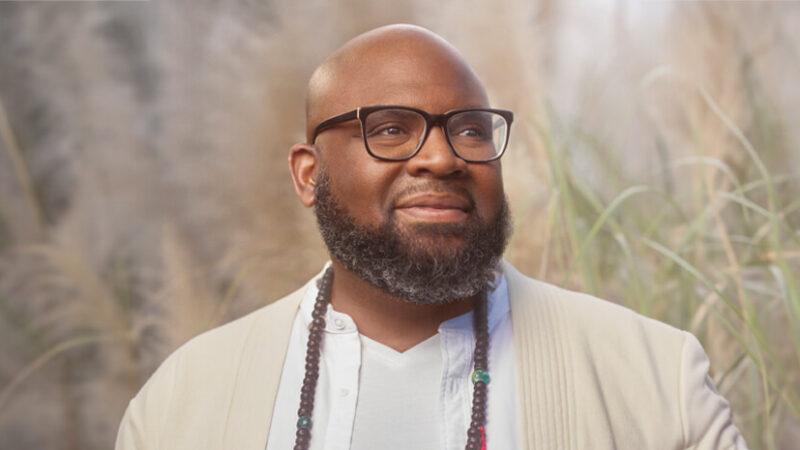
Lama Rod Owens

Lama Rod Owens is a “Black Buddhist Southern Queen” who is an authorized lama in the Kagyu School of Tibetan Buddhism with a Master of Divinity degree from Harvard. He is the coauthor of Radical Dharma and author of Love and Rage: The Path of Liberation Through Anger. He is the cofounder of Bhumisparsha, a Buddhist spiritual community, and has a gift for reaching diverse audiences with transformative wisdom. He lives in Atlanta, Georgia. For more, see lamarod.com.

Author photo © Jess Benjamin

Seane Corn

Seane Corn is an internationally celebrated yoga teacher known for her impassioned activism, unique self-expression, and inspirational style of teaching. Featured in commercials, magazines, NPR, and Oprah.com, Seane now utilizes her national platform to bring awareness to global humanitarian issues. In 2005, she was named “National Yoga Ambassador” for YouthAIDS, and in 2013 was given the “Global Green International Environmental Leadership Award.” Since 2007, she has been training leaders of activism through her co-founded organization Off the Mat, Into the World®. Seane has spent time in the US, India, Cambodia, Haiti and Africa working with communities in need- teaching yoga, providing support for child labor and educating people about HIV/AIDS prevention. Seane is also co-founder of the Seva Challenge Humanitarian Tours, which have raised almost $4 million since 2007, getting the yoga community involved in fund and awareness raising efforts across the globe. Her self-authored dvds are available through Gaiam and Yoga Journal, as well as her most recent groundbreaking 3-dvd set “The Yoga of Awakening” through Sounds True. She is currently working on her first book. For more, visit seanecorn.com.

Author photo © NormanSeeff-2018

Also By Author

Seane Corn and Lama Rod Owens: Steady Breath, Steady H...

How are you doing these days? Exhausted? Heartbroken? Outraged? All of the above? In this era of uncertainty and instability, you may feel like your only choice is to forge ahead and just get through the week. If so, this podcast with two beloved Sounds True authors was created just for YOU. Here, Tami Simon speaks with Seane Corn and Lama Rod Owens to hear their personal insights for navigating our rapidly-changing world from a place of deep connection to our most important values, to the people who give us strength, and to those with whom we may feel hopelessly divided.

Take a deep listen as they share about: Grounding yourself and returning to inner stability; the ongoing integration that’s needed in the post-Pandemic world; trauma, control, surrender, and liberation; honoring the natural cycles of life; dismantling systems of oppression and ushering in the selves we want to become; the power of raw truth; the skillful navigation of our grief, heartbreak, and outrage; becoming a New Saint; holding oneself accountable and continuing to do both your inner and outer work; reclaiming hope; reconnecting to your community of beloveds; the bodhisattva tradition; activism today; showing up instead of giving up; self-elevation and self-validation; and more.

Note: This episode originally aired on Sounds True One, where these special episodes of Insights at the Edge are available to watch live on video and with exclusive access to Q&As with our guests. Learn more at join.soundstrue.com.

Lama Rod Owens: The Path of the New Saint

To be a New Saint is to move into a direct relationship with suffering—our own and that of the world—and make a commitment to disrupt that suffering in any way we can, for as long as it takes. In this podcast, Tami Simon speaks with Lama Rod Owens about his trailblazing new book, The New Saints: From Broken Hearts to Spiritual Warriors. 

Give a listen to this inspiring conversation on how each one of us can become effective agents of social and spiritual liberation. Tami and Lama Rod discuss awakened care and bodhicitta; partnering with ancestral forces and the unseen world; brokenheartedness and our collective emotional labor; disrupting reactivity; the radical act of choosing joy; experiencing our true home; two traits of a prophet: embodying clarity and telling the truth; the New Saint as an ordinary human being; the practice of receiving love; spiritual warriorship and what it means to “fight within love”; prayers of protection; the commitment to get free from suffering; consenting to the work of being a New Saint; and more.

Note: This episode originally aired on Sounds True One, where these special episodes of Insights at the Edge are available to watch live on video and with exclusive access to Q&As with our guests. Learn more at join.soundstrue.com.

Lama Rod Owens: Finding Our Way Home Through the Body

Lama Rod Owens is an author, activist, and fully trained lama of the Vajrayana tradition of Tibetan Buddhism. With Sounds True, he is presenting during the upcoming Wisdom of the Body Summit, an online event devoted to tuning into the natural intuition and awareness of our physical forms. In this episode of Insights at the Edge, Tami Simon speaks with Lama Rod about the basics of Vajrayana and how its practices can be applied to modern life. Tami asks Lama Rod how his identity as an African-American, queer man informs his practice and teachings. In turn, Lama Rod comments on how spiritual teachings should meet people where they actually live and those parts of the Tantric tradition that he had to leave behind. Finally, Lama Rod explains how Vajrayana brings you into greater harmony with the body, as well as why love and anger aren’t the polar opposites you might assume.(63 minutes)

You Might Also Enjoy

Stephen Cope: Finding Your True Calling

Somewhere between a job that pays the bills and a life that feels genuinely lived sits a question most people spend decades avoiding: what is this all actually for? Stephen Cope has spent his career sitting with exactly that question, drawing on both contemporary psychology and one of the oldest texts in the yogic tradition to answer it. His answer, notably, refuses the comfortable vagueness that so much popular advice on purpose tends to settle for.

Cope is a scholar emeritus at the Kripalu Center for Yoga and Health and former director of the Kripalu Institute for Extraordinary Living, the largest yoga research institute in the Western world, working alongside scientists affiliated with Harvard Medical School. He is the bestselling author of The Wisdom of Yoga and The Great Work of Your Life, and with Sounds True, he created an eight-week course called Your True Calling. Sounds True has carried Cope’s work for years because his teaching sits squarely at the intersection of yoga and vocation, bridging rigorous scholarship and genuinely lived practice, exactly the combination our founder believed spiritual wisdom needed when Sounds True began in 1985.

In this piece, we look at what dharma actually means in Cope’s framework, why precision matters more than effort alone, and how the Bhagavad Gita still speaks directly to anyone quietly wondering if they’ve missed their own path.

Key Takeaways:

  • Dharma Has Precision: Learn why Stephen Cope insists that missing your calling by an inch is the same as missing it by a mile.
  • Subtraction Comes First: Understand why deciding what not to do matters as much as deciding what to pursue.
  • The Gita as a Modern Guide: See how an ancient parable still maps directly onto contemporary struggles with purpose.

Find Teachings that Speak to You With Sounds True.

Dharma: Purpose With Precision, Not Just Passion

Cope centers his teaching on dharma, a concept he defines as considerably more exact than the vague modern language of finding your passion.” His well-known line, that missing your calling by an inch is the same as missing it by a mile, captures something most self-help framing misses entirely: dharma isn’t a general direction; it’s a specific fit between a person’s gifts and the world’s genuine need for them. This precision can feel uncomfortable at first, since it leaves little room for the comfortable ambiguity many people prefer when talking about purpose, and it forces a much more honest inventory of what a person actually has to offer.

  • Not Vague Enthusiasm: Dharma requires a real match between innate gift and actual application.
  • Precision Over Proximity: Close alignment still counts as missing the mark in Cope’s framework.
  • A Path, Not a Feeling: Dharma is something lived and practiced, not simply felt once and confirmed.

The Bhagavad Gita as a Living Map

Cope draws heavily on the Bhagavad Gita, using the ancient warrior Arjuna’s crisis on the battlefield as a template for the very real paralysis many people feel when facing the direction of their own lives. Arjuna’s hesitation, caught between duty and doubt, becomes in Cope’s reading a stand-in for anyone stuck at a genuine crossroads, unsure whether to trust their gifts or retreat into safer, more familiar roles. What makes this ancient parable so enduring, Cope suggests, is that the core dilemma hasn’t actually changed much over thousands of years, only its modern packaging has, whether that shows up as a career change, a creative risk, or a quiet midlife reckoning.

  • Duty Versus Doubt: Arjuna’s paralysis mirrors the hesitation many feel before committing fully to a path.
  • An Old Text, A Current Struggle: The specific circumstances differ, but the underlying crisis of nerve repeats.
  • Guidance, Not Escape: The Gita offers a framework for engaging the crisis, not avoiding it.

Deciding What Not to Do

One of the more counterintuitive pieces of Cope’s teaching is his emphasis on subtraction. Before a person can bring their true gifts fully into the world, Cope argues, they usually need to consciously decide what they will stop doing, the obligations, distractions, and half-hearted commitments that quietly crowd out the work that actually matters. This isn’t framed as minimalism for its own sake; it’s framed as a necessary clearing, since a life spread too thin rarely has room left for genuine mastery. 

Cope walks through this idea in detail in Stephen Cope: Finding Your True Calling, where he suggests most people intuitively know what needs to go long before they’re willing to actually let it go, which is often the harder half of the work, requiring more courage than the initial act of choosing a direction ever did.

Build Relationships That Nourish and Sustain.

Riding the Wave: Meeting Emotion Instead of Managing It

Cope also teaches a process he calls riding the wave, a way of leaning fully into emotional experience rather than suppressing or intellectualizing it. This practice connects directly to his broader dharma teaching, since he suggests that avoiding emotion often becomes exactly the static that drowns out a person’s clearer sense of calling. 

Learning to stay present with difficult feelings, in his framework, isn’t separate from finding purpose. It’s part of the same discipline. Cope draws this connection from years of observing that clients who avoid strong emotion tend to also stay vague about their life’s direction, as if the two avoidances share a common root, each reinforcing the other over time.

Becoming a Warrior for Your Own Gifts

Toward the end of this conversation, Cope and Tami discuss what it means to become a warrior in service of one’s calling, not a combative stance, but a willingness to bring one’s full skill to a world that genuinely needs it. This reframes purpose away from private fulfillment alone and toward something closer to responsibility, the sense that withholding a genuine gift has consequences beyond the person holding it back. Cope suggests this warrior stance requires a kind of courage rarely discussed in conventional purpose-finding advice, the courage to be seen fully practicing a gift before it feels polished or guaranteed to succeed.

Center Yourself With Meditative Teachings by Sounds True

Final Thoughts

Stephen Cope doesn’t offer calling as something discovered once in a flash of clarity and never questioned again. It’s closer to a discipline requiring precision, subtraction, and an ongoing willingness to meet whatever emotion the path stirs up along the way. What makes his teaching endure, perhaps, is his refusal to romanticize the process; dharma, in his framework, demands real rigor, not simply good intentions. 

Sounds True continues sharing this conversation because helping people live their dharma more fully is, in many ways, exactly what waking up the world has always meant to us. If Cope’s teaching resonated, his books and eight-week course carry the work considerably further.

Frequently Asked Questions About Stephen Cope

Who is Stephen Cope?

He is a scholar emeritus at Kripalu and the bestselling author of The Wisdom of Yoga and The Great Work of Your Life.

What does Cope mean by dharma?

A precise alignment between a person’s innate gifts and the world’s genuine need for them.

What ancient text does Cope draw from most?

He draws heavily on the Bhagavad Gita, using Arjuna’s crisis as a template for finding purpose.

What is Your True Calling?

An eight-week online course Cope created with Sounds True focused on discovering one’s dharma.

Is riding the wave a therapy technique?

It’s a practice Cope teaches for staying present with emotion rather than suppressing or avoiding it.

Where can I listen to the full conversation?

The complete episode, “Stephen Cope: Finding Your True Calling,” is available on Sounds True.

Is this teaching only relevant to yoga practitioners?

No, Cope’s ideas on purpose and dharma apply broadly, regardless of any formal yoga background.

Does Sounds True offer other content by Stephen Cope?

Yes, Sounds True has published several of his books and courses on yoga, purpose, and psychological health.

Michelle Cassandra Johnson is an author, activist, spiritual teacher, racial equity consultant, and intuitive healer. She is the author of six books, including Skill in Action and Finding Refuge. Amy Burtaine is a leadership coach and racial equity trainer. With Robin DiAngelo, she is the coauthor of The Facilitator's Guide for White Affinity Groups. For more, visit https://www.michellecjohnson.com/wisdom-of-the-hive.

Best Yoga and Movement Courses for Building a Daily Pr...

Building a daily yoga practice can bring movement, mindfulness, and greater presence into everyday life. The right course can provide structure while allowing the practice to develop at a comfortable pace.

For more than 40 years, Sounds True has shared spiritual wisdom and transformational teachings from respected teachers through courses, books, audio programs, and other learning experiences.

In this piece, the best yoga courses for building a daily practice are discussed, along with ways to choose an approach that supports a consistent routine.

Key Takeaways:

  • Practice Options: Learn how yoga and mindful movement courses can support different interests, experience levels, and personal routines.
  • Everyday Consistency: See how online yoga courses can make a daily yoga practice more accessible and easier to maintain.
  • Personal Growth: Understand how regular practice can nurture body awareness, presence, mindfulness, and a deeper connection with yourself.

Center Yourself With Meditative Teachings by Sounds True

Best Yoga Courses for Building a Daily Practice

A steady yoga practice can create space to reconnect with the body, settle the mind, and bring greater awareness to everyday life. The best yoga courses for building a daily practice make that process approachable by offering guidance you can return to regularly. At Sounds True, our teachings are created to meet learners at different stages of their journey, with practices rooted in presence, personal growth, and embodied wisdom.

Yoga can be adapted to many bodies, backgrounds, and stages of life. Learning more about approaches such as Yoga for Men can also help you consider how a practice may support your individual needs and intentions.

Online Yoga Courses for a Consistent Daily Yoga Practice

Online yoga courses can make consistency easier by bringing guided instruction into your own space. Instead of arranging your day around a studio schedule, you can choose a practice that fits naturally into your routine.

A daily yoga practice does not need to be lengthy to feel meaningful. Short, focused sessions can provide opportunities to work with the breath, notice sensations, and become more attentive to the relationship between body and mind. Over time, returning to these practices can help yoga become a familiar part of daily life.

How Online Yoga Courses Support Mindful Movement

Yoga is one way to cultivate embodied awareness, but mindful movement can take many forms. Online yoga courses may include teachings on breathing, mobility, posture, meditation, and other forms of conscious movement that encourage a closer relationship with the body.

Accessibility matters, too. Practices may need to change as our bodies and circumstances change. Our guide to Yoga for Seniors offers additional perspective on adapting yoga for older adults and approaching movement with care.

Find Teachings that Speak to You With Sounds True.

Choosing the Right Course for Your Daily Yoga Practice

A sustainable daily yoga practice begins with choosing teachings that fit your current needs. Consider your experience level, available time, preferred pace, and what you hope to cultivate through practice.

Some people are drawn to physically active sessions, while others prefer restorative movement, breathwork, or meditation alongside yoga. A course that feels manageable is often easier to revisit consistently. Giving yourself room to adjust the duration and intensity can also help your practice remain supportive rather than becoming another obligation.

Benefits of Online Yoga Courses and a Daily Yoga Practice

Consistency offers an opportunity to experience yoga as an ongoing practice rather than an occasional activity. Depending on the style and approach, yoga may support flexibility, strength, balance, relaxation, and greater awareness of the body and breath. Our guide to the Benefits of Yoga looks more closely at the ways yoga can support physical, mental, and emotional well-being.

Online yoga courses can provide the structure and guidance needed to keep returning to practice. With regular attention, movement can become a meaningful way to cultivate presence and deepen your connection with yourself.

Learn Practices for Self-Compassion with Sounds True.

Final Thoughts

The best yoga courses for building a daily practice make consistency feel approachable and meaningful. With supportive guidance and mindful movement, a daily yoga practice can become a steady opportunity to nurture presence, awareness, and connection with your body.

Frequently Asked Questions About the Best Yoga Courses for Building a Daily Practice

How long does it take to establish a regular yoga habit?

There is no set timeline. A realistic schedule and consistent practice can help yoga become part of your routine.

Is it better to practice yoga in the morning or evening?

Either can work. Choose a time that fits your schedule and makes regular practice easier.

Do I need yoga equipment to take an online course?

Not always. Some courses may recommend a mat, blocks, straps, or blankets for added support.

Can beginners take movement courses alongside yoga?

Yes. Beginner-friendly movement courses can complement yoga through mobility, breathing, and body awareness.

Should I take one yoga course at a time?

You can. Focusing on one course may help you become more familiar with its practices and teachings.

What should I look for in an online yoga teacher?

Look at their experience, teaching approach, course focus, and ability to provide clear, accessible guidance.

Can meditation be part of a daily yoga routine?

Yes. Meditation and breathwork can complement physical yoga and support greater awareness and presence.

What if I miss a day of yoga?

Simply return to your practice when you can. Flexibility can make a long-term routine easier to maintain.

How can I tell if a yoga course matches my experience level?

Check the course description, intended audience, prerequisites, and difficulty level before starting.

Can I repeat the same online yoga course?

Yes. Repeating a course can deepen familiarity with the movements, practices, and teachings.

Michelle Cassandra Johnson is an author, activist, spiritual teacher, racial equity consultant, and intuitive healer. She is the author of six books, including Skill in Action and Finding Refuge. Amy Burtaine is a leadership coach and racial equity trainer. With Robin DiAngelo, she is the coauthor of The Facilitator's Guide for White Affinity Groups. For more, visit https://www.michellecjohnson.com/wisdom-of-the-hive.

What Is Yoga Nidra and How Does It Differ From Meditat...

While both yoga nidra and meditation gently guide us toward a spacious awareness, each offers a unique pathway home to ourselves. Yoga nidra invites you into a state of deep, guided rest—a conscious sleep where healing can unfold. Meditation, on the other hand, embraces a beautiful spectrum of practices designed to quiet the mind, anchor your attention, and awaken you to the present moment.

For more than 40 years, Sounds True has shared spiritual wisdom and transformational teachings from leading voices in meditation, mindfulness, yoga, and personal growth.

In this piece, it will be discussed what yoga nidra vs meditation means, their key differences, yoga nidra benefits, and the role of guided rest meditation.

Key Takeaways:

  • Practice: Yoga nidra uses structured guidance for conscious rest, while meditation includes a broader range of approaches to attention and awareness.
  • Benefits: Yoga nidra benefits may include opportunities for deep relaxation, mindful awareness, and a closer connection with inner experience.
  • Choice: Guided rest meditation may suit those drawn to verbal guidance and relaxation, while other meditation practices can support different contemplative intentions.

Center Yourself With Meditative Teachings by Sounds True

What Is Yoga Nidra vs Meditation?

Yoga nidra, often translated as “yogic sleep,” is generally practiced lying down and following verbal guidance. As the body becomes deeply relaxed, the practitioner is invited to remain aware rather than drift fully into sleep.

Meditation can be practiced seated, lying down, standing, or walking. Techniques also vary widely, from observing the breath to repeating a mantra or resting in open awareness. Our guide to Meditation and Yoga offers more context on how these contemplative traditions relate to one another.

How Guided Rest Meditation Differs From Traditional Meditation

Guided rest meditation typically relies on spoken instructions that lead attention through the body, breath, sensations, or other aspects of present-moment experience. Yoga nidra is a structured form of guided practice that encourages progressively deeper relaxation.

Traditional meditation does not necessarily focus on rest. Depending on the technique, you may observe thoughts, focus on the breath, cultivate compassion, or simply notice what arises. If you are interested in building consistency, learning How to Start a Daily Meditation Practice can help establish a foundation.

Yoga Nidra Benefits for Deep Rest and Awareness

One of the most valued yoga nidra benefits is its emphasis on conscious rest. By allowing the body to gently settle while maintaining awareness, the practice creates space to notice sensations and inner experiences with less effort.

Rather than requiring intense concentration, yoga nidra instead invites you to listen and follow the guidance as the body relaxes.

Awaken Something Greater Within You. Find Teachings that Speak to You With Sounds True.

How Yoga Nidra Benefits Mindfulness and Relaxation

Yoga nidra can also support mindfulness by encouraging awareness of the body, breath, and present experience. This connection between physical awareness and inner attention reflects the broader relationship between contemplative and yogic practices.

Those interested in this wider tradition can also learn about the Benefits of Yoga and the many ways yoga can support well-being and greater presence.

Is Yoga Nidra or Guided Rest Meditation Right for You?

The beautiful truth is that your practice can bend to meet exactly what your soul needs today. Yoga nidra invites you to simply lie down, let go, and allow a soothing voice to guide you into profound stillness—making it a perfect sanctuary if you are seeking deep rest as a form of spiritual practice.

Other paths of meditation might call to you if you wish to actively cultivate focused attention, loving-kindness, mindfulness, or gentle self-inquiry. There is no need to choose just one; yoga nidra and meditation complement each other beautifully. Both offer sacred, gentle pathways to awaken your presence and cultivate a deeper, more loving relationship with your inner world.

Meet Your Sorrow with Kindness. Learn Practices for Self-Compassion with Sounds True.

Final Thoughts

Ultimately, both yoga nidra and meditation are sacred invitations to step out of the busy current of doing and return to the simple truth of being. Yoga nidra cradles you in a space of guided, conscious rest, while the vast landscape of meditation offers diverse paths to nurture mindfulness and quiet your inner world. Both are profoundly beautiful ways to anchor your daily life in awareness. There is no right or wrong path—only the practice that feels most supportive, nourishing, and true for you in this very moment.

Frequently Asked Questions About Yoga Nidra vs Meditation

How long should a yoga nidra session last?

Many yoga nidra sessions last 20 to 45 minutes, though shorter practices can also be helpful.

Do you need yoga experience to practice yoga nidra?

No, yoga nidra is beginner-friendly and does not require previous yoga experience.

Can you fall asleep during yoga nidra?

Yes, falling asleep can happen, although the practice encourages gentle awareness during deep rest.

What is a sankalpa in yoga nidra?

A sankalpa is a personal intention or resolve used in some yoga nidra practices.

What is the best time of day to practice yoga nidra?

Yoga nidra can be practiced whenever you have time to rest comfortably without interruption.

Do you need special equipment for yoga nidra?

No, you simply need a comfortable place to lie down, though pillows and blankets can help.

Can yoga nidra be part of a regular meditation routine?

Yes, yoga nidra can complement seated meditation and other contemplative practices.

Is yoga nidra a type of mindfulness practice?

Yoga nidra can support mindfulness by guiding awareness toward the body, breath, and present experience.

Is guided rest meditation suitable for beginners?

Yes, guided rest meditation can be approachable for beginners because spoken guidance provides a clear focus.

How often can you practice yoga nidra?

You can practice yoga nidra as often as it feels supportive and fits naturally into your routine.

Michelle Cassandra Johnson is an author, activist, spiritual teacher, racial equity consultant, and intuitive healer. She is the author of six books, including Skill in Action and Finding Refuge. Amy Burtaine is a leadership coach and racial equity trainer. With Robin DiAngelo, she is the coauthor of The Facilitator's Guide for White Affinity Groups. For more, visit https://www.michellecjohnson.com/wisdom-of-the-hive.