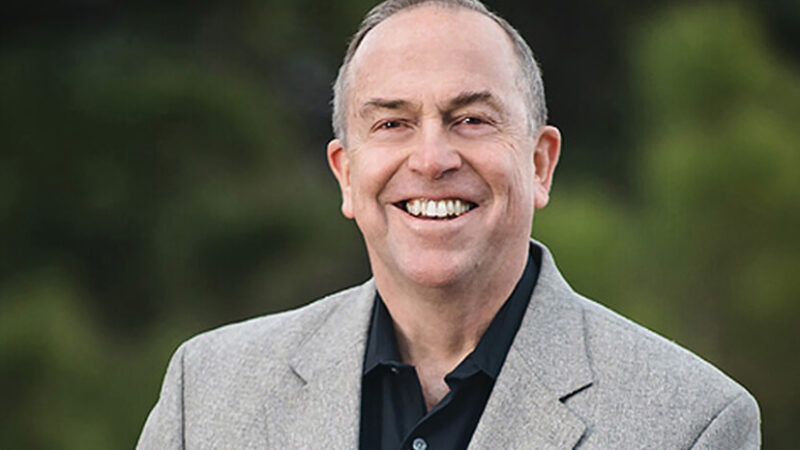
Bruce Tift: Already Free

    —
January 31, 2023

Bruce Tift: Already Free

Bruce Tift — January 31, 2023

Have you ever wondered how to hold the following two seemingly contradictory experiences? On the one hand, you feel in touch with the vast expanse of being. You sense that your true nature is infinite, boundless, unconditionally loving, and outside of time. And on the other hand, you know that in certain situations (usually involving other people!), you are avoidant, dismissive, reactive, and shut down, and—truth be told—you have a lot of healing and personal growth work to do.

Buddhist psychotherapist Bruce Tift is a master at holding these two seemingly contradictory views, and—ready for this?—he does so “without any hope of resolution.” In this podcast, Tami Simon and Bruce Tift talk about how, in his work with clients, he skillfully embraces both the developmental view of psychotherapy and the fruitional view of Vajrayana Buddhism, the blind spots that come with each approach, and how combining them can help people avoid these pitfalls. 

Tune in as they discuss unconditional openness, and how it is important to be “open to being closed”; how neurosis requires disembodiment, and further, how our neurosis is fundamentally an avoidance strategy—“a substitute for experiential intensity”; our complaints about other people (especially our relationship partners) as opportunities to take responsibility for our own feelings of disturbance (instead of blaming other people for upsetting us); how to engage in “unconditional practices,” such as the practice of unconditional openness, unconditional embodiment, and unconditional kindness; and more.

Bruce Tift, MA, LMFT has been in private practice since 1979, has taught at Naropa University for 25 years, and has given presentations in the US, Mexico, and Japan. A practitioner of Vajrayana Buddhism for more than 35 years, he had the good fortune to be a student of Chogyam Trungpa Rinpoche and to meet a number of realized teachers.

Author photo © Steve Zdawczynski

900 Episodes and Counting…

Subscribe to Insights at the Edge to hear all of Tami’s interviews (transcripts available too!), featuring Eckhart Tolle, Caroline Myss, Tara Brach, Jack Kornfield, Adyashanti, and many more.

Meet Your Host: Tami Simon

Each week on Insights at the Edge, Tami Simon interviews leading voices in the Mind/Body/Spirit space about a vast spectrum of fascinating ideas. Since 2009, Tami and her guests have been exploring the edge of understanding, nearly 1,000 episodes on the honest work of change, including spiritual discovery, awakening, intuition, purpose, trauma, and grief.

Photo © Jason Elias

Also By Author

Bruce Tift: Already Free

Have you ever wondered how to hold the following two seemingly contradictory experiences? On the one hand, you feel in touch with the vast expanse of being. You sense that your true nature is infinite, boundless, unconditionally loving, and outside of time. And on the other hand, you know that in certain situations (usually involving other people!), you are avoidant, dismissive, reactive, and shut down, and—truth be told—you have a lot of healing and personal growth work to do.

Buddhist psychotherapist Bruce Tift is a master at holding these two seemingly contradictory views, and—ready for this?—he does so “without any hope of resolution.” In this podcast, Tami Simon and Bruce Tift talk about how, in his work with clients, he skillfully embraces both the developmental view of psychotherapy and the fruitional view of Vajrayana Buddhism, the blind spots that come with each approach, and how combining them can help people avoid these pitfalls. 

Tune in as they discuss unconditional openness, and how it is important to be “open to being closed”; how neurosis requires disembodiment, and further, how our neurosis is fundamentally an avoidance strategy—“a substitute for experiential intensity”; our complaints about other people (especially our relationship partners) as opportunities to take responsibility for our own feelings of disturbance (instead of blaming other people for upsetting us); how to engage in “unconditional practices,” such as the practice of unconditional openness, unconditional embodiment, and unconditional kindness; and more.

Bruce Tift: Already Free

Bruce Tift has been in private practice as a psychotherapist in Boulder, Colorado since 1979. He taught at Naropa University for 24 years and was a student of Chögyam Trungpa Rinpoche. With Sounds True, he has published the book Already Free: Buddhism Meets Psychotherapy on the Path of Liberation. In this episode of Insights at the Edge, Bruce and Tami Simon compare and contrast two different approaches to personal transformation: the “developmental” approach of psychotherapy and the “fruitional” approach of Buddhist practice. They discuss the blind spots inherent in each approach, as well as the ways they can be addressed. Tami and Bruce talk about the nature of neurosis and how neurotic tendencies almost always involve a sense of disembodiment. Finally, they speak on “unconditional practices,” and how unconditional kindness can transform one’s outlook on the procession of life. (70 minutes)

Bruce Tift: Buddhism Meets Psychotherapy

Bruce Tift has been a psychotherapist since 1979, a practitioner of Vajrayana Buddhism for more than 35 years, and has taught at Naropa University for 25 years. He is the author of the Sounds True audio learning course Already Free: Buddhism Meets Psychotherapy on the Path of Liberation. In this episode of Insights at the Edge, Tami Simon speaks with Bruce about his perspectives on therapy as informed by Buddhist insights—examining how our “neurotic organization” exists to insulate us from legitimate suffering, why much of our growth comes from acting in ways that are counter-instinctual, and what it might mean to practice psychotherapy with the view that there is no problem we actually need to solve. (66 minutes)

You Might Also Enjoy

Michelle Cassandra Johnson: “Invocations and Spe...

What are we actually being protected from—and how do we call in the support we need to stay grounded, whole, and connected to ourselves?

This week, Tami Simon speaks with Michelle Cassandra Johnson—author, mystic, activist, spiritual director, and racial equity educator—about her new book, You Are Protected: Invoking Spiritual Support to Sustain Your Energy. Drawing on ancestral wisdom, archetypes, elemental energies, and spell work, Michelle offers a grounded, practical vision of protection—not as armor against the world, but as a way of staying rooted in our own center.

Join Tami and Michelle to explore:

  • What we’re really protected from, and why protection isn’t about building walls
  • Naming malevolent energies—from collective distraction to war and disconnection
  • How to call on ancestors, archetypes, and elemental energies (mountains, trees, water) for support
  • The practice of “spiritual hygiene,” and why it matters as much as physical or mental hygiene
  • How to cast a simple protection spell using salt—no cauldron required
  • Creating a sigil: turning an intention into a symbol you can charge and work with
  • Michelle’s own birth story, and why she calls a traumatic beginning “auspicious”
  • Calling in collective protection for our human family during a precarious time

Whether you keep a cauldron of your own or have never cast a spell in your life, this conversation offers real tools—and real permission—to protect your energy, tend your spirit, and stay open-hearted even in difficult times.

Listen now, and find your own way toward protection. →

This conversation offers genuine transmission, not just concepts about awakening, but the palpable presence of realized teachers exploring the growing edge of spiritual understanding together, and it originally aired on Sounds True One.

Get a FREE month of membership at https://bit.ly/STOne-Free-Month.

Just One Question | Adyashanti: Is It an Awakening If ...

Is a spiritual awakening only real if it completely rearranges your life? That’s the question Tami Simon puts to Adyashanti in this episode, and his answer digs into something a lot of seekers wrestle with: the gap between a powerful glimpse of clarity and the ongoing work of actually living from it.

Adya, the American-born teacher behind books like The End of Your World and Falling into Grace, walks through why those temporary tastes of awakening are real, even when they fade, and offers a surprisingly practical way to hold onto what they revealed without grasping at them. Then he does something rare: he tells the story of his own first major awakening, a moment he describes as feeling like a nuclear explosion going off inside him.

Here’s what we cover:

  • Why a fleeting shift still counts as a real awakening, even if it doesn’t stick
  • The two (seemingly contradictory) pieces of advice Adya gives people chasing a past peak experience
  • How the first awakening can feel like a “freebie,” while everything after asks you to participate consciously
  • Adya’s own account of the night everything fell away and the still, small voice that told him, “This isn’t all of it. Keep going.”

And there’s so much more. Listen to the entire conversation from this Insights At the Edge episode, “Waking Up: What Does It Really Mean?” 

Tracee Stanley: What We Need in These Threshold Times

What if the antidote to a world coming apart isn’t a bigger plan, but a smaller, daily act of devotion?

This week, Tami Simon speaks with Tracee Stanley—teacher of yoga nidra, meditation, and self-inquiry, founder of Empowered Life Circle, and author of the new Sounds True book Living Ritual: Infuse Each Day with Purpose and Spirit—about why ritual may be the most important practice we have during what she calls threshold times.

Join Tami and Tracee to explore:

  • The threshold question at the heart of ritual: what within me is dying, and what is waiting to be born?
  • Why devotion, not discipline, is the doorway—and how to weave practice through an ordinary householder’s day without shame
  • Tracee’s shard of light in Cape Town, and the years it took to find language for it
  • The body as shrine: the origins of yoga nidra in nyasa, the ancient practice of anointing the body as a divine temple
  • Earth dreaming—lying on the land and letting the land dream through you
  • Her reframe of the four Purusharthas, turning prosperity into support and pleasure into relationship
  • Sankalpa as a vow that leads to dharma, not a manifestation wish list
  • The analog cocoon and the night school: reclaiming sleep and dream time from the phone
  • Why enlightenment may be less a permanent state than a moment available in the space between two breaths

Tracee also speaks candidly about walking away from a successful film career, and what a surgery taught her about the ego that refuses to let the body rest.

Tracee opens and closes this interview with a short guided ritual you can practice along with.

Listen now, and let something be reshaped. →

This conversation offers genuine transmission, not just concepts about awakening, but the palpable presence of realized teachers exploring the growing edge of spiritual understanding together, and it originally aired on Sounds True One.

Get a FREE month of membership at https://bit.ly/STOne-Free-Month.