Bruce Tift: Buddhism Meets Psychotherapy

    —
July 5, 2016

Bruce Tift: Buddhism Meets Psychotherapy

Bruce Tift July 5, 2016

Bruce Tift has been a psychotherapist since 1979, a practitioner of Vajrayana Buddhism for more than 35 years, and has taught at Naropa University for 25 years. He is the author of the Sounds True audio learning course Already Free: Buddhism Meets Psychotherapy on the Path of Liberation. In this episode of Insights at the Edge, Tami Simon speaks with Bruce about his perspectives on therapy as informed by Buddhist insights—examining how our “neurotic organization” exists to insulate us from legitimate suffering, why much of our growth comes from acting in ways that are counter-instinctual, and what it might mean to practice psychotherapy with the view that there is no problem we actually need to solve. (66 minutes)

Bruce Tift, MA, LMFT has been in private practice since 1979, has taught at Naropa University for 25 years, and has given presentations in the US, Mexico, and Japan. A practitioner of Vajrayana Buddhism for more than 35 years, he had the good fortune to be a student of Chogyam Trungpa Rinpoche and to meet a number of realized teachers.

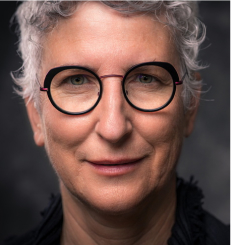
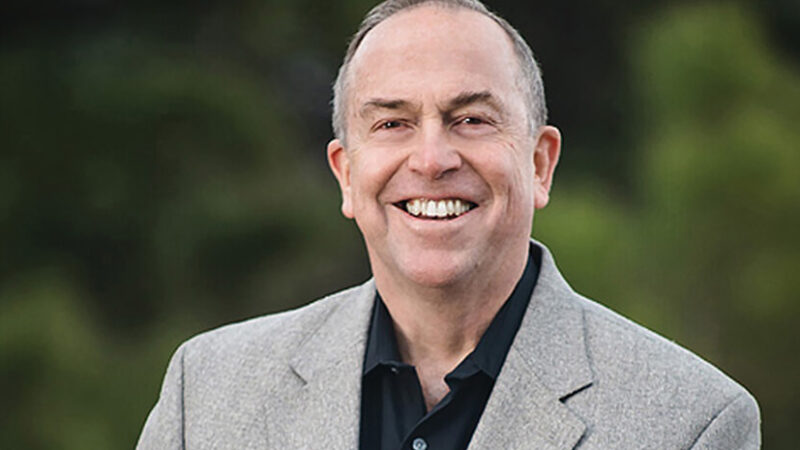
Author photo © Steve Zdawczynski

600 Podcasts and Counting…

Subscribe to Insights at the Edge to hear all of Tami’s interviews (transcripts available too!), featuring Eckhart Tolle, Caroline Myss, Tara Brach, Jack Kornfield, Adyashanti, and many more.

Meet Your Host: Tami Simon

Founded Sounds True in 1985 as a multimedia publishing house with a mission to disseminate spiritual wisdom. She hosts a popular weekly podcast called Insights at the Edge, where she has interviewed many of today's leading teachers. Tami lives with her wife, Julie M. Kramer, and their two spoodles, Rasberry and Bula, in Boulder, Colorado.

Photo © Jason Elias

Also By Author

Bruce Tift: Already Free

Have you ever wondered how to hold the following two seemingly contradictory experiences? On the one hand, you feel in touch with the vast expanse of being. You sense that your true nature is infinite, boundless, unconditionally loving, and outside of time. And on the other hand, you know that in certain situations (usually involving other people!), you are avoidant, dismissive, reactive, and shut down, and—truth be told—you have a lot of healing and personal growth work to do.

Buddhist psychotherapist Bruce Tift is a master at holding these two seemingly contradictory views, and—ready for this?—he does so “without any hope of resolution.” In this podcast, Tami Simon and Bruce Tift talk about how, in his work with clients, he skillfully embraces both the developmental view of psychotherapy and the fruitional view of Vajrayana Buddhism, the blind spots that come with each approach, and how combining them can help people avoid these pitfalls. 

Tune in as they discuss unconditional openness, and how it is important to be “open to being closed”; how neurosis requires disembodiment, and further, how our neurosis is fundamentally an avoidance strategy—“a substitute for experiential intensity”; our complaints about other people (especially our relationship partners) as opportunities to take responsibility for our own feelings of disturbance (instead of blaming other people for upsetting us); how to engage in “unconditional practices,” such as the practice of unconditional openness, unconditional embodiment, and unconditional kindness; and more.

Bruce Tift: Already Free

Bruce Tift has been in private practice as a psychotherapist in Boulder, Colorado since 1979. He taught at Naropa University for 24 years and was a student of Chögyam Trungpa Rinpoche. With Sounds True, he has published the book Already Free: Buddhism Meets Psychotherapy on the Path of Liberation. In this episode of Insights at the Edge, Bruce and Tami Simon compare and contrast two different approaches to personal transformation: the “developmental” approach of psychotherapy and the “fruitional” approach of Buddhist practice. They discuss the blind spots inherent in each approach, as well as the ways they can be addressed. Tami and Bruce talk about the nature of neurosis and how neurotic tendencies almost always involve a sense of disembodiment. Finally, they speak on “unconditional practices,” and how unconditional kindness can transform one’s outlook on the procession of life. (70 minutes)

Bruce Tift: Buddhism Meets Psychotherapy

Bruce Tift has been a psychotherapist since 1979, a practitioner of Vajrayana Buddhism for more than 35 years, and has taught at Naropa University for 25 years. He is the author of the Sounds True audio learning course Already Free: Buddhism Meets Psychotherapy on the Path of Liberation. In this episode of Insights at the Edge, Tami Simon speaks with Bruce about his perspectives on therapy as informed by Buddhist insights—examining how our “neurotic organization” exists to insulate us from legitimate suffering, why much of our growth comes from acting in ways that are counter-instinctual, and what it might mean to practice psychotherapy with the view that there is no problem we actually need to solve. (66 minutes)

You Might Also Enjoy

Tara Brach: Choosing to Love in Perilous Times


What if the bravest thing you can do right now is refusing to close your heart?

This week, Tami Simon speaks with Tara Brach—beloved meditation teacher, clinical psychologist, and bestselling author of Radical Acceptance and Trusting the Gold—about her new inner workbook with Sounds True, The Courageous Heart: Choosing to Love in Perilous Times. At a moment when so many people feel pulled between despair and action, Tara offers a grounded path through both.

Join Tami and Tara to explore:

  • How to stay spiritually engaged—without burning out or spiritually bypassing the reality of suffering
  • The bodhisattva path as a living practice: what it means to be an “awakening being” in ordinary, everyday life
  • Why grief is often covered over by anger—and how moving through grief unlocks the capacity for love and action
  • The RAIN practice (Recognize, Allow, Investigate, Nurture) for working with armoring, fear, and excruciating pain in the heart
  • The shift from head space to heart space—and a brief guided meditation to experience it directly
  • How aspiration becomes the fuel for the spiritual path—and why Tara “sandwiches” her day with it
  • The practice of seeing basic goodness in others—including stories of Father Gregory Boyle and John Lewis that illuminate how this changes everything
  • What to do when you feel alone, disconnected, and uncertain where to start

Whether you’re overwhelmed by current events or searching for a more engaged and openhearted way to meet this moment, Tara Brach offers both the courage and the practical tools to begin.

Listen now and choose to love. →

This conversation offers genuine transmission—not just concepts about awakening, but the palpable presence of realized teachers exploring the growing edge of spiritual understanding together. Originally aired on Sounds True One.

Enter for a chance to win the Monthly Magic Subscription Journey. It includes 12 months of tea, a loose leaf starter kit, monthly virtual classes, and free shipping worth $673. Learn more at ClubMagicHour.com/TRUE (no purchase required). Get 20% off your first order of Magic Hour tea at ClubMagicHour.com with the code TRUE.

Just One Question | Thích Nhất Hạnh: What Is the ...


What if the root cause of every social problem — starvation, ecological destruction, violence — wasn’t a broken system or a corrupt institution, but a collective state of unawareness? And what if the most powerful act of social change available to you today happened in your own mind?

That’s the territory Tami Simon explores in this remarkable exchange with Thich Nhat Hanh, the Vietnamese Zen master who founded Plum Village, pioneered engaged Buddhism, and became one of the most influential spiritual teachers of the twentieth century. Recorded more than two decades ago beneath a willow tree, this conversation feels astonishingly present.

Thích Nhất Hạnh’s answer to Tami’s question doesn’t point outward to policy or protest — it points inward, then ripples out. Individual awakening, he says, is collective awakening. Your practice is social action. Your light is contagious.

What you’ll hear in this exchange:

  • Why individual mindfulness practice is inseparable from social transformation
  • How collective enlightenment spreads — and how it already has, in ways we don’t always recognize
  • The role artists, teachers, economists, and politicians all play in the work of awakening
  • How to stay rooted in hope — and action — without being swallowed by despair

This is a short clip, but it carries the full weight of a lifetime of practice and teaching. It may change how you think about what you’re doing every time you sit down to meditate.

This clip is taken from the full Insights at the Edge conversation with Thích Nhất Hạnh. Find the complete interview in this feed or at soundstrue.com.

This episode is sponsored by Omega Institute, a global gathering hub for lifelong learning and spiritual exploration. Omega offers weekend workshops, special events, rest and rejuvenation retreats, professional training, online learning, and more. Discover what calls to you at eomega.org/true.

Richard Schwartz and Tamala Floyd: Healing Across Gene...


What if the anxiety, grief, or fear you’ve struggled with for years is a burden you inherited—not one you earned?

This week, Tami Simon speaks with Richard Schwartz—founder of Internal Family Systems and author of the bestselling No Bad Parts—and Tamala Floyd, psychotherapist, IFS lead trainer, and author of Listening: When Parts Speak: A Practical Guide to Healing with IFS Therapy and Ancestor Wisdom. Together, they explore how IFS and ancestral healing converge to help us release intergenerational trauma at its root.

Join Tami, Dick, and Tamala to explore:

  • What “legacy burdens” are in IFS—and how to recognize when what you’re carrying came from someone else
  • How personal, ethnic, and cultural legacy burdens operate differently—and why racism, historical trauma, and collective suffering require their own healing
  • The concept of the “well ancestor”: why every lineage has one, and how to invite them into your healing
  • Heirlooms vs. burdens: how our ancestral lines carry gifts as well as wounds—and how to receive them
  • Why legacy burdens are often easier to release than personal ones—and what fear most commonly gets in the way
  • Tamala’s guided ancestral meditation, offered live: a practice for releasing what no longer serves you
  • What we offer future generations simply by doing our own inner work

The episode includes a full guided meditation led by Tamala Floyd—drawn directly from her ancestors—that listeners can return to again and again.

Listen now and begin your own healing across generations. →

This conversation offers genuine transmission—not just concepts about awakening, but the palpable presence of realized teachers exploring the growing edge of spiritual understanding together. Originally aired on Sounds True One.