Most people feel trapped in a thousand ways. But more often than not, this sense of entrapment us into putting our heads down and getting the things we are expected to get done, done. We can’t often see the entrapment, especially if it looks like the result of our own choices in life. But were they truly our own choices? What if some of the choices we made in life have never really been ours to begin with?
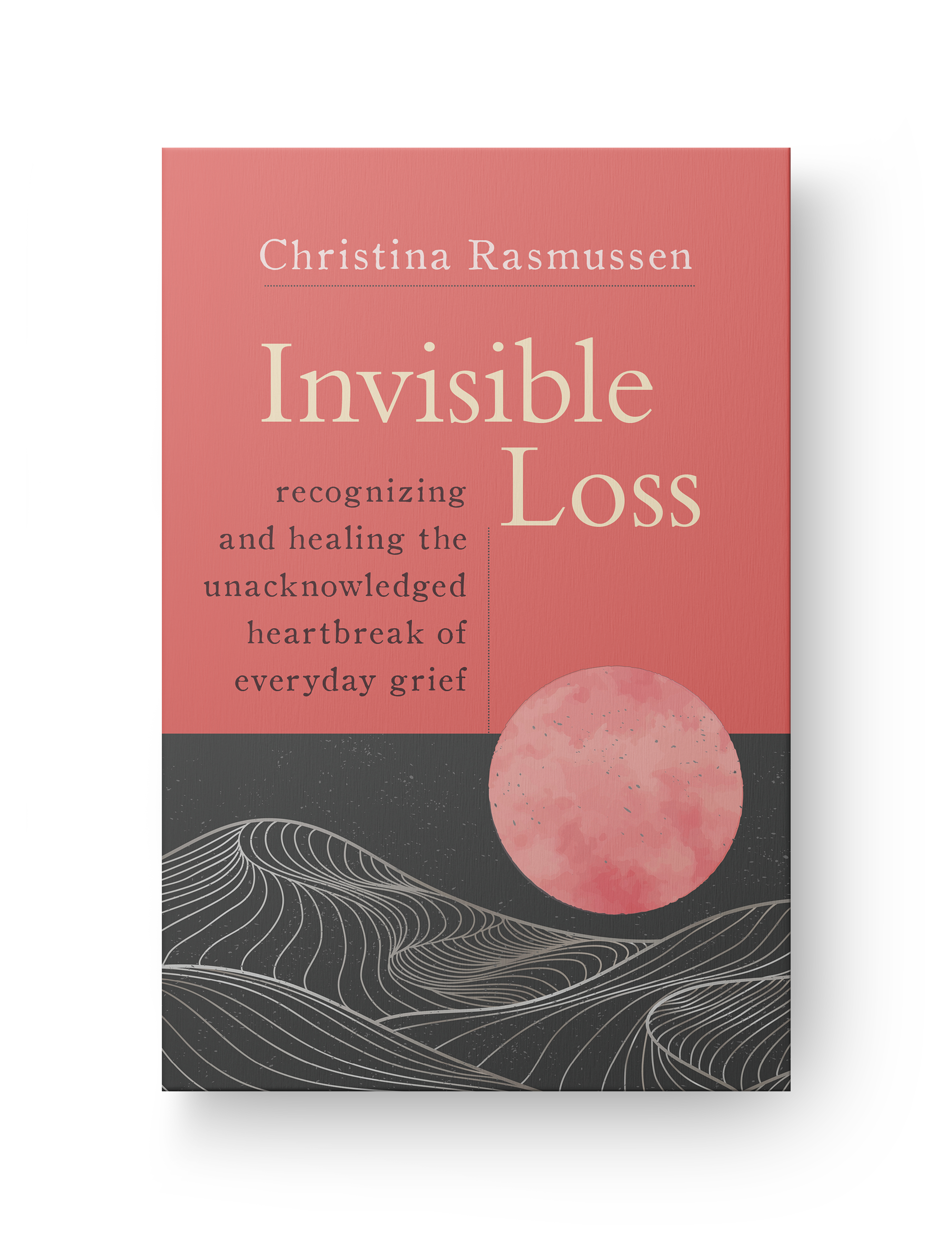
I want to take us back a little. Back to when we were younger. When we had to rely on the wisdom of our elders, and those who have been in this life much longer than us. In my upcoming book Invisible Loss, I write about that time in our lives when we were at our most rebellious:
Disobedience—as a child, as a teen, as an adult in the world of work and home—is an act that creates invisible suffering. We learn to survive that repeated pattern of being commanded by our elders to be “good.” In order to be good and obey, we may create a life closer to that command but further away from our Original Self. We may work hard trying to be good, trying to please and fit into the mold created for us, but that only helps to build our Waiting Room life.
But time in the Waiting Room doesn’t need to last forever. And you don’t have to die inside it. There are parts within you that can bring forth a life worthy of your human existence. Places within yourself that have no shame.
As long as we have been alive, creating a life that aligns closest to the wishes of our caregivers and protectors blinds us to the life that we could choose for ourselves. That life is completely hidden even if we think we know our wishes. Often, only when we go through tragic or invisible losses, do we start to question those choices. Dare I say, these moments are opportunities to exit the loop of being “good.”
It is time to interrupt our regular transmission. It is time to be clear when it comes to what it is we are trying to communicate to the people in our lives. It starts from no longer trying so hard to fit into the mold that was created for us. No matter how old we are, we can always break outside this mold and align our choices with our true values and desires.
This is not an easy task. I understand that. At the core of my book, Invisible Loss, I’ve created tjos easy practice to help set you on the right path to your Original Self. I call it Mental Stacking:
What Is Mental Stacking?
Mental Stacking is the ability to intentionally layer your thoughts to replace unconscious, Survivor-based
thinking with Wisdom-based thinking. In doing so, these Wisdom-based thoughts can more easily be converted into real-life action. This Stacking practice allows you to access your true and authentic self (your Original Self) and entrust it with the controls of your life. Here is what a basic Stack looks like:
The Cleanse:Transcribing the automatic, routine-based, unconscious thoughts. Write them down. Don’t stop writing until you feel you are done.
The Pattern:Subtracting from that first layer the thoughts of fear and doubt. Once you write everything you are feeling and thinking down, read it back to yourself and find a sentence or two that comes from a place of fear or doubt. For example, somewhere in your long cleanse you may find yourself saying: “I feel trapped in my marriage and I don’t dare tell anyone about it because he is the nicest guy. All of my friends always tell me how lucky I am to be married to someone who takes such good care of me.”
The Reframe: Writing the consciously reframed thought layer in the Stack. Take that sentence and reframe it. For example: “I feel trapped in my marriage and feel ashamed for feeling this way because my partner is such a good guy,” to, “even though I may feel shame about how I feel, I need to share these feelings with my partner even though it may not be expected or understood. This is my life, after all.”
The Plug-In: Translating the reframed thought into action. Once you have that reframed thought, think of a low-risk action you can take that can stem from that newly scripted thought. For example, you can suggest to your partner to go for dinner at a brand new place where you can bring up what is on your mind in a new environment. You can act on your right to express yourself regardless of what the response might be or how others view your situation.
Your Mental Stack leads you to a specific next step that may not always be easy to see without the power of each previous layer in the Stack.
Christina Rasmussen is an acclaimed grief educator and the author of Second Firstsand Where Did You Go? She is the founder of the Life Reentry Institute and has helped countless people break out of what she coined the “waiting room” of grief to rebuild their lives through her Life Reentry® Model, a new paradigm of grief, based on the science of neuroplasticity. She lives in Austin, Texas. For more, visit christinarasmussen.com.
Christina Rasmussen is an acclaimed grief educator and the author of Second Firstsand Where Did You Go? She is the founder of the Life Reentry Institute and has helped countless people break out of what she coined the “waiting room” of grief to rebuild their lives through her Life Reentry® Model, a new paradigm of grief, based on the science of neuroplasticity. She lives in Austin, Texas. For more, visit christinarasmussen.com.
There are certain experiences that are completely and utterly devastating, yet seemingly impossible to articulate and share. Grief educator and author Christina Rasmussen calls these our “invisible losses”—and they are often more perplexing and difficult to navigate than the overt tragedies we all endure in life. In this podcast, join Sounds True’s founder, Tami Simon, in conversation with Christina Rasmussen about her new book, Invisible Loss: Recognizing and Healing the Unacknowledged Heartbreak of Everyday Grief.
Filled with unique perspective and compassionate insight, this dialogue explores the place of uncertainty and stagnation known as “the waiting room”; the original self, and how we get disconnected from it; the impacts of an “us vs. them” experience; how to identify your primary invisible loss; three inner narrators—the survivor, the watcher, and the thriver; reclaiming our forgotten “thriver memories”; the cost of seeking approval; saying yes to what you’ve always wanted to do; cleansing our patterns of fear; the practice of mental stacking; the Life Reentry model; reframing our experiences and taking action from our wisdom; why the place of death is also the place of creation; and more.
Most people feel trapped in a thousand ways. But more often than not, this sense of entrapment us into putting our heads down and getting the things we are expected to get done, done. We can’t often see the entrapment, especially if it looks like the result of our own choices in life. But were they truly our own choices? What if some of the choices we made in life have never really been ours to begin with?
I want to take us back a little. Back to when we were younger. When we had to rely on the wisdom of our elders, and those who have been in this life much longer than us. In my upcoming book Invisible Loss, I write about that time in our lives when we were at our most rebellious:
Disobedience—as a child, as a teen, as an adult in the world of work and home—is an act that creates invisible suffering. We learn to survive that repeated pattern of being commanded by our elders to be “good.” In order to be good and obey, we may create a life closer to that command but further away from our Original Self. We may work hard trying to be good, trying to please and fit into the mold created for us, but that only helps to build our Waiting Room life.
But time in the Waiting Room doesn’t need to last forever. And you don’t have to die inside it. There are parts within you that can bring forth a life worthy of your human existence. Places within yourself that have no shame.
As long as we have been alive, creating a life that aligns closest to the wishes of our caregivers and protectors blinds us to the life that we could choose for ourselves. That life is completely hidden even if we think we know our wishes. Often, only when we go through tragic or invisible losses, do we start to question those choices. Dare I say, these moments are opportunities to exit the loop of being “good.”
It is time to interrupt our regular transmission. It is time to be clear when it comes to what it is we are trying to communicate to the people in our lives. It starts from no longer trying so hard to fit into the mold that was created for us. No matter how old we are, we can always break outside this mold and align our choices with our true values and desires.
This is not an easy task. I understand that. At the core of my book, Invisible Loss, I’ve created tjos easy practice to help set you on the right path to your Original Self. I call it Mental Stacking:
What Is Mental Stacking?
Mental Stacking is the ability to intentionally layer your thoughts to replace unconscious, Survivor-based
thinking with Wisdom-based thinking. In doing so, these Wisdom-based thoughts can more easily be converted into real-life action. This Stacking practice allows you to access your true and authentic self (your Original Self) and entrust it with the controls of your life. Here is what a basic Stack looks like:
The Cleanse:Transcribing the automatic, routine-based, unconscious thoughts. Write them down. Don’t stop writing until you feel you are done.
The Pattern:Subtracting from that first layer the thoughts of fear and doubt. Once you write everything you are feeling and thinking down, read it back to yourself and find a sentence or two that comes from a place of fear or doubt. For example, somewhere in your long cleanse you may find yourself saying: “I feel trapped in my marriage and I don’t dare tell anyone about it because he is the nicest guy. All of my friends always tell me how lucky I am to be married to someone who takes such good care of me.”
The Reframe: Writing the consciously reframed thought layer in the Stack. Take that sentence and reframe it. For example: “I feel trapped in my marriage and feel ashamed for feeling this way because my partner is such a good guy,” to, “even though I may feel shame about how I feel, I need to share these feelings with my partner even though it may not be expected or understood. This is my life, after all.”
The Plug-In: Translating the reframed thought into action. Once you have that reframed thought, think of a low-risk action you can take that can stem from that newly scripted thought. For example, you can suggest to your partner to go for dinner at a brand new place where you can bring up what is on your mind in a new environment. You can act on your right to express yourself regardless of what the response might be or how others view your situation.
Your Mental Stack leads you to a specific next step that may not always be easy to see without the power of each previous layer in the Stack.
Christina Rasmussen is an acclaimed grief educator and the author of Second Firsts and Where Did You Go? She is the founder of the Life Reentry Institute and has helped countless people break out of what she coined the “waiting room” of grief to rebuild their lives through her Life Reentry® Model, a new paradigm of grief, based on the science of neuroplasticity. She lives in Austin, Texas. For more, visit christinarasmussen.com.
What if sobriety isn’t the point? Tami Simon talks with Cecily Mak, founder of the ClearLife Movement, about the spontaneous thirty-day break from drinking that began at Burning Man and never really ended. They explore why “alcohol-free” became a more honest word for her than “sober,” and what it looks like to face what we’re really avoiding when we reach for a drink, a distraction, or anything that dims our life.
Cecily Mak is the founder and visionary of the ClearLife Movement, a former attorney and Silicon Valley executive turned writer, podcast host, and co-founder of Wisdom Ventures. She is the author of Undimmed: The Eight Awarenesses for Freedom from Unwanted Habits.
In this conversation, Tami and Cecily explore:
The spontaneous thirty-day alcohol-free experiment that began at Burning Man, and the divorce decision behind it
Why Cecily chose the language “alcohol-free” over “sober,” and a therapist’s model of use, abuse, and addiction
The concept of dimmers: the habits, substances, and behaviors we use to soften difficult feelings
How to tell whether a habit is helping us grow, or helping us avoid something we already know
Forgiveness and letting go as an inside job, including her path toward her ex-husband and her late mother
Why self-compassion, not self-judgment, is often the real work underneath changing any habit
The sixth awareness: learning not to judge or impose our own path onto someone else’s
This conversation is for anyone questioning their relationship with alcohol or another habit, anyone doing forgiveness work with a parent or former partner, and anyone curious what it actually takes to live with more clarity and presence.
Listen now and discover what it means to live undimmed. →
This interview originally aired on Sounds True One, where you can enjoy early, ad-free access to episodes of Insights at the Edge: https://join.soundstrue.com/
Twenty-six years ago, a chiropractor sitting in her first meditation class was transported into a field of light ten times brighter than the desert sun. Dr. Sue Morter, bestselling author of The Energy Codes, joins Tami Simon to map the energetic architecture behind that kind of awakening, and how the rest of us can build the inner circuitry to access it on purpose instead of by accident.
Dr. Sue earned her doctorate in chiropractic more than 40 years ago and has spent decades developing a body of work in bioenergetics—the study of how energy flows through, builds, and heals the body. She’s the founder of the Body Awake School of Yoga and the Morter Institute, an internationally recognized speaker, and the author of the new book The Anatomy of Awakening: The 5 Hidden Codes to Activate Self-Healing, Unlock Your Higher Consciousness, and Live Your Divine Destiny, which maps five additional energy centers beyond the familiar seven chakras.
In this conversation, Tami and Dr. Sue explore:
The spiritual experience that reoriented Dr. Sue’s entire career and, over time, helped resolve her lifelong scoliosis and migraines
Why “seeking enlightenment” misses the point, and why embodiment, not transcendence, is the real work
The five additional chakras beyond the traditional seven (eight through twelve), and what each one governs in our energetic architecture
How to build “energetic circuitry” at the site of a trigger instead of getting lost in its story
Spherical breathing and Mula Bandha as practical tools for grounding and stabilizing the nervous system
What it actually means to regulate your nervous system, and why trying too hard to do it can backfire
This episode is for anyone navigating a season of nervous system dysregulation, energy practitioners and bodyworkers, and listeners drawn to the chakra system who want a more embodied, practical approach to awakening.
Listen in for a guided practice you can use the next time you feel triggered, overwhelmed, or ungrounded.
Dr. Sue uses a number of visual aids throughout this conversation, so if you’d rather watch than just listen, you can find the video version on YouTube @SoundsTrueManyVoices or on our premium membership platform at soundstrueone.com
Giving love comes easy, but can you actually receive it? Lama Rod Owens says most of us flinch at being cared for, even by something as simple as the chair we’re sitting in. In this practice from his book The New Saints, he walks us through what it takes to actually let love in.
Lama Rod Owens, a Black Buddhist Southern Queen, authorized lama in the Kagyu lineage of Tibetan Buddhism, and author of The New Saints: From Broken Hearts to Spiritual Warriors, guides Tami Simon (and all of us listening) through a short meditation on receiving care, drawn straight from the pages of his new book.
In this conversation, Tami and Lama Rod explore:
Feeling supported by the seat or ground beneath you
Recalling a time someone, or something, really loved you
Letting that love move through the body, including the grief it can stir up along the way
Imagining the whole universe wanting you safe, happy, and free
Gently returning to the body and closing the practice
This one’s for anyone who finds it easier to give love than to receive it, which, let’s be honest, is most of us.
Taken from the full Insights at the Edge conversation with Lama Rod Owens. Find the complete interview in this feed or at https://bit.ly/new-saint