
Rabbi Tirzah Firestone, PhD: Harnessing Ancestral Pain into Power

February 4, 2025

Rabbi Tirzah Firestone, PhD: Harnessing Ancestral Pain into Power

Rabbi Tirzah Firestone, PhD — February 4, 2025

Our understanding of the severe scope of trauma in our world has greatly expanded in recent years. This includes intergenerational trauma, something that all of us likely carry within. In this episode of Insights at the Edge, Tami Simon speaks with Rabbi Tirzah Firestone about her book Wounds into Wisdom and our collective task to acknowledge, face, and work to heal our invisible wounds and break the cycle of intergenerational trauma. 

Tami and Tirzah discuss: the concept of “image deposits” and “task deposits”; dreams containing real-life experiences of our ancestors, and how they are far more common than we might think; the shift from impotence to agency; harnessing our pain as a fuel for growth; how the human nervous system holds on to unresolved trauma despite the debilitating consequences; hypervigilance and the dangers of overactive stress hormones; overcoming self-blame, shame, unworthiness, and isolation; unlearning inherited beliefs that impair our well-being; choosing compassion instead of “othering”; the roots of anti-Semitism; kabbalah, the mystical branch of Judaism; disidentifying from victimhood; the power of being witnessed; why healing intergenerational trauma is a gift to both our ancestors and our descendants; self-regulation and coming back home to ourselves in nurturing ways; a guided practice for finding inner safety amid stressors; alchemizing pain into wisdom (instead of passing it on); and more.

Note: This episode originally aired on Sounds True One, where these special episodes of Insights at the Edge are available to watch live on video and with exclusive access to Q&As with our guests. Learn more at join.soundstrue.com.

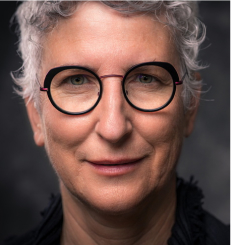
Rabbi Tirzah Firestone, PhD, is an author, Jungian psychotherapist, leader in the international Jewish Renewal Movement, and a renowned Jewish scholar and teacher. Widely known for her groundbreaking work on Kabbalah, depth psychology, intergenerational trauma healing, and the reintegration of the feminine wisdom tradition within Judaism, Rabbi Tirzah lectures and teaches internationally about spiritual and ancient wisdom practices that are honed to assist us at this critical time in world history. Her latest work, “Wounds into Wisdom: Healing Intergenerational Jewish Trauma,” is the recipient of the 2020 Nautilus Book Award Gold in Psychology and the Jewish Women's Caucus of the Association for Women in Psychology 2020 book award.

Author photo © Laura Hobbs

900 Episodes and Counting…

Subscribe to Insights at the Edge to hear all of Tami’s interviews (transcripts available too!), featuring Eckhart Tolle, Caroline Myss, Tara Brach, Jack Kornfield, Adyashanti, and many more.

Meet Your Host: Tami Simon

Each week on Insights at the Edge, Tami Simon interviews leading voices in the Mind/Body/Spirit space about a vast spectrum of fascinating ideas. Since 2009, Tami and her guests have been exploring the edge of understanding, nearly 1,000 episodes on the honest work of change, including spiritual discovery, awakening, intuition, purpose, trauma, and grief.

Photo © Jason Elias

Also By Author

No other posts by author

You Might Also Enjoy

Terri Cole: “Healing the Worthiness Wound”

Terri Cole calls it an invisible wound: the imprint left when a daughter never receives protection, presence, or emotional attunement from her father. This week, Tami Simon talks with Terri Cole—Sounds True’s own Boundary Boss—about her new book, Father Wound, and why even women with loving fathers can carry this wound without ever naming it.

Terri Cole, MSW, LCSW, is a licensed psychotherapist, relationship expert, and best-selling author who has spent nearly three decades helping people break dysfunctional patterns and build healthier relationships with themselves and others. With Sounds True, she is the author of the trilogy that began with Boundary Boss and continued with Too Much: A Guide to Breaking the Cycle of High-Functioning Codependency. Her newest book, Father Wound: Break Unhealthy Patterns to Reclaim Your Worth and Power, examines what happens when a father or father figure is absent, abusive, immature, or simply not emotionally attuned—and why daughters of patriarchy carry a version of this wound no matter what kind of father they had.

In this conversation, Tami and Terri explore:

  •  How to recognize a father wound even when “my father wasn’t that bad”
  • Why Terri defines the father wound as, at its root, a worthiness wound
  • The difference between self-parenting and re-parenting, and what healing your inner child looks like in daily decisions
  • The “father wound trance”: how old patterns resurface in adult relationships, and how to work with transference instead of being run by it
  • Mourning the Dream, Terri’s exercise for grieving the father you wished you’d had
  • Why healing this wound personally is tied to healing patriarchy at a collective, societal level

Who this episode is for: anyone doing inner child work, anyone who keeps finding themselves in the same relationship pattern and wondering why, and anyone ready to ask whether their sense of worth was shaped long before they had any say in it.

Listen now, and start reclaiming your worth. →


This interview originally aired on Sounds True One, where you can enjoy early, ad-free access to episodes of Insights at the Edge: https://join.soundstrue.com/

Richard Schwartz and Tamala Floyd: Healing Across Gene...


What if the anxiety, grief, or fear you’ve struggled with for years is a burden you inherited—not one you earned?

This week, Tami Simon speaks with Richard Schwartz—founder of Internal Family Systems and author of the bestselling No Bad Parts—and Tamala Floyd, psychotherapist, IFS lead trainer, and author of Listening: When Parts Speak: A Practical Guide to Healing with IFS Therapy and Ancestor Wisdom. Together, they explore how IFS and ancestral healing converge to help us release intergenerational trauma at its root.

Join Tami, Dick, and Tamala to explore:

  • What “legacy burdens” are in IFS—and how to recognize when what you’re carrying came from someone else
  • How personal, ethnic, and cultural legacy burdens operate differently—and why racism, historical trauma, and collective suffering require their own healing
  • The concept of the “well ancestor”: why every lineage has one, and how to invite them into your healing
  • Heirlooms vs. burdens: how our ancestral lines carry gifts as well as wounds—and how to receive them
  • Why legacy burdens are often easier to release than personal ones—and what fear most commonly gets in the way
  • Tamala’s guided ancestral meditation, offered live: a practice for releasing what no longer serves you
  • What we offer future generations simply by doing our own inner work

The episode includes a full guided meditation led by Tamala Floyd—drawn directly from her ancestors—that listeners can return to again and again.

Listen now and begin your own healing across generations. →

This conversation offers genuine transmission—not just concepts about awakening, but the palpable presence of realized teachers exploring the growing edge of spiritual understanding together. Originally aired on Sounds True One.

Tian Dayton: If You Grew Up with Addicts, Healing Is a...

Trauma doesn’t show up in what we remember. It shows up in how we react.

This week, Tami Simon speaks with Dr. Tian Dayton—award-winning scholar, senior fellow at The Meadows, and author of Growing Up with Addiction: How Adult Children of Addicts Can Heal Family Trauma, Complex PTSD and Codependency—about what it means to grow up inside a family shaped by addiction, and what it actually takes to heal.

Drawing on decades of clinical work, her own lived experience, and her innovative Relational Trauma Repair (RTR) method, Dr. Dayton explores the neuroscience of relational trauma and the embodied, experiential path through it.

Join Tami and Tian to explore:

  • Why addiction is a family disease—and how process addictions like workaholism and overeating leave the same marks as substance use
  • How childhood trauma gets stored in the body, not the story—and why you can’t think your way out of complex PTSD
  • The neuroscience of overreaction: why triggers feel present-tense even when they’re decades old
  • Cognitive and somatic distortions—and how to recognize when the past is hijacking the present
  • Psychodrama and Relational Trauma Repair: the power of talking to instead of about
  • Timelines, social atoms, and letter writing as tools for putting fragmented memories back in order
  • Why healing is a discipline—and what it means to take ownership of your own darkness as a path to freedom

Whether you grew up in a home shaped by addiction or simply recognize the patterns Dr. Dayton describes, this interview offers both a map and the courage to begin the journey.

Listen now and start where you are. 

This conversation offers genuine transmission—not just concepts about awakening, but the palpable presence of realized teachers exploring the growing edge of spiritual understanding together. Originally aired on Sounds True One.
