
Frank Ostaseki: “I’m Allergic to the Notion of a Good Death”

December 23, 2025

Frank Ostaseki: “I’m Allergic to the Notion of a Good Death”

December 23, 2025

What truly matters when we face the end of life? After decades of sitting at the bedside of hundreds of dying people, Frank Ostaseski has distilled the deepest human concerns into two essential questions: Am I loved? Have I loved well?

This week on Insights at the Edge, Tami welcomes Frank Ostaseski—co-founder of America’s first Buddhist hospice, the Zen Hospice Project, founder of the Metta Institute, and author of The Five Invitations: Discovering What Death Can Teach Us About Living Fully. Frank brings extraordinary wisdom from his pioneering work in compassionate end-of-life care, along with profound personal insights from his own encounters with heart surgery, strokes, and the transformative vulnerability of being “on the other side of the sheets.”

Join Tami and Frank to explore:

  • The two essential questions that arise when facing death—and what they reveal about living fully now
  • Why emotional flexibility is the true condition for healing and transformation
  • How to meet our own fear and pain without abandoning ourselves or others
  • The practice of “allowing” as a path to both wisdom and compassion
  • What happens in the dying process: surrender, reconstitution, and coming home
  • Why Frank is allergic to the notion of a “good death”
  • The indestructible love that emerges when we keep our hearts open through pain
  • How to practice dying by paying attention to everyday endings

This conversation is for anyone grappling with loss, change, or the fundamental questions of existence—offering not prescriptive answers, but the profound medicine of honest presence and the recognition that our vulnerability itself is one of our most beautiful human qualities.

For more with Frank Ostaseski:

Year to Live Course (Spirit Rock Meditation Center)

Spirit of Service (Upaya Zen Center)

Awareness in Action: The Role of Love (Upaya Zen Center, Frank Ostaseski & Sharon Salzberg)

This conversation offers genuine transmission—not just concepts about awakening, but the palpable presence of realized teachers exploring the growing edge of spiritual understanding together. Originally aired on Sounds True One.
600 Podcasts and Counting…

Subscribe to Insights at the Edge to hear all of Tami’s interviews (transcripts available too!), featuring Eckhart Tolle, Caroline Myss, Tara Brach, Jack Kornfield, Adyashanti, and many more.

Meet Your Host: Tami Simon

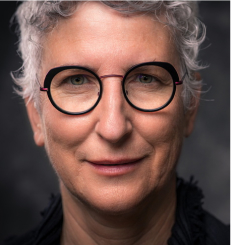
Founded Sounds True in 1985 as a multimedia publishing house with a mission to disseminate spiritual wisdom. She hosts a popular weekly podcast called Insights at the Edge, where she has interviewed many of today's leading teachers. Tami lives with her wife, Julie M. Kramer, and their two spoodles, Rasberry and Bula, in Boulder, Colorado.

Photo © Jason Elias

Also By Author

No Author Available

No other posts by author

You Might Also Enjoy

Thomas Moore: “Curing Our Cultural Lostness̶...

Thoreau said he wasn’t paddling the Assabet River—he was on the Ganges. Was he being poetic, or was he seeing something we’ve lost the capacity to see?

This week, Tami Simon speaks with Thomas Moore—bestselling author of Care of the Soul, Dark Nights of the Soul, and Ageless Soul—about his new book, The Cure at Walden Pond: A Guide to Recovering Our Humanity. At 85, Moore offers a reading of Thoreau that upends the one most of us were taught: not a naturalist cataloguing the woods, but a mystic looking for what he called the divine “lurking” there.

Join Tami and Thomas to explore:

  • Living daimonically: the guiding presence the Greeks called a daimon and the Romans called a genius—and how to tell it from your own ego agenda
  • Why Moore left the monastery after 13 years on the strength of a single morning’s clarity
  • “We are half human, half angel”—and what changes when you look at the people in your life through that lens
  • Musical time, Bach, and why playing the piano every day has made Moore think differently about dying
  • Why “the ultimate secret is to show the world who you are”—and why humiliation may be closer to the soul than confidence
  • Thoreau’s dark night: holding his brother as he died, and what it teaches about grief you never get over
  • The chapter called “Be Cold and Hungry,” and why the storms belong

Tami presses Moore on the parts she finds hard to swallow—and his answers are the heart of this episode.

Listen now, and find the cure. →

This conversation offers genuine transmission, not just concepts about awakening, but the palpable presence of realized teachers exploring the growing edge of spiritual understanding together, and it originally aired on Sounds True One.

Just One Question | Pānquetzani: How Do We Honor Our ...

Tami asks Pānquetzani how she would put words to the devotion she so clearly feels toward her ancestral line. The answer starts in the body. During her first postpartum womb adjustment, Pānquetzani felt an anger release that she is certain wasn’t hers — it was inherited, and it had arrived alongside the gifts.

That’s the premise of her work as a traditional healer of Mesoamerican and Mexican medicine: the gifts and the wounds come together, and tending the wounds is the job. Her ancestors survived colonization and violence, and they didn’t survive it only for themselves. So she owes them reverence — paid not in words but in living. Slowing down. Crying. Dancing. Sensual and sexual pleasure. All the things they may never have had the privilege to do.

Then there’s her son. At fifteen he taught himself metalwork — knives, swords, bows, tools. Pānquetzani showed the work to her eighty-three-year-old grandmother, who said, oh, your grandfather used to do that. A whole family trade back in Mexico, a shop, generations of it, and nobody had ever mentioned it. He found his way back to it because he was given room to follow what he loved.

In this episode:

  • Why ancestral gifts and ancestral wounds arrive together
  • Making your life an altar — reverence as something you live rather than something you say
  • Healing lineages backwards, and telling the dead their suffering wasn’t in vain
  • What thriving actually means: joy, energy, celebration, and getting your medicine to the people who need it
  • The inheritance beyond the physical — the energetic, mental, and social resources previous generations went without

Taken from the full Insights at the Edge conversation with Pānquetzani. Find the complete interview in this feed or at soundstrue.com

[ENCORE EPISODE] Yongey Mingyur Rinpoche: “In Lo...

A nine-year-old asks his father how to fight his panic attacks. His father says: don’t.

That answer set the course of Yongey Mingyur Rinpoche’s life—and, twenty-seven years later, sent him out of his monastery in the middle of the night.

In this encore presentation, Tami Simon speaks with Rinpoche—beloved Tibetan Buddhist teacher in the Kagyu and Nyingma lineages, guiding teacher of the Tergar meditation community, and author of In Love with the World—about the four-and-a-half-year wandering retreat that nearly killed him, and the teaching he calls “adding wood to the fire.”

Raised as a tulku with attendants at his side, he left at 36 with almost no money. Within weeks he was begging for food, sleeping on a train station floor, and severely ill—and when he believed he was dying, he chose not to reach for rescue.

Join Tami and Mingyur Rinpoche to explore:

  • “Adding wood to the fire”: how obstacles become opportunity, and poison becomes medicine
  • His father’s teaching on the sky: why no storm can change the nature of awareness
  • Why banging your head against the wall isn’t courage, and what acceptance actually opens
  • The bardo as everyday experience: job loss, breakups, falling asleep, and the gaps between
  • The four steps of the dying practice—offering, dedication, intention, and prayer
  • Child luminosity meeting mother luminosity, and what he directly experienced that night
  • Why he titled the book In Love with the World: “If you love the world, world loves you back”

Rinpoche is now partnering with Sounds True on a brand-new course, Wild World, Steady Mind: 21 Days to Embrace Modern Reality with Clarity and Calm, filmed on location at his monastery in Nepal.

Listen now, and find the sky behind the storm. →