Just One Question | Gabor Maté: What Keeps Me from Being More Compassionate?

    —
October 15, 2026

Just One Question | Gabor Maté: What Keeps Me from Being More Compassionate?

Gabor Maté — October 15, 2026

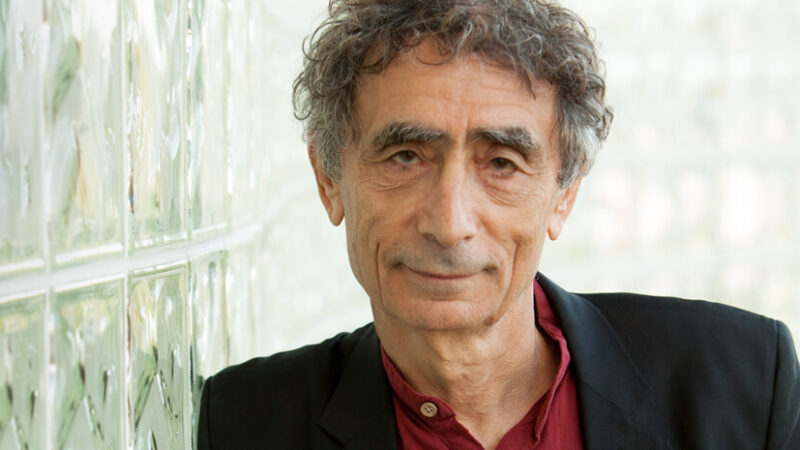
Why do some of the most hardened people—lifers on death row, people who’ve killed—turn out to be, underneath it all, remarkably sensitive? Physician and trauma expert Dr. Gabor Maté has spent decades working with addicts and prisoners, and he’s found a pattern that upends how we usually think about cruelty and compassion.

Dr. Gabor Maté is a physician and bestselling author whose work on trauma and addiction has shaped how millions understand pain, illness, and healing. He’s the author of In the Realm of Hungry Ghosts, When the Body Says No, Scattered Minds, and, with his son Daniel, The Myth of Normal.

In this conversation, Tami and Gabor explore:

  • Why compassion is wired into us from birth and what shuts it down
  • The neuroscience of care, drawing on affective neuroscientist Jaak Panksepp’s research on emotional systems
  • What Gabor has witnessed firsthand working with lifers and people on death row
  • The difference between “orchid” and “dandelion” temperaments, and why high sensitivity can become either a liability or a gift
  • Why genes linked to addiction may really be genes for sensitivity

This one’s for anyone trying to understand the roots of cruelty, or working through their own compassion fatigue; toward others, or toward themselves.

Taken from the full Insights at the Edge conversation with Gabor Maté titled “Gabor Maté: Healing Principles to Embody in a Traumatized World”

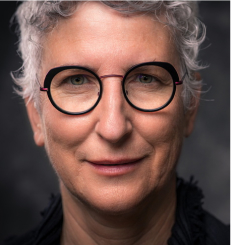
Dr. Gabor Maté is an author, speaker, and physician who specializes in addiction, stress, and childhood development. His many books include In the Realm of Hungry Ghosts and When the Body Says No. His signature psychotherapeutic approach, Compassionate Inquiry, reveals what lies beneath the appearance we present to the world.

900 Episodes and Counting…

Subscribe to Insights at the Edge to hear all of Tami’s interviews (transcripts available too!), featuring Eckhart Tolle, Caroline Myss, Tara Brach, Jack Kornfield, Adyashanti, and many more.

Meet Your Host: Tami Simon

Each week on Insights at the Edge, Tami Simon interviews leading voices in the Mind/Body/Spirit space about a vast spectrum of fascinating ideas. Since 2009, Tami and her guests have been exploring the edge of understanding, nearly 1,000 episodes on the honest work of change, including spiritual discovery, awakening, intuition, purpose, trauma, and grief.

Photo © Jason Elias

Also By Author

Just One Question | Gabor Maté: What Keeps Me from Be...

Why do some of the most hardened people—lifers on death row, people who’ve killed—turn out to be, underneath it all, remarkably sensitive? Physician and trauma expert Dr. Gabor Maté has spent decades working with addicts and prisoners, and he’s found a pattern that upends how we usually think about cruelty and compassion.

Dr. Gabor Maté is a physician and bestselling author whose work on trauma and addiction has shaped how millions understand pain, illness, and healing. He’s the author of In the Realm of Hungry Ghosts, When the Body Says No, Scattered Minds, and, with his son Daniel, The Myth of Normal.

In this conversation, Tami and Gabor explore:

  • Why compassion is wired into us from birth and what shuts it down
  • The neuroscience of care, drawing on affective neuroscientist Jaak Panksepp’s research on emotional systems
  • What Gabor has witnessed firsthand working with lifers and people on death row
  • The difference between “orchid” and “dandelion” temperaments, and why high sensitivity can become either a liability or a gift
  • Why genes linked to addiction may really be genes for sensitivity

This one’s for anyone trying to understand the roots of cruelty, or working through their own compassion fatigue; toward others, or toward themselves.

Taken from the full Insights at the Edge conversation with Gabor Maté titled “Gabor Maté: Healing Principles to Embody in a Traumatized World”

Gabor Maté: Healing Principles to Embody in a Traumat...


Why do we suppress our authenticity? How do we reconcile the need to accept things as they are with a desire to change them? What is the pathway to healing in a world that’s breaking our hearts? In this podcast, Tami Simon speaks with renowned physician and author Dr. Gabor Maté about these profound questions, and how the approach he calls Compassionate Inquiry can help us find the answers within ourselves. 

Listen in to this informative, inspiring, and at times “fiery” conversation exploring how to bridge the gap between understanding and embodiment; the “full heart beneath a broken heart”; paying attention to tension; growth, not perfection; the neuroscience of emotions; the connections between sensitivity and addiction; activism and advocacy as an element of healing; the dance of acceptance and agency; psychoneuroimmunology; the search for truth and where it emanates from; and more.

Note: This episode originally aired on Sounds True One, where these special episodes of Insights at the Edge are available to watch live on video and with exclusive access to Q&As with our guests. Learn more at join.soundstrue.com.

Gabor Maté: Healing into Wholeness in a Toxic Culture

Celebrated author and physician Dr. Gabor Maté has become one of the world’s foremost voices on the journey of healing from trauma—in large part because it is a path he walks himself. In this podcast, Tami Simon speaks with Dr. Maté about his new book, The Myth of Normal, sharing breakthrough insights into the nature of trauma and some of the necessary steps for our personal and collective recovery. 

Give a listen as Tami and Dr. Maté discuss the truth of our interconnectedness; disease as a process, not a distinct entity; self-compassion and honoring our suffering; an inquiry practice—the happy childhood challenge; the emotional work that healing requires; the concepts of wholeness and recovery; the essence of trauma—disconnection from the Self; experiencing your own natural goodness; psychedelics and the veil between the conscious and the unconscious; closing the gap between science and the practice of medicine; learning how to say no before your body does; and more.

This episode first aired live and on video on Sounds True One. To watch Insights at the Edge episodes live and on video, and to access additional bonus Q&A, please visit join.soundstrue.com to learn more.

You Might Also Enjoy

Just One Question | Lissa Rankin: Can Healing Our Trau...

Physician Lissa Rankin says trauma doesn’t just live in the mind; it can trigger measurable physical disease, from autoimmune conditions to chronic illness that conventional medicine can’t explain. But her most provocative claim is the reverse: that healing the nervous system may be the missing piece in reversing illnesses that have resisted every other treatment.

Dr. Rankin, a physician and author of Sacred Medicine and the New York Times bestseller Mind Over Medicine, has spent years studying the link between the nervous system and self-healing, including polyvagal theory and the ventral vagal branch of the vagus nerve. In this conversation with Tami Simon, she widens the definition of trauma well beyond childhood wounds to include systemic racism, environmental toxins, and the everyday stress of simply living in the world today.

In this conversation, Tami and Lissa explore:

  • Why Dr. Rankin believes trauma and chronic illness are intrinsically connected
  • How polyvagal theory and the vagus nerve point to a physical mechanism for healing
  • Why “developmental trauma” can affect even people who had privileged childhoods
  • How collective traumas — like systemic racism and white-body supremacy — show up in the body
  • Why treating trauma isn’t a guarantee of cure, but can still open the door to real healing

This episode is for anyone who has tried everything to heal a chronic or life-threatening illness and wants to understand what role the nervous system might play.

Taken from the full Insights at the Edge conversation with Lissa Rankin, “Is There a Holy Grail of Healing?”

Laurel Parnell: “The Evolution from EMDR to Mult...


What if some of what we’re carrying was never ours to begin with?

This week, Tami Simon speaks with Laurel Parnell—psychologist, longtime spiritual practitioner, and a leading innovator in EMDR (eye movement desensitization and reprocessing). Laurel developed attachment-focused EMDR and resource tapping, and now, in her new book with Sounds True, Releasing What Isn’t Yours: Living from Your True Self Through Multidimensional Integrative Healing, she introduces her most far-reaching approach yet—one born out of the devastating loss of her son.

Join Tami and Laurel to explore:

  • How EMDR works, and why bilateral stimulation—whether eye movements, tapping, or sound—seems to unlock the brain’s natural healing system
  • The difference between EMDR and resource tapping, and how each supports transformation
  • Why Laurel came to believe that trauma work can open a portal to other dimensions
  • Missing and attached soul parts, spirit release work, and how to sense what isn’t yours
  • A profound, real-time account of guiding a soul’s crossing at Esalen, and its connection to the region’s Indigenous history
  • Why Laurel sees Western psychotherapy as, in some ways, colonized—and what other healing traditions have to teach it
  • The image of a multidimensional mycelium network of light and love that connects all beings

This is a candid, moving conversation about grief, the limits of what evidence-based therapy can explain, and the courage it takes to follow where healing actually leads.

Listen now to explore the evolving edge of trauma healing. →

This conversation offers genuine transmission, not just concepts about awakening, but the palpable presence of realized teachers exploring the growing edge of spiritual understanding together, and it originally aired on Sounds True One.

Get a FREE month of membership at https://bit.ly/STOne-Free-Month.

Just One Question | Adyashanti: Is It an Awakening If ...

Is a spiritual awakening only real if it completely rearranges your life? That’s the question Tami Simon puts to Adyashanti in this episode, and his answer digs into something a lot of seekers wrestle with: the gap between a powerful glimpse of clarity and the ongoing work of actually living from it.

Adya, the American-born teacher behind books like The End of Your World and Falling into Grace, walks through why those temporary tastes of awakening are real, even when they fade, and offers a surprisingly practical way to hold onto what they revealed without grasping at them. Then he does something rare: he tells the story of his own first major awakening, a moment he describes as feeling like a nuclear explosion going off inside him.

Here’s what we cover:

  • Why a fleeting shift still counts as a real awakening, even if it doesn’t stick
  • The two (seemingly contradictory) pieces of advice Adya gives people chasing a past peak experience
  • How the first awakening can feel like a “freebie,” while everything after asks you to participate consciously
  • Adya’s own account of the night everything fell away and the still, small voice that told him, “This isn’t all of it. Keep going.”

And there’s so much more. Listen to the entire conversation from this Insights At the Edge episode, “Waking Up: What Does It Really Mean?”