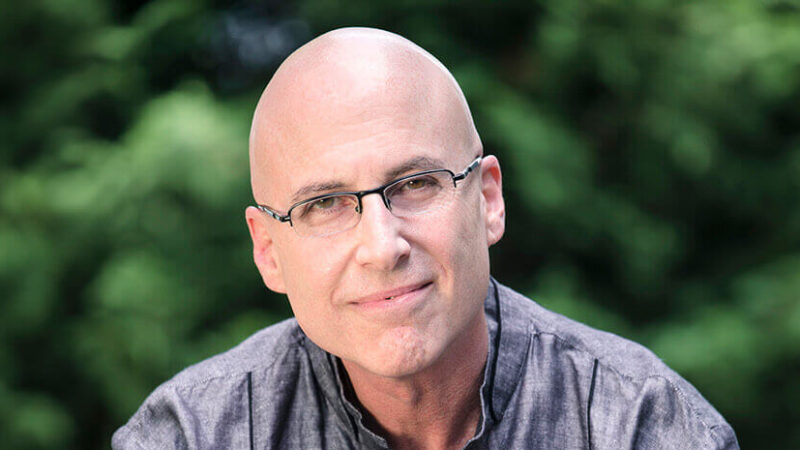
Just One Question | Jeffrey Rutstein: Did I Inherit My Nervous System?

    —
October 22, 2026

Just One Question | Jeffrey Rutstein: Did I Inherit My Nervous System?

Jeffrey Rutstein — October 22, 2026


Ever notice how a tiny criticism can send you into a full-blown spiral, and then you spend the rest of the day furious at yourself for spiraling? Dr. Jeffrey Rutstein has a theory about why that happens, and it starts before you ever had a say in the matter: with the nervous system you were born with.

Rutstein, a clinical psychologist, Hakomi-certified somatic psychotherapist, and host of Sounds True’s Healing Trauma Program, talks with Tami Simon about inheriting his own mother’s fight-or-flight wiring, and how a childhood encounter with Indra Devi’s Yoga for Americans sent him down a decades-long path through pranayama, Hatha yoga, and Zen practice.

In this conversation, Tami and Jeffrey explore:

  • Why your baseline nervous system state is more inheritance than character flaw
  • How naming that inheritance can interrupt years of self-blame and shame
  • The difference between a fixed nervous system and one you can learn to shift

This one’s for anyone who’s ever hated themselves for “overreacting.” So…pretty much everyone.

Taken from the full Insights at the Edge conversation with Jeffrey Rutstein titled “Not Being a Prisoner To Your Nervous System.”

Find the complete interview: https://bit.ly/iate-jeffrey-rutstein

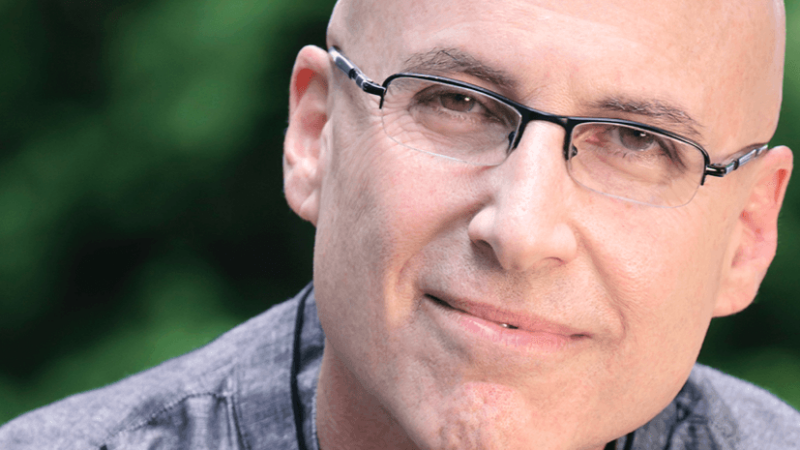
Dr. Jeffrey Rutstein is a clinical psychologist, an expert in the treatment of trauma, a certified Hakomi Mindfulness-Centered Somatic psychotherapist, and a meditation teacher who has been in private practice for over 35 years. He has practiced meditation for over 50 years. He has devoted his professional life to helping people reduce their suffering and struggle while empowering them to claim their strengths, their talents, and their unique abilities to live a more fulfilling and rich life.

Author photo © Josh Hailey

900 Episodes and Counting…

Subscribe to Insights at the Edge to hear all of Tami’s interviews (transcripts available too!), featuring Eckhart Tolle, Caroline Myss, Tara Brach, Jack Kornfield, Adyashanti, and many more.

Meet Your Host: Tami Simon

Each week on Insights at the Edge, Tami Simon interviews leading voices in the Mind/Body/Spirit space about a vast spectrum of fascinating ideas. Since 2009, Tami and her guests have been exploring the edge of understanding, nearly 1,000 episodes on the honest work of change, including spiritual discovery, awakening, intuition, purpose, trauma, and grief.

Photo © Jason Elias

Also By Author

Just One Question | Jeffrey Rutstein: Did I Inherit My...


Ever notice how a tiny criticism can send you into a full-blown spiral, and then you spend the rest of the day furious at yourself for spiraling? Dr. Jeffrey Rutstein has a theory about why that happens, and it starts before you ever had a say in the matter: with the nervous system you were born with.

Rutstein, a clinical psychologist, Hakomi-certified somatic psychotherapist, and host of Sounds True’s Healing Trauma Program, talks with Tami Simon about inheriting his own mother’s fight-or-flight wiring, and how a childhood encounter with Indra Devi’s Yoga for Americans sent him down a decades-long path through pranayama, Hatha yoga, and Zen practice.

In this conversation, Tami and Jeffrey explore:

  • Why your baseline nervous system state is more inheritance than character flaw
  • How naming that inheritance can interrupt years of self-blame and shame
  • The difference between a fixed nervous system and one you can learn to shift

This one’s for anyone who’s ever hated themselves for “overreacting.” So…pretty much everyone.

Taken from the full Insights at the Edge conversation with Jeffrey Rutstein titled “Not Being a Prisoner To Your Nervous System.”

Find the complete interview: https://bit.ly/iate-jeffrey-rutstein
Jeffrey Rutstein, PsyD: You Can Shift the State of You...

Our understanding of the human nervous system has grown exponentially in recent years, thanks to astounding discoveries from neuroscience, Polyvagal Theory, trauma research, Attachment Theory, and other emerging fields. No longer do we see the functioning of the nervous system as an unconscious process outside of our control. Today, we know that you can actually befriend and work with your nervous system to self-regulate in the face of emotionally triggering situations, release unresolved trauma from the “stuck places” inside, and reclaim a life of integration and wholeness. Sounds True’s annual training, The Healing Trauma Program, was designed expressly for these purposes. In this podcast, Tami Simon speaks with psychotherapist and lead teacher of the program Dr. Jeffrey Rutstein. 

Tune in for an eye-opening conversation on: the connection between unhealed trauma and nervous system dysregulation; raising self-awareness around your personal triggers and conditioned responses; shifting from defensiveness to feelings of safety and belonging; chronic dysregulation; accurately discerning when you’re in danger; the vagus nerve, the ventral vagal response, and the “tend and befriend” zone where we can be fully present; the interplay of genetics and your upbringing in the formation of your “go-to nervous system states”; a nervous system approach to transforming self-blame and shame into self-compassion and worthiness; three pools of energy—hyperarousal, hypoarousal, and the Window of Tolerance; the empowering firsthand experience of changing your nervous system states; why there are no “bad” nervous system states; why being in a regulated state is so critical to healthy relationships; neuroception; simple, on-the-spot techniques (or “nervous system hacks”) you can use to self-regulate, from breathwork to gentle stretching and more; the shortcomings of talk therapy; co-regulation and the social engagement zone; the four key questions of the aspiring nervous system co-regulator; severe trauma and how “the state drives the story”; meditation practice, the true self, and the inner “hijacker”; and more.


Note: This episode originally aired on Sounds True One, where these special episodes of Insights at the Edge are available to watch live on video and with exclusive access to Q&As with our guests. Learn more at join.soundstrue.com. 

Not Being a Prisoner to Your Nervous System

Jeffrey Rutstein, PsyD, is a clinical psychotherapist, trauma expert, and a longtime student and teacher of meditation. In collaboration with Sounds True, Dr. Rutstein is hosting the upcoming Healing Trauma Program: A Nine-Month Training to Regulate Your Nervous System, Embody Safety, and Become a Healing Presence. In this episode of Insights at the Edge, Tami Simon speaks with Dr. Rutstein about the physical aspects of trauma and how to understand their influences on daily life. He explains his model of “the owner’s manual of your nervous system” and how actively reading your body state is the first step to unraveling traumatic aftereffects. Tami and Dr. Rutstein also discuss self-regulation during stressful situations, practices for anchoring in the body, and how our understanding of trauma has evolved over time. Finally, they talk about consciously interrupting trauma-born behaviors, as well as the ongoing work of teaching emotional literacy and resilience.

You Might Also Enjoy

Beatrice Chestnut: “Going Deeper with the Enneag...

What if the type you’ve been typing yourself as isn’t the whole story? Tami Simon sits down with Enneagram pioneer Beatrice Chestnut to mark the re-release of her classic guide, The Complete Enneagram, and to ask why facing our shadow, not avoiding it, is the real path to waking up.

Beatrice Chestnut, PhD, is a global expert, researcher, and educator on the Enneagram. She holds a PhD in communication studies and a master’s degree in clinical psychology, and is a licensed psychotherapist, coach, and business consultant based in San Francisco. She is the author of several acclaimed books on the Enneagram, including the newly re-released edition of The Complete Enneagram: 27 Paths to Greater Self-Knowledge, widely considered a classic in Enneagram literature.

In this conversation, Tami and Beatrice explore:

  • The difference between personality (the protective “false self” formed in childhood) and our essential, true nature
  • Why each of the nine Enneagram types has its own distinct shadow challenge to confront and integrate
  • The 27 subtypes, and why Beatrice believes they matter far more than Enneagram “wings”
  • How the connecting lines, or arrows, reveal each type’s specific growth pathway — and why the order matters
  • What each type looks like at its highest, most evolved expression
  • Why more people may be ready to “wake up” to who they really are now than ever before

This episode is for anyone who’s taken an Enneagram test and wondered what to do next, as well as therapists, coaches, and longtime students of the system looking to go deeper with the subtypes.

Listen now to discover your own path to greater self-knowledge. →

This conversation offers genuine transmission, not just concepts about awakening, but the palpable presence of realized teachers exploring the growing edge of spiritual understanding together, and it originally aired on Sounds True One.

Get a FREE month of membership at https://bit.ly/STOne-Free-Month.

Just One Question | Gabor Maté: What Keeps Me from Be...

Why do some of the most hardened people—lifers on death row, people who’ve killed—turn out to be, underneath it all, remarkably sensitive? Physician and trauma expert Dr. Gabor Maté has spent decades working with addicts and prisoners, and he’s found a pattern that upends how we usually think about cruelty and compassion.

Dr. Gabor Maté is a physician and bestselling author whose work on trauma and addiction has shaped how millions understand pain, illness, and healing. He’s the author of In the Realm of Hungry Ghosts, When the Body Says No, Scattered Minds, and, with his son Daniel, The Myth of Normal.

In this conversation, Tami and Gabor explore:

  • Why compassion is wired into us from birth and what shuts it down
  • The neuroscience of care, drawing on affective neuroscientist Jaak Panksepp’s research on emotional systems
  • What Gabor has witnessed firsthand working with lifers and people on death row
  • The difference between “orchid” and “dandelion” temperaments, and why high sensitivity can become either a liability or a gift
  • Why genes linked to addiction may really be genes for sensitivity

This one’s for anyone trying to understand the roots of cruelty, or working through their own compassion fatigue; toward others, or toward themselves.

Taken from the full Insights at the Edge conversation with Gabor Maté titled “Gabor Maté: Healing Principles to Embody in a Traumatized World”

Just One Question | Lissa Rankin: Can Healing Our Trau...

Physician Lissa Rankin says trauma doesn’t just live in the mind; it can trigger measurable physical disease, from autoimmune conditions to chronic illness that conventional medicine can’t explain. But her most provocative claim is the reverse: that healing the nervous system may be the missing piece in reversing illnesses that have resisted every other treatment.

Dr. Rankin, a physician and author of Sacred Medicine and the New York Times bestseller Mind Over Medicine, has spent years studying the link between the nervous system and self-healing, including polyvagal theory and the ventral vagal branch of the vagus nerve. In this conversation with Tami Simon, she widens the definition of trauma well beyond childhood wounds to include systemic racism, environmental toxins, and the everyday stress of simply living in the world today.

In this conversation, Tami and Lissa explore:

  • Why Dr. Rankin believes trauma and chronic illness are intrinsically connected
  • How polyvagal theory and the vagus nerve point to a physical mechanism for healing
  • Why “developmental trauma” can affect even people who had privileged childhoods
  • How collective traumas — like systemic racism and white-body supremacy — show up in the body
  • Why treating trauma isn’t a guarantee of cure, but can still open the door to real healing

This episode is for anyone who has tried everything to heal a chronic or life-threatening illness and wants to understand what role the nervous system might play.

Taken from the full Insights at the Edge conversation with Lissa Rankin, “Is There a Holy Grail of Healing?”