Adreanna Limbach: Tea and Cake with Demons

    —
August 13, 2019

Adreanna Limbach: Tea and Cake with Demons

Adreanna Limbach August 13, 2019

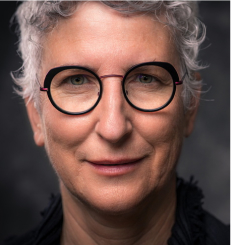
Adreanna Limbach is a personal coach and the lead meditation teacher at Mindful Meditation Studios in New York City. With Sounds True, she has published Tea and Cake with Demons: A Buddhist Guide to Feeling Worthy. In this episode of Insights at the Edge, Tami Simon speaks with Adreanna about contemplative practices that can open anyone to sitting down and becoming more familiar with their own difficult, painful feelings. Adreanna explains how these same practices helped her come to terms with panic attacks and become more resilient to extreme bursts of emotion. Tami and Adreanna discuss what it means to be “worthy” and why challenges are actually invitations to practice. Finally, they talk about the Four Noble Truths and how they might be interpreted in the modern era. (67 minutes)

Adreanna Limbach is the head teacher at MNDFL meditation studios and a personal development coach who helps women access their inherent clarity and confidence so that they can expand their freedom in business and life. She’s practiced meditation for the last twenty years and has taught Buddhist studies, meditation, and the cultivation of self-worth since 2012 at locations across the globe.
 
She has spent a decade mentoring do-gooders at the Institute for Integrative Nutrition as a coach, and she has catalyzed cohorts of tomorrow’s leaders around social change as an executive coach and faculty member at the Institute for Compassion Leadership. Her work has been featured by the New York Times, Refinery29, Women’s Health, and xoJane. She lives with her husband and too many small animals in an apartment in NYC. You can find out more at AdreannaLimbach.com.

Author photo © Veronika Kindred

600 Podcasts and Counting…

Subscribe to Insights at the Edge to hear all of Tami’s interviews (transcripts available too!), featuring Eckhart Tolle, Caroline Myss, Tara Brach, Jack Kornfield, Adyashanti, and many more.

Meet Your Host: Tami Simon

Founded Sounds True in 1985 as a multimedia publishing house with a mission to disseminate spiritual wisdom. She hosts a popular weekly podcast called Insights at the Edge, where she has interviewed many of today's leading teachers. Tami lives with her wife, Julie M. Kramer, and their two spoodles, Rasberry and Bula, in Boulder, Colorado.

Photo © Jason Elias

Also By Author

Bigger Isn’t Always Better (and Other Cultural Myths...

Some of our beliefs aren’t even ours. Like old wives’ tales passed down through generations or reflected back to us through society, we inherited certain cultural and familial narratives, adopted them, and left them unquestioned as “Truth.” Sometimes these inherited narratives and beliefs manifest as unquestioned traditions. For example, when making the Thanksgiving turkey, my friend’s mother always cut the breast of the bird off and roasted it separately. This process was embedded in my friend’s view of “how to cook a turkey.” When she moved to New York and began hosting her own Thanksgivings, she also sliced the top off the turkey and cooked it separately. Naturally. 

One year a guest asked her why she didn’t cook the turkey whole, which got her to thinking. She didn’t actually know why. It’s just the way it had always been done. So she called her mother to ask about the tradition: Why do we cut the tops off our turkeys? Her mother replied that she had always taken the top off because her mother had always taken the top off; it’s just the way she had learned how to cook a turkey. Naturally curious as to where this learned behavior all began, her mother called her mother, my acquaintance’s grandmother, and asked: Why do we cut the tops off our turkeys?

The grandmother, stumped, thought for a long, hard minute. “Oh,” she remembered, “the oven in my very first apartment was too small to fit an entire turkey, so I had to cook it with the top cut off.” Sixty years later, in a city across the country, my acquaintance was still cooking turkeys as a result of an oven that was too small. This is how inherited narrative works.

Here are some of the narratives that I inherited over the years, in order from most helpful to least: You can be anything that you want to be. Money isn’t very important. It is what it is, and it can’t be changed. Men prefer pretty over smart. Asking for help means you’re weak and needy. These are the ones that I’ve managed to tease out; I’m sure there are plenty more operating in the background that I can’t see.

Part of developing a wholesome or Beneficial View is identifying the stories that we live by, where they came from, and, perhaps most importantly, whether or not they are helpful on the path of waking up to our worthiness. Shariputra, one of the Buddha’s chief disciples, described Beneficial View as the practice of identifying which of our views spring from beneficial beliefs and which spring from harmful beliefs, and then choosing which to nourish and cultivate. Sometimes this also means looking at the views of the culture that we live in.

A few times every year, I host group coaching programs for a rather large online training institute with a global reach, drawing students from a dozen countries, primarily women of varying ages. These groups offer an encouraging environment in which we can speak openly about our fears and hesitations. Over the past decade, working as a coach has revealed to me just how many of us feel a chronic sense of falling behind and a nagging suspicion that we’re not quite _________ enough. You can fill in the blank here with your own particular flavor of not-enough-ness. Not educated enough, smart enough, good-looking enough, likable enough, thin enough . . . You get the picture. A consistent element of these groups has been a gobsmacking number of women sharing that they view their capabilities as insufficient or lacking. Sometimes this feeling extends to the way that they view themselves as people. It’s said that if one fish washes up on the shore, the scientist will call it what it is: a dead fish. Nothing of note, really. However, if hundreds of fish wash up on the shore, the biologist won’t look to the fish for answers. They’ll test the water that the fish are swimming in. So what’s up with the water that we all seem to be swimming in?

In the Western hemisphere, there is a deeply embedded narrative of scarcity that is nearly invisible. I don’t know about you, but I clearly remember playing the childhood game of musical chairs. It begins as a cheerful romp around the circle, with kids squealing and running to nab a chair once the music stops. As the game progresses, however, the stakes get higher. The chairs begin to disappear. The slowest, smallest, and most accommodating kids get disqualified. And the fastest, most aggressive kids advance amidst the dwindling resource of chairs. Good, clean childhood fun. Also, a wonderful way to implicitly teach kids this prevailing myth of scarcity: There is simply not enough to go around. And you better get yours before someone else takes it.

Author, activist, and fund-raiser Lynne Twist illustrates this phenomenon exquisitely in her book The Soul of Money. She likens the scarcity narrative to a “helmet” of insufficiency that we wear throughout our day that flavors every interaction we have. For example, our first thought when getting up in the morning tends to be I didn’t get enough sleep. As we get ready for the day, we think, I don’t have enough to wear, I don’t have enough time, I don’t have enough room on the subway, I don’t have enough help to get this job done well, There aren’t enough good men or women on Tinder, I don’t have enough energy to meet up with my friends, and then our final thought before falling asleep is I didn’t get enough done. This view of not having enough is truly pervasive. It’s no wonder that the women I’ve worked with consistently communicate that they don’t feel like they can live up to their own, or society’s, expectations.

Even if we try to address the messages we might tell ourselves about what we have and don’t have, we can’t avoid them altogether. I was riding the subway to Brooklyn one day when a father and his daughter, who was all of five or six years old, entered the train and stood toward the center of the car. She was chatting to her dad about her day at school until one of the many subway ads caught her eye. In it, there were two juxtaposed photos of a blonde woman. In one photo, the woman was frowning while holding a lemon in each hand, which were hovering at chest height. In the other, she was holding two grapefruits, also at chest height, but she was grinning. “Dad, why is she happy in that one and sad in that one?” the girl asked, pointing to the ad for breast augmentation. I swear the entire subway car went silent in anticipation of how her father would respond. He awkwardly and skillfully lobbed the question back to his daughter. “Well . . . what do you think?” The girl waited a beat and then answered, “She’s happy there because she has big ones and sad there because she has small ones.”

Clearly she had understood the message this poster was communicating to us all: a message of scarcity, insufficiency, and how one might always be “better.” And in that instant I understood how conditioning works. Hello, demon of self-doubt. Just like the fish in the ocean, we’re bound to swallow the water that we swim in. When considering what it means to develop Beneficial View, and the view of our own worthiness, it can be helpful to identify why we might not feel worthy to begin with. If our cultural perspective is rooted in the myth of “not enough,” it would logically follow that we would inherit this not-so-beneficial view of ourselves. Through looking at our own mind in meditation practice, we begin to take stock of the stories and beliefs that are not serving us, unraveling this myth of “not enough,” and revealing the Beneficial View of our innate wholeness and worth.

This is an excerpt from Tea and Cake with Demons: A Buddhist Guide to Feeling Worthy by Adreanna Limbach.


adreanna limbachAdreanna Limbach is a personal coach and a lead meditation instructor at MNDFL, NYC’s premier drop-in meditation studio. Her teachings have been featured in the New York Times, Women’s Health, and Refinery29. She lives in New York City. For more, visit adreannalimbach.com.


tea and cake with demons

Buy your copy of Tea and Cake with Demons at your favorite bookseller!

Sounds True | Amazon | Barnes & Noble | Indiebound | Bookshop

Adreanna Limbach: Tea and Cake with Demons

Adreanna Limbach is a personal coach and the lead meditation teacher at Mindful Meditation Studios in New York City. With Sounds True, she has published Tea and Cake with Demons: A Buddhist Guide to Feeling Worthy. In this episode of Insights at the Edge, Tami Simon speaks with Adreanna about contemplative practices that can open anyone to sitting down and becoming more familiar with their own difficult, painful feelings. Adreanna explains how these same practices helped her come to terms with panic attacks and become more resilient to extreme bursts of emotion. Tami and Adreanna discuss what it means to be “worthy” and why challenges are actually invitations to practice. Finally, they talk about the Four Noble Truths and how they might be interpreted in the modern era. (67 minutes)

Bigger Isn’t Always Better (and Other Cultural Myths...

Bigger Isn't Always BetterSome of our beliefs aren’t even ours. Like old wives’ tales passed down through generations or reflected back to us through society, we inherited certain cultural and familial narratives, adopted them, and left them unquestioned as “Truth.” Sometimes these inherited narratives and beliefs manifest as unquestioned traditions. For example, when making the Thanksgiving turkey, my friend’s mother always cut the breast of the bird off and roasted it separately. This process was embedded in my friend’s view of “how to cook a turkey.” When she moved to New York and began hosting her own Thanksgivings, she also sliced the top off the turkey and cooked it separately. Naturally. 

One year a guest asked her why she didn’t cook the turkey whole, which got her to thinking. She didn’t actually know why. It’s just the way it had always been done. So she called her mother to ask about the tradition: Why do we cut the tops off our turkeys? Her mother replied that she had always taken the top off because her mother had always taken the top off; it’s just the way she had learned how to cook a turkey. Naturally curious as to where this learned behavior all began, her mother called her mother, my acquaintance’s grandmother, and asked: Why do we cut the tops off our turkeys?

The grandmother, stumped, thought for a long, hard minute. “Oh,” she remembered, “the oven in my very first apartment was too small to fit an entire turkey, so I had to cook it with the top cut off.” Sixty years later, in a city across the country, my acquaintance was still cooking turkeys as a result of an oven that was too small. This is how inherited narrative works.

Here are some of the narratives that I inherited over the years, in order from most helpful to least: You can be anything that you want to be. Money isn’t very important. It is what it is, and it can’t be changed. Men prefer pretty over smart. Asking for help means you’re weak and needy. These are the ones that I’ve managed to tease out; I’m sure there are plenty more operating in the background that I can’t see.

Part of developing a wholesome or Beneficial View is identifying the stories that we live by, where they came from, and, perhaps most importantly, whether or not they are helpful on the path of waking up to our worthiness. Shariputra, one of the Buddha’s chief disciples, described Beneficial View as the practice of identifying which of our views spring from beneficial beliefs and which spring from harmful beliefs, and then choosing which to nourish and cultivate. Sometimes this also means looking at the views of the culture that we live in.

A few times every year, I host group coaching programs for a rather large online training institute with a global reach, drawing students from a dozen countries, primarily women of varying ages. These groups offer an encouraging environment in which we can speak openly about our fears and hesitations. Over the past decade, working as a coach has revealed to me just how many of us feel a chronic sense of falling behind and a nagging suspicion that we’re not quite _________ enough. You can fill in the blank here with your own particular flavor of not-enough-ness. Not educated enough, smart enough, good-looking enough, likable enough, thin enough . . . You get the picture. A consistent element of these groups has been a gobsmacking number of women sharing that they view their capabilities as insufficient or lacking. Sometimes this feeling extends to the way that they view themselves as people. It’s said that if one fish washes up on the shore, the scientist will call it what it is: a dead fish. Nothing of note, really. However, if hundreds of fish wash up on the shore, the biologist won’t look to the fish for answers. They’ll test the water that the fish are swimming in. So what’s up with the water that we all seem to be swimming in?

In the Western hemisphere, there is a deeply embedded narrative of scarcity that is nearly invisible. I don’t know about you, but I clearly remember playing the childhood game of musical chairs. It begins as a cheerful romp around the circle, with kids squealing and running to nab a chair once the music stops. As the game progresses, however, the stakes get higher. The chairs begin to disappear. The slowest, smallest, and most accommodating kids get disqualified. And the fastest, most aggressive kids advance amidst the dwindling resource of chairs. Good, clean childhood fun. Also, a wonderful way to implicitly teach kids this prevailing myth of scarcity: There is simply not enough to go around. And you better get yours before someone else takes it.

Author, activist, and fund-raiser Lynne Twist illustrates this phenomenon exquisitely in her book The Soul of Money. She likens the scarcity narrative to a “helmet” of insufficiency that we wear throughout our day that flavors every interaction we have. For example, our first thought when getting up in the morning tends to be I didn’t get enough sleep. As we get ready for the day, we think, I don’t have enough to wear, I don’t have enough time, I don’t have enough room on the subway, I don’t have enough help to get this job done well, There aren’t enough good men or women on Tinder, I don’t have enough energy to meet up with my friends, and then our final thought before falling asleep is I didn’t get enough done. This view of not having enough is truly pervasive. It’s no wonder that the women I’ve worked with consistently communicate that they don’t feel like they can live up to their own, or society’s, expectations.

Even if we try to address the messages we might tell ourselves about what we have and don’t have, we can’t avoid them altogether. I was riding the subway to Brooklyn one day when a father and his daughter, who was all of five or six years old, entered the train and stood toward the center of the car. She was chatting to her dad about her day at school until one of the many subway ads caught her eye. In it, there were two juxtaposed photos of a blonde woman. In one photo, the woman was frowning while holding a lemon in each hand, which were hovering at chest height. In the other, she was holding two grapefruits, also at chest height, but she was grinning. “Dad, why is she happy in that one and sad in that one?” the girl asked, pointing to the ad for breast augmentation. I swear the entire subway car went silent in anticipation of how her father would respond. He awkwardly and skillfully lobbed the question back to his daughter. “Well . . . what do you think?” The girl waited a beat and then answered, “She’s happy there because she has big ones and sad there because she has small ones.”

Clearly she had understood the message this poster was communicating to us all: a message of scarcity, insufficiency, and how one might always be “better.” And in that instant I understood how conditioning works. Hello, demon of self-doubt. Just like the fish in the ocean, we’re bound to swallow the water that we swim in. When considering what it means to develop Beneficial View, and the view of our own worthiness, it can be helpful to identify why we might not feel worthy to begin with. If our cultural perspective is rooted in the myth of “not enough,” it would logically follow that we would inherit this not-so-beneficial view of ourselves. Through looking at our own mind in meditation practice, we begin to take stock of the stories and beliefs that are not serving us, unraveling this myth of “not enough,” and revealing the Beneficial View of our innate wholeness and worth.

This is an excerpt from Tea and Cake with Demons: A Buddhist Guide to Feeling Worthy by Adreanna Limbach.Tea and Cake with Demons

Adreanna LimbachAdreanna Limbach is a personal coach and a lead meditation instructor at MNDFL, NYC’s premier drop-in meditation studio. Her teachings have been featured in the New York Times, Women’s Health, and Refinery29. She lives in New York City. For more, visit adreannalimbach.com.

Buy your copy of Tea and Cake with Demons at your favorite bookseller!

Sounds True | Amazon | Barnes & Noble | Indiebound


Bigger Isn't Always Better Pinterest

You Might Also Enjoy

Phenomena Finale: Not a Machine but a Flame [Takeover]

What is the “energy” in energy healing? Healers channel it. Patients reach for it. Ancient healing traditions built entire systems around it, and modern researchers are working to study it. But what is energy, biologically, physically, measurably…but also spiritually, and how does it move through the body to influence health and healing?

In this special feed takeover, we’re bringing you the season finale of Phenomena: The Science and Stories of Energy Healing, in which host Ivy Ross brings together three renowned scientists whose visions, taken together, begin to answer that question:

  • Martin Picard, PhD, of Columbia University, has spent his career studying mitochondria, the body’s cellular power sources, and has found them far more connected to our inner experience and consciousness than biomedicine ever assumed, and likely far more central to how we heal.
  • Richard Hammerschlag, PhD, co-authored the paper that helped define the modern science of the biofield: the organizing fields of energy and information that operate within the body and extend outward from it, echoing the nested qi fields of older healing traditions.
  • Neil Theise, MD, of NYU, helped identify the interstitium, a major recent discovery of a fluid-filled network running throughout the body that may explain how signals fundamental to health and healing actually travel.

Together, these three voices offer a compelling, deeply human vision of the body and mind not as a machine, but as a dynamic energetic ecosystem.

To close out the season, Ivy and researcher Meredith Sprengel also welcome special guest Jonathan Cohen, co-creator and executive producer of Mayim Bialik’s Breakdown, to help land these big ideas about energy, healing, and life.

This episode marks the finale of Phenomena‘s first season. To continue the journey and explore the full docuseries, visit phenomenahealing.com. →

Just One Question | Craig Foster: Why am I Afraid of N...


We’ve all felt it: the excitement of heading out into nature, followed almost immediately by “wow, that’s a lot of bugs” energy. Turns out, that’s not just you being an urban dweller — it’s a genuine evolutionary paradox, and this week’s guest has spent his whole career living inside it.

Craig Foster is the filmmaker and naturalist behind My Octopus Teacher, and in this episode he tackles a question Tami poses about her own experience: why can she melt into a deep, connected feeling about nature from the safety of meditation, but feel completely terrified and separate the moment she’s actually standing in a wilderness with wolves, cougars, or sharks nearby?

Craig’s answer reframes the whole thing. He explains that we’re each carrying millions of years of “wild” memory, hardwired into who we are, while our conscious, modern selves have only had a few generations to adjust to industrial life. The fix isn’t a heroic leap into the deep wild — it’s small, steady reconnection.

A few takeaways from Craig’s answer:

  • We’re designed for wildness — our discomfort with it is a mismatch, not a flaw
  • Reconnection starts small: get to know the trees, insects, and animals right around your house
  • Comfort with the wild builds faster than you’d expect — sometimes in a matter of months
  • Even one backyard animal can teach you something profound about yourself and the natural world

If this got you thinking about your own relationship with the wild, you’ll want to hear the whole conversation — Craig and Tami go even deeper into what it means to live an amphibious life, split between our tame and wild selves.

Taken from the full Insights at the Edge conversation with Craig Foster. Find the complete interview in this feed or at soundstrue.com.

This episode is sponsored by Omega Institute, a global gathering hub for lifelong learning and spiritual exploration. Omega offers weekend workshops, special events, rest and rejuvenation retreats, professional training, online learning, and more. Discover what calls to you at eomega.org/true.

Just One Question | Martha Beck: What Do I Do At Three...


Three in the morning. Brain already running. Every unfinished thing in your life suddenly very urgent. Sound familiar?

We pulled this week’s question because when Tami asked Martha Beck what to actually do in that moment, her answer was genuinely not what we were expecting. No breathwork protocol. No journaling prompt. What Martha offers is something way simpler — and honestly, kind of revolutionary in how low the bar is.

Martha Beck is a Harvard-trained sociologist, bestselling author, and one of the sharpest minds out there on anxiety and how we actually heal it. She’s been working through her own anxiety since childhood, and she’s arrived somewhere really good. (Spoiler: it involves audiobooks, furry blankets, and thinking like a golden retriever.)

Here’s some of what she gets into:

  • Why she plays Sounds True audiobooks at half-speed in the middle of the night — and why slowing down is the whole point
  • The self-kindness practice she uses when her brain won’t quit, including the exact question she asks herself
  • A story from Liz Gilbert’s Eat, Pray, Love about a two-word message that Martha keeps coming back to — it’s a good one
  • How decades of anxiety can actually rewire into something peaceful, and why what fires together really does wire together

Honestly, this one left us wanting to go take a nap. In the best way.

Taken from the full Insights at the Edge conversation with Martha Beck. Find the complete interview in this feed or at soundstrue.com.

This episode is sponsored by Omega Institute, a global gathering hub for lifelong learning and spiritual exploration. Omega offers weekend workshops, special events, rest and rejuvenation retreats, professional training, online learning, and more. Discover what calls to you at eomega.org/true.

Leave a Reply

Your email address will not be published. Required fields are marked *