
Susan David: Emotional Agility

    —
September 11, 2018

Susan David: Emotional Agility

Susan David — September 11, 2018

Susan David is a psychologist teaching at Harvard Medical School, cofounder of the Institute of Coaching at McLean Hospital, and the bestselling author of Emotional Agility: Get Unstuck, Embrace Change, and Thrive in Work and Life. In this episode of Insights at the Edge, Tami Simon talks with Susan about modern society’s attitudes toward emotion—specifically our tendency to label certain feelings as good or bad, and the dysfunctional behaviors that arise as a result. Susan explains that a much healthier approach is to identify “bad” emotions as “tough” or “difficult,” allowing us to examine them in a granular way that helps in processing them. Tami and Susan discuss how this informed method of dealing with emotions can be taught to children, which is especially important for learning not to bottle or brood upon unpleasant feelings. Finally, Susan draws upon a story from her adolescence to illustrate why emotional honesty is paramount for living a fulfilled life and why forced positivity never works out in the long run. (66 minutes)

Tami’s Takeaway: I loved hearing from a Harvard professor that “chasing happiness just doesn’t work.” It certainly hasn’t worked for me. Instead, she teaches how rewarding it can be to orient ourselves towards fulfillment and living a life that is meaningful. And then in some strange, unexpected way, happiness dawns. My two favorite quotes from this interview are: “Discomfort is the price of admission to a meaningful life,” and “Life’s beauty is inseparable from its fragility.”
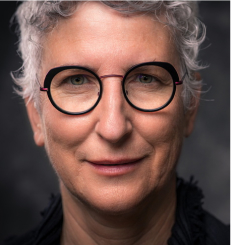

Author Info for Susan David Coming Soon

900 Episodes and Counting…

Subscribe to Insights at the Edge to hear all of Tami’s interviews (transcripts available too!), featuring Eckhart Tolle, Caroline Myss, Tara Brach, Jack Kornfield, Adyashanti, and many more.

Meet Your Host: Tami Simon

Each week on Insights at the Edge, Tami Simon interviews leading voices in the Mind/Body/Spirit space about a vast spectrum of fascinating ideas. Since 2009, Tami and her guests have been exploring the edge of understanding, nearly 1,000 episodes on the honest work of change, including spiritual discovery, awakening, intuition, purpose, trauma, and grief.

Photo © Jason Elias

Also By Author

Susan David: Emotional Agility

Susan David is a psychologist teaching at Harvard Medical School, cofounder of the Institute of Coaching at McLean Hospital, and the bestselling author of Emotional Agility: Get Unstuck, Embrace Change, and Thrive in Work and Life. In this episode of Insights at the Edge, Tami Simon talks with Susan about modern society’s attitudes toward emotion—specifically our tendency to label certain feelings as good or bad, and the dysfunctional behaviors that arise as a result. Susan explains that a much healthier approach is to identify “bad” emotions as “tough” or “difficult,” allowing us to examine them in a granular way that helps in processing them. Tami and Susan discuss how this informed method of dealing with emotions can be taught to children, which is especially important for learning not to bottle or brood upon unpleasant feelings. Finally, Susan draws upon a story from her adolescence to illustrate why emotional honesty is paramount for living a fulfilled life and why forced positivity never works out in the long run. (66 minutes)

Tami’s Takeaway: I loved hearing from a Harvard professor that “chasing happiness just doesn’t work.” It certainly hasn’t worked for me. Instead, she teaches how rewarding it can be to orient ourselves towards fulfillment and living a life that is meaningful. And then in some strange, unexpected way, happiness dawns. My two favorite quotes from this interview are: “Discomfort is the price of admission to a meaningful life,” and “Life’s beauty is inseparable from its fragility.”

You Might Also Enjoy

Geneen Roth: It’s Not About Your Mother—Finding Lo...


What if the relationship you’ve been trying to fix your whole life isn’t actually broken in the way you think?

This week, Tami Simon speaks with Geneen Roth—author of 11 books including the New York Times bestseller Women, Food, and God—about her newest and most personal book yet: Love Finally: Untangling the Knot Between Mothers, Daughters, and Food. After 70 years of carrying wounds she believed came directly from her mother, Roth stumbled into a teaching that cracked everything open: the pain isn’t about your mother. It’s about what you concluded about yourself.

Join Tami and Geneen to explore:

  • Why the most painful legacy of childhood wounds isn’t what was done to us—but the lies we decided were true about ourselves
  • The six steps to freedom that Geneen learned from her mentor Coco, and how to begin working with them
  • How self-rejection—not the original wound—is what keeps us trapped, and how awareness dissolves it
  • Why affirmations and forgiveness meditations don’t work—and what actually does
  • The surprising transformation of Geneen’s relationship with her 97-year-old mother, and what it reveals about how we change
  • A candid revisiting of Geneen’s foundational teachings on intuitive eating—and what she’s learned to say differently now
  • What it means to be “the one you’ve been waiting for”—and why that’s not a platitude but a practice

Whether your relationship with your mother is tender, complicated, estranged, or something in between, this conversation offers a genuinely new way to understand where the real work lives—and why it might finally be possible to do it.

Listen now. →

This conversation offers genuine transmission—not just concepts about awakening, but the palpable presence of realized teachers exploring the growing edge of spiritual understanding together. Originally aired on Sounds True One.

Richard Schwartz and Tamala Floyd: Healing Across Gene...


What if the anxiety, grief, or fear you’ve struggled with for years is a burden you inherited—not one you earned?

This week, Tami Simon speaks with Richard Schwartz—founder of Internal Family Systems and author of the bestselling No Bad Parts—and Tamala Floyd, psychotherapist, IFS lead trainer, and author of Listening: When Parts Speak: A Practical Guide to Healing with IFS Therapy and Ancestor Wisdom. Together, they explore how IFS and ancestral healing converge to help us release intergenerational trauma at its root.

Join Tami, Dick, and Tamala to explore:

  • What “legacy burdens” are in IFS—and how to recognize when what you’re carrying came from someone else
  • How personal, ethnic, and cultural legacy burdens operate differently—and why racism, historical trauma, and collective suffering require their own healing
  • The concept of the “well ancestor”: why every lineage has one, and how to invite them into your healing
  • Heirlooms vs. burdens: how our ancestral lines carry gifts as well as wounds—and how to receive them
  • Why legacy burdens are often easier to release than personal ones—and what fear most commonly gets in the way
  • Tamala’s guided ancestral meditation, offered live: a practice for releasing what no longer serves you
  • What we offer future generations simply by doing our own inner work

The episode includes a full guided meditation led by Tamala Floyd—drawn directly from her ancestors—that listeners can return to again and again.

Listen now and begin your own healing across generations. →

This conversation offers genuine transmission—not just concepts about awakening, but the palpable presence of realized teachers exploring the growing edge of spiritual understanding together. Originally aired on Sounds True One.

Tian Dayton: If You Grew Up with Addicts, Healing Is a...

Trauma doesn’t show up in what we remember. It shows up in how we react.

This week, Tami Simon speaks with Dr. Tian Dayton—award-winning scholar, senior fellow at The Meadows, and author of Growing Up with Addiction: How Adult Children of Addicts Can Heal Family Trauma, Complex PTSD and Codependency—about what it means to grow up inside a family shaped by addiction, and what it actually takes to heal.

Drawing on decades of clinical work, her own lived experience, and her innovative Relational Trauma Repair (RTR) method, Dr. Dayton explores the neuroscience of relational trauma and the embodied, experiential path through it.

Join Tami and Tian to explore:

  • Why addiction is a family disease—and how process addictions like workaholism and overeating leave the same marks as substance use
  • How childhood trauma gets stored in the body, not the story—and why you can’t think your way out of complex PTSD
  • The neuroscience of overreaction: why triggers feel present-tense even when they’re decades old
  • Cognitive and somatic distortions—and how to recognize when the past is hijacking the present
  • Psychodrama and Relational Trauma Repair: the power of talking to instead of about
  • Timelines, social atoms, and letter writing as tools for putting fragmented memories back in order
  • Why healing is a discipline—and what it means to take ownership of your own darkness as a path to freedom

Whether you grew up in a home shaped by addiction or simply recognize the patterns Dr. Dayton describes, this interview offers both a map and the courage to begin the journey.

Listen now and start where you are. 

This conversation offers genuine transmission—not just concepts about awakening, but the palpable presence of realized teachers exploring the growing edge of spiritual understanding together. Originally aired on Sounds True One.

Leave a Reply

Your email address will not be published. Required fields are marked *
