Energy Healing for Animals

    —
November 24, 2015

Energy Healing for Animals

Joan Ranquet November 24, 2015

Joan Ranquet is an animal communicator and energy healer who teaches workshops nationwide. With Sounds True, she has published Energy Healing for Animals: A Hands-On Guide for Enhancing the Health, Longevity, and Happiness of Your Pets. In this episode of Insights at the Edge, Joan and Tami Simon speak on the baseline concepts of animal communication—its history, evidence, and various applications. They also talk about the use of energy healing with animals, including the similarities between the energetic bodies of people and their pets. Finally, Tami and Joan discuss the many ways we can use energy healing to enhance the health and well-being of our pets—especially during times of stress or transition. (71 minutes)

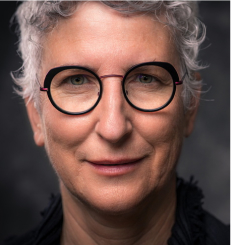
JOAN RANQUET is an animal communicator and energy healer who teaches basic and advanced workshops nationwide. She is the author of Communication with All Life. Joan is the founder of Communication with All Life University. Her work has been featured on The Today Show, Good Morning America, and Animal Planet. For more, visit joanranquet.com.

Author photo © Corinne-McNeely-2011

600 Podcasts and Counting…

Subscribe to Insights at the Edge to hear all of Tami’s interviews (transcripts available too!), featuring Eckhart Tolle, Caroline Myss, Tara Brach, Jack Kornfield, Adyashanti, and many more.

Meet Your Host: Tami Simon

Founded Sounds True in 1985 as a multimedia publishing house with a mission to disseminate spiritual wisdom. She hosts a popular weekly podcast called Insights at the Edge, where she has interviewed many of today's leading teachers. Tami lives with her wife, Julie M. Kramer, and their two spoodles, Rasberry and Bula, in Boulder, Colorado.

Photo © Jason Elias

Also By Author

Energy Healing for Animals

Joan Ranquet is an animal communicator and energy healer who teaches workshops nationwide. With Sounds True, she has published Energy Healing for Animals: A Hands-On Guide for Enhancing the Health, Longevity, and Happiness of Your Pets. In this episode of Insights at the Edge, Joan and Tami Simon speak on the baseline concepts of animal communication—its history, evidence, and various applications. They also talk about the use of energy healing with animals, including the similarities between the energetic bodies of people and their pets. Finally, Tami and Joan discuss the many ways we can use energy healing to enhance the health and well-being of our pets—especially during times of stress or transition. (71 minutes)

You Might Also Enjoy

Inner Alchemy: Zulma Reyo On The Path Of Mastery And T...

For years, a young woman split her time between formal psychotherapy training and long journeys across South America, India, and Europe, gathering pieces of a practice that didn’t yet have a name. That practice eventually became Inner Alchemy, and its founder, Zulma Reyo, has spent decades refining it into one of the more distinctive voices in contemporary spiritual teaching.

At Sounds True, we’ve long championed teachers who blend rigorous inner work with genuine warmth, and Zulma’s approach reflects exactly that balance. Here, we’ll take a closer look at who Zulma Reyo is, what her path of mastery actually involves, and how consciousness development connects to a more heart-centered way of living.

Key Takeaways:

  • Transformation Begins With The Personality: Zulma Reyo teaches that inner alchemy starts by working through the personality before a deeper sense of self can emerge.
  • Mastery Unfolds Through Consistent Practice: The path of mastery is not a single destination but a gradual unfolding shaped by sustained, patient inner work.
  • Let The Heart Lead You: Heart-centered spirituality asks us to lead with love and radiance, meeting our wounds with compassion as the heart opens. 

Who Is Zulma Reyo? A Life Devoted To Inner Alchemy

Zulma Reyo’s teaching draws from a wide range of sources: Gestalt therapy, psychosynthesis, bioenergetics, energy balancing, and psychic arts, alongside Esoteric Christianity, Zen, Sufism, Taoism, Theosophy, and Tantra. She wove these threads together into what she calls Inner Alchemy, a systematic approach to raising the vibratory quality of the self, without anchoring the work to any single tradition or belief system.

As the founder of the Zulma Reyo School of Consciousness, she leads a five-year program built entirely around these principles, working from the belief that personal transformation is the foundation for lasting change in the wider world. Her teachings speak to something we return to often in our Spirituality & Awakening collection: the idea that authentic teaching emerges slowly, shaped by years of direct experience.

Inner Alchemy maps a rich inner landscape. Key concepts include chakras, the seven rays, dimensional and astral realms, karma, the role of dreams in spiritual development, and the practice of gratitude as an active spiritual force, each offering students a clear framework for the inner journey ahead.

Your Wellness Journey Starts Here At Sounds True

What Consciousness Development Asks From Us

Zulma Reyo often speaks about the three energy bodies of the personality as a framework for understanding how physical, emotional, and mental patterns shape our experience. Consciousness development, in her view, requires working with all three together.

Working With The Three Energy Bodies

Each energy body carries its own kind of conditioning, and addressing one without the others tends to produce only partial change. Zulma treats the body, emotions, and mind as interconnected systems that need coordinated attention. In practice, this might look like somatic awareness exercises to release held physical tension, emotional processing practices to move stuck grief or fear, and mindfulness techniques that train the mind to observe its own patterns without immediately reacting.

This kind of subtle inner work is something we explore across our Subtle Energy collection, where teachings on energy anatomy, chakra work, and somatic awareness open complementary pathways into the same territory.

Meet Your Sorrow with Kindness. Learn Practices for Self-Compassion with Sounds True.

Bringing Energetic Work Into Daily Life

One of the most grounding aspects of Zulma Reyo’s teaching as a spiritual teacher alchemy practitioner is that this work is meant to live in ordinary life, not only in formal practice. She offers several principles that translate directly into the daily rhythm:

  • Turning attention from the personality to the deeper self: When we notice ourselves reacting from old patterns, habitual defenses, or conditioned emotions, the practice is to pause and ask what lies beneath. This might mean sitting quietly for five minutes after a frustration arises and witnessing the emotion without identifying with it.
  • Finding community support: Transformation deepens when held in relationship. Being witnessed by others and witnessing them in return accelerates growth in ways that solitary practice rarely can. A spiritual practice group, a trusted circle of friends, or programs led by teachers you resonate with all serve this function.

Honesty, Service, And The Inner Life

  • Seeing the purity within others: Zulma teaches that each person carries an essential self beneath their wounds and conditioning. Training ourselves to look for that purity in daily interactions, even difficult ones, softens the heart and shifts how we move through the world.
  • Humility and self-honesty: The path of mastery asks us to see ourselves clearly, without harsh judgment, but without self-deception either. Practices like reflective journaling or letter writing, one of Zulma’s own recommended tools, give the inner life a place to surface and be heard.

Working on oneself becomes, in this framework, a form of service. The more we clear our own patterns, the less we project onto others, and the more fully we can show up for them. Zulma is one of many teachers whose devoted practice you can find in our All Teachers & Authors directory.

Heart Centered Spirituality And The Radiant Sun Within

In her Sounds True conversation on the Insights at the Edge podcast, Zulma Reyo and Tami Simon explore what it means to access an inner radiance that lives beneath layers of conditioning and self-protection.

The conversation covers the gift of etheric sight, a kind of expanded perception that becomes available as the personality grows quieter. Tami and Zulma also discuss the relationship between the personality and the soul, and what happens when the ego begins to release its grip through what Zulma calls ego death, not a destruction but a gradual loosening of the false self so the deeper self can step forward.

This heart-centered spirituality doesn’t ask us to bypass difficulty. Instead, the practice asks us to meet our own wounds with enough compassion that the heart can soften and open again. Much of this involves working through emotional patterns many of us carry from childhood, including learning to offer ourselves the love and acceptance we may not have received early on.

Build Relationships That Nourish And Sustain

Final Thoughts

Zulma Reyo’s decades of work suggest that real transformation asks more of us than insight alone. Real transformation requires patient attention to the personality, a willingness to feel what we’ve avoided feeling, and a steady return to the heart as a source of guidance. 

Explored through Zulma’s teachings or through the many other voices we carry at Sounds True, the path of mastery remains open to anyone willing to begin. We believe the inner work each person does ripples outward, and we’re honored to walk alongside you on that path. 

Frequently Asked Questions About Zulma Reyo

Who is Zulma Reyo?

Zulma Reyo is an educator, writer, and spiritual teacher who developed Inner Alchemy, a practice blending psychotherapy, energy work, and mystical traditions from both Eastern and Western sources.

What is Inner Alchemy?

Inner Alchemy is Zulma Reyo’s system for raising the vibratory quality of the self through sustained inner work, blending psychological and spiritual approaches to personal transformation.

What does the path of mastery involve?

The path of mastery involves an ongoing process of clearing stuck emotional patterns and redirecting attention from personality-driven behavior toward a deeper sense of self.

What are the three energy bodies Zulma Reyo discusses?

They refer to physical, emotional, and mental patterns of conditioning that Zulma Reyo suggests must be addressed together for meaningful consciousness development to occur.

Is Inner Alchemy connected to a specific religion?

No. Zulma Reyo draws from many traditions, including Esoteric Christianity, Zen, Sufism, and Taoism, without requiring students to follow any single belief system.

What does heart-centered spirituality mean in this context?

It refers to approaching spiritual growth by softening toward one’s own wounds with compassion, allowing love and radiance to guide the process rather than intellect alone.

Where can I hear Zulma Reyo speak about her own path?

Sounds True’s Insights at the Edge podcast features a full conversation between Tami Simon and Zulma Reyo, including a guided alchemical alignment practice.

Michelle Cassandra Johnson is an author, activist, spiritual teacher, racial equity consultant, and intuitive healer. She is the author of six books, including Skill in Action and Finding Refuge. Amy Burtaine is a leadership coach and racial equity trainer. With Robin DiAngelo, she is the coauthor of The Facilitator's Guide for White Affinity Groups. For more, visit https://www.michellecjohnson.com/wisdom-of-the-hive.

Does Prayer Work? Larry Dossey on the Science of Heali...

Does prayer work? Larry Dossey’s honest answer is more nuanced than a simple yes or no. As a physician trained in conventional internal medicine, he built a career by questioning why prayer, intention, and compassion consistently produced measurable effects in controlled studies. The evidence he has spent forty years gathering suggests something worth taking seriously is happening.

At Sounds True, we have followed his work closely because it asks readers to sit with genuine uncertainty rather than rush toward belief or dismissal. Our mission has always been to wake up the world by offering access to conversations exactly like this one. 

In this piece, we look at his background, his theory of the mind, and what the research actually shows.

Key Takeaways:

  • Healing Intention and What It Means: Larry Dossey’s research asks whether focused intention can influence healing in ways conventional medicine has yet to fully explain. Forty years of evidence suggest the question is worth taking seriously.
  • Consciousness Without Boundaries: His theory of non-local mind proposes that consciousness is not confined to a single brain or body, and may connect individual minds to something far larger.
  • What the Studies Point To: Controlled studies point to measurable effects from prayer and focused intention, while scientific debate about mechanisms remains open and ongoing.

Uncover How Your Mind Works with Valuable Resources

Who Is Larry Dossey?

Larry Dossey, MD, served as a battalion surgeon in Vietnam before becoming chief of staff at Medical City Dallas Hospital, a fairly conventional trajectory for someone who would later challenge medicine’s assumptions from the inside. 

His book Healing Words became a New York Times bestseller and helped bring prayer healing into mainstream medical education. He is one of many teachers and researchers whose thinking we carry at Sounds True, and readers curious about how his ideas connect with others’ can find the full range of voices on our All Teachers & Authors page. Dossey frames the history of medicine in three stages:

  • Era I: The Body as Machine Era I treats the body as something to be fixed through physical interventions, including surgery, pharmaceuticals, and diagnostics. This approach defined medicine for centuries, and its focus on measurable, physical causes and effects laid the groundwork for how healthcare works today.
  • Era II: Mind Meets Body Era II acknowledges that thoughts, beliefs, and emotions can shape physical health outcomes. Research has since affirmed this connection through work on stress reduction, meditation, and breathwork.
  • Era III: Consciousness Beyond the Body Era III is the stage Dossey argues we are now entering, one where consciousness may reach beyond an individual’s skin and skull to influence outcomes at a distance. This is the most contested of the three, and the question his career has been devoted to building a case for.

The Non-Local Mind Theory

The idea of non-local mind sits at the center of nearly everything Dossey writes. He argues that consciousness is not confined to a single brain or body, which may help explain why one person’s intention can seem to affect another person or organism at a distance. This is the foundation of what he calls consciousness medicine: a way of approaching healing that takes seriously the possibility that the mind’s reach extends beyond the body.

Dossey describes a non-local mind as unbounded in space and time, and as incapable of remaining separate from other minds. Within this framework, the consciousness participates in something he calls the One Mind. Our working concept of mind has been expanding since the nineteenth century, with subdivisions like the conscious, preconscious, subconscious, and collective unconscious gradually filling out the picture. 

The Research Behind Prayer Healing

Much of the research Dossey cites comes from decades of controlled experiments, including studies by the Spindrift Organization examining whether focused intention can influence outcomes in bacteria, plants, and human patients. He reports that over 100 such studies point to a real, if modest, effect. Prayer healing is cited across this research as one of the clearest examples of non-local consciousness in action.

The evidence spans three distinct categories: healing in human patients, healing at a cellular level, and healing in plants and animals. Two case studies are offered in direct support of non-local healing, with the underlying question being whether medicine can afford to close the door on any reliable pathway toward recovery. 

We follow conversations like this one closely on our Insights at the Edge Podcast, where guests are invited to test their ideas through genuine dialogue rather than simply restate them.

Center Yourself With Meditative Teachings by Sounds True

Distant Healing and What Studies Suggest

Dossey’s writing on distant healing extends this logic outward, proposing that care, love, and focused attention can travel across space without any known physical mechanism. Studies within prayer research science have examined everything from cardiac patients to seed germination, and Dossey reads those results as evidence that the mind operates beyond the boundaries conventional science assumes.

This research disclosed that prayer had a measurable effect not only on human beings but also on bacteria, germinating seeds, and animals. Some cases of distant consciousness operating on non-humans are noted in the literature, but the central focus remains the healing power of intercessory prayer on humans and what that might mean for how medicine approaches care.

Critics, including psychologist Robert Baker, have argued that Dossey’s conclusions outpace what the data can firmly hold, and mainstream science has not settled the question. Those drawn to the terrain he is mapping will find a hands-on starting point in our Subtle Energy collection, which gathers programs and teachings on energy-based healing practices.

Also, our Spirituality & Awakening collection covers similar ground through a wider range of traditions, for anyone who wants to deepen this inquiry through practice as much as reading.

Dossey’s Influence on Modern Healthcare

Dossey’s work in consciousness medicine has shaped how integrative medicine is discussed at the federal level: he served as co-chair of the Panel on Mind-Body Interventions for the National Center for Complementary and Alternative Medicine at the National Institutes of Health, placing his ideas in federal research conversations. 

He was also appointed to Hillary Rodham Clinton’s Task Force on Health Care Reform and, for many years, served as executive editor of Explore, The Journal of Science and Healing, a peer-reviewed publication covering integrative approaches to medicine. Over the decades, he has lectured at Harvard, the Mayo Clinic, Johns Hopkins, and Cornell, before audiences not typically receptive to unverified claims. 

His legacy lies not only in the claims he has made but in the space he has kept open. Not every conclusion he draws may hold up under further study, yet Dossey has helped ensure that questions about prayer healing, non-local mind, and the mind’s potential role in physical recovery remain part of serious medical dialogue.

Awaken Something Greater Within You. Find Teachings that Speak to You With Sounds True.

Final Thoughts

Larry Dossey does not ask you to take his conclusions on faith. He asks you to look at the data, sit with an open question, and let the discomfort of not-knowing guide you toward something more honest than certainty. That spirit is something we recognize deeply at Sounds True.

Our mission has always been to wake up the world by giving you access to conversations exactly like this one, conversations that resist easy answers and honor complexity. We return to Dossey’s work because the question at its center has no tidy answer: whether focused intention and prayer healing represent a real frontier in medicine is something the research is still working out. 

Frequently Asked Questions About Larry Dossey

Is there scientific proof that prayer heals?

Evidence remains mixed and contested. Dossey cites supportive studies, while critics argue results are inconclusive or unproven.

What does non-local mind mean?

It describes consciousness as potentially unconfined to the brain, capable of influencing outcomes beyond physical proximity.

Is Larry Dossey a religious author?

No. He writes as a physician focused on evidence and research rather than any specific religious tradition.

Does distant healing have to involve prayer specifically?

No. Dossey includes compassion, meditation, and focused intention as forms of distant healing beyond formal prayer.

Do mainstream doctors accept these theories?

Not universally. Many medical schools now teach the topic, though consensus on mechanisms remains unresolved.

Where can I learn more about Larry Dossey’s work?

Sounds True features books, podcasts, and programs from Larry Dossey and researchers exploring similar questions.

Sources:

  1. Harding O. G. (2001). The healing power of intercessory prayer. The West Indian medical journal, 50(4), 269–272.

Michelle Cassandra Johnson is an author, activist, spiritual teacher, racial equity consultant, and intuitive healer. She is the author of six books, including Skill in Action and Finding Refuge. Amy Burtaine is a leadership coach and racial equity trainer. With Robin DiAngelo, she is the coauthor of The Facilitator's Guide for White Affinity Groups. For more, visit https://www.michellecjohnson.com/wisdom-of-the-hive.

Dawson Church on Epigenetics and EFT: How Your Emotion...

For a long time, the dominant assumption was straightforward: genes were fixed at birth, and health was largely a matter of inheritance. Dawson Church has spent decades questioning that assumption, showing through rigorous research that the emotions we carry and the beliefs we hold can switch certain genes on or off in real time.

At Sounds True, we have shared his work because it sits at a rare intersection of hard science and everyday practice. Few researchers explain that bridge as clearly or as accessibly as he does. Here, we will look at his background, the science of epigenetics and emotions, and how emotional freedom technique research fits into a broader picture of lasting health.

Key Takeaways:

  • Your Genes Respond to Your Emotions: Dawson Church’s research on immediate early genes shows that thoughts, memories, and emotional experiences can switch gene activity on or off within seconds.
  • How Tapping Reaches the Body: EFT tapping may calm the nervous system in ways that carry a measurable biological signal, according to Church’s published studies on veterans and stress response.
  • Small Habits, Real Biological Shifts: Daily practices rooted in emotional awareness, drawn from Church’s findings, offer an approachable path to supporting long-term health from the inside out.

Who Is Dawson Church

Dawson Church, PhD, is an award-winning science writer whose work has reached millions of readers seeking a deeper link between mind and body. He has written three bestselling books, including Genie in Your Genes, and has published dozens of studies in peer-reviewed journals examining how breakthroughs in energy psychology apply to health and personal performance. He also founded the National Institute for Integrative Healthcare and served as editor emeritus of the peer-reviewed journal Energy Psychology.

His name sits naturally among the voices in our All Teachers & Authors, a gathering of researchers, practitioners, and wisdom teachers who each approach healing and transformation from a different angle. Teachers like Larry Dossey, who has spent decades examining the role of consciousness and prayer in medicine, offer another entry point for readers drawn to the overlap between science and inner life that Church’s work exemplifies.

Uncover How Your Mind Works with Valuable Resources

How Your Genes Respond to Life

Epigenetics is the study of how your behaviors and environment cause changes that affect the way your genes work, without altering the DNA sequence itself. Your genes are less like a locked blueprint and more like a dial that turns up or down in response to signals from your life.

Genes Shift as You Age and Adapt

Epigenetic patterns change throughout your lifetime, as part of normal development and aging, and in response to what you encounter along the way. Sustained stress, nutrition, emotional patterns, and environmental exposures all leave marks on how genes express themselves. Certain diseases can also alter epigenetic patterns, which is part of why researchers now study this field to shed light on conditions ranging from autoimmune responses to mood disorders. 

What Immediate Early Genes Tell Us

Church centers much of his research on a class called immediate early genes, which respond within seconds to stimuli like a thought, a memory, or a sudden wave of relief. This rapid responsiveness is where epigenetics and emotions meet most clearly. Repeated emotional patterns may shape how consistently those genes stay switched on or off. So, if your inner life can trigger measurable changes in gene activity, then practices that shift your emotional state are not just psychological in effect. As a matter of fact, they may be biological.

Center Yourself With Meditative Teachings by Sounds True

Inside the Research on Emotional Freedom Technique

Emotional Freedom Technique, often referred to as EFT tapping, is a practice in which a person taps on specific acupressure points on the face and body while holding a distressing thought or feeling in mind. The technique draws from both cognitive and somatic traditions and is used to address trauma responses, anxiety, and chronic stress. 

Practitioners work through a structured sequence of tapping points while verbally acknowledging a difficulty, then shifting toward a statement of self-acceptance. For many people, the practice becomes a way of meeting an emotion directly rather than suppressing or avoiding it.

Church’s published research on EFT and epigenetics uses tools like MRI and EEG scans alongside gene expression tests to measure what happens in the body during and after sessions. 

In one study involving veterans, participants who completed a course of EFT tapping reported significant reductions in PTSD symptoms, pointing toward the idea that emotional regulation practices carry a measurable biological signal. This is a reminder that working with the nervous system is not separate from working with the body at its most foundational level.

Those drawn to this kind of work will find our Subtle Energy collection a natural complement to Church’s principles, with programs and practices that work at the intersection of the body’s energy systems and lasting wellness. Similar threads come up regularly on our Insights at the Edge Podcast.

Living Church’s Principles Every Day

None of what Church studies requires a laboratory. The principles behind epigenetics and emotions translate into small, repeatable habits that anyone can begin today.

Notice Emotional Signals Early

The body often registers stress before the mind catches up. Tuning into physical cues, a tightening in the chest, a shallow breath, a spike in irritability, before they escalate is a practice in itself. Church’s research suggests that how quickly you respond to an emotional signal matters, because the longer a stress response continues uninterrupted, the more likely it is to influence gene expression patterns. 

Start With a Short Tapping Sequence

EFT tapping sequences are accessible enough to use in the middle of a difficult moment, without any equipment or training required. Starting with a few rounds while naming what you are feeling can interrupt the stress cycle before it escalates. Many people begin with guided audio recordings before working with a certified practitioner, and that entry point is completely valid.

Track Your Patterns Over Several Weeks

Keeping a simple record of mood, sleep, and physical sensations across several weeks creates a kind of visibility that single moments rarely offer. Church’s framework suggests that what you repeat emotionally becomes biologically reinforced, so tracking helps you spot a pattern early enough to consciously shift it. A few lines in a notebook at the end of each day is enough to start.

Those ready to build a fuller toolkit will find our Health & Healing collection a strong next step, with programs and courses built around the body-mind connection, stress, and long-term recovery.

Build Relationships That Nourish And Sustain

Final Thoughts

Dawson Church’s research offers something rare: a scientific basis for the intuition that how we feel matters beyond the moment. The body is not a fixed machine running on a script written at birth. Emotions, attention, and practices like EFT tapping all seem to leave a mark on how genes express themselves, and that mark is not permanent.

At Sounds True, our mission has always been to wake up the world, one honest conversation at a time. Church’s work is one thread in that larger fabric. We continue sharing voices like his because this kind of research gives people something real and livable to work with. The next step of your own process may be closer than you think.

Frequently Asked Questions About Dawson Church

What is epigenetics in simple terms?

Epigenetics studies how genes turn on or off in response to emotions, thoughts, and environment, without changing DNA itself.

Is EFT tapping backed by science?

Some published studies, including work by Dawson Church, report measurable stress and symptom changes after EFT sessions.

Can emotions really affect gene expression?

Research on immediate early genes suggests that strong emotional experiences can trigger short-term changes in gene activity.

What is Genie in Your Genes about?

It’s Dawson Church’s bestselling book explaining how epigenetic medicine connects consciousness, emotion, and physical healing.

Do I need training to try EFT tapping?

No. Many people learn basic tapping sequences from books or guided audio before working with a certified practitioner.

Is this research widely accepted in mainstream medicine?

Epigenetics is an established field, though specific claims about EFT’s mechanisms are still an active area of study.

Where can I learn more about Dawson Church’s work?

Sounds True offers books, podcasts, and programs featuring Dawson Church and other researchers working in similar territory.

Michelle Cassandra Johnson is an author, activist, spiritual teacher, racial equity consultant, and intuitive healer. She is the author of six books, including Skill in Action and Finding Refuge. Amy Burtaine is a leadership coach and racial equity trainer. With Robin DiAngelo, she is the coauthor of The Facilitator's Guide for White Affinity Groups. For more, visit https://www.michellecjohnson.com/wisdom-of-the-hive.