Learning from Non-Ordinary States

    —
August 24, 2010

Learning from Non-Ordinary States

Stanislav Grof — August 24, 2010

Tami Simon speaks with Stanislav Grof. For more than half of a century, Stan has been a pioneer in the research of non-ordinary states of consciousness. He is the author of many books including Realms of the Human Unconscious, Beyond the Brain, and most recently Holotropic Breathwork: A New Approach to Self-Exploration and Therapy. With Sounds True, Stan wrote the book When the Impossible Happens: Adventures in Non-Ordinary Realities, and the audio learning program The Transpersonal Vision. Stan discusses the lessons that can be learned from non-ordinary states, the idea of a consciousness independent of the brain, and the uses and goals of holotropic breath work. (67 minutes)

Stanislav Grof, MD, PhD, is a psychiatrist with more than sixty years of experience in the research of holotropic states of consciousness, a large and important subgroup of non-ordinary states that have healing, transformative, heuristic, and evolutionary potential. In the past, he was principal investigator in a psychedelic research program at the Psychiatric Research Institute in Prague, chief of psychiatric research at the Maryland Psychiatric Research Center, assistant professor of psychiatry at Johns Hopkins University in Baltimore, and Scholar-in-Residence at the Esalen Institute in Big Sur, California.
Currently, he is professor of psychology at the California Institute of Integral Studies (CIIS) in San Francisco, conducts professional training programs in holotropic breathwork and transpersonal psychology, and gives lectures and seminars worldwide. He is one of the founders and chief theoreticians of transpersonal psychology and the founding president of the International Transpersonal Association (ITA). In 2007, he was granted the prestigious Vision 97 Award from the Václav and Dagmar Havel Foundation in Prague, and in 2010 the Thomas R. Verny Award from the Association for Pre- and Perinatal Psychology and Health (APPPAH) for his pivotal contributions to this field. He received an honorary PhD degree from the Institute of Transpersonal Psychology (ITP) and in 2018 another one for Psychedelic Therapy and Healing Arts from CIIS in San Francisco.

Among his publications are over 150 articles in professional journals and the books Beyond the Brain, LSD Psychotherapy, The Cosmic Game, Psychology of the Future, The Ultimate Journey, When the Impossible Happens, Healing Our Deepest Wounds, Modern Consciousness Research and the Understanding of Art, The Stormy Search for the Self, Spiritual Emergency, and Holotropic Breathwork. He was also invited as a consultant for special effects in the Metro Goldwyn Meyer science fiction movie Brainstorm and the 20th Century Fox science fiction movie Millenium.
In August 2019, his life’s work encyclopedia, The Way of the Psychonaut, was published and the documentary film about his life and work was released: The Way of the Psychonaut: Stanislav Grof’s Journey of Consciousness. Learn more: thewayofthepsychonaut.com.
In May 2020, Stan and his wife, Brigitte Grof, launched their new training in working with holotropic states of consciousness, the international Grof® Legacy Training. Learn more: grof-legacy-training.com.
Stan and Brigitte have been happily married since April 2016. They live together in Germany and travel the inner and outer worlds in tandem, conducting seminars, trainings, and holotropic breathwork workshops worldwide. Learn more about Stan Grof and his work at stangrof.com.
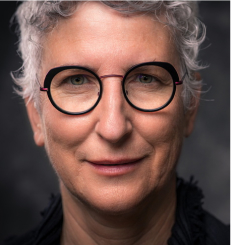
Author Photo © Brigitte Grof 

900 Episodes and Counting…

Subscribe to Insights at the Edge to hear all of Tami’s interviews (transcripts available too!), featuring Eckhart Tolle, Caroline Myss, Tara Brach, Jack Kornfield, Adyashanti, and many more.

Meet Your Host: Tami Simon

Each week on Insights at the Edge, Tami Simon interviews leading voices in the Mind/Body/Spirit space about a vast spectrum of fascinating ideas. Since 2009, Tami and her guests have been exploring the edge of understanding, nearly 1,000 episodes on the honest work of change, including spiritual discovery, awakening, intuition, purpose, trauma, and grief.

Photo © Jason Elias

Also By Author

Learning from Non-Ordinary States

Tami Simon speaks with Stanislav Grof. For more than half of a century, Stan has been a pioneer in the research of non-ordinary states of consciousness. He is the author of many books including Realms of the Human Unconscious, Beyond the Brain, and most recently Holotropic Breathwork: A New Approach to Self-Exploration and Therapy. With Sounds True, Stan wrote the book When the Impossible Happens: Adventures in Non-Ordinary Realities, and the audio learning program The Transpersonal Vision. Stan discusses the lessons that can be learned from non-ordinary states, the idea of a consciousness independent of the brain, and the uses and goals of holotropic breath work. (67 minutes)

You Might Also Enjoy

Tracee Stanley: What We Need in These Threshold Times

What if the antidote to a world coming apart isn’t a bigger plan, but a smaller, daily act of devotion?

This week, Tami Simon speaks with Tracee Stanley—teacher of yoga nidra, meditation, and self-inquiry, founder of Empowered Life Circle, and author of the new Sounds True book Living Ritual: Infuse Each Day with Purpose and Spirit—about why ritual may be the most important practice we have during what she calls threshold times.

Join Tami and Tracee to explore:

  • The threshold question at the heart of ritual: what within me is dying, and what is waiting to be born?
  • Why devotion, not discipline, is the doorway—and how to weave practice through an ordinary householder’s day without shame
  • Tracee’s shard of light in Cape Town, and the years it took to find language for it
  • The body as shrine: the origins of yoga nidra in nyasa, the ancient practice of anointing the body as a divine temple
  • Earth dreaming—lying on the land and letting the land dream through you
  • Her reframe of the four Purusharthas, turning prosperity into support and pleasure into relationship
  • Sankalpa as a vow that leads to dharma, not a manifestation wish list
  • The analog cocoon and the night school: reclaiming sleep and dream time from the phone
  • Why enlightenment may be less a permanent state than a moment available in the space between two breaths

Tracee also speaks candidly about walking away from a successful film career, and what a surgery taught her about the ego that refuses to let the body rest.

Tracee opens and closes this interview with a short guided ritual you can practice along with.

Listen now, and let something be reshaped. →

This conversation offers genuine transmission, not just concepts about awakening, but the palpable presence of realized teachers exploring the growing edge of spiritual understanding together, and it originally aired on Sounds True One.

Get a FREE month of membership at https://bit.ly/STOne-Free-Month.

[ENCORE EPISODE] Yongey Mingyur Rinpoche: “In Lo...

A nine-year-old asks his father how to fight his panic attacks. His father says: don’t.

That answer set the course of Yongey Mingyur Rinpoche’s life—and, twenty-seven years later, sent him out of his monastery in the middle of the night.

In this encore presentation, Tami Simon speaks with Rinpoche—beloved Tibetan Buddhist teacher in the Kagyu and Nyingma lineages, guiding teacher of the Tergar meditation community, and author of In Love with the World—about the four-and-a-half-year wandering retreat that nearly killed him, and the teaching he calls “adding wood to the fire.”

Raised as a tulku with attendants at his side, he left at 36 with almost no money. Within weeks he was begging for food, sleeping on a train station floor, and severely ill—and when he believed he was dying, he chose not to reach for rescue.

Join Tami and Mingyur Rinpoche to explore:

  • “Adding wood to the fire”: how obstacles become opportunity, and poison becomes medicine
  • His father’s teaching on the sky: why no storm can change the nature of awareness
  • Why banging your head against the wall isn’t courage, and what acceptance actually opens
  • The bardo as everyday experience: job loss, breakups, falling asleep, and the gaps between
  • The four steps of the dying practice—offering, dedication, intention, and prayer
  • Child luminosity meeting mother luminosity, and what he directly experienced that night
  • Why he titled the book In Love with the World: “If you love the world, world loves you back”

Rinpoche is now partnering with Sounds True on a brand-new course, Wild World, Steady Mind: 21 Days to Embrace Modern Reality with Clarity and Calm, filmed on location at his monastery in Nepal.

Listen now, and find the sky behind the storm. →

Just One Question | Craig Foster: Why am I Afraid of N...


We’ve all felt it: the excitement of heading out into nature, followed almost immediately by “wow, that’s a lot of bugs” energy. Turns out, that’s not just you being an urban dweller — it’s a genuine evolutionary paradox, and this week’s guest has spent his whole career living inside it.

Craig Foster is the filmmaker and naturalist behind My Octopus Teacher, and in this episode he tackles a question Tami poses about her own experience: why can she melt into a deep, connected feeling about nature from the safety of meditation, but feel completely terrified and separate the moment she’s actually standing in a wilderness with wolves, cougars, or sharks nearby?

Craig’s answer reframes the whole thing. He explains that we’re each carrying millions of years of “wild” memory, hardwired into who we are, while our conscious, modern selves have only had a few generations to adjust to industrial life. The fix isn’t a heroic leap into the deep wild — it’s small, steady reconnection.

A few takeaways from Craig’s answer:

  • We’re designed for wildness — our discomfort with it is a mismatch, not a flaw
  • Reconnection starts small: get to know the trees, insects, and animals right around your house
  • Comfort with the wild builds faster than you’d expect — sometimes in a matter of months
  • Even one backyard animal can teach you something profound about yourself and the natural world

If this got you thinking about your own relationship with the wild, you’ll want to hear the whole conversation — Craig and Tami go even deeper into what it means to live an amphibious life, split between our tame and wild selves.

Taken from the full Insights at the Edge conversation with Craig Foster. Find the complete interview in this feed or at soundstrue.com.

This episode is sponsored by Omega Institute, a global gathering hub for lifelong learning and spiritual exploration. Omega offers weekend workshops, special events, rest and rejuvenation retreats, professional training, online learning, and more. Discover what calls to you at eomega.org/true.

Leave a Reply

Your email address will not be published. Required fields are marked *