3 Ways To Be Present This Holiday Season

    —
December 20, 2019

Holidays are a mixed blessing … they’re times when we take a pause from our daily routines and share more personal time with family and friends—some who we love unconditionally, and those that we love “almost” unconditionally (as long as we don’t talk about politics, the environment, the world, etc.).

Here are a few easy suggestions to help show up in all holiday situations, while maintaining full presence and a sense of calm.

Seek Moments of Stillness

Look ahead to your holiday social events, then plan for intermittent moments to be by yourself for creating stillness, physically and mentally, away from the hustle and bustle of family activities (or the TV). It’s easier than you think, especially if you are truthful about its importance for your health with those around you. If they are curious what it does for you, encourage them to try it too. And after, be curious about their experience as a conversation-starter when you’re together again.

Seek Moments of Silliness

Calm is not easy when our mind is preoccupied and struggling with the chaos often found during the holidays. Luckily the human species is bestowed with the gift of humor and light-heartedness, which research shows is capable of overriding the mind’s obsessive or compulsive tendencies to overwhelm our emotions, and take us out of the present. Engaging in a bit of silliness is literally child’s play and an elixir to bring us back to the present that helps strengthen connection and community.

Breathe Slow and Soft

Awareness of breath is one of the most common techniques for staying present in our “moments” during the holidays. By simply making the sound of our breath soft and the breath’s rhythm slow, we create a more naturally conscious state of being that stimulates our body’s parasympathetic response. This releases the tension and stress our sympathetic nervous system naturally creates during times of anxiety or distress. Remembering this during the upcoming season is truly the best gift you can give!


Peter Sterios, author of Gravity and Grace, is a popular yoga teacher and trainer with over four decades experience. He’s the founder of LEVITYoGA™ and MANDUKA™, as well as KarmaNICA™, a charitable organization for underprivileged children in rural Nicaragua. Sterios taught yoga at the White House for Michelle Obama’s anti-obesity initiatives for three years, and in 2018 he was invited to the Pentagon to share yoga’s therapeutic effects with the US Marine Corps. He resides in San Luis Obispo, CA. For more, visit LEVITYoGA.com.

The community here at Sounds True wishes you a lovely holiday season! We are happy to collaborate with some of our Sounds True authors to offer you wisdom and practices as we move into this time together; please enjoy this blog series for your holiday season. 

To help encourage you and your loved ones to explore new possibilities this holiday season, we’re offering 40% off nearly all of our programs, books, and courses sitewide. May you find the wisdom to light your way.

EXPLORE NOW


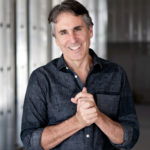
Peter Sterios

Peter Sterios is an internationally recognized author, certified yoga teacher, licensed architect, and entrepreneur based in San Luis Obispo, California, USA. He is the founder of LEVITYoGA™, MANDUKA™, and creator of the popular yoga DVD series Gravity & Grace, which is one of Yoga Journal’s “top 15 yoga DVDs of all time.” For three years (2011–2013) Peter taught yoga at the White House as a part of Michelle Obama’s anti-obesity initiatives. In 2018, he was invited to the Pentagon to share his ideas about yoga’s therapeutic effects for the US Marine Corps.

He also cofounded karmaNICA™, a charitable organization for underprivileged children in rural Nicaragua. Peter’s first book Gravity & Grace: How to Awaken Your Subtle Body and the Healing Power of Yoga, published by Sounds True, is now available.

Author photo © Jason And Laura Photography

Also By Author

The Hidden Meaning of The Belly in Yoga

The Hidden Meaning of the Belly in Yoga Blog Header ImageMost of us have lost our connection to the mysterious forces at play in the abdominal region, as well as to the appearance, function, and location of the organs and glands within it. We know that this area is responsible for digestion and assimilation, but in most Western cultures, a belly is considered healthy only according to its outer appearance: flat, “cut,” and firm. Good posture is supposed to be chest up, shoulders back, gut in. Emotionally, for many, the belly receives the brunt of our dysfunctional attempts to deal with negative feelings such as anger, fear, or low self-esteem.

In general, popular Western culture has placed more prominence on the head (objective intellect) and heart (individual soul) centers for discernment and transformation, while overlooking what many Eastern or so-called primitive cultures consider an essential step—the prerequisite descent into the depths of our being (lower centers), which is necessary before the ascent toward higher levels of awareness (upper centers). Our attention has moved away from the profound intelligence of the lower physical and emotional center of the body—our “guts.”

However, remnants of understanding are still found in common expressions in our languages, intimating a time when we recognized the power of the lower centers. In English, to have “a gut feeling” suggests a deep understanding that often is hard to explain logically, and in the past, feelings that come from deep in our center were considered more reliable than those that came from “above”: the heart or the head. Then there is someone with “guts,” which implies courage and unwavering integrity.

In Japan, the word hara can be simply translated as “belly,” but the roots of its meaning extend far beyond the physical abdomen. In Japanese culture, hara takes on a meaning that involves almost every aspect of life. It implies all that is considered essential to a person’s character and spiritual evolvement. Hara is the center of the human body, but not just of the physical body. In many idiomatic Japanese expressions where the root word is found, the meanings suggest a deeper context for the term. In his book Hara: The Vital Center of Man, Karlfried Graf Dürckheim describes one such expression: Hara no aru hito. It suggests not only one who possesses “center” physically, as in posture and balance, but also one who maintains balance in every way, including emotionally and mentally. This person is capable of tranquility in the face of strain, moves in and about the world with serenity, and possesses an inner elasticity that allows quick and decisive responses to any situation that arises. The hara is also seen as the place where the body’s vital life energies collect and are expressed, whether through physical movement or energetic presence.

Hara means an understanding of the significance of the middle of the body as the foundation of an overall feeling for life.

—Karlfried Graf Dürckheim

It is this very quality of hara that we look for in our yoga practice. What is referred to in Patanjali’s Yoga Sutras as sthira sukham is a state of unconditional calm that is not dependent on any outward circumstances. When in it, we command heightened sensitivity and an increased readiness to meet the unexpected. Here we realize that our capacity for appropriate response in the practice of asana can only come from the genuine absence of tension, coupled with the correct attitude of mind and lightness of heart. Throughout the practice of yoga poses, cultivating softness in the belly helps release a subtle downward flow and sense of fluidity that can be felt there and moving down into the pelvic floor, providing an intuitive invitation to move more deeply in all poses, especially those that turn or lengthen through the waist.

How the belly “thinks” intuitively could be a function of what science is now calling our second brain, or the enteric nervous system, which is an extensive network of neurons embedded in the lining of our gastrointestinal tract, from esophagus to anus. In addition to its handling of nearly all the digestive functions of our intestines, it is important to understand how this system of neurons intimately connects with our autonomic nervous system and, through the vagus nerve, becomes a critical component of parasympathetic control of the heart, lungs, and intestines.

The vagal channel of communication between the abdominal organs and the brain includes branches of cardiac and pulmonary ganglion, which suggests a shared relationship among these organs as well and offers a scenario in which the interrelationships are established both anatomically and energetically. The enteric system includes many of the same neurotransmitters found in the brain, including dopamine (in the intestines, it reduces peristaltic movement and maintains the inner linings of the intestinal tract; in the brain, it stimulates desire and motivation for reward response, or pleasure), serotonin (in the intestines, it stimulates peristaltic movement; in the brain, it regulates mood, appetite, and sleep), and acetylcholine (in the intestines, it stimulates peristaltic movement; in the brain, it regulates arousal, attention, memory, and motivation).

Numerous scientific studies have shown that the voluntary control of slow breathing has a substantial positive effect on our parasympathetic response. There is multidirectional communication via vagal signals to and from the brain to quiet frontal cortical activity, as well as an inhibitory influence upon the heart and sympathetic nervous system activity to and from the gastrointestinal tract that improves peristaltic function while strengthening immune system response in the gut.

Breathing is not merely an in-drawing and outstreaming of air, but a fundamental movement of a living whole, affecting the world of the body as well as the regions of the soul and mind.

—Karlfried Graf Dürckheim

This is an excerpt from Gravity & Grace: How to Awaken Your Subtle Body and the Healing Power of Yoga by Peter Sterios.


Peter Sterios is a popular yoga teacher and trainer with over four decades of experience. He’s the founder of LEVITYoGA™ and MANDUKA™, as well as KarmaNICA™, a charitable organization for underprivileged children in rural Nicaragua. Sterios taught yoga at the White House for Michelle Obama’s anti-obesity initiatives for three years, and in 2018 he was invited to the Pentagon to share yoga’s therapeutic effects with the US Marine Corps. He resides in San Luis Obispo, CA. For more, visit LEVITYoGA.com.

Read Gravity & Grace today!

Sounds True | Amazon | Barnes&Noble | Indiebound


The Hidden Meaning of the Belly In Yoga Pinterest

Yoga For Pain Relief

Yoga For Pain Relief

We often find metaphors for life in our yoga practice, and those of us who come to yoga stiff or weak are only too familiar with confronting our edges. In most urban, contemporary societies, we are frequently exposed to confrontation: in our communities, our relationships, our jobs—the list goes on. Our success in dealing with confrontation and the stress it generates depends on our ability to recognize and adjust to what presents itself in those situations. It is often easy to avoid dealing with confrontation until it reaches a certain level of intensity and we are forced to address what stands in our way.


The Hidden Gift of Obstacles in Yoga

When our tools for dealing with confrontation are overwhelmed and when what we perceive as our very nature becomes threatened, our life systems—mental, emotional, and physical—begin to contract. If we ignore this contraction for too long, it can color the way we perceive our reality, and what is very unnatural to a healthy body begins to seem natural. Because this process occurs over extended periods, as in the aging process, we often lack the awareness that it is happening until we are beyond simple fixes. 

Difficult Poses

Consider the beginner’s approach to difficult poses—even the relatively simple ones—that challenge flexibility, balance, or strength. These poses take our attention directly into areas of our body that are unfamiliar, painful, or unresponsive. This is often confronting. Stiff people have to learn how to work with pain, which is often intense, in order to remove the obstructions found in tight muscles or joints. Typically, this work is associated with movement where previously no movement existed or where it was extremely limited. The weak or overly flexible have to learn how to work without overworking, to create the support or resistance necessary to bring about the subtle movement of energy in the body to build stamina or strength. 


It is a common experience for beginners to question why they lack movement or feeling in these areas in the first place and to wonder if there will ever come a day when it could be different. This is the beauty of the confrontation found in yoga, where opposites attract and working simultaneously with effort and non-effort is a very important lesson to learn. 

Overcoming Resistance In Yoga

With many of the asanas that a beginner tackles for the first time, it is common to struggle with the opposing forces of particular actions found in a pose. Attempting to relax tight muscles is not easy when we are receiving a steady stream (or scream) of more demanding messages in the seemingly undecipherable language of pain. It can feel like the very resistance we experience has been protecting us from injury or overdoing something and that to surrender into this discomfort would be unwise.


Likewise, working with weak muscles to stay in a pose, to dig a little deeper, even for one more breath, seems to go against all of the yogic principles of nonviolence (ahimsa), and the anxiety that this can produce is real. Fatigue (mental and physical) seems to threaten our very existence, and every cell in our body is convinced that we’re approaching an injury or a near-death experience.

Hatha Yoga Is A Confrontational Journey

By its very nature, though, hatha yoga takes us on a confrontational journey that can produce the awareness required to overcome ingrained resistance and penetrate the dense matter of our consciousness. For those with chronically tight or weak muscles, the correct practice of asana with conscious breathing forces the mind into a very alert state and very quickly fills the gaps typically found in a beginner’s attention. This is a very important place to be. In it, we are given an opportunity to feel the power of this situation physically, to observe the dynamics of stress in an intense environment, and to overcome the mental or emotional struggle inherent in that predicament.


Of course, entering these situations in your practice requires a little preparation, and in the event of any preexisting conditions, it is beneficial and highly recommended to work with an experienced teacher who can suggest modifications to challenging poses. However, once you become familiar enough with your edge to gaze at what lies beyond it, an exterior guide will only be a distraction. Instead, you can reach inside yourself—toward your inner teacher—for guidance. 


This is an excerpt from Gravity & Grace: How to Awaken Your Subtle Body and the Healing Power of Yoga by Peter Sterios.

Peter Sterios is a popular yoga teacher and trainer with over four decades of experience. He’s the founder of LEVITYoGA™ and MANDUKA™, as well as KarmaNICA™, a charitable organization for underprivileged children in rural Nicaragua. Sterios taught yoga at the White House for Michelle Obama’s anti-obesity initiatives for three years, and in 2018 he was invited to the Pentagon to share yoga’s therapeutic effects with the US Marine Corps. He resides in San Luis Obispo, CA. For more, visit LEVITYoGA.com.


Read Gravity & Grace today!

Sounds True | Amazon | Barnes&Noble | Indiebound

3 Ways To Be Present This Holiday Season

Holidays are a mixed blessing … they’re times when we take a pause from our daily routines and share more personal time with family and friends—some who we love unconditionally, and those that we love “almost” unconditionally (as long as we don’t talk about politics, the environment, the world, etc.).

Here are a few easy suggestions to help show up in all holiday situations, while maintaining full presence and a sense of calm.

Seek Moments of Stillness

Look ahead to your holiday social events, then plan for intermittent moments to be by yourself for creating stillness, physically and mentally, away from the hustle and bustle of family activities (or the TV). It’s easier than you think, especially if you are truthful about its importance for your health with those around you. If they are curious what it does for you, encourage them to try it too. And after, be curious about their experience as a conversation-starter when you’re together again.

Seek Moments of Silliness

Calm is not easy when our mind is preoccupied and struggling with the chaos often found during the holidays. Luckily the human species is bestowed with the gift of humor and light-heartedness, which research shows is capable of overriding the mind’s obsessive or compulsive tendencies to overwhelm our emotions, and take us out of the present. Engaging in a bit of silliness is literally child’s play and an elixir to bring us back to the present that helps strengthen connection and community.

Breathe Slow and Soft

Awareness of breath is one of the most common techniques for staying present in our “moments” during the holidays. By simply making the sound of our breath soft and the breath’s rhythm slow, we create a more naturally conscious state of being that stimulates our body’s parasympathetic response. This releases the tension and stress our sympathetic nervous system naturally creates during times of anxiety or distress. Remembering this during the upcoming season is truly the best gift you can give!


Peter Sterios, author of Gravity and Grace, is a popular yoga teacher and trainer with over four decades experience. He’s the founder of LEVITYoGA™ and MANDUKA™, as well as KarmaNICA™, a charitable organization for underprivileged children in rural Nicaragua. Sterios taught yoga at the White House for Michelle Obama’s anti-obesity initiatives for three years, and in 2018 he was invited to the Pentagon to share yoga’s therapeutic effects with the US Marine Corps. He resides in San Luis Obispo, CA. For more, visit LEVITYoGA.com.

The community here at Sounds True wishes you a lovely holiday season! We are happy to collaborate with some of our Sounds True authors to offer you wisdom and practices as we move into this time together; please enjoy this blog series for your holiday season. 

To help encourage you and your loved ones to explore new possibilities this holiday season, we’re offering 40% off nearly all of our programs, books, and courses sitewide. May you find the wisdom to light your way.

EXPLORE NOW


You Might Also Enjoy

Laurie Nealon: “Energy Healing with Help From the Ot...

What if you were never working alone—and neither was anyone you were trying to help?

This week, Tami Simon speaks with Laurie Nealon, an intuitive energy healer, medium, and educator whose work is profiled on the Sounds True podcast Phenomena: The Science and Stories of Energy Healing. Seventeen years ago, Laurie began seeing and hearing those who had passed—not in dreams, but in the middle of her waking life. She resisted it. Then she built a practice around it.

Join Tami and Laurie to explore:

  • What Laurie actually perceives when someone who has died “appears”—and how she learned to filter it
  • Integrated Energy Therapy (IET), attunement, and why she calls the practitioner a facilitator rather than a healer
  • The “spiritual support group”: angels, guides, ascended masters, and loved ones she says fill the room during a session
  • A guided practice—rolling the energy—you can do in two minutes before you get out of bed
  • The screen technique: how to stay open to love without carrying everyone else’s journey
  • Why “lightening someone’s load” may actually dishonor their path
  • Entity energy, imprints, and what clearing a block really means
  • Tami’s hardest question: what about the people who did everything right and still died?
  • A closing prayer Laurie offers for every listener

Laurie’s conviction is that none of this is exotic. Everyone, she says, should be trained in energy healing the way everyone is trained in CPR—and everyone has the capacity to open to their own gifts.

Listen now, and find out who else is in the room. →

This conversation offers genuine transmission, not just concepts about awakening, but the palpable presence of realized teachers exploring the growing edge of spiritual understanding together, and originally aired on Sounds True One.

Michelle Wadleigh: “I Demand to Be Me”

“You have to want the freedom more than you want to be right about it.”

That’s what Reverend Dr. Michelle Wadleigh offers to anyone who has tried forgiveness and found that it didn’t take. Not a technique. A decision.

This week, Tami Simon speaks with Wadleigh—ordained minister in Centers for Spiritual Living, retreat facilitator, co-founder of the Planned Happiness Institute, and author of Forgiveness, Shadow Work, and the new Dance Like Nobody’s Watching: The Soul’s Journey to Courage, Authenticity, and Self-Love—about what it actually takes to stop living at the mercy of our own stories.

Join Tami and Michelle to explore:

  • Why forgiveness practices fail when they skip the body and the subconscious—and what to do instead
  • How shadow work and forgiveness depend on each other, and why projection drives so much of the divisiveness we see
  • “Functioning on top of dysfunction”: our addictions to being nice and being liked, and how they train us to dumb ourselves down
  • The 15 to 20 minutes before sleep, when the mind turns porous—and how Michelle guards that window
  • Fire walking, cold plunges, and the discovery that fear is a choice rather than an automatic
  • What it means to demand to be me without excuses—and who, exactly, that demand is addressed to
  • Why a book about bold self-expression closes with instructions for a solo silent retreat
  • Presence as a practice, learned while walking beside a dying husband

Michelle speaks throughout from the middle of her own hardest passage, which gives everything she says about buoyancy, beauty, and determination a weight it would not otherwise carry.

Listen now. →

This conversation offers genuine transmission, not just concepts about awakening, but the palpable presence of realized teachers exploring the growing edge of spiritual understanding together, and originally aired on Sounds True One.

Insights at the Edge is supported by Omega Institute, a global gathering hub for lifelong learning and spiritual exploration. Located in upstate New York’s beautiful Hudson Valley, Omega offers weekend workshops, special events, rest and rejuvenation retreats, professional trainings, online learning, and more.

Special Offer – Sounds True community members enjoy 10% off any workshop registration at Omega Institute. Discover what calls to you at eomega.org/true. Use code TRUE at checkout.

Insights at the Edge is supported by Magic Hour, whose ceremonial teas carry more presence, beauty, and ritual into ordinary days. Magic Hour draws its leaves and botanicals from regenerative small farms around the world, in blends made to nourish the body and open the mind.

Explore their teas, matchas, and herbal rituals at clubmagichour.com. Get 20% off your first order with the code TRUE.

What Is Brainspotting? David Grand on Using Eye Positi...

What happens when healing needs to go deeper than words can reach? For many people, the most profound emotional experiences resist easy articulation. Brainspotting is a therapeutic approach developed by David Grand that uses specific eye positions to access what the brain and body hold onto, even when language falls short.

At Sounds True, we’ve spent more than 40 years sharing trusted teachings from therapists, authors, and spiritual teachers whose work nurtures healing, personal growth, and lasting transformation. From online courses and in-depth programs to podcasts and digital resources, we bring the voices that matter most directly to you.

We cover what brainspotting is, how David Grand developed the approach, the role of eye position in trauma therapy, and how brainspotting compares with EMDR.

Key Takeaways:

  • Healing Beyond Words: Brainspotting uses specific eye positions to access unresolved trauma and emotional experiences stored in the brain and body, creating a path forward that doesn’t require verbal storytelling alone.
  • David Grand’s Path to Healing: David Grand developed brainspotting after observing that a client’s eye position reflected deeper emotional processing during trauma treatment, giving rise to an approach built around the brain’s natural capacity to heal.
  • EMDR vs. Brainspotting: While both approaches help people process trauma, brainspotting and EMDR differ in structure and session style. The right fit depends on your history, goals, and therapeutic relationship.

Discover the Power of Daily Meditation and Inner Stillness

What Is Brainspotting?

Brainspotting is designed to help people access and process unresolved trauma through focused attention on specific eye positions. The method rests on the idea that where a person looks can correspond to where difficult experiences are stored in the brain and body. Staying with a brainspot while remaining aware of physical sensations and emotions, people can work through material that language alone might not reach.

Since David Grand developed this approach, brainspotting therapy has been applied broadly, with athletes, artists, business leaders, and survivors of large-scale events, among others. Grand also offers an online course through Sounds True that walks through the core principles behind brainspotting therapy, available to those who want to learn directly from the source.

His insights align with the conversations we host on the Insights at the Edge Podcast, where therapists, teachers, and practitioners share what healing really looks like from the inside out.

David Grand and the Development of Brainspotting Therapy

Brainspotting therapy came out of a significant clinical observation. During trauma treatment, David Grand noticed that a client’s eye position seemed to shift when deeper emotional material surfaced. That moment became the foundation for a method built around the brain’s own capacity to process and release what it has long held in place.

Since its introduction, brainspotting therapy has been used by clinicians around the world to help people facing trauma, anxiety, grief, chronic stress, and performance-related challenges. Grand’s work continues to shape the field by drawing attention to the connection between the brain, the body, and emotional healing.

Sounds True is home to teachers like David Grand alongside hundreds of other practitioners, healers, and visionaries whose work spans a wide range of healing traditions. Those who want to trace that full breadth can visit our All Teachers & Authors collection, where every teacher’s body of work is gathered in one place.

Trauma Therapy Eye Position and the Brain-Body Connection

Trauma therapy eye position describes the relationship between where someone directs their gaze and what emotional or physical experiences become accessible as a result. During a session, a therapist guides the client to a specific visual point and invites them to notice what arises in the body as they hold that focus. Sensations, emotions, and memories can surface as the nervous system begins to process material it has held in place for years.

The body carries what the mind sometimes can’t articulate. A shift in eye position can open access to experiences held below conscious awareness, gently creating conditions for the nervous system to complete what was once interrupted. Healing, in this way, becomes a process the whole person takes part in, not just the thinking mind.

The teachers and practitioners gathered in our Health & Healing collection share this same orientation: that real healing often begins when we learn to listen to what the body already knows.

How the Brainspotting Technique Uses Eye Position to Access Trauma

The brainspotting technique begins with identifying an eye position linked to an emotional or physical response. From there, the therapist invites the client to rest their attention on that visual point while remaining aware of what arises in the body. The process creates space for the nervous system to do what it naturally knows how to do, without demanding that memories surface on command.

A concrete example might be this: someone working through anxiety tied to an experience might start by calling that experience to mind. As the therapist slowly moves a pointer across their field of vision, the client notices a position where a physical sensation intensifies, perhaps tightness in the chest or a change in breath. That’s the brainspot. The session then focuses there while the client tracks what unfolds internally, allowing the nervous system to process what it has previously stored.

Awaken Your Inner Healing Power: Your Wellness Journey Starts Now

EMDR vs Brainspotting: Understanding the Key Differences

EMDR follows a standardized eight-phase protocol and uses bilateral stimulation, typically through guided eye movements, sounds, or tapping, to help the brain reprocess traumatic memories. Brainspotting focuses on identifying one significant eye position and following the client’s internal experience from there. Sessions tend to be more open-ended, allowing the individual’s nervous system to lead.

Neither method is universally better than the other. A qualified therapist can help determine which fits a person’s history, goals, and comfort level. Many clinicians receive training in both and draw on each as the situation calls for it.

Those who want to go deeper into trauma healing and related practices can find immersive learning through our In-Depth Programs, where experienced practitioners bring both clinical knowledge and heart to each course.

Discover how your mind really works

Final Thoughts

Brainspotting offers a distinctive perspective on trauma healing, one that trusts the body’s capacity to know where attention is needed. Working with eye position rather than narration alone, this approach creates conditions for healing to happen at the body’s own pace.

As David Grand has shown through decades of clinical work, healing is often less about forcing change and more about creating the conditions for it to unfold. That belief is at the heart of what we do at Sounds True. We share the work of practitioners and teachers who honor the full range of human experience, including the places where language falls short, and the body quietly holds the way forward.

Frequently Asked Questions About Brainspotting

Is brainspotting backed by research?

Brainspotting is supported by a growing body of clinical research and case studies. While research continues to evolve, many mental health professionals use it as part of trauma-informed care for emotional and psychological concerns.

Who can benefit from brainspotting?

Brainspotting may benefit adults and adolescents experiencing trauma, anxiety, grief, stress, or performance-related challenges. A qualified mental health professional can determine whether it is an appropriate approach for an individual’s needs.

Do I have to talk about my trauma during brainspotting?

Not necessarily. While some people choose to discuss their experiences, brainspotting can also focus on physical sensations and emotions, allowing processing without requiring detailed verbal storytelling.

Can brainspotting be combined with other therapies?

Yes. Many therapists integrate brainspotting with other evidence-based approaches, such as cognitive behavioral therapy, mindfulness practices, or somatic therapies, to create a personalized treatment plan.

Is brainspotting only used for trauma?

No. Although it is widely recognized for trauma treatment, brainspotting is also used to support people dealing with anxiety, creative blocks, chronic stress, and performance enhancement in sports, music, and public speaking.

What should I expect after a brainspotting session?

Some people feel calm or relieved after a session, while others may continue processing emotions or physical sensations for a short time. Therapists often recommend rest, hydration, and self-reflection between sessions.

Is brainspotting suitable for everyone?

Brainspotting may not be the best fit for every individual or situation. A licensed therapist can evaluate your mental health history and recommend the most appropriate treatment approach.

Michelle Cassandra Johnson is an author, activist, spiritual teacher, racial equity consultant, and intuitive healer. She is the author of six books, including Skill in Action and Finding Refuge. Amy Burtaine is a leadership coach and racial equity trainer. With Robin DiAngelo, she is the coauthor of The Facilitator's Guide for White Affinity Groups. For more, visit https://www.michellecjohnson.com/wisdom-of-the-hive.

Leave a Reply

Your email address will not be published. Required fields are marked *