A Grounding Meditation to Start Living From Your Heart

    —
December 21, 2020

I would like to open with a grounding meditation. Feel free to listen to the meditation here or you can read along with the text below.

If I may, I’d like to guide you someplace warm. To an island not too far away. It won’t take much effort, just a few conscious breaths. And all I need for you to do is to stop. For this moment, stop seeking, stop solving, stop gritting and grinding. All you need is to close your eyes and receive. 

Quiet now, like water or sand. Settle now, like dusk and dew drop. One breath in, one breath out. One breath in, one breath out. Reorient yourself to face toward what is immovable inside you. Just look now. Trust and you shall see. It is there, to the left of your right lung, tucked just under your left rib, a warm small island, beating like a drum.  If you stand here long enough, you will feel the song inside being written, maybe even prayed over you. Moment by moment, it never stops. 

Can you feel you are unlacing something? Or better, something is unlacing you? Can you feel the fight stopping? The fear quieting? Can you feel your edges becoming more like wind or water, rather than shale and stone? Can you feel the light coming? The waves of warmth rising? 

Now move into this current of grace that your heart has created for you, and feel the great hush wash over you. Feel the substance of love holding your very atoms together. This is your heart, dear one. Never forget this is yours. Kneel here, whenever you are thirsty, whenever your feet are tired, or your hands are sore. Kneel here when you can’t see love any longer. Kneel here, dear one. Reorient yourself toward what is immovable in you.

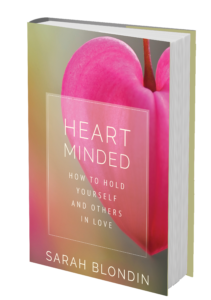
My new book, Heart Minded: How to Hold Yourself and Others in Love, was written to help remind us, reconnect us, reorient us with our hearts. Through story and guided meditation, I lead you through the fraught and sometimes frightening places holding you separate from your heart. It is a journey of healing that teaches you how to see and feel not from the mind, but from the wise seat of your very heart.

Now more than ever, we are being asked to move into the consciousness of the heart. Where love, compassion, “at-one-ment” become our governing virtues. When we see through the eyes of the heart, when we become heart minded, we stand as a beacon of light, burning back the dark.

Please join me in the heart-minded revolution. 

This originally appeared as an author letter to the Sounds True audience from Sarah Blondin.


sarah blondinSarah Blondin is an internationally beloved spiritual teacher. Her guided meditations on the app InsightTimer have received nearly 10 million plays. She hosts the popular podcast Live Awake, as well as the online course Coming Home to Yourself. Her work has been translated into many languages and is in use in prison, recovery, and wellness programs. For more, visit sarahblondin.com.
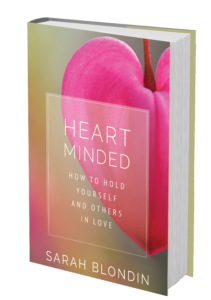



book cover

Learn More

Sounds True | Amazon | Barnes & Noble | Bookshop

Sarah Blondin

Sarah Blondin is an internationally beloved spiritual teacher. Her guided meditations on the app InsightTimer have received nearly 10 million plays. She hosts the popular podcast Live Awake, as well as the online course Coming Home to Yourself. Her work has been translated into many languages and is in use in prison, recovery, and wellness programs. For more, visit sarahblondin.com.
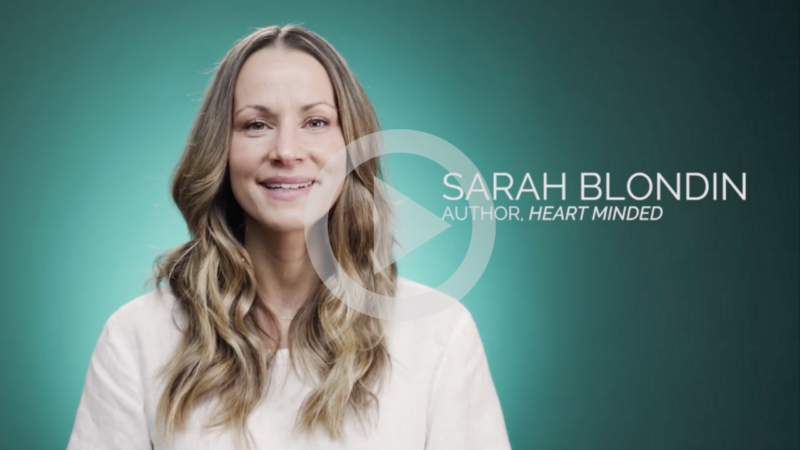
Author photo © Britgill Photography

Also By Author

Sarah Blondin: Heart Minded

Is your heart asking you for a more meaningful conversation? Are you longing to engage a different kind of awareness than the thinking mind? Sarah Blondin is beloved by millions for her online guided meditations that invite us to come back home to our hearts and to embrace the fullness of our experience. In this podcast, Tami Simon speaks with Sarah about her new book, Heart Minded, and how we can each take up residence in the intelligence and strength of our hearts. 

Tune in as Tami and Sarah discuss the practice of softening and releasing inner rigidity, overcoming defensiveness and resistance, witnessing the rivalry between the emotional heart and the spiritual heart, discovering the voice of your own heart, the practice of flow writing, self-intimacy as the source of true safety, finding your authentic “yes to life,” trust in the face of initiatory experiences, normalizing the challenging nature of the spiritual journey, the mysterious force of grace, the interplay between our sensitivity and our strength, a meditation for welcoming joy, and more.

Note: This episode originally aired on Sounds True One, where these special episodes of Insights at the Edge are available to watch live on video and with exclusive access to Q&As with our guests. Learn more at join.soundstrue.com.

Building the Bridge Between the Heart and the Mind

How can we drop what we are holding on to, if we do not first look for the hand that is grasping so tightly?

Have you ever noticed that you have two distinctly different personae and tend to vacillate between them?

One is very rigid and concerned with the outcome of everything. It worries and frets, its gaze mostly downcast. It doesn’t rest easily, even keeps you up at night sometimes. It acts almost like a dog chasing its tail. It circles obsessively over every detail and unknowable outcome, chasing the same things in a constant repeated pattern. It is cunning, convincing, and tyrannical in nature. It is feverish and ungrounded. Changing, morphing, and flopping from one story or idea to the next. This is your unharnessed mind. The persona you take on when your mind is not connected to the compass of the heart.

For most of us, that’s the dominant persona. But the other aspect of you, as if by some divine intervention, will from time to time slip past the censor of the mind and cheerfully take over your being with its boundless and uninhibited spirit. This personality doesn’t worry. Its face is often lifted, looking in wonder at the shifting sky and swollen moon. Lips curled into a slight smile. It is fluid and flowing, as if it’s on a river of unending joy. It acts like water and reflects light. You feel buoyant. This is your heart-centered self, your true self.

Because most of us moved into our mind long, long ago as a way of protecting our hearts, we now live most of our time in that rigid, concerned first persona. Without even realizing it, we allow our minds to stand between us and our true nature. We have no (conscious) idea how much our minds are acting as a defensive block against our soft and tender core, constantly at work trying to find ways to keep us from feeling, from hurt, from heartache. The price we are paying, however, is that we are also kept from accessing source.

In order to be heart minded, we need to bring the heart and mind into harmony and partnership with one another. For this to happen, we have to train the mind not to fear and close off from the heart, and instead, serve our heart and implement its wishes. In order to do this, we have to undo our mind’s association of feelings of the heart with hurt and harm. In situations that would ordinarily have us retreat or retaliate, we need to remain conscious of what’s happening and choose to soften and lean into our heart’s center. Each time we practice this softening, we send a new message to the mind that signals that we are safe, willing, and wanting to live in this more open, more sensitive way.

Over time, if we are resolute in our intention to step into our heart, our mind will become less rigid in its defenses against feelings and tenderness, and gradually we will become more heart centered.

Remember, we are not trying to pit the heart and mind against one another; we are trying to marry their aptitudes.

Let’s say a wave of anxiety washes through you. You notice your mind begin to race and attach to fearful thoughts. The anxiety then morphs into panic, which courses through you and makes you feel like jumping out of your skin. You begin reaching for an escape, resorting to some form of substance or distraction that can act as a numbing balm.

What just happened? Because you avoided your distress, you are only slightly comforted. A part of you remains braced under the distraction, in fear of the next time this could happen. Your mind’s instinct to protect and defend has been confirmed.

Your heart is neglected and still aching.

But let’s say a wave of anxiety washes through you and instead of looking for an escape route, you go to a quiet room to confront the feeling. You let go of the notion that something is wrong and respond as if something very right is taking place. You know some part of you is calling out for your love and attention.

Let’s say you close your eyes and open your heart to the bigness of the feeling. You create space around it simply by looking without resistance at its contours. You know the only antidote is self-love and hospitality. The mind stops racing away from the distress, which makes room for the heart to begin healing and soothing the body. Your mind learns a new route. You are gifted with courage and resilience.

The only difference between these scenarios was one simple choice: to remain a bystander as the mind continues to ignore the call of the body and heart or to act in ways that support leading from the heart, so the mind can follow.

The two can be wonderful allies if we let them.

As we become heart minded, we begin transforming our human experience from something out of our hands to something very much in them. We begin to cultivate joy instead of haphazardly stumbling upon it when we are willing.

Each moment, our bodies are counseling us to make choices that bring us closer to love. The wisdom of the heart and body is there for us, always, if we listen and let it lead.

For a guided practice in learning to stay in our hearts during difficult times, follow along with Sarah in this video.


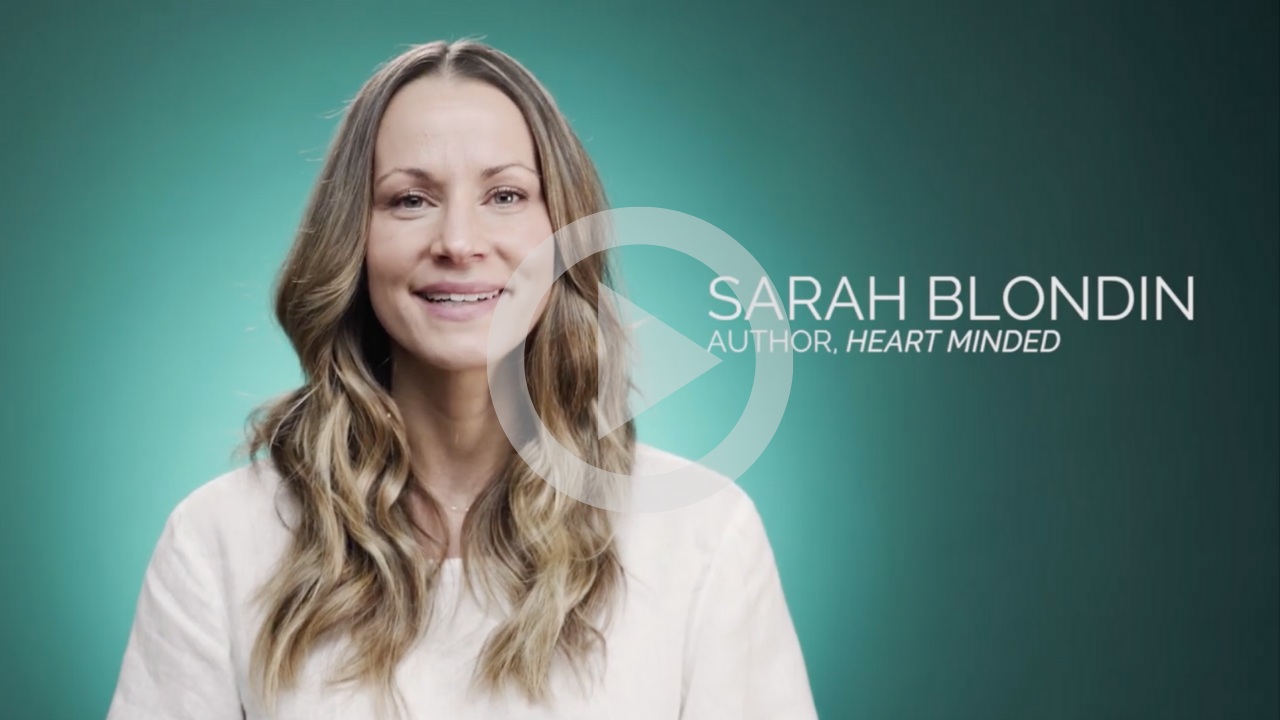
This is an adapted excerpt from Heart Minded: How to Hold Yourself and Others in Love by Sarah Blondin.


Sarah Blondin

Sarah Blondin is an internationally beloved spiritual teacher. Her guided meditations on the app InsightTimer have received nearly 10 million plays. She hosts the popular podcast Live Awake, as well as the online course Coming Home to Yourself. Her work has been translated into many languages and is in use in prison, recovery, and wellness programs. For more, visit sarahblondin.com.


Learn More

Sounds True | Amazon | Barnes & Noble | Bookshop

A Grounding Meditation to Start Living From Your Heart

I would like to open with a grounding meditation. Feel free to listen to the meditation here or you can read along with the text below.

If I may, I’d like to guide you someplace warm. To an island not too far away. It won’t take much effort, just a few conscious breaths. And all I need for you to do is to stop. For this moment, stop seeking, stop solving, stop gritting and grinding. All you need is to close your eyes and receive. 

Quiet now, like water or sand. Settle now, like dusk and dew drop. One breath in, one breath out. One breath in, one breath out. Reorient yourself to face toward what is immovable inside you. Just look now. Trust and you shall see. It is there, to the left of your right lung, tucked just under your left rib, a warm small island, beating like a drum.  If you stand here long enough, you will feel the song inside being written, maybe even prayed over you. Moment by moment, it never stops. 

Can you feel you are unlacing something? Or better, something is unlacing you? Can you feel the fight stopping? The fear quieting? Can you feel your edges becoming more like wind or water, rather than shale and stone? Can you feel the light coming? The waves of warmth rising? 

Now move into this current of grace that your heart has created for you, and feel the great hush wash over you. Feel the substance of love holding your very atoms together. This is your heart, dear one. Never forget this is yours. Kneel here, whenever you are thirsty, whenever your feet are tired, or your hands are sore. Kneel here when you can’t see love any longer. Kneel here, dear one. Reorient yourself toward what is immovable in you.

My new book, Heart Minded: How to Hold Yourself and Others in Love, was written to help remind us, reconnect us, reorient us with our hearts. Through story and guided meditation, I lead you through the fraught and sometimes frightening places holding you separate from your heart. It is a journey of healing that teaches you how to see and feel not from the mind, but from the wise seat of your very heart.

Now more than ever, we are being asked to move into the consciousness of the heart. Where love, compassion, “at-one-ment” become our governing virtues. When we see through the eyes of the heart, when we become heart minded, we stand as a beacon of light, burning back the dark.

Please join me in the heart-minded revolution. 

This originally appeared as an author letter to the Sounds True audience from Sarah Blondin.


sarah blondinSarah Blondin is an internationally beloved spiritual teacher. Her guided meditations on the app InsightTimer have received nearly 10 million plays. She hosts the popular podcast Live Awake, as well as the online course Coming Home to Yourself. Her work has been translated into many languages and is in use in prison, recovery, and wellness programs. For more, visit sarahblondin.com.



book cover

Learn More

Sounds True | Amazon | Barnes & Noble | Bookshop

You Might Also Enjoy

What Is Reverse Meditation? A Counterintuitive Path to...

Many people begin meditation hoping to quiet the mind, reduce stress, or create a sense of inner peace. Reverse meditation takes a different approach by encouraging people to turn toward the thoughts, emotions, and experiences they usually avoid. Instead of escaping discomfort, the practice invites awareness of it. Although this approach may feel unfamiliar at first, it can lead to deeper self-understanding, emotional honesty, and presence.

At Sounds True, we have spent decades sharing wisdom from leading spiritual teachers, meditation practitioners, and contemplative voices through books, audio programs, podcasts, and transformational learning experiences. Our mission has always been to support meaningful inner growth through teachings that are grounded, compassionate, and accessible.

Here, we discuss what reverse meditation is, how it differs from traditional mindfulness practices, and how it can support awakening through awareness, shadow work, and emotional openness.

Key Takeaways:

  • Emotional Awareness: Reverse meditation encourages people to stay present with difficult emotions instead of avoiding them.
  • Spiritual Insight: The practice helps uncover unconscious patterns that shape fear, identity, and emotional reactions.
  • Inner Freedom: Reverse meditation and shadow meditation support greater compassion, honesty, and emotional resilience.

Discover the Power of Daily Meditation and Inner Stillness

What Is Reverse Meditation and Why Is It So Counterintuitive?

Reverse meditation challenges the привычка to avoid discomfort during spiritual practice. Instead of trying to quiet difficult emotions or achieve constant calm, practitioners learn how to stay present with fear, uncertainty, and emotional tension. Thoughts and uncomfortable feelings are not treated as distractions but as part of the practice itself.

This counterintuitive approach encourages greater self-awareness and emotional honesty. Rather than chasing ideal spiritual states, reverse meditation focuses on presence, openness, and a deeper relationship with inner experience.

The Origins of Reverse Meditation in Spiritual and Contemplative Traditions

Reverse meditation draws from contemplative traditions that emphasize awareness without resistance. Although the language surrounding the practice may vary, the central principle remains similar across many teachings. Freedom develops when people stop struggling against their inner experience.

Ancient Teachings on Turning Toward Experience

Many contemplative traditions teach practitioners to observe thoughts and emotions without immediately reacting to them. In Tibetan Buddhism and nondual teachings, awareness is seen as spacious enough to include discomfort, confusion, and emotional intensity.

Rather than viewing difficult emotions as obstacles, these traditions suggest they can lead to deeper understanding. Reverse meditation reflects this approach by encouraging awareness of the emotions and patterns people usually avoid.

Why Modern Practitioners Are Drawn to Reverse Meditation

Many people are drawn to meditation practices that feel emotionally honest and grounded. While traditional mindfulness can be meaningful, some practitioners realize they are using meditation to avoid discomfort instead of understanding it.

Reverse meditation creates space for vulnerability, uncertainty, and difficult emotions without judgment. Rather than pretending discomfort does not exist, the practice encourages a more open and honest relationship with inner experience.

Andrew Holecek Reverse Meditation Teachings on Awareness and Awakening

The growing conversation around reverse meditation has been influenced by Andrew Holecek, whose teachings combine Tibetan Buddhism, dream yoga, and nondual contemplative wisdom. His work often focuses on the patterns people use to avoid discomfort and reinforce identity.

Reversing Habitual Patterns of Avoidance

Andrew Holecek reverse meditation teachings emphasize how deeply conditioned people are to seek comfort and avoid emotional pain. Fear, anxiety, and uncertainty are usually treated as problems that need immediate resolution.

Reverse meditation interrupts this pattern. Instead of escaping difficult emotions, practitioners learn how to remain present with them long enough to observe what exists beneath the surface. Fear may reveal vulnerability. Anger may uncover grief. Emotional resistance may expose attachment to control.

The practice does not encourage emotional overwhelm. Instead, it develops the capacity to remain aware without immediately turning away from discomfort.

Awakening Through Openness and Curiosity

A central insight within reverse meditation is that awakening begins through openness rather than control. Many people spend years trying to perfect themselves spiritually while remaining disconnected from unresolved emotional experience.

Reverse meditation shifts that orientation. Curiosity replaces judgment. Awareness becomes less focused on fixing experience and more focused on understanding it directly.

This creates a different relationship with meditation itself. Practitioners stop measuring progress according to how peaceful they feel. Instead, they begin developing the ability to remain present with changing emotional states without becoming consumed by them.

Over time, this openness can create greater emotional resilience, compassion, and clarity.

How a Reverse Meditation Practice Changes Your Relationship With Fear

Fear often becomes one of the central doorways within a reverse meditation practice. Most people instinctively move away from emotional discomfort as quickly as possible. Reverse meditation asks practitioners to slow down and examine that impulse instead of following it automatically.

Learning to Stay Present With Discomfort

One of the first things practitioners notice is how quickly the mind reaches for distraction. Restlessness, analysis, and mental storytelling often appear when vulnerability begins surfacing.

Reverse meditation encourages practitioners to remain present with those reactions rather than immediately escaping them. Fear is no longer treated as something that must disappear before peace can emerge.

This shift can feel uncomfortable at first. Yet many practitioners discover that difficult emotions become less overwhelming once they are approached with awareness instead of resistance.

Fear as a Gateway to Deeper Insight

Fear often protects deeper emotional experiences that have not been fully acknowledged. Beneath anxiety, there may be grief, loneliness, uncertainty, or attachment to identity and control.

A reverse meditation practice creates space to observe these hidden layers more clearly. Instead of reacting automatically, practitioners begin recognizing how much emotional energy is spent avoiding vulnerability.

This awareness can gradually transform the relationship with fear itself. Fear becomes less of an enemy and more of a signal pointing toward areas that require compassion, honesty, and attention.

Awaken Your Inner Healing Power: Your Wellness Journey Starts Now

Why Counterintuitive Meditation Challenges Traditional Mindfulness

Counterintuitive meditation often challenges familiar ideas about what meditation is supposed to accomplish. Many people begin meditation expecting calmness, focus, or emotional relief. Reverse meditation introduces another possibility by encouraging awareness of all experience, including discomfort.

  • Traditional mindfulness practices often emphasize concentration on the breath or bodily sensations, while counterintuitive meditation opens awareness toward thoughts, emotions, and emotional tension.
  • Counterintuitive meditation encourages practitioners to notice resistance itself rather than immediately trying to eliminate uncomfortable feelings.
  • Emotional difficulty is not viewed as failure within the practice. Difficult emotions become opportunities for deeper awareness and self-understanding.
  • The practice shifts attention away from spiritual achievement and toward emotional honesty.
  • Practitioners learn how to remain present with uncertainty instead of constantly seeking resolution or control.
  • Counterintuitive meditation encourages greater compassion by helping people recognize the shared vulnerability within human experience.

Although this approach may feel challenging, many practitioners eventually develop a more grounded relationship with meditation. Awareness becomes less dependent on achieving ideal states and more connected to direct experience as it unfolds naturally.

The practice reminds people that awakening does not require perfection. It begins through willingness to remain present with reality in all its complexity.

The Connection Between Shadow Meditation and Reverse Meditation

Shadow meditation and reverse meditation encourage awareness of the hidden parts of the self, including fear, grief, shame, anger, and emotional pain. These emotions often surface during meditation through thoughts, physical sensations, or emotional reactions that are usually avoided.

Instead of suppressing those experiences, reverse meditation invites practitioners to meet them with compassion and curiosity. Over time, this process can reduce emotional resistance and create a greater sense of wholeness, honesty, and self-understanding.

Common Challenges That Arise During a Reverse Meditation Practice

A reverse meditation practice can feel emotionally intense, especially for people who are accustomed to avoiding vulnerability through distraction or control. Difficult emotions may become more visible once awareness slows down and becomes more attentive.

One common challenge involves expectations. Many people believe meditation should always feel peaceful or calming. Reverse meditation asks practitioners to reconsider that assumption. Emotional discomfort does not necessarily mean something is wrong. In many cases, it reflects a growing willingness to encounter inner experience honestly.

Impatience can also become part of the process. People often want immediate transformation or clarity, yet reverse meditation unfolds gradually through consistent awareness and self-compassion.

Support can be valuable during this process. Teachers, contemplative communities, and trusted spiritual resources can help practitioners navigate emotionally complex experiences with steadiness and care.

How Reverse Meditation and Shadow Meditation Support Inner Freedom

Reverse meditation and shadow meditation encourage a more compassionate relationship with difficult emotions and inner experiences. Instead of resisting fear, vulnerability, or uncertainty, practitioners learn how to remain present with them in a more open and grounded way.

Over time, this awareness can create greater emotional freedom and self-understanding. Rather than escaping pain or discomfort, reverse meditation supports a deeper sense of clarity, steadiness, and connection with human experience.

Discover how your mind really works

Final Thoughts

Reverse meditation offers a different relationship with awareness. Instead of moving away from discomfort, practitioners learn how to meet fear, uncertainty, and emotional complexity with openness and compassion. Through this counterintuitive practice, difficult experiences become opportunities for greater clarity rather than obstacles to awakening.

By turning gently toward the parts of ourselves we often resist, reverse meditation and shadow meditation can support a deeper sense of presence, honesty, and inner freedom.

Frequently Asked Questions About What Is Reverse Meditation?

Can reverse meditation help with emotional overwhelm?

Reverse meditation may help people develop a healthier relationship with overwhelming emotions by encouraging awareness instead of immediate avoidance. The practice focuses on observing emotional experiences with patience and compassion.

Is reverse meditation suitable for daily practice?

Yes. Many practitioners incorporate reverse meditation into daily routines through short periods of self-inquiry, mindful observation, or reflective awareness. Consistency is often more important than duration.

Does reverse meditation require silence?

Not necessarily. While quiet environments can support concentration, reverse meditation can also involve awareness during ordinary daily experiences, emotional reactions, or moments of discomfort.

How is reverse meditation different from positive thinking?

Positive thinking often focuses on replacing difficult thoughts with encouraging ones. Reverse meditation does not attempt to replace or fix emotions. Instead, it encourages awareness of experience exactly as it appears.

Can reverse meditation improve self-awareness?

Yes. The practice can deepen self-awareness by helping practitioners notice unconscious habits, emotional patterns, and reactions that often operate automatically.

Is reverse meditation connected to nondual teachings?

Many reverse meditation teachings share similarities with nondual traditions because both emphasize direct awareness and reduced identification with thoughts and emotions.

What role does the body play in reverse meditation?

The body often becomes an important source of awareness during reverse meditation. Emotional tension, fear, and stress frequently appear as physical sensations that practitioners learn to observe more consciously.

Can reverse meditation support spiritual growth without religion?

Yes. Although some teachings draw from Buddhist and contemplative traditions, reverse meditation can be practiced in a nonreligious way focused on awareness, emotional honesty, and inner reflection.

Why do some people resist reverse meditation at first?

The practice challenges the instinct to avoid discomfort. Remaining present with difficult emotions can initially feel unfamiliar, especially for people accustomed to distraction or emotional suppression.

How long does it take to understand reverse meditation?

Understanding develops gradually through experience rather than intellectual study alone. Many practitioners notice subtle shifts in awareness over time as they continue practicing with openness and consistency.

Michelle Cassandra Johnson is an author, activist, spiritual teacher, racial equity consultant, and intuitive healer. She is the author of six books, including Skill in Action and Finding Refuge. Amy Burtaine is a leadership coach and racial equity trainer. With Robin DiAngelo, she is the coauthor of The Facilitator's Guide for White Affinity Groups. For more, visit https://www.michellecjohnson.com/wisdom-of-the-hive.

Compassion as a Superpower: How Loving-Kindness Medita...

Compassion is not only an emotional response but also a skill that can grow through practice. During moments of stress or emotional exhaustion, compassion meditation offers a way to respond with greater patience, balance, and connection. Practices like loving kindness meditation and metta meditation are also gaining attention for their potential impact on emotional resilience and overall well-being.

At Sounds True, we have spent decades sharing the teachings of meditation practitioners, neuroscientists, psychologists, and spiritual teachers devoted to emotional healing and inner transformation.

Below, we discuss compassion meditation benefits, how loving kindness meditation may influence the brain, and the role self and other compassion can play in emotional well-being and human connection.

Key Takeaways:

  • Brain and Compassion: Compassion meditation may support emotional regulation and strengthen neural pathways connected to empathy and resilience.
  • Everyday Emotional Health: Loving kindness meditation can help reduce self-criticism, stress, and emotional reactivity in daily life.
  • Relationships and Connection: Practicing self and other compassion may encourage healthier communication, patience, and deeper human connection.

Awaken Your Inner Healing Power: Your Wellness Journey Starts Now

Compassion Meditation Benefits for Emotional and Physical Well-Being

Compassion is more than a feeling. It is a practice that helps us relate to ourselves and others with greater patience and care. Many people begin meditation to manage stress or emotional overwhelm, yet over time, compassion practices can also reshape how we respond to pain, conflict, and connection.

By encouraging emotional awareness and presence, compassion meditation helps build resilience in everyday life, from relationships and work to the way we speak to ourselves during difficult moments.

What Loving Kindness Meditation Reveals About Human Connection

Loving kindness meditation is one of the most accessible compassion practices because it begins with a simple intention: wishing well-being for ourselves and others. Rooted in the Buddhist tradition of metta, this practice helps soften habitual patterns of judgment and separation while strengthening feelings of care and interconnectedness.

The Foundations of Loving Kindness Meditation

In loving kindness meditation, practitioners silently repeat phrases of goodwill such as “May I be safe,” “May I be healthy,” or “May I live with ease.” These phrases are first directed inward before gradually expanding outward toward loved ones, strangers, and even difficult people.

While the practice appears simple, many people notice how challenging it can feel to offer compassion to themselves. This awareness is part of the process. Loving kindness meditation gently reveals the places where the heart has become guarded and invites greater openness over time.

Why Connection Matters for Emotional Health

Human beings are wired for connection. Research continues to show that supportive relationships influence emotional well-being, physical health, and longevity. Compassion meditation helps nurture these connections by increasing empathy and reducing reactive emotional patterns.

As people deepen their practice, they often report feeling less isolated in their struggles. Compassion creates space for shared humanity. Instead of seeing suffering as a personal failure, we begin recognizing that vulnerability belongs to everyone.

How Compassion Meditation Brain Research Is Changing Neuroscience

Modern neuroscience has opened an important conversation around how meditation changes the brain. Studies focused on compassion practices suggest that intentional emotional training can influence neural pathways connected to empathy, emotional regulation, and attention.

What Compassion Meditation Brain Studies Show

Brain imaging research has found that compassion meditation activates areas associated with emotional processing and positive social connection. Some studies also suggest increased activity in regions linked to empathy and caregiving responses.

This matters because the brain remains adaptable throughout life. Neuroplasticity allows repeated experiences to strengthen certain pathways over time. Compassion meditation becomes a form of mental training that supports healthier emotional habits rather than reinforcing fear or self-criticism.

Emotional Regulation and Nervous System Support

Many people carry tension without fully noticing it. Compassion meditation helps create a sense of emotional steadiness by teaching us to meet difficult emotions with awareness and care rather than avoidance. Over time, this practice may reduce emotional reactivity and help people feel more grounded, patient, and balanced.

Metta Meditation Benefits for Stress, Anxiety, and Emotional Healing

Metta meditation benefits extend into many areas of emotional health because the practice directly addresses patterns of fear, shame, and disconnection. Rather than forcing positivity, metta creates a supportive inner environment where healing becomes more possible.

Reducing Self-Criticism Through Metta Practice

For many people, the harshest voice they encounter is their own inner dialogue. Metta meditation helps interrupt cycles of self-judgment by introducing language rooted in care and acceptance.

Over time, these repeated phrases begin influencing how people relate to themselves during moments of failure or uncertainty. Self-compassion does not remove accountability. Instead, it creates the emotional safety needed for growth and honest reflection.

How Compassion Supports Recovery From Emotional Exhaustion

Stress and burnout often leave people emotionally numb or disconnected from their inner lives. Compassion practices can help restore emotional sensitivity without becoming overwhelming.

By slowing down and intentionally practicing care, individuals often reconnect with feelings they had learned to avoid. This process may feel tender at first, yet many practitioners find that compassion gives them greater strength to face life with openness rather than withdrawal.

Discover how your mind really works

Understanding Self and Other Compassion Through Meditation Practice

Compassion meditation helps strengthen awareness of both personal suffering and the struggles carried by others. Over time, this awareness creates meaningful shifts in how people relate within families, friendships, and communities.

  • Self and other compassion encourages emotional honesty without shame.
  • Compassion practices help people listen more fully during difficult conversations.
  • Meditation can reduce reactive patterns rooted in fear or defensiveness.
  • Greater empathy often leads to healthier relationship boundaries.
  • Practicing compassion regularly may support forgiveness and reconciliation.
  • Compassion helps people remain connected without absorbing every emotional burden around them.

As these qualities deepen, compassion becomes less of an isolated meditation exercise and more of a lived experience. Small moments of patience, understanding, and kindness begin shaping everyday interactions in lasting ways.

Loving Kindness Meditation Practices That Support Lasting Change

Consistency matters more than perfection in meditation practice. Many people believe they need long periods of silence or complete emotional calm before beginning. In reality, loving kindness meditation often works best when approached gently and without pressure.

A simple daily practice of five or ten minutes can gradually reshape emotional habits. Some practitioners begin each morning with a few compassionate phrases before moving into the rest of the day. Others return to the practice during stressful moments as a reminder to pause and reconnect with themselves.

The heart responds to repetition. Just as self-criticism becomes stronger through constant reinforcement, compassion also grows stronger through practice. Over time, these small moments accumulate into meaningful emotional change.

The Link Between Compassion Meditation Brain Activity and Resilience

Resilience is often misunderstood as emotional toughness or the ability to avoid pain. Compassion meditation offers another perspective. True resilience develops through the capacity to remain present with difficulty while responding with care instead of fear.

Research surrounding compassion meditation brain activity suggests that emotional resilience can be cultivated intentionally. Meditation appears to strengthen regions associated with emotional regulation while reducing patterns connected to chronic stress responses. Although the science continues evolving, many practitioners already recognize these changes through lived experience.

People who engage regularly in compassion practices often describe recovering more quickly from emotional setbacks. They may still experience grief, frustration, or uncertainty, yet these emotions become easier to navigate without spiraling into overwhelm. Compassion creates inner steadiness that supports healing rather than resistance.

How Metta Meditation Benefits Daily Relationships and Inner Awareness

One of the most meaningful aspects of metta meditation benefits is the way the practice extends beyond formal meditation sessions. Compassion begins influencing ordinary interactions, including how we respond to stress, disagreement, disappointment, and emotional vulnerability.

People often notice subtle changes first. Conversations may feel less reactive. Moments of frustration may soften more quickly. There can also be a growing awareness of shared humanity, especially during difficult encounters. Compassion does not require perfection or constant emotional warmth. Instead, it asks us to remain present enough to respond with care when it matters most.

Over time, loving kindness meditation can deepen inner awareness in profound ways. Many practitioners begin recognizing emotional patterns they previously ignored or suppressed. This awareness creates opportunities for healing because it replaces automatic judgment with curiosity and gentleness.

Compassion becomes a practice of remembering that every person, including ourselves, carries unseen struggles. From that understanding, relationships often become more honest, patient, and grounded in genuine connection.

Discover the Power of Daily Meditation and Inner Stillness

Final Thoughts

Compassion is not a fixed trait reserved for a few people. It is a practice that can be strengthened over time through patience, awareness, and intentional care. Loving kindness meditation offers a way to reconnect with ourselves and others with greater openness, even during difficult moments.

As research into compassion meditation brain activity continues to grow, many people are also experiencing its effects firsthand through deeper emotional resilience, healthier relationships, and a stronger sense of connection. Small moments of compassion practiced consistently can create meaningful shifts that extend far beyond meditation itself.

Frequently Asked Questions About Compassion Meditation Benefits

What is the difference between compassion meditation and loving kindness meditation?

Compassion meditation focuses on recognizing suffering and responding with care, while loving kindness meditation centers on offering goodwill and positive intentions toward ourselves and others. The practices often overlap and support one another.

Can compassion meditation help with loneliness?

Many people find that compassion practices reduce feelings of isolation by strengthening emotional connection and shared humanity. The practice can help create a greater sense of belonging and openness toward others.

Is loving kindness meditation connected to Buddhism?

Yes, loving kindness meditation comes from Buddhist teachings and is traditionally known as metta practice. Today, people from many backgrounds use the practice for emotional well-being and mindfulness.

How long does it take to notice compassion meditation benefits?

Some people notice emotional shifts after a few sessions, while deeper changes often develop through consistent practice over time. Even short daily sessions may gradually support emotional awareness and resilience.

Can beginners practice loving kindness meditation?

Yes, loving kindness meditation is often recommended for beginners because the practice is simple and flexible. There is no need for previous meditation experience to begin.

Why do some people feel emotional during compassion meditation?

Compassion practices can bring attention to emotions that have been ignored or suppressed. Feeling emotional during meditation is common and may reflect the process of reconnecting with inner experiences gently and honestly.

Does compassion meditation require repeating phrases?

Many forms of compassion meditation include repeated phrases, but some practices focus on visualization, breath awareness, or emotional reflection instead. Different approaches work for different people.

Can compassion meditation improve workplace relationships?

Compassion practices may help people respond with greater patience, empathy, and emotional steadiness during stressful interactions, which can support healthier communication at work.

Is there scientific evidence behind compassion meditation brain research?

Research in neuroscience continues to examine how compassion practices affect emotional processing, empathy, and stress regulation in the brain. Findings suggest meditation may influence neural activity connected to emotional well-being.

Can self and other compassion exist at the same time?

Yes, self-compassion and compassion for others often strengthen together. Learning to respond kindly to personal struggles can make it easier to extend understanding and care toward other people as well.

Michelle Cassandra Johnson is an author, activist, spiritual teacher, racial equity consultant, and intuitive healer. She is the author of six books, including Skill in Action and Finding Refuge. Amy Burtaine is a leadership coach and racial equity trainer. With Robin DiAngelo, she is the coauthor of The Facilitator's Guide for White Affinity Groups. For more, visit https://www.michellecjohnson.com/wisdom-of-the-hive.

What Is Non-Dual Awareness (And Why It Changes Everyth...

There is a kind of awareness that exists beneath the constant stream of thoughts and reactions that fill daily life. Non-dual awareness points to this open, undivided quality of consciousness that many spiritual traditions have long recognized as the ground of all experience.

Sounds True has spent over 40 years gathering the voices of the world’s most respected spiritual teachers, including Eckhart Tolle, Pema Chödrön, and Tara Brach, into the largest living library of transformational wisdom available today.

In this piece, Sounds True will examine what non-dual awareness is and why it matters for spiritual seekers.

Key Takeaways:

  • Rooted in Tradition: Non-dual awareness has been recognized across diverse spiritual traditions for centuries.
  • A Shift in Perception: This understanding reveals that separation is a mental construct rather than an absolute truth.
  • Supported by Living Teachers: Contemporary guides make these ancient insights approachable and applicable to modern life.

Center Yourself With Meditation Resources to Support Your Inner Stillness

What Is Non-Dual Awareness?

Non-dual awareness has been explored across centuries of spiritual traditions, from Advaita Vedanta to Zen Buddhism, and more recently through contemporary teachers reaching seekers worldwide. Here is a closer look at what this teaching actually means: 

A State Beyond Subject And Object

Non-dual awareness is the recognition that the boundary between “you” and “everything else” is not as solid as it seems, a challenge to what the APA defines as self: a stable, separate identity distinct from others. The sense of a separate self softens, revealing a unified field of awareness that holds all experience without division, as explored by teachers like A.H. Almaas.

Uncover Hw Your Mind Really Works With Sounds True

The Witness That Dissolves Into What It Sees

Rather than awareness being something you possess, nonduality teaches that awareness is what you fundamentally are, a recognition at the core of Zen practice as well as other contemplative paths. The observer and the observed are seen as two expressions of one seamless, undivided reality, a theme central to the work of Adyashanti.

Presence Without Separation

Non-dual awareness meditation offers a practical gateway into this lived quality of presence, moving it from concept into direct experience. It is the felt sense of being fully here, without the mental commentary that creates distance from life. Explore Sounds True’s resources to go deeper.

Awaken Your Inner Healing Power: Your Wellness Journey Starts Now

Final Thoughts

Non-dual awareness is not a destination reserved for monks or mystics. It is an invitation available to anyone willing to look honestly at the nature of their own experience. Teachers and communities exist today to support exactly this kind of inquiry, including life and spiritual awakening with Adyashanti.

What makes this journey so remarkable is that it does not ask you to become someone different. It simply invites you to recognize what has always been present. For those seeking nonduality teachings online, the insights at the edge podcast and other resources offer an accessible starting point.

Frequently Asked Questions About What Non-Dual Awareness Is

Can non-dual awareness be experienced without a spiritual background?

Yes, non-dual awareness is accessible to anyone regardless of prior spiritual experience or religious background.

Is non-dual awareness the same as enlightenment?

While related, non-dual awareness is better understood as a quality of perception rather than a fixed spiritual endpoint.

How long does it take to experience non-dual awareness?

There is no set timeline, as glimpses can arise spontaneously while deeper stabilization unfolds gradually.

Does non-dual awareness mean emotions no longer exist?

Emotions continue to arise, but they are experienced with greater spaciousness and less identification with their content.

Is non-dual awareness connected to any specific religion?

It appears across many traditions, including Hinduism, Buddhism, Taoism, and Christian mysticism, though it belongs exclusively to none.

Can therapy or psychology support the path toward non-dual awareness?

Yes, certain therapeutic approaches complement non-dual inquiry by helping clear emotional patterns that obscure open awareness.

Michelle Cassandra Johnson is an author, activist, spiritual teacher, racial equity consultant, and intuitive healer. She is the author of six books, including Skill in Action and Finding Refuge. Amy Burtaine is a leadership coach and racial equity trainer. With Robin DiAngelo, she is the coauthor of The Facilitator's Guide for White Affinity Groups. For more, visit https://www.michellecjohnson.com/wisdom-of-the-hive.

Leave a Reply

Your email address will not be published. Required fields are marked *