Vegan Salted Caramel

    —
March 16, 2021

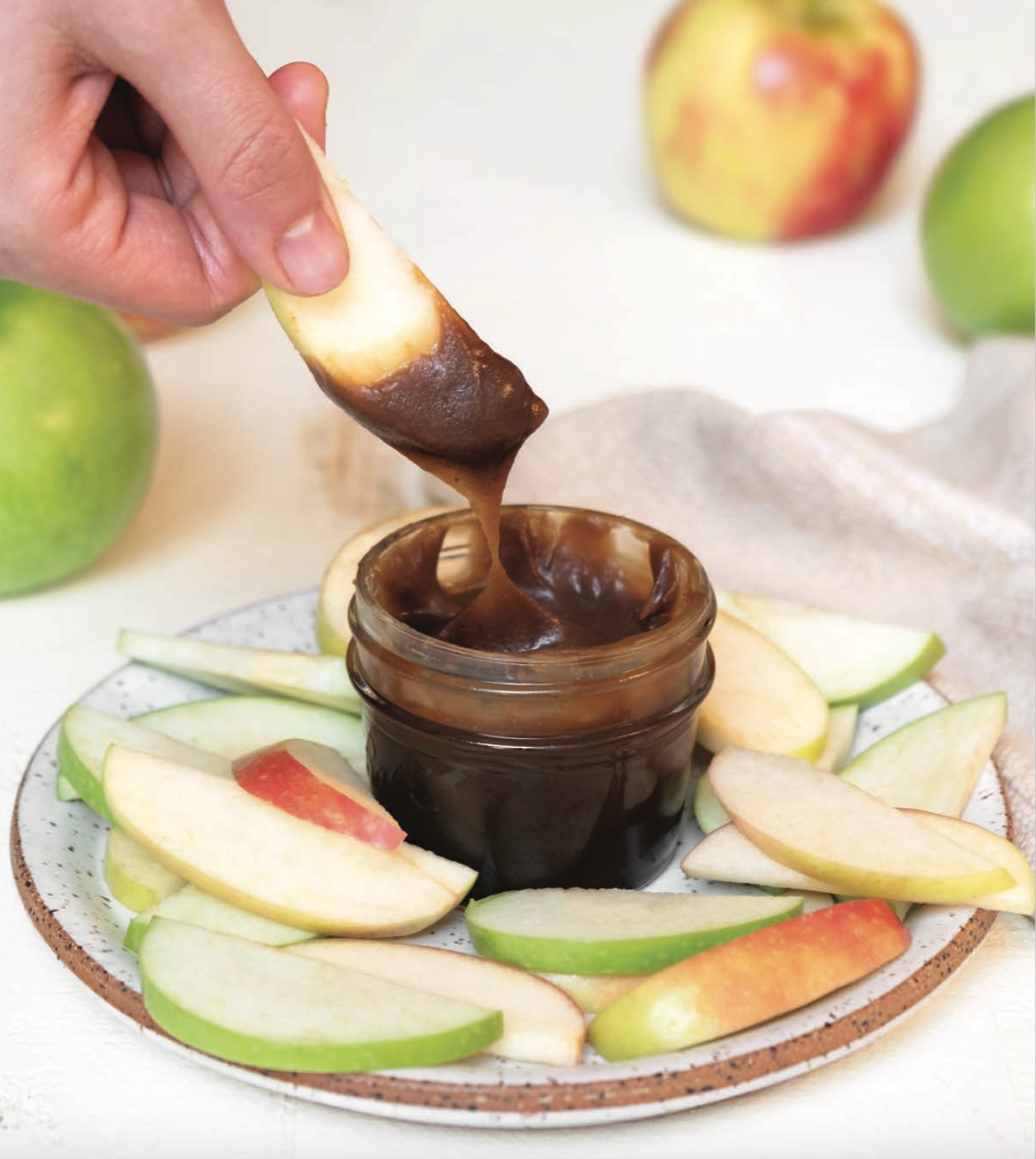
Vegan Salted Caramel

From the book, Whole Girl by Sadie Radinsky

Yield: Serves 10


INGREDIENTS:

  • ½ cup coconut sugar
  • ¾ cup full-fat coconut milk 2 tsp vanilla extract
  • 1 tsp coconut oil
  • ¼ tsp sea salt
  • 2 – 5 apples, sliced, for dipping


INSTRUCTIONS:

  1. Whisk together the coconut sugar and coconut milk in a medium saucepan and bring to a boil over medium-high heat.
  2. Once the mixture has started boiling, turn down the heat to medium-low and let the caramel simmer for 20 to 25 minutes, whisking every couple minutes. If it starts to smell very strong, remove from heat; it could be burning. When the caramel appears to have thickened considerably and darkened in color, remove from heat.
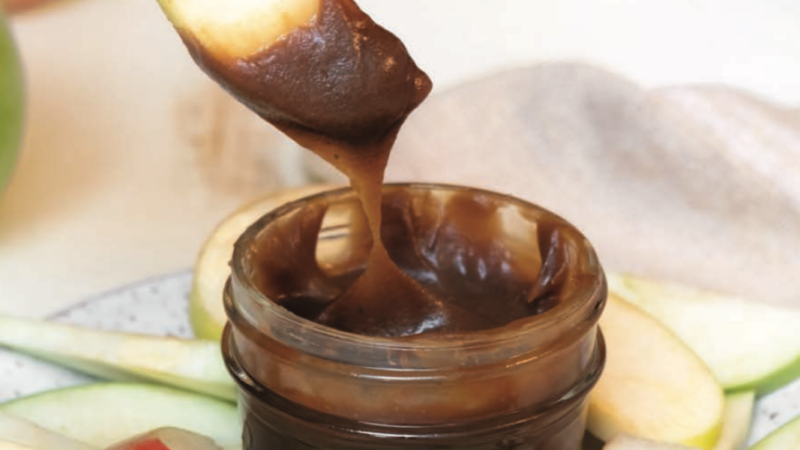
  3. Slowly whisk in the vanilla extract, coconut oil, and sea salt. Let the caramel cool for at least 10 minutes, to thicken up more. Pour the caramel into a small jar. I recommend serving it with sliced apples for a healthy snack. Store any leftover caramel in a sealed jar in the refrigerator for up to 2 weeks.

salted caramel

sadie radinsky

Sadie Radinsky is a 19-year-old blogger and recipe creator. For over six years, she has touched the lives of girls and women worldwide with her award-winning website, wholegirl.com, where she shares paleo treat recipes and advice for living an empowered life. She has published articles and recipes in national magazines and other platforms, including Paleo, Shape, Justine, mindbodygreen, and The Primal Kitchen Cookbook. She lives in the mountains of Los Angeles. For more, visit wholegirl.com.

Sadie Radinsky

Sadie Radinsky is an 18-year-old blogger and recipe creator. For over six years, she has touched the lives of girls and women worldwide with her award-winning website, wholegirl.com, where she shares paleo treat recipes and advice for living an empowered life. She has published articles and recipes in national magazines and other platforms, including Paleo, Shape, Justine, mindbodygreen, and The Primal Kitchen Cookbook. She lives in the mountains of Los Angeles. For more, visit wholegirl.com.

Author photo © KellyRadinsky

Also By Author

Mindful Movement: Walking Meditation 101

The Here and Now

What if you could change your life by doing one thing for just ten seconds each day? What if this thing would make you more contented, more grounded, and less stressed?

Welcome to mindfulness.

We spend almost all of our time worrying about two things: what has already happened (the past) and what hasn’t happened yet (the future). This only makes us miserable. The past is over, so there’s nothing we can do about it. And the future isn’t something we should be thinking about right now—unless we’re taking concrete action toward a goal.

Mindfulness breaks us out of this pattern by turning our awareness to the simple moments of life as they happen. We laser in on our senses as we’re experiencing them, and we feel them deeply.

So, the way to “be deep” is to focus on what’s going on right now.

I have two favorite ways to zap into the present moment.

The first way is to briefly tune in to my breath a few times a day. Set an alarm on your watch or phone to go off at three set times during the day. When it goes off, close your eyes and take three deep breaths. Notice how the breath feels as it flows in and out. Let go of whatever else is going on in your mind. Then open your eyes and go back to your day.

The second way is to tune in to the little details of the day. Say you’re picking up a water bottle. Consider this: How does the bottle feel in your hand? Is it heavy or light? When you take a sip of the water, how does it feel on your tongue? Is it cool or warm? What does it taste like? Try this exercise with one small act each day.

deepMINDFUL MOVEMENT: Walking Meditation

Walking meditation is a great way to de-stress and get centered while moving your body and getting some fresh air. It takes only a few minutes, so you can do it almost anywhere.

  1. The next time you’re walking down the street, start by getting your senses alert. Tune in to the pace of your steps and fall into the rhythm of the steps. What do they sound like?
  2. Turn your attention to an object you see as you’re walking. It might be a sign, a tree, or a building. Look intently at that object and observe it without labeling it. Just notice it.
  3. Now turn your attention to the noises that surround you. Don’t label them. Just listen.
  4. Finally, turn your attention to your breathing. Is it fast and shallow or slow and deep? Take a few deep breaths and continue with your steady pace.
  5. When you finish your walking meditation, take a minute and pause before reentering your day. Notice the way your body and mind feel. Carry that alertness and presence with you into the rest of your day

walking meditation

This is an excerpt from the chapter “Be Deep” from Whole Girl: Live Vibrantly, Love Your Entire Self, and Make Friends with Food by Sadie Radinsky.


sadie radinskySadie Radinsky is a 19-year-old blogger and recipe creator. For over six years, she has touched the lives of girls and women worldwide with her award-winning website, wholegirl.com, where she shares paleo treat recipes and advice for living an empowered life. She has published articles and recipes in national magazines and other platforms, including Paleo, Shape, Justine, mindbodygreen, and The Primal Kitchen Cookbook. She lives in the mountains of Los Angeles. For more, visit wholegirl.com.


whole girl bookSounds True | Amazon | Barnes & Noble | Bookshop | Indiebound

Vegan Salted Caramel

Vegan Salted Caramel

From the book, Whole Girl by Sadie Radinsky

Yield: Serves 10


INGREDIENTS:

  • ½ cup coconut sugar
  • ¾ cup full-fat coconut milk 2 tsp vanilla extract
  • 1 tsp coconut oil
  • ¼ tsp sea salt
  • 2 – 5 apples, sliced, for dipping


INSTRUCTIONS:

  1. Whisk together the coconut sugar and coconut milk in a medium saucepan and bring to a boil over medium-high heat.
  2. Once the mixture has started boiling, turn down the heat to medium-low and let the caramel simmer for 20 to 25 minutes, whisking every couple minutes. If it starts to smell very strong, remove from heat; it could be burning. When the caramel appears to have thickened considerably and darkened in color, remove from heat.
  3. Slowly whisk in the vanilla extract, coconut oil, and sea salt. Let the caramel cool for at least 10 minutes, to thicken up more. Pour the caramel into a small jar. I recommend serving it with sliced apples for a healthy snack. Store any leftover caramel in a sealed jar in the refrigerator for up to 2 weeks.

salted caramel

sadie radinsky

Sadie Radinsky is a 19-year-old blogger and recipe creator. For over six years, she has touched the lives of girls and women worldwide with her award-winning website, wholegirl.com, where she shares paleo treat recipes and advice for living an empowered life. She has published articles and recipes in national magazines and other platforms, including Paleo, Shape, Justine, mindbodygreen, and The Primal Kitchen Cookbook. She lives in the mountains of Los Angeles. For more, visit wholegirl.com.

Setting Intentions to Clear the Mind

Clear Your Mind

Do you ever feel like your brain might burst? Right this minute, my mind is simultaneously processing way too many thoughts:

Need to walk the dogs.

Text my friend back.

Tomorrow’s physics final.

College applications.

Need to make lunch.

What time do I have to wake up tomorrow?

It seems as though my mind is always on overload. But I’m not actually getting anything done. Why is this?

It’s because our brains aren’t meant to hold this much information. Science shows that we can only store a maximum of three or four things at once in our conscious mind, also known as our “working memory.” When we hold on to more than this, our brains become like messy rooms—cluttered and full of junk, so we can’t find anything. No wonder I feel so overwhelmed and disorganized.

clear final


I Intend

Another way we can be clear is by setting intentions each morning. Intentions are state- ments for how we would like to go about our day. Unlike a goal, an intention doesn’t require any steps to reach a certain objective. It’s simply a way to be.

Intentions work like magic. They affect our behavior, how our day goes, and even what things “happen” to us. Here’s how to get started:

  1. Make your intentions at a set time each day, such as right after waking up. Take a deep breath. Notice how you feel. Do you have pain anywhere in your body? What is the first thought that pops into your mind? Is your brain racing with stress or worry? Pay attention to all of it.
  2. Ask yourself, What do I want to bring into this day? Breathe and listen to your body’s answer.
  3. Roll over, grab a pen and notebook, and write down three intentions for the day. Be sure to state them all in the affirmative. (For example, “I will practice forgiveness” rather than “I will not hold a grudge.”) Here is a sample:

I will be patient with myself.

I will listen intently to others. 

I will speak out of kindness.

  1. Read over your list. Let your intentions seep in. It might help to read them out loud. When you feel satisfied, seal the practice with another deep breath. Throughout your day, whenever you feel yourself becoming overwhelmed or stressed, think back to those statements.

This is an excerpt from the chapter “Be Clear” from Whole Girl: Live Vibrantly, Love Your Entire Self, and Make Friends with Food by Sadie Radinsky.


sadie radinskySadie Radinsky is a 19-year-old blogger and recipe creator. For over six years, she has touched the lives of girls and women worldwide with her award-winning website, wholegirl.com, where she shares paleo treat recipes and advice for living an empowered life. She has published articles and recipes in national magazines and other platforms, including Paleo, Shape, Justine, mindbodygreen, and The Primal Kitchen Cookbook. She lives in the mountains of Los Angeles. For more, visit wholegirl.com.


whole girl bookSounds True | Amazon | Barnes & Noble | Bookshop | Indiebound

You Might Also Enjoy

Frank Ostaseki: “I’m Allergic to the Notion of a G...

What truly matters when we face the end of life? After decades of sitting at the bedside of hundreds of dying people, Frank Ostaseski has distilled the deepest human concerns into two essential questions: Am I loved? Have I loved well?

This week on Insights at the Edge, Tami welcomes Frank Ostaseski—co-founder of America’s first Buddhist hospice, the Zen Hospice Project, founder of the Metta Institute, and author of The Five Invitations: Discovering What Death Can Teach Us About Living Fully. Frank brings extraordinary wisdom from his pioneering work in compassionate end-of-life care, along with profound personal insights from his own encounters with heart surgery, strokes, and the transformative vulnerability of being “on the other side of the sheets.”

Join Tami and Frank to explore:

  • The two essential questions that arise when facing death—and what they reveal about living fully now
  • Why emotional flexibility is the true condition for healing and transformation
  • How to meet our own fear and pain without abandoning ourselves or others
  • The practice of “allowing” as a path to both wisdom and compassion
  • What happens in the dying process: surrender, reconstitution, and coming home
  • Why Frank is allergic to the notion of a “good death”
  • The indestructible love that emerges when we keep our hearts open through pain
  • How to practice dying by paying attention to everyday endings

This conversation is for anyone grappling with loss, change, or the fundamental questions of existence—offering not prescriptive answers, but the profound medicine of honest presence and the recognition that our vulnerability itself is one of our most beautiful human qualities.

For more with Frank Ostaseski:

Year to Live Course (Spirit Rock Meditation Center)

Spirit of Service (Upaya Zen Center)

Awareness in Action: The Role of Love (Upaya Zen Center, Frank Ostaseski & Sharon Salzberg)

This conversation offers genuine transmission—not just concepts about awakening, but the palpable presence of realized teachers exploring the growing edge of spiritual understanding together. Originally aired on Sounds True One.

Steven Washington: “My Recovery Is Non-Negotiabl...

How do we remain committed to staying sober when grief strikes, when stress becomes overwhelming, or when shame threatens to pull us back into old patterns?

This week on Insights at the Edge, Tami Simon welcomes Steven Washington, a former professional Broadway dancer who has transformed his 23-year recovery journey into a powerful practice of embodied healing. Steven is the author of Recovering You: Soul Care and Mindful Movement for Overcoming Addiction and creator of the SWE Studio, an online community offering movement and meditation support for people in recovery.

In this deeply personal interview, Tami and Steven explore:

  • Why recovery must be “non-negotiable”—with no conditions attached, regardless of life’s challenges 
  • How shame operates as the linchpin of addiction and the healing power of sharing it with trusted others
  • The connection between sensitivity and addiction, and how to transform sensitivity from vulnerability into strength
  • Practical tools for creating a trigger plan that works for both small daily stressors and major life crises
  • How Qigong and embodied practices help regulate the nervous system and process emotions held in the body
  • The journey from inherited shame to self-compassion and authentic self-worth
  • Why asking for help—practiced with small things—prepares us for life’s biggest challenges
  • Developing a personal relationship with a higher power that feels authentic rather than inherited

If you’re navigating recovery, supporting someone who is, or seeking to understand the connection between embodiment and transformation, Steven offers both practical wisdom and profound compassion for the journey.

Note: This interview originally aired on Sounds True One, where these special episodes of Insights at the Edge are available to watch live on video and with exclusive access to Q&As with our guests. Learn more at https://www.join.soundstrue.com

Healing From The Inside Out: How Yoga Cultivates Emoti...

Finding mental peace can feel difficult when life keeps pulling your attention in a dozen directions. Your emotions may swing between high and low, and clarity can feel out of reach. Yoga offers more than physical postures, it offers a practice of slowing down, tuning in, and tending to what’s within. Whether you’re struggling with stress, feeling emotionally off balance, or simply needing space to breathe, yoga can support a deeper kind of healing that unfolds from the inside out.

For over 40 years, Sounds True has served as a trusted source for spiritual education and personal growth. We share practices that are rooted in authentic wisdom and designed for real, everyday lives. Our collection of digital courses, audio programs, and teachings from renowned guides such as Tara Brach, Eckhart Tolle, and Pema Chödrön reflect a living library of transformation, created to support your journey back to wholeness.

Key Takeaways:

  • Practice & Presence: Yoga offers tools to process emotions and calm the mind through movement, breath, and awareness.
  • Science & Soul: Evidence supports yoga’s ability to reduce stress while honoring its deeper spiritual roots in healing.
  • Sustainable Healing: Ongoing, compassionate practice encourages emotional resilience and lasting mental clarity.

How Yoga Supports Mental And Emotional Well-Being

Yoga’s influence goes far beyond the physical body. For many, it serves as an anchor through emotional storms and mental overwhelm. To understand how yoga for mental health can become part of your healing journey, let’s explore its core contributions:

A Holistic Practice That Meets You Where You Are

Yoga isn’t just movement, it’s a conversation with your inner world. It brings together the breath, body, and mind to create space for awareness, without pressure to perform or change. In that space, emotional patterns can soften, revealing clarity beneath the noise.

Scientific Support For Emotional And Mental Relief

Research continues to affirm what many practitioners intuitively feel. Regular yoga practice has been shown to reduce stress hormones, increase calming brain chemicals like GABA, and regulate the nervous system. This makes it a gentle, sustainable approach to both yoga and mental health.

Emotional Balance Begins With Compassionate Awareness

One of the most powerful aspects of yoga for emotional balance is its ability to foster self-compassion. When we step onto the mat with whatever emotions are present: anxiety, grief, joy, or numbness, yoga teaches us how to stay connected without judgment. Over time, this builds emotional resilience rooted in presence rather than resistance.

From Temporary Relief To Lasting Inner Stability

The effects of yoga can feel subtle at first, but they ripple outward. A consistent practice doesn’t just offer short-term calm; it strengthens your ability to self-regulate and respond, not react. This is how inner healing yoga supports transformation from within, one breath at a time.

Discover The Power Of Daily Meditation With Sounds True.

The Science And Spirit Of Yoga For Mental Health

Yoga’s unique power lies in its ability to bridge ancient wisdom with modern understanding. While it has spiritual roots that invite deep introspection, it also holds measurable benefits for mental health. To fully appreciate the role of yoga in emotional and psychological well-being, it helps to look at both perspectives side by side:

What Modern Research Reveals

Scientific studies continue to explore the mental health benefits of yoga. Results point to improved mood, reduced anxiety and depression, and enhanced emotional regulation. These outcomes support the growing use of yoga for mental health in therapeutic settings, including trauma recovery and stress management.

Why The Subtle Body Matters

In yogic philosophy, healing isn’t limited to the physical or even the psychological. The concept of prana, or life force, helps explain why movement and breath can shift emotional states. Practices that work with subtle energy including inner healing yoga, help release stored tension and clear emotional blockages.

Balancing Effort And Surrender

Yoga invites a delicate interplay between strength and softness. In doing so, it mirrors the healing process itself: part discipline, part letting go. This balance nurtures the experience of mental clarity through yoga, creating the conditions for stillness to arise naturally.

Explore Further With Embodied Resources

If you’re curious to deepen your connection to body and breath in a supported way, Sounds True offers a wide range of practices through yoga and movement. These digital programs are led by teachers who blend somatic wisdom with grounded guidance, meeting you right where you are.

Cultivating Emotional Balance Through Movement And Breath

Our emotions live in the body. They’re not just mental states but physical experiences, tightness in the chest, heaviness in the limbs, or fluttering in the gut. Yoga helps us move these feelings through instead of holding them in:

The Body As A Gateway To Emotional Awareness

Movement can unlock what words cannot. Through intentional poses, especially those that open the hips, heart, and spine, yoga supports the release of stored emotions. This is why yoga for emotional balance feels less like escape and more like a homecoming.

The Breath As Regulator And Messenger

Breathwork, or pranayama, is a powerful tool for emotional regulation. By consciously slowing the breath, we calm the nervous system and shift our state of mind. Over time, this supports both yoga and mental health by creating internal space for reflection rather than reaction.

Rhythmic Practice Builds Emotional Resilience

Consistency is key. Even short, daily practices help build the emotional strength needed to navigate life’s ups and downs. This steady rhythm reinforces the benefits of inner healing yoga, creating a supportive foundation for deeper personal work.

Supportive Tools For Emotional Healing

For those looking for gentle guidance, the yoga for your mood deck offers intuitive prompts and accessible poses to meet you where you are emotionally. It’s a helpful companion for days when you’re not sure how to begin but know you need something.

Build Relationships That Nourish And Sustain.

Accessing Mental Clarity Through Yogic Presence

Mental clarity often feels just out of reach in a noisy world. Yoga creates the internal conditions that allow clarity to surface, not by forcing it, but by slowing things down. When the body is calm and the breath is steady, the mind can begin to clear:

Slowing Down To See Clearly

Yoga encourages us to pause and notice. Whether you’re holding a posture or sitting in stillness, these moments of mindful presence quiet the mental chatter. This process is central to experiencing mental clarity through yoga, where insights arise not from thinking harder but from thinking less.

Meditation And Stillness As Deep Practices

While movement helps discharge tension, meditation helps us see beneath it. Even a few minutes of seated awareness can reveal thought patterns and emotional loops we didn’t realize were there. These practices are integral to both yoga for mental health and long-term emotional wellness.

The Restorative Power Of Rest

Rest is not a luxury, it’s essential for mental clarity and nervous system repair. Deep rest practices like Yoga Nidra offer profound restoration. For an accessible entry point, explore yoga nidra—the sleep yoga, which gently guides you into deep states of awareness without effort.

Clarity As A Byproduct, Not A Goal

Yoga doesn’t chase clarity. It invites you to create the right internal environment and let clarity arise in its own time. Over time, this approach nurtures both inner healing yoga and sustainable mental clarity rooted in presence.

Inner Healing Yoga As A Path To Wholeness

Healing is not always about fixing what’s broken. Often, it’s about remembering what has always been whole beneath the layers of stress, pain, and disconnection. Inner healing yoga invites this remembering through intentional practice and self-inquiry:

Creating A Safe Space Within

The mat becomes a mirror. Each posture, breath, and moment of stillness offers a chance to meet yourself with honesty and care. This safe internal space nurtures the emotional awareness essential for lasting transformation.

The Power Of Self-Compassion

Yoga teaches us that healing is not linear. There will be days when the mind is foggy, the body is tense, or emotions feel overwhelming. Returning to your practice anyway builds trust, in yourself, and in the process of yoga for emotional balance.

Integration Beyond The Mat

The most meaningful shifts often happen after practice, in how we speak to ourselves, how we move through relationships, and how we respond to life. This is the deeper work of yoga and mental health, where practice becomes a lived experience of wholeness.

An Ongoing Invitation To Go Deeper

Inner healing is not a destination. It’s a continuous invitation to be in relationship with yourself as you are right now. As your awareness grows, so does your capacity for mental clarity through yoga, clarity rooted in self-understanding, not perfection.

Expand Your Consciousness With Sounds True.

Final Thoughts

Yoga invites a return to ourselves. It doesn’t demand that we change who we are, but gently guides us to remember what already lives within us, clarity, calm, and connection. Whether you’re seeking stillness, release, or simply a moment to breathe, yoga offers the tools to support your healing from the inside out.

As you continue exploring the path of yoga for mental health, you may find that what once felt like emotional chaos begins to soften into something more spacious. With consistent practice, both yoga for emotional balance and inner healing yoga can become steady companions in your life. The clarity that arises is not forced but welcomed, cultivated through each breath, each pause, each mindful moment.

To deepen your experience, you might consider joining the global celebration of yoga through the international day of yoga offerings by Sounds True. These resources, created by trusted teachers and rooted in heart-centered wisdom, are here to support your personal journey, one that honors where you are and gently points toward where you’re going.

Read Also:

Frequently Asked Questions About Yoga For Mental Health

What type of yoga is best for mental health?

Gentle, breath-focused styles like Hatha, Yin, and Restorative Yoga are especially beneficial for mental health, as they calm the nervous system and promote inner stillness.

Can yoga replace therapy or medication for mental health conditions?

Yoga can be a powerful complement to therapy or medication, but it is not a substitute. Always consult a healthcare provider for individualized treatment plans.

How often should I practice yoga for mental health benefits?

Even 10 to 20 minutes daily can support mental and emotional wellness. Consistency matters more than intensity when it comes to cultivating inner balance.

Is it normal to feel emotional during or after yoga practice?

Yes, emotions can rise during yoga as physical movement and breathwork unlock stored tension. This is part of the body’s natural release and healing process.

Can beginners benefit from yoga for mental clarity and emotional healing?

Absolutely. No advanced skill is needed to start. Breath awareness, simple movements, and mindful rest can offer noticeable benefits, even for beginners.

What role does community play in yoga for mental health?

Practicing in community, whether in-person or online, can enhance feelings of support and connection. Shared practice helps reduce isolation and deepens healing.

How does yoga support nervous system regulation?

Yoga helps activate the parasympathetic nervous system through slow breathing and mindful movement, promoting a state of rest, recovery, and emotional stability.

Michelle Cassandra Johnson is an author, activist, spiritual teacher, racial equity consultant, and intuitive healer. She is the author of six books, including Skill in Action and Finding Refuge. Amy Burtaine is a leadership coach and racial equity trainer. With Robin DiAngelo, she is the coauthor of The Facilitator's Guide for White Affinity Groups. For more, visit https://www.michellecjohnson.com/wisdom-of-the-hive.

>
Share via
Copy link
Powered by Social Snap