Connor Beaton

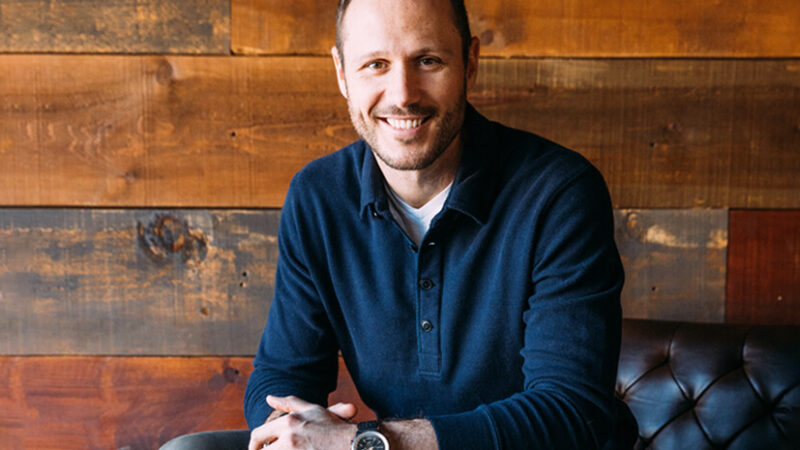
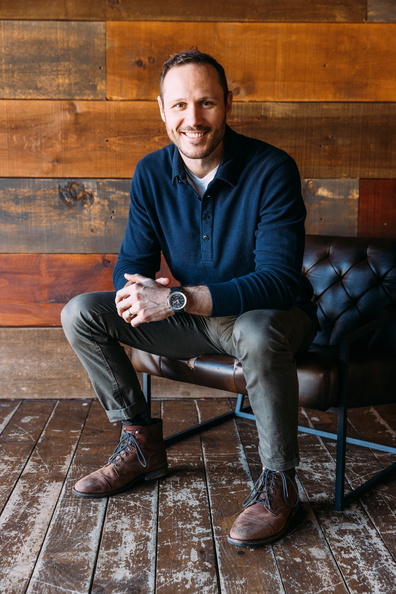
Connor Beaton is the founder of ManTalks, an international organization dedicated to the personal and professional growth of men. He is an entrepreneur, writer, keynote speaker, and facilitator dedicated to building better men. Connor has spoken to large corporate brands, nonprofits, schools, and international organizations such as the United Nations, Microsoft, Johnson & Johnson, Apple, TED, and Entrepreneurs’ Organization. He lives in New York. For more, visit connorbeaton.com.

Author photo © Nick Onken

Also By Author

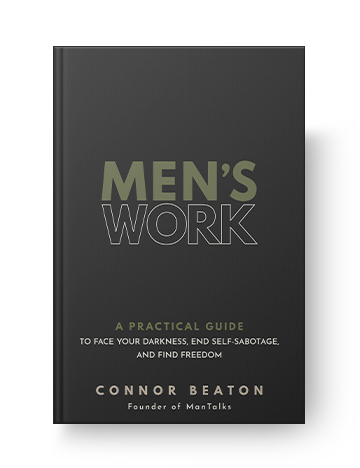
Connor Beaton: Men’s Work

What does it look like to connect to our own masculinity, our own masculine core, in a healthy way? How as men do we welcome the parts of ourselves we dislike the most? Where can we find the validation and recognition we seek? These are the questions that Connor Beaton addresses in his new book, Men’s Work: A Practical Guide to Face Your Darkness, End Self-Sabotage, and Find Freedom

In this podcast, Tami Simon speaks with Connor about his life and work, discussing why the work of men begins with pain; the consequences of the belief that strength equals suppression; “fathering yourself” and carrying your pain more effectively; welcoming and healing a hurtful inner dialogue; breaking the erroneous rule that blocks real intimacy; transforming the spirit of competition into a positive force for mutual support; the conundrum of male vulnerability; the skill of opening up; leadership, self-respect, and how we conduct ourselves in hard times; emotional sovereignty; self-regulation and the practice of moving from rationalizing into sensation; infidelity and porn; building your own system of self-validation and recognition; and more.

Note: This episode originally aired on Sounds True One, where these special episodes of Insights at the Edge are available to watch live on video and with exclusive access to Q&As with our guests. Learn more at join.soundstrue.com.

Pain as the Path

The wounds, scars, and pain we carry as men have a place in our lives. A function that can lead us directly to the core of deep meaning and fulfillment and provide a positive path forward. This is what initiation was supposed to teach us as men—how to descend into the depths of our own darkness and return a more complete and contributive participant in society.

However, this is where a man’s real problem resides: He has not been taught the skill or alchemy of initiation. He has not learned how to deal with his pain, or the pain of the world, and so he bucks against it.

I realized over the years of grappling with how to heal that not only was I ill-equipped to deal with the hurt I’d been given, but I also seemed to be woefully ill-equipped to reconcile with, and put a halt to, the perpetual hurt I passed on to others. Like many men, I was good at inflicting pain—and men who are good at something tend to do that thing a lot.

Not only was I undereducated in the alchemical craft of turning pain into purpose, but almost every man I knew was in relatively the same situation. Most men simply haven’t been taught how to deal with their pain and use it to become something better.

And this aspect of the journey is the missing link in male initiation, which has historically played the role of guiding a man through the transitory period between adolescence and adulthood, teaching him the skills of discipline, sovereignty, and the ability to face some of the most challenging aspects of his own life.

In fact, I began to see that not only have most men not been given the tools or resources to deal with the pain and suffering in their lives, but we as men are actively taught the opposite—the idiotic tactic of constant emotional avoidance. Not only this, but our emotional avoidance is seen as a theoretical and rational strength in certain circles.

Seeing this brings about a multitude of questions that both illuminate the foundational cracks within current masculine culture and also highlight the work we must embark on if we are to do our individual and collective parts as men in building a thriving society.

There’s more: I began to see the direct correlation between a man’s ability and willingness to face his own darkness and having a clear purpose, deep fulfillment, and clarity of contribution to the things that matter most to him.

But how can we as men give our pain a purpose in a culture where we are largely devoid of emotional permissions? Where the archetype of man, in order to be classified or quantified as a man, must do the impossible task of being brave and courageous without being vulnerable?

This is one of the biggest masculine myths—the false idea that you can be courageous without being inherently vulnerable. When we are rewarded for giving our lives, our hearts, and our emotional bodies up for sacrifice to maintain the illusion of invulnerable strength, we prioritize victory over connection. We praise ourselves for performance in the boardroom, bedroom, and bars, but we lack recognition for our performance in reconciliation, repair, and reparation.

There’s another way. A way where victory is found within the work, and part of that work is facing our own darkness.

Excerpted from Men’s Work: A Practical Guide to Face Your Darkness, End Self-Sabotage, and Find Freedom by Connor Beaton.

CONNOR BEATON is the founder of ManTalks, an international organization dedicated to the personal growth of men. He is a facilitator dedicated to building better men, an entrepreneur, a writer, and a keynote speaker. Connor has spoken to large corporate brands, nonprofits, schools, and international organizations such as the United Nations, Microsoft, Johnson & Johnson, Apple, TED, and Entrepreneurs' Organization. For more, visit mantalks.com.

You Might Also Enjoy

David Brooks: Perception Is an Act of Creation

What does it mean to truly see another person—not just their surface, but their soul, their yearning, their infinite dignity?

This week, Tami speaks with David Brooks—acclaimed New York Times columnist, author, and PBS NewsHour commentator—about his remarkable journey from emotional guardedness to what he calls “heart vision.” In this profound interview on Insights at the Edge, David shares the mystical experiences that transformed his understanding of human connection, including a pivotal moment in a New York subway when he suddenly perceived everyone around him as souls in motion.

Join Tami and David to explore:

  • David’s emotional awakening and the journey from cerebral detachment to human vulnerability
  • The distinction between diminishers and illuminators—and how we see others
  • Why attention is the ultimate form of generosity and morality
  • The difference between heart intelligence and mental intelligence
  • How perception itself is an act of creation, not passive observation
  • Practical skills for seeing others deeply: the on/off switch of attention, being a loud listener, and avoiding the topper trap
  • Why he identifies as a religious rather than a spiritual person
  • The moral order of the universe and how our yearnings reflect something woven into reality itself
  • How rupture and repair shape us—and why staying in pain can be necessary for growth

David’s wisdom reminds us that in a world increasingly dominated by data and algorithms, the art of truly seeing another human being remains our most sacred—and most practical—capacity.

Listen now to discover how cultivating the illuminator’s gaze can transform every relationship in your life.

This conversation offers genuine transmission—not just concepts about awakening, but the palpable presence of realized teachers exploring the growing edge of spiritual understanding together. Originally aired on Sounds True One.

Frank Ostaseki: “I’m Allergic to the Notion of a G...

What truly matters when we face the end of life? After decades of sitting at the bedside of hundreds of dying people, Frank Ostaseski has distilled the deepest human concerns into two essential questions: Am I loved? Have I loved well?

This week on Insights at the Edge, Tami welcomes Frank Ostaseski—co-founder of America’s first Buddhist hospice, the Zen Hospice Project, founder of the Metta Institute, and author of The Five Invitations: Discovering What Death Can Teach Us About Living Fully. Frank brings extraordinary wisdom from his pioneering work in compassionate end-of-life care, along with profound personal insights from his own encounters with heart surgery, strokes, and the transformative vulnerability of being “on the other side of the sheets.”

Join Tami and Frank to explore:

  • The two essential questions that arise when facing death—and what they reveal about living fully now
  • Why emotional flexibility is the true condition for healing and transformation
  • How to meet our own fear and pain without abandoning ourselves or others
  • The practice of “allowing” as a path to both wisdom and compassion
  • What happens in the dying process: surrender, reconstitution, and coming home
  • Why Frank is allergic to the notion of a “good death”
  • The indestructible love that emerges when we keep our hearts open through pain
  • How to practice dying by paying attention to everyday endings

This conversation is for anyone grappling with loss, change, or the fundamental questions of existence—offering not prescriptive answers, but the profound medicine of honest presence and the recognition that our vulnerability itself is one of our most beautiful human qualities.

For more with Frank Ostaseski:

Year to Live Course (Spirit Rock Meditation Center)

Spirit of Service (Upaya Zen Center)

Awareness in Action: The Role of Love (Upaya Zen Center, Frank Ostaseski & Sharon Salzberg)

This conversation offers genuine transmission—not just concepts about awakening, but the palpable presence of realized teachers exploring the growing edge of spiritual understanding together. Originally aired on Sounds True One.

A.H. Almaas and Henry Shukman: “The Many Faces of Aw...

What if awakening isn’t a single destination but an endless unfolding of reality’s many faces? This week on Insights at the Edge, Tami Simon facilitates a groundbreaking conversation between two of the most profound spiritual teachers of our time: A.H. Almaas (Hameed Ali), founder of the Diamond Approach, and Zen teacher Henry Shukman.

In this rare dialogue, these teachers—meeting for the first time—explore how different wisdom traditions point to distinct dimensions of awakened experience. Rather than claiming all paths lead to the same mountaintop, they celebrate the unique territory each tradition reveals: from the “blazing forth” of creative emptiness to experiences where consciousness itself dissolves, from the recognition that each point contains the entire universe to the discovery that everything is made of love.

Join Tami, Hameed, and Henry to discover:

  • Why awakening is an endless process rather than a final arrival
  • The profound difference between thinking and heart-knowing
  • How to navigate the fear that arises at the threshold of ego dissolution 
  • The role of trust, compassion, and basic trust in profound transformation 
  • What happens when individual consciousness completely ceases 
  • Why nothingness and being are inseparable faces of reality 
  • How grief and catastrophic loss can become doorways to awakening 
  • The Zen teaching of uni-locality—experiencing that one point is everything 
  • Why love may be the most fundamental nature of reality itself

This conversation offers genuine transmission—not just concepts about awakening, but the palpable presence of realized teachers exploring the growing edge of spiritual understanding together. Originally aired on Sounds True One

>