
Frank Ostaseki: “I’m Allergic to the Notion of a Good Death”

December 23, 2025

Frank Ostaseki: “I’m Allergic to the Notion of a Good Death”

December 23, 2025

What truly matters when we face the end of life? After decades of sitting at the bedside of hundreds of dying people, Frank Ostaseski has distilled the deepest human concerns into two essential questions: Am I loved? Have I loved well?

This week on Insights at the Edge, Tami welcomes Frank Ostaseski—co-founder of America’s first Buddhist hospice, the Zen Hospice Project, founder of the Metta Institute, and author of The Five Invitations: Discovering What Death Can Teach Us About Living Fully. Frank brings extraordinary wisdom from his pioneering work in compassionate end-of-life care, along with profound personal insights from his own encounters with heart surgery, strokes, and the transformative vulnerability of being “on the other side of the sheets.”

Join Tami and Frank to explore:

  • The two essential questions that arise when facing death—and what they reveal about living fully now
  • Why emotional flexibility is the true condition for healing and transformation
  • How to meet our own fear and pain without abandoning ourselves or others
  • The practice of “allowing” as a path to both wisdom and compassion
  • What happens in the dying process: surrender, reconstitution, and coming home
  • Why Frank is allergic to the notion of a “good death”
  • The indestructible love that emerges when we keep our hearts open through pain
  • How to practice dying by paying attention to everyday endings

This conversation is for anyone grappling with loss, change, or the fundamental questions of existence—offering not prescriptive answers, but the profound medicine of honest presence and the recognition that our vulnerability itself is one of our most beautiful human qualities.

For more with Frank Ostaseski:

Year to Live Course (Spirit Rock Meditation Center)

Spirit of Service (Upaya Zen Center)

Awareness in Action: The Role of Love (Upaya Zen Center, Frank Ostaseski & Sharon Salzberg)

This conversation offers genuine transmission—not just concepts about awakening, but the palpable presence of realized teachers exploring the growing edge of spiritual understanding together. Originally aired on Sounds True One.
900 Episodes and Counting…

Subscribe to Insights at the Edge to hear all of Tami’s interviews (transcripts available too!), featuring Eckhart Tolle, Caroline Myss, Tara Brach, Jack Kornfield, Adyashanti, and many more.

Meet Your Host: Tami Simon

Each week on Insights at the Edge, Tami Simon interviews leading voices in the Mind/Body/Spirit space about a vast spectrum of fascinating ideas. Since 2009, Tami and her guests have been exploring the edge of understanding, nearly 1,000 episodes on the honest work of change, including spiritual discovery, awakening, intuition, purpose, trauma, and grief.

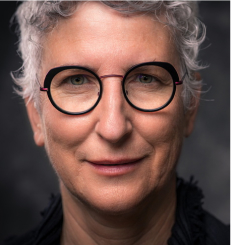
Photo © Jason Elias

Also By Author

No Author Available

No other posts by author

You Might Also Enjoy

Just One Question | Jeffrey Rutstein: Did I Inherit My...


Ever notice how a tiny criticism can send you into a full-blown spiral, and then you spend the rest of the day furious at yourself for spiraling? Dr. Jeffrey Rutstein has a theory about why that happens, and it starts before you ever had a say in the matter: with the nervous system you were born with.

Rutstein, a clinical psychologist, Hakomi-certified somatic psychotherapist, and host of Sounds True’s Healing Trauma Program, talks with Tami Simon about inheriting his own mother’s fight-or-flight wiring, and how a childhood encounter with Indra Devi’s Yoga for Americans sent him down a decades-long path through pranayama, Hatha yoga, and Zen practice.

In this conversation, Tami and Jeffrey explore:

  • Why your baseline nervous system state is more inheritance than character flaw
  • How naming that inheritance can interrupt years of self-blame and shame
  • The difference between a fixed nervous system and one you can learn to shift

This one’s for anyone who’s ever hated themselves for “overreacting.” So…pretty much everyone.

Taken from the full Insights at the Edge conversation with Jeffrey Rutstein titled “Not Being a Prisoner To Your Nervous System.”

Find the complete interview: https://bit.ly/iate-jeffrey-rutstein

Beatrice Chestnut: “Going Deeper with the Enneag...

What if the type you’ve been typing yourself as isn’t the whole story? Tami Simon sits down with Enneagram pioneer Beatrice Chestnut to mark the re-release of her classic guide, The Complete Enneagram, and to ask why facing our shadow, not avoiding it, is the real path to waking up.

Beatrice Chestnut, PhD, is a global expert, researcher, and educator on the Enneagram. She holds a PhD in communication studies and a master’s degree in clinical psychology, and is a licensed psychotherapist, coach, and business consultant based in San Francisco. She is the author of several acclaimed books on the Enneagram, including the newly re-released edition of The Complete Enneagram: 27 Paths to Greater Self-Knowledge, widely considered a classic in Enneagram literature.

In this conversation, Tami and Beatrice explore:

  • The difference between personality (the protective “false self” formed in childhood) and our essential, true nature
  • Why each of the nine Enneagram types has its own distinct shadow challenge to confront and integrate
  • The 27 subtypes, and why Beatrice believes they matter far more than Enneagram “wings”
  • How the connecting lines, or arrows, reveal each type’s specific growth pathway — and why the order matters
  • What each type looks like at its highest, most evolved expression
  • Why more people may be ready to “wake up” to who they really are now than ever before

This episode is for anyone who’s taken an Enneagram test and wondered what to do next, as well as therapists, coaches, and longtime students of the system looking to go deeper with the subtypes.

Listen now to discover your own path to greater self-knowledge. →

This conversation offers genuine transmission, not just concepts about awakening, but the palpable presence of realized teachers exploring the growing edge of spiritual understanding together, and it originally aired on Sounds True One.

Get a FREE month of membership at https://bit.ly/STOne-Free-Month.

Just One Question | Gabor Maté: What Keeps Me from Be...

Why do some of the most hardened people—lifers on death row, people who’ve killed—turn out to be, underneath it all, remarkably sensitive? Physician and trauma expert Dr. Gabor Maté has spent decades working with addicts and prisoners, and he’s found a pattern that upends how we usually think about cruelty and compassion.

Dr. Gabor Maté is a physician and bestselling author whose work on trauma and addiction has shaped how millions understand pain, illness, and healing. He’s the author of In the Realm of Hungry Ghosts, When the Body Says No, Scattered Minds, and, with his son Daniel, The Myth of Normal.

In this conversation, Tami and Gabor explore:

  • Why compassion is wired into us from birth and what shuts it down
  • The neuroscience of care, drawing on affective neuroscientist Jaak Panksepp’s research on emotional systems
  • What Gabor has witnessed firsthand working with lifers and people on death row
  • The difference between “orchid” and “dandelion” temperaments, and why high sensitivity can become either a liability or a gift
  • Why genes linked to addiction may really be genes for sensitivity

This one’s for anyone trying to understand the roots of cruelty, or working through their own compassion fatigue; toward others, or toward themselves.

Taken from the full Insights at the Edge conversation with Gabor Maté titled “Gabor Maté: Healing Principles to Embody in a Traumatized World”