
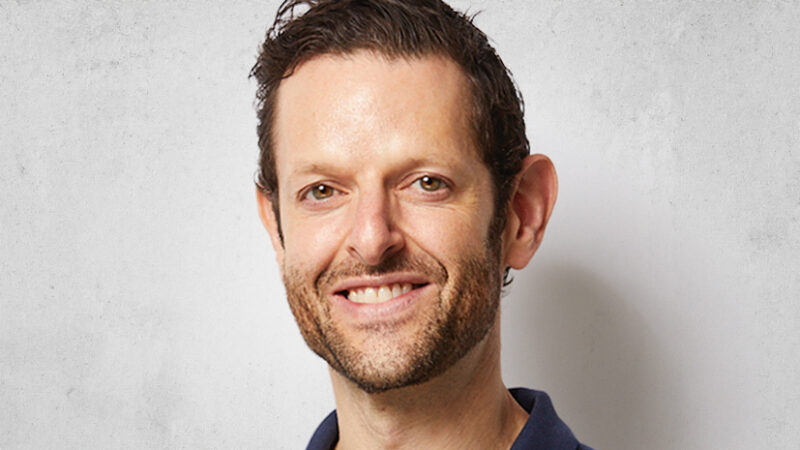
Jeff Karp, PhD

Jeff Karp, PhD, is an acclaimed mentor and biomedical engineering professor at Harvard Medical School and MIT, a Distinguished Chair at Brigham and Women’s Hospital, and a fellow of the National Academy of Inventors. He has dedicated his research to bioinspired medical problem-solving, and his lab’s technologies have led to the formation of Thirteen companies. His technologies include a tissue glue that can seal holes inside a beating heart (inspired by snails and sandcastle worms); targeted therapy for osteoarthritis, Crohn’s disease, and brain disorders; “smart needles” that automatically stop when they reach their target; a nasal spray that neutralizes pathogens; and immunotherapy approaches to annihilate cancer. Dr. Karp lives in Brookline, Massachusetts, with his wife, children, and two Cavalier King Charle’s spaniels.

Also By Author

Uncategorized

Jeff Karp, PhD: LIT: Resensitizing Our Aliveness

The natural world has provided inspiration to poets, artists, and creatives of every ilk. And that includes inventors and innovators like Dr. Jeff Karp. In this podcast, Tami Simon speaks with the renowned biomedical engineer and founder of The Karp Lab about his new book, LIT (Life Ignition Tools): Use Nature’s Playbook to Energize Your Brain, Spark Ideas, and Ignite Action, and how you yourself can turn to the natural world as an ally for problem-solving, unexpected insight, and profound transformation on a daily basis.

Enjoy this incredibly inspiring conversation exploring: The work of the “bioinspirationalist”; how sandcastle worms inspired a new approach to vascular reconstruction in humans; the LIT state and how we can open ourselves up to limitless possibilities in any situation; the pendulum swing between “dull moments” and the times we are totally lit up; the life force within everything; the importance of changing up our routines; LEB (low energy brain); the “press pause” tool of LIT; working with intention; elevating your baseline feeling of wellness and fulfillment; viewing the world through the lens of energy transfer; how we are all contributing to evolution; the practice of cycling through your senses; appreciating our interconnectedness; creating space; aligning your thoughts and actions with your core values; turning negatives into positives; finding rituals and practices to enter into the LIT state; mining the treasures of neurodiversity; and more.

Note: This episode originally aired on Sounds True One, where these special episodes of Insights at the Edge are available to watch live on video with exclusive access to Q&As with our guests. Learn more at join.soundstrue.com.

You Might Also Enjoy

Rob Bell: “The Risk of Not Becoming More YouR...


What if not doing the thing is the riskier choice?

This week, Tami Simon speaks with Rob Bell—New York Times bestselling author of 14 books and plays, host of The RobCast, and a former pastor—about what he calls his civilian phase. Rob left the role years ago. What surprised him was how long the role stayed with him afterward: “We leave an external form, and then over the years, the form begins to leave us.”

This is an unusually candid conversation. Tami goes first, admitting she didn’t feel free to fully reveal herself until she had economic security—and Rob meets her there without a tidy answer.

Join Tami and Rob to explore:

  • Why he doesn’t believe in risk versus no risk—only in risk management, and which risk is actually smaller
  • The “answer man” conditioning of a job that expected crisp soundbites about the deepest human questions—and what it did to his nervous system
  • Hiding in plain sight: how public visibility can be its own kind of concealment
  • The abyss, the void, the fallow field—learning to stop fighting the empty seasons
  • “And then I kept going”: the phrase that came out of pandemic sessions, and why people can’t see their own resilience
  • What shifted when a plant medicine experience dropped his head into his heart
  • Toxic positivity, a lineage that didn’t know what to do with pain, and the son who taught him it’s okay to be sad
  • Why a birch tree scatters 250 million seeds and doesn’t seem worried about efficiency
  • His father’s dementia, temporariness, and the strange way mortality heightens aliveness

Rob will lead an immersive workshop, The Ongoing Creation of Your Life, at Omega Institute, August 30–September 4.

Listen now and hear what it costs to keep standing at a distance from your own life. →

This conversation offers genuine transmission, not just concepts about awakening, but the palpable presence of realized teachers exploring the growing edge of spiritual understanding together, and originally aired on Sounds True One.

E208: Living Beyond the Personal

Every genuine spiritual tradition teaches that the highest path is letting go of the personal ego and living according to a greater guidance than our personal desires. The suffering we experience comes from identifying with our preferences, fears, and self-concepts, instead of recognizing ourselves as the awareness that is experiencing our experiences. As we surrender self-interest, act without attachment to outcomes, and become instruments of something greater than ourselves, we discover true freedom, joy, peace, and the ability to serve life with clarity and love.

© Sounds True Inc. Episodes: © 2026 Michael A. Singer. All Rights Reserved.

Just One Question | James Hollis: Why Am I Here?

Tami came to Living with Borrowed Dust wanting to talk about the abyss — the chapter that held her attention most. James Hollis offers Heidegger’s framing of it: not the pit that swallows you, but the openness of being.

Then he does something guests rarely do here. He takes the question back. The abyss opens, he says, every time we ask a truly radical question — radical from radix, root — and there is none more radical than “Why am I here?”

He answers it from inside a hospital bed. Two serious spinal surgeries, real doubt about whether he’d come through, and what he describes feeling is not despair but something closer to adventure. He thanked his surgeon on the way into the operating room. Fear is normal, he says, and anxiety is real — but neither one has to be the thing that decides how you live.

In this episode:

  • Heidegger’s abyss as the openness of being, and how that reframe exposed Hollis’s own defenses
  • The patterns we build against the unknown: power over small things, staying out of harm’s way, narcissistic inflation
  • Why mortality is the one statistic with no uncertainty in it, and what that should free us to do
  • Keep walking — if you’re in the middle of the forest, you’re halfway through
  • Dignity over pride, and the one thing nobody can take from you unless you give it away

Taken from the full Insights at the Edge conversation with James Hollis. Find the complete interview in this feed or at soundstrue.com
