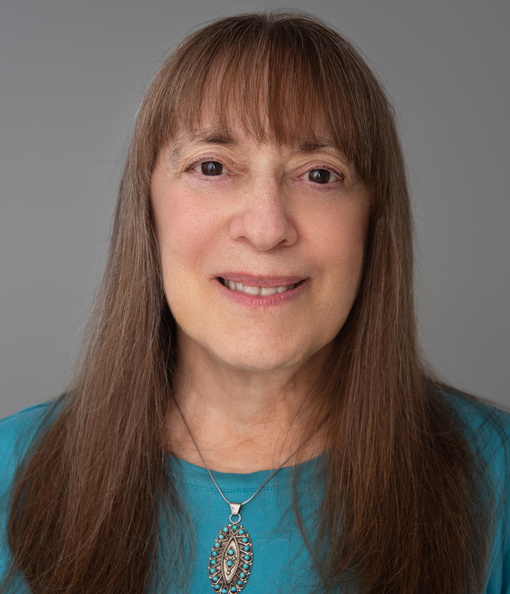
Judith Blackstone, PhD, is a psychotherapist and innovative teacher in contemporary spirituality. She developed the Realization Process®, an embodied approach to personal and relational healing and nondual realization. She is the author of Trauma and the Unbound Body, Belonging Here, The Intimate Life, The Enlightenment Process, and The Empathic Ground.For more, see realizationprocess.org.
We find ourselves in a time that is rich with paths toward spiritual awakening, especially that pinnacle of awakening called “nonduality.”
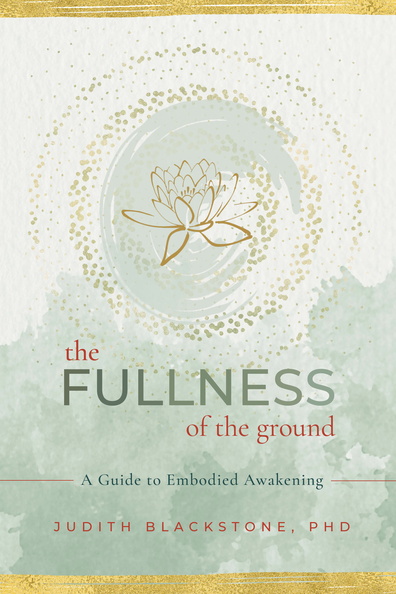
The Fullness of the Ground is my contribution to that abundance. It describes in detail the lived experience of nondual realization.
In the book, I offer a series of gentle attunement practices, called the Realization Process, for uncovering and knowing ourselves as a fundamental, undivided dimension of consciousness, pervading our whole body and environment. Pervading our body, fundamental consciousness is experienced as the authentic ground of our individual being. Pervading our body and environment, it is the basis of our oneness with everyone and everything around us. This means that we become whole as individuals at the same time as we transcend our individuality and experience unity with our surroundings.
As a longtime spiritual teacher and psychotherapist, I feel that there is not enough emphasis in some of the nonduality teachings about how this realization enriches our lives. I have been particularly concerned about teachings that encourage people to disconnect from themselves as individuals or to suppress their emotional responses to the world around them. In this book, I instead offer a path to nondual realization that is deeply embodied and that matures us as individuals, at the same time that it opens us to self–other oneness. Far from erasing us as individuals, nondual realization enhances our experience of our own unique existence. It deepens all of our human capacities, including our ability to feel, to think, and to enjoy our lives. It can help heal and enhance our relationships with other people by enabling us to experience deep contact with others without losing inward contact with ourselves.
Central to the method in this book is the important difference between being aware of the body and inhabiting the body. So I often begin with this simple exercise for experiencing this distinction:
Sit upright with your hands in your lap.
Take a moment to become aware of your hands. You may notice how warm or cold they are or how tense or relaxed they are. This is becoming aware of your hands.
Now enter into your hands. Experience yourself as present, living within your hands. This is inhabiting your hands.
You can go on to inhabiting different parts of your body and, finally, your body as a whole. See if you can feel present everywhere within your body, rather than aware of it from the outside.
In the Realization Process, we go through several steps, taking around 30 minutes, to reach this next part. But, for a very shortened version, if you can feel that you are living within your body, then next find the space outside of your body, the space in your environment.
Let yourself experience that the space inside and outside of your body is the same undivided space. Without leaving your body, experience that the space that pervades your body also pervades your whole environment. This is the spacious expanse of fundamental consciousness.
Judith Blackstone, PhD
Judith Blackstone, PhD, is a psychotherapist and innovative teacher in contemporary spirituality. She developed the Realization Process®, an embodied approach to personal and relational healing and nondual realization. She is the author of Trauma and the Unbound Body, Belonging Here, The Intimate Life, The Enlightenment Process, and The Empathic Ground.
When we attune to ourselves as fundamental consciousness, we
find that this pervasive space is not empty in the sense of void. Even though
it is experienced as stillness, it is lively, luminous stillness.
In my method, the Realization Process, I attempt to avoid
metaphysical assertions about what fundamental consciousness actually is or
what qualities it actually possesses. However, an important part of the
Realization Process, for both healing from trauma and for spiritual awakening,
is to attune to specific qualities that appear to be inherent in this lively
pervasive space. These qualities, which we can attune to pervading everywhere,
are experienced as the fundamental qualities of our own being. In this work, we name these qualities: awareness,
emotion, and physical sensation. Attuning to these three qualities can help
us feel whole within ourselves and unified with our surroundings.
Before we go further, by “quality,” I mean the “feel” of our experience. A distinguishing characteristic of a quality is that it cannot be translated into a direct description of the experience. For example, the quality of love, exactly how it feels, cannot really be conveyed to someone who has not experienced it. We can talk about the experience—we can say that love is warm or that it causes us to want to connect with someone that we feel this toward, but we cannot put into words the exact experience of love itself. In the same way, we cannot convey, to someone who has not experienced it, the color red, the taste of vanilla, or the sensation of coldness. This is true for all of the many qualities that make up our experience, including the unchanging qualities of fundamental consciousness.
We attune to each quality through a different section of our body. We attune to the ground of awareness in, around, and above our head. By awareness, I mean that part of the ground within which perceptions and thoughts occur. We attune to the ground of emotion in the mid-third of our body—our chest and midsection. By emotion, I mean that part of the ground within which emotions, such as grief, anger, and joy, occur. We attune to physical sensation through the bottom third of our body—our lower torso, legs, and feet. By physical sensation, I mean that part of the ground in which physical sensations such as heat and sexual pleasure occur.
We need to be attuned to all three qualities of fundamental
consciousness in order to reach our most subtle and most complete experience of
ourselves and the world around us. The blend of awareness, emotion, and
physical sensation pervading everywhere helps us attune to and resonate with
the awareness, emotion, and physical sensation in other people and in all of
nature.
PRACTICE: Attuning to
Fundamental Consciousness
Sit upright with your feet on the floor. Keep your eyes open.
Feel that you are inside your whole body at once. Find the
space outside your body, the space in the room. Experience that the space
inside and outside your body is the same, continuous space. It pervades you.
Experience that the space pervading your own body also pervades your whole
environment. Do not move from within your body to do this: attune to the space
that seems to already be there, pervading you and your environment.
Attune to the quality
of awareness. This means becoming aware of your awareness. Attune to
awareness around, within, and way above your head. Experience the quality of
awareness pervading your whole body so that it feels like you are made of the
quality of awareness. Experience the quality of awareness pervading your whole
body and environment at the same time.
Attune to the quality
of emotion. Sense the quality of emotion in the middle of your body: your
chest and gut. Experience the quality of emotion pervading your whole body so
that it feels like you are made of the quality of emotion. This is not a
specific emotion; it is the subtle ground of emotion. Experience the quality of
emotion pervading your whole body and environment at the same time.
Attune to the quality
of physical sensation. Come down into the bottom of your torso, legs, and
feet to attune to the quality of physical sensation. Experience the quality of
physical sensation pervading your whole body so that it feels like you are made
of the quality of physical sensation. Again, this is not a specific physical
sensation; it is the subtle ground of physical sensation. Experience the
quality of physical sensation pervading your whole body and environment at the
same time.
Now experience the quality of physical sensation pervading
your whole body and environment and the quality of awareness pervading your
whole body and environment at the same time. Add the quality of emotion
pervading your whole body and environment. At this point, the qualities blend
together; they become indistinguishable from each other.
Sit for a moment in this rich field of awareness, emotion, and physical sensation, pervading your body and environment.
Judith Blackstone, PhD, is a licensed clinical psychotherapist in New York and an innovative teacher in contemporary spirituality. Her published works include the books Belonging Here, The Enlightenment Process, The Empathic Ground, and The Intimate Life, as well as the audio learning course The Realization Process.
Buy your copy of Trauma
and the Unbound Body at your favorite bookseller!
Judith Blackstone is a pioneering teacher of contemporary spirituality best known for developing The Realization Process, a direct path toward nondual awakening. With Sounds True, she has most recently published the book Trauma and the Unbound Body. In this episode of Insights at the Edge, Tami Simon speaks with Judith about applying The Realization Process to the healing process—whether it’s physical, relational, or psychological. They discuss the Process’s application to unprocessed trauma—especially how fully inhabiting the body can highlight long-term physical constrictions. Tami and Judith talk about the methods for releasing that constriction, as well as the difference between awareness of the body and inhabiting it. Finally, Judith leads listeners in a core breath practice for settling into the body and attuning to the fundamental consciousness that is always available to us. (57 minutes)
Tami’s Takeaway: As part of our conversation about “disentangling the constrictions” that are held in the body as a result of trauma, Judith Blackstone teaches one of the central practices of The Realization Process—the Core Breath Practice. This is a powerful technique for quickly entering the subtle core of the body (a vertical channel that is described in many spiritual traditions). Once we enter this subtle core, we have a powerful resource available to us for releasing traumatic experiences held in the body. The takeaway: do the Core Breath Practice regularly as a way to stay in deep inward contact and “unbind the body.”
What does it mean to truly see another person—not just their surface, but their soul, their yearning, their infinite dignity?
This week, Tami speaks with David Brooks—acclaimed New York Times columnist, author, and PBS NewsHour commentator—about his remarkable journey from emotional guardedness to what he calls “heart vision.” In this profound interview on Insights at the Edge, David shares the mystical experiences that transformed his understanding of human connection, including a pivotal moment in a New York subway when he suddenly perceived everyone around him as souls in motion.
Join Tami and David to explore:
David’s emotional awakening and the journey from cerebral detachment to human vulnerability
The distinction between diminishers and illuminators—and how we see others
Why attention is the ultimate form of generosity and morality
The difference between heart intelligence and mental intelligence
How perception itself is an act of creation, not passive observation
Practical skills for seeing others deeply: the on/off switch of attention, being a loud listener, and avoiding the topper trap
Why he identifies as a religious rather than a spiritual person
The moral order of the universe and how our yearnings reflect something woven into reality itself
How rupture and repair shape us—and why staying in pain can be necessary for growth
David’s wisdom reminds us that in a world increasingly dominated by data and algorithms, the art of truly seeing another human being remains our most sacred—and most practical—capacity.
Listen now to discover how cultivating the illuminator’s gaze can transform every relationship in your life.
This conversation offers genuine transmission—not just concepts about awakening, but the palpable presence of realized teachers exploring the growing edge of spiritual understanding together. Originally aired on Sounds True One.
What truly matters when we face the end of life? After decades of sitting at the bedside of hundreds of dying people, Frank Ostaseski has distilled the deepest human concerns into two essential questions: Am I loved? Have I loved well?
This week on Insights at the Edge, Tami welcomes Frank Ostaseski—co-founder of America’s first Buddhist hospice, the Zen Hospice Project, founder of the Metta Institute, and author of The Five Invitations: Discovering What Death Can Teach Us About Living Fully. Frank brings extraordinary wisdom from his pioneering work in compassionate end-of-life care, along with profound personal insights from his own encounters with heart surgery, strokes, and the transformative vulnerability of being “on the other side of the sheets.”
Join Tami and Frank to explore:
The two essential questions that arise when facing death—and what they reveal about living fully now
Why emotional flexibility is the true condition for healing and transformation
How to meet our own fear and pain without abandoning ourselves or others
The practice of “allowing” as a path to both wisdom and compassion
What happens in the dying process: surrender, reconstitution, and coming home
Why Frank is allergic to the notion of a “good death”
The indestructible love that emerges when we keep our hearts open through pain
How to practice dying by paying attention to everyday endings
This conversation is for anyone grappling with loss, change, or the fundamental questions of existence—offering not prescriptive answers, but the profound medicine of honest presence and the recognition that our vulnerability itself is one of our most beautiful human qualities.
This conversation offers genuine transmission—not just concepts about awakening, but the palpable presence of realized teachers exploring the growing edge of spiritual understanding together. Originally aired on Sounds True One.
What if awakening isn’t a single destination but an endless unfolding of reality’s many faces? This week on Insights at the Edge, Tami Simon facilitates a groundbreaking conversation between two of the most profound spiritual teachers of our time: A.H. Almaas (Hameed Ali), founder of the Diamond Approach, and Zen teacher Henry Shukman.
In this rare dialogue, these teachers—meeting for the first time—explore how different wisdom traditions point to distinct dimensions of awakened experience. Rather than claiming all paths lead to the same mountaintop, they celebrate the unique territory each tradition reveals: from the “blazing forth” of creative emptiness to experiences where consciousness itself dissolves, from the recognition that each point contains the entire universe to the discovery that everything is made of love.
Join Tami, Hameed, and Henry to discover:
Why awakening is an endless process rather than a final arrival
The profound difference between thinking and heart-knowing
How to navigate the fear that arises at the threshold of ego dissolution
The role of trust, compassion, and basic trust in profound transformation
What happens when individual consciousness completely ceases
Why nothingness and being are inseparable faces of reality
How grief and catastrophic loss can become doorways to awakening
The Zen teaching of uni-locality—experiencing that one point is everything
Why love may be the most fundamental nature of reality itself
This conversation offers genuine transmission—not just concepts about awakening, but the palpable presence of realized teachers exploring the growing edge of spiritual understanding together. Originally aired on Sounds True One.