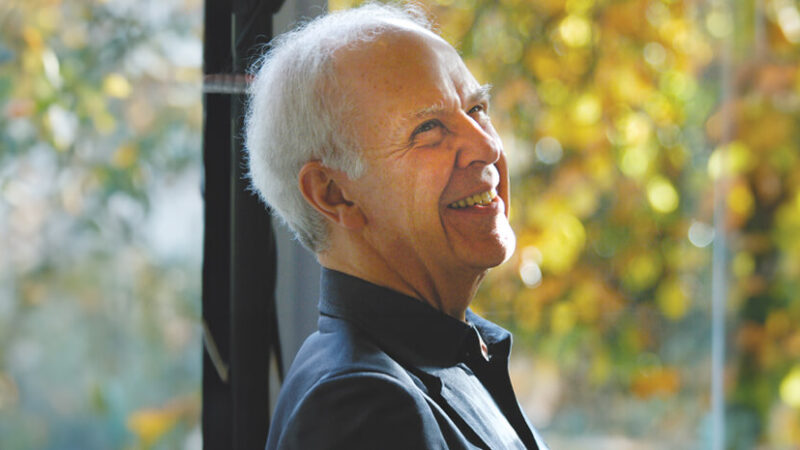
Parker J. Palmer

Photo of ()\

Parker J. Palmer is a writer, speaker and activist, as well as founder and senior partner of the Center for Courage & Renewal. His wisdom has reached millions worldwide through his eight books, including Healing the Heart of Democracy, A Hidden Wholeness, Let Your Life Speak, The Courage to Teach, The Active Life, To Know as We Are Known, The Company of Strangers and The Promise of Paradox. He holds a Ph.D. in sociology from the University of California at Berkeley, along with ten honorary doctorates, two Distinguished Achievement Awards from the National Educational Press Association, an Award of Excellence from the Associated Church Press, and major grants from the Danforth Foundation, the Lilly Endowment, and the Fetzer Institute. In 2011, Palmer was named an Utne Reader Visionary, one of “25 people who are changing your world.” To learn more, visit www.CourageRenewal.org.

Author photo © Dan Kowalski Rollingbay Works

Also By Author

Parker Palmer: Welcome to the Human Race

Why is depression so hard for us to bring out into the open? Why does it stir up so much shame and fear? How can we shift our view of depression from a problem that needs to be fixed to a gateway to empathy, courage, wholeness, and belonging? These are the profound questions explored by Tami Simon and Parker Palmer in this incisive, insightful podcast. 

Join Tami and Parker as they discuss: Being present for those in depression; suffering and empathy; courage and resilience; integrating (rather than disowning) experiences of depression; showing up in the world as who you really are; the vast intelligence of life—and the weaving of shadow and light; embracing paradox; Parker’s metaphor of “living at altitude” (or the level of ego) vs. living from one’s soul; depression as a befriending, grounding energy; how Abraham Lincoln’s depression served as a force of reconciliation for a nation at war with itself; learning to be “hallowed by our diminishments”; and more.

Welcome to the Human Race

Parker J. Palmer is a writer, speaker, and activist who is world-renowned for his many insightful books, including Let Your Life Speak and Healing the Heart of Democracy. With Sounds True, he has most recently contributed to the anthology Darkness Before Dawn: Redefining the Journey Through Depression. In this episode of Insights at the Edge, Tami Simon and Parker discuss his own passages through clinical depression and the meaning he derived from them. They also speak on the modern cultural taboo surrounding depression, and how depression is actually an innate part of the life journey. Finally, Parker and Tami talk about how depression can act as “a befriending force pushing you down onto safe ground”—an agent that can help course-correct a life lived “at altitude.” (86 minutes)

Parker Palmer: Living the Undivided Life

Tami Simon speaks with Parker J. Palmer, author of the bestseller The Courage to Teach and Let Your Life Speak: Listening for the Voice of Vocation, as well as being the founder of  the Center for Courage and Renewal. They discuss Parker’s perspectives about what he calls “an undivided life: seeking wholeness in ourselves, our work, and our world.” (79 minutes)

You Might Also Enjoy

Richard Schwartz and Tamala Floyd: Healing Across Gene...

What if the anxiety, grief, or fear you’ve struggled with for years is a burden you inherited—not one you earned?

This week, Tami Simon speaks with Richard Schwartz—founder of Internal Family Systems and author of the bestselling No Bad Parts—and Tamala Floyd, psychotherapist, IFS lead trainer, and author of Listening: When Parts Speak: A Practical Guide to Healing with IFS Therapy and Ancestor Wisdom. Together, they explore how IFS and ancestral healing converge to help us release intergenerational trauma at its root.

Join Tami, Dick, and Tamala to explore:

  • What “legacy burdens” are in IFS—and how to recognize when what you’re carrying came from someone else
  • How personal, ethnic, and cultural legacy burdens operate differently—and why racism, historical trauma, and collective suffering require their own healing
  • The concept of the “well ancestor”: why every lineage has one, and how to invite them into your healing
  • Heirlooms vs. burdens: how our ancestral lines carry gifts as well as wounds—and how to receive them
  • Why legacy burdens are often easier to release than personal ones—and what fear most commonly gets in the way
  • Tamala’s guided ancestral meditation, offered live: a practice for releasing what no longer serves you
  • What we offer future generations simply by doing our own inner work

The episode includes a full guided meditation led by Tamala Floyd—drawn directly from her ancestors—that listeners can return to again and again.

Listen now and begin your own healing across generations. →

This conversation offers genuine transmission—not just concepts about awakening, but the palpable presence of realized teachers exploring the growing edge of spiritual understanding together. Originally aired on Sounds True One.

Tian Dayton: If You Grew Up with Addicts, Healing Is a...

Trauma doesn’t show up in what we remember. It shows up in how we react.

This week, Tami Simon speaks with Dr. Tian Dayton—award-winning scholar, senior fellow at The Meadows, and author of Growing Up with Addiction: How Adult Children of Addicts Can Heal Family Trauma, Complex PTSD and Codependency—about what it means to grow up inside a family shaped by addiction, and what it actually takes to heal.

Drawing on decades of clinical work, her own lived experience, and her innovative Relational Trauma Repair (RTR) method, Dr. Dayton explores the neuroscience of relational trauma and the embodied, experiential path through it.

Join Tami and Tian to explore:

  • Why addiction is a family disease—and how process addictions like workaholism and overeating leave the same marks as substance use
  • How childhood trauma gets stored in the body, not the story—and why you can’t think your way out of complex PTSD
  • The neuroscience of overreaction: why triggers feel present-tense even when they’re decades old
  • Cognitive and somatic distortions—and how to recognize when the past is hijacking the present
  • Psychodrama and Relational Trauma Repair: the power of talking to instead of about
  • Timelines, social atoms, and letter writing as tools for putting fragmented memories back in order
  • Why healing is a discipline—and what it means to take ownership of your own darkness as a path to freedom

Whether you grew up in a home shaped by addiction or simply recognize the patterns Dr. Dayton describes, this interview offers both a map and the courage to begin the journey.

Listen now and start where you are. 

This conversation offers genuine transmission—not just concepts about awakening, but the palpable presence of realized teachers exploring the growing edge of spiritual understanding together. Originally aired on Sounds True One.

Brené Brown on Vulnerability: Why It’s Your Gre...

Vulnerability is often misunderstood. Many of us were taught to associate it with weakness, as if showing emotion or uncertainty somehow discredits our strength. But the truth is, some of our most meaningful human experiences, love, trust, connection, and creativity can’t exist without it. Vulnerability isn’t a flaw to fix. It’s the starting place for everything that gives life depth.

At Sounds True, we’ve spent decades creating teachings that support emotional wellness, spiritual depth, and authentic living. Our programs are rooted in the belief that transformation happens when we meet life as it is, with honesty and heart. We’re proud to collaborate with voices like Brené Brown, whose work opens the door to wholehearted conversations about what it means to be human.

In this piece, we’ll discuss Brené Brown’s insights into vulnerability, why it’s not only necessary but also one of the greatest strengths we can bring to our lives and relationships.

Key Takeaways:

  • Vulnerability Is Courage: Choosing vulnerability means facing emotional risk, not weakness. It is the foundation of authentic strength.
  • Connection Needs Openness: True connection requires emotional honesty, not perfection or control. Vulnerability builds trust and belonging.
  • Daily Practice Matters: Small, intentional acts of honesty and self-compassion help make vulnerability a sustainable part of everyday life.

Discover The Power Of Daily Meditation

What Brené Brown Teaches Us About Vulnerability

For many of us, vulnerability feels like exposure to something to avoid, something unsafe. But Brené Brown offers a different lens. Through her research and teaching, she reveals that vulnerability is the birthplace of courage, creativity, belonging, and love. It’s not a flaw to be hidden. It’s the very fabric of human connection.

Rather than defining vulnerability as weakness, Brené invites us to see it as uncertainty, risk, and emotional openness. These aren’t liabilities. They are the core of what it means to show up fully in our lives. Whether it’s sharing a hard truth, asking for help, or allowing ourselves to be truly seen, she reminds us that vulnerability is the measure of real courage.

In her programs with Sounds True, including The Power of Vulnerability, Brené breaks down years of research into stories and insights that are as relatable as they are transformative. What emerges is a message that stays with you: vulnerability isn’t something we need to fix. It’s something we can honor.

Why Vulnerability Is A Sign of Strength, Not Weakness

Vulnerability often carries a false reputation. We’re taught to hide it, control it, or overcome it, but Brené Brown reminds us that the willingness to be vulnerable is not a weakness to correct, but a strength to live by. Here’s why it holds such power:

It Takes Strength To Show Up Without Certainty

There’s nothing easy about stepping into the unknown. Whether we’re starting something new, speaking our truth, or navigating conflict, we rarely have a guaranteed outcome. Choosing to show up anyway, that’s strength.

Authenticity Is Braver Than Perfectionism

Pretending to have it all together is a defense. Authenticity is a decision. It’s vulnerable to say “this is who I really am,” and that act of truth-telling builds resilience, not fragility.

Emotional Openness Builds Inner Resilience

Brené teaches that emotional exposure isn’t the opposite of strength. It’s the training ground for it. Each time we allow ourselves to feel, to share, or to ask for support, we build a deeper kind of courage.

Letting Go Of The Armor Creates Deeper Connection

When we drop the need to appear invulnerable, we invite others to do the same. This is where true connection begins. Vulnerability becomes the bridge, not just to others, but to ourselves.

The Courage To Be Vulnerable In Everyday Life

Vulnerability isn’t reserved for big life events or dramatic turning points. It lives in the everyday, in the small, honest moments where we choose to be real instead of safe. Brené Brown reminds us that courage doesn’t always roar. Sometimes, it simply sounds like telling the truth, setting a boundary, or asking for help. Here’s how it shows up in daily life:

Speaking Honestly, Even When It’s Uncomfortable

Whether it’s a difficult conversation with a partner or sharing feedback at work, honesty often comes with risk. Vulnerability means saying what’s true, even when it might not land perfectly. Trust that honesty creates space for growth.

Letting Others See The Real You

We all carry parts of ourselves we’d rather keep hidden. Choosing to share your true feelings, stories, or struggles takes courage. It opens the door to deeper connection and trust.

Asking For Support Without Shame

One of the most human things we can do is need each other. Still, many of us hesitate to ask for help, fearing judgment or rejection. Brené’s work encourages us to see asking not as weakness, but as brave, wholehearted living.

Saying No To What Doesn’t Feel Right

Boundaries are an act of vulnerability, too. They require clarity, honesty, and a willingness to disappoint others in order to stay aligned with ourselves. It’s not always easy. But it is courageous.

How Embracing Vulnerability Deepens Connection

At the heart of every meaningful relationship is one simple truth: connection requires openness. When we allow ourselves to be seen, truly seen, we create the conditions for intimacy, trust, and belonging. Brené Brown’s research points to vulnerability as the key ingredient in relationships that feel real, grounded, and lasting. Here’s why:

  • We Build Trust by Letting Others In: Trust isn’t built through perfection. It’s built in moments of mutual openness. When we’re honest about our fears, hopes, or boundaries, we give others permission to meet us with the same level of care and honesty.
  • Vulnerability Makes Empathy Possible: When someone shares a raw, human moment with us, we don’t respond with solutions. We respond with presence. That space for empathy can only exist when we stop hiding behind a polished version of ourselves.
  • Belonging Grows Where Masks Come Off:True belonging isn’t about fitting in. It’s about being accepted as you are. And that can only happen when we’re willing to show who we really are. Vulnerability invites that kind of acceptance.
  • Relationships Thrive on Emotional Honesty: Whether it’s with a partner, friend, colleague, or family member, emotional honesty strengthens the fabric of connection. It helps us repair misunderstandings, express needs clearly, and stay grounded in compassion.

Learn To Treat Yourself With The Care You Offer Others

The Role Of Self-Compassion In Vulnerability

Being vulnerable with others begins with how we relate to ourselves. Without self-compassion, vulnerability can feel unbearable. Like opening a door without any sense of safety on the other side. Brené Brown often highlights that we cannot offer ourselves to the world authentically if we’re busy beating ourselves up inside. Here’s how self-compassion supports the courage to be vulnerable:

Self-Kindness Softens The Fear Of Judgment

When we’re harsh with ourselves, we naturally fear that others will be, too. Practicing self-kindness allows us to face vulnerability without bracing for shame or criticism. It builds the internal safety to take emotional risks.

Awareness Without Harshness Builds Resilience

Self-compassion isn’t about ignoring our flaws. It’s about seeing ourselves clearly, but with warmth. This kind of mindful awareness strengthens us from the inside and helps us stay open even when things feel shaky.

Letting Go Of Perfectionism Starts With Self-Acceptance

We often armor up with perfectionism to avoid being seen as “not enough.” But the more we accept ourselves as we are, the less we need that armor. Self-compassion clears the way for more honest, human moments.

Our Inner Dialogue Shapes Our Outer Courage

What we say to ourselves matters. When our internal voice is critical, we shrink. When it’s gentle, we grow. Brené speaks to this often in The Power of Self-Compassion, inviting us to cultivate a relationship with ourselves that supports our vulnerability.

Bringing Vulnerability Into Your Own Practice

Vulnerability isn’t a one-time act. It’s a daily choice to live with openness, even when it’s uncomfortable. It shows up differently for everyone, but the practice begins the same way: with intention. Brené Brown encourages us to turn toward our lives with more presence, honesty, and willingness to be seen. Here are a few ways that might look:

  • Start by Noticing Where You Hold Back: Awareness is the first step. Pay attention to the places where you avoid speaking up, asking for help, or showing emotion. Those quiet pullbacks often signal moments when vulnerability seeks a voice.
  • Practice Small Acts of Emotional Honesty: You don’t have to make sweeping changes. Try sharing how you’re feeling with someone you trust, or saying no to something that doesn’t align with you. These small, everyday choices build your capacity for wholehearted living.
  • Let Vulnerability Be Part of Your Spiritual Life: In Rising Strong as a Spiritual Practice, Brené explores how spiritual growth and emotional honesty go hand in hand. Your inner work deepens when you stop trying to appear invulnerable and start showing up as you are.
  • Remember That Vulnerability Is a Process: This is a practice, not a performance. Some days you’ll feel brave. Other days, you might want to retreat. That’s okay. Keep coming back to the intention to live more openly, gently, and honestly.

Learn More Through Brené’s Courses

Brené Brown’s teachings offer more than insights. They offer tools for living. If you’re ready to explore vulnerability not just as an idea but as a lived experience, her digital courses with Sounds True are a meaningful place to begin. Each program is rooted in research and delivered with the honesty and heart that make her work so resonant.

In The Power of Vulnerability, you’ll hear six sessions of Brené’s most essential teachings, filled with stories and guidance that bring the research to life.

Courage and Vulnerability invites you to walk the path of openness with greater clarity and compassion, an experiential course that supports real change.

If you’re working on how you treat yourself while you open up to others, The Power of Self-Compassion can be a gentle but transformative companion.

And for those who want to go deeper spiritually, Rising Strong as a Spiritual Practice offers a grounded way to explore healing, courage, and emotional honesty from within.

Each course is an invitation. Not to be perfect, but to be present.

Insight Is The First Step Toward Transformation

Final Thoughts

Vulnerability isn’t about spilling everything or being unguarded with everyone. It’s about choosing to show up honestly, on purpose, and with heart. As Brené Brown reminds us, vulnerability is where our courage lives. It’s not the easy way. But it’s the real one.

Living this way doesn’t mean we won’t get hurt. It means we’re willing to be alive, to love, to try, and to keep going. And in that willingness, there is strength. Not loud or flashy, but steady, grounded, and deeply human.

At Sounds True, we hold space for that kind of living. Not perfect. But present. Not polished. But wholehearted.

Frequently Asked Questions About Brené Brown Vulnerability

What does Brené Brown say is the biggest myth about vulnerability?

She identifies the biggest myth as the idea that vulnerability equals weakness. Instead, she emphasizes that vulnerability is the most accurate measure of courage.

Is vulnerability always appropriate in every situation?

Brené notes that vulnerability involves boundaries. It’s not about oversharing or being emotionally unfiltered with everyone, but about being open with people who’ve earned your trust.

How does Brené Brown define vulnerability?

She defines it as uncertainty, risk, and emotional exposure, the willingness to show up and be seen even when there are no guarantees.

Does Brené Brown connect vulnerability with leadership?

Yes. She teaches that courageous leadership requires vulnerability. Leaders who embrace emotional honesty create environments where innovation and trust thrive.

What role does shame play in preventing vulnerability?

According to Brené, shame is a major barrier. It tells us we’re not worthy of connection, which keeps us silent and hidden. Naming and understanding shame helps us move through it.

Can vulnerability be practiced without talking about emotions?

Not really. Vulnerability often involves acknowledging emotions, even if they’re not discussed in detail. Emotional awareness is a part of wholehearted living.

How does vulnerability relate to creativity and innovation?

Brené explains that without vulnerability, there is no creativity. Trying something new always carries risk, and vulnerability is what allows us to take those creative leaps.

What practices help build vulnerability over time?

She recommends daily self-reflection, self-compassion, and building trust in small ways. These help develop the muscle to stay open over time.

Is vulnerability the same as transparency?

Not exactly. Transparency is sharing information. Vulnerability is about emotional risk. You can be transparent without being vulnerable, and vice versa.

Why does Brené Brown say vulnerability is essential to connection?

Because connection requires authenticity. Without vulnerability, relationships stay on the surface. Real connection happens when we let people see who we truly are.

Michelle Cassandra Johnson is an author, activist, spiritual teacher, racial equity consultant, and intuitive healer. She is the author of six books, including Skill in Action and Finding Refuge. Amy Burtaine is a leadership coach and racial equity trainer. With Robin DiAngelo, she is the coauthor of The Facilitator's Guide for White Affinity Groups. For more, visit https://www.michellecjohnson.com/wisdom-of-the-hive.

>