Customer Favorites

Why the Summer is Surprisingly Busy—And What To Do A...

Why Summer is Busy & What to Do About It, Charlie Gilkey, Sounds True


Many people find themselves surprisingly busier in the summer than they expect to be. The chief reason we’re surprised is that the summer brings new projects that we often don’t count as projects and we have to weave those projects in with the projects we set in motion in the spring.

Why don’t we count the new projects that summer brings? Simple—many of us don’t count “life” activities as projects or prioritize “life” activities in the same way we do “work” projects. There’s an artificial divide between the work we do and the “life stuff” we do.

But here’s the thing: regardless of whether something falls into the “work” or “life” bucket, it’s going to take time, energy, and attention to get done. My definition of project in Start Finishing is anything that requires time, energy, and attention to complete. The upshot of looking at things this way is that it helps us see more clearly all the stuff we’re carrying and trying to do.

So, what are some “life” projects?

Summer trips are projects.

Transitioning kids from being at school all day to being at home all day for the summer is a project. (As is transitioning them back into school.)

Figuring out how to keep said kids fed every day is a project (that then turns into a new daily routine).

Maintaining yard care equipment is a project (that then turns into a new weekly routine of taking care of the lawn.)

Cleaning out the garage is a project.

Getting the motorcycle and/or bike ready for the season is a project.

I could go on, but you get the point. All of those are summer-specific projects that fall in our laps after the spring. But when we’re setting plans in spring, we’re often not thinking about them because they’re not in our face in the same way as a kid asking where the milk is (where it always is!) or the weeds that are peeking over the window to the backyard.

If it were just that new projects blossom in the summer, it would be one thing. But conjoined with new projects blossoming is that many of us often want to work less in the summer—and, for some of us, the desire to slow down isn’t just emotional, but something primal or spiritual. The long, hot days of summer changes some of us from hard-driving, high-energy, can-do folk into a walking Jimmy Buffet song.

Though we find ourselves in this position every year, it can be hard to see the pattern. Part of it is just the pace of life, but the other part is that we too often think of ourselves as invariant robots rather than the animals we are. Every other animal adapts to the changing world around it—artificial lights and air conditioning may allow us to alter the environment, but the changes still affect us more than we like to let on.

If you’re finding your summer busier and more compressed than you’d like it to be, here are three questions that will help you sink into the season:

  1. What new or recurring seasonal projects emerged that you hadn’t planned for or didn’t fully acknowledge as a project?
  2. Which of the projects you planned in the spring can be put on hold or dropped to make space for this summer’s projects?
  3. Are there any shifts to project timelines or your daily work schedule that would help you keep momentum on your projects while sinking into feeling of summer?

You might also check out Samantha Brody’s Overcoming Overwhelm—it’s a fantastic book that explains how overwhelm shows up in our bodies, hearts, and heads and what to do about it.

Better to adjust now than spend the summer feeling like you’re behind and unable to enjoy the people, nature, and energy of the season.


Charlie Gilkey, Sounds True


Charlie Gilkey is the founder of Productive Flourishing, a company that helps professional creatives, leaders, and changemakers take meaningful action on work that matters. He is the author of The Small Business Life Cycle, and is widely cited in outlets such as Inc., Time, Forbes, the Guardian, Lifehacker,and more. He’s also an Army veteran and near-PhD in philosophy. He lives in Portland, Oregon. For more, visit productiveflourishing.com .


Start Finishing, Charlie Gilkey, Sounds True


Pre-order your copy of Charlie’s forthcoming book,

Start Finishing: How to Go from Idea to Done from your favorite retailer below!

Sounds True | Amazon | Barnes and Noble | IndieBound


Why Summer is Busy & What to Do About It, Charlie Gilkey, Sounds True

Pin It!

How to Breathe With Your Whole Body

Blog header - How to Breathe With Your Whole Body Sounds True blog

Spending time in the woods—or shinrin-yoku (“forest bathing”)—has been proven to significantly strengthen our immune system and increase our overall happiness. The forest air triggers our bloodstream to produce 40 percent more natural killer cells, which help fight harmful viruses, bacteria, and other illnesses. The tradition of forest bathing goes back a long time in Japan’s folk medicine, but it has its longest history in China and Taiwan and has been called senlinyu there for centuries.

Ancient knowledge about healing from nature is also found in traditional Chinese medicine. Numerous exercises from qigong are designed to “absorb the chi of nature” and are carried out mainly in forests or green areas with trees. Even the qigong masters of the past apparently knew that nature not only heals in the form of plant- and mineral-based pharmaceutical substances, but also by a person simply being present in a green space and breathing. In qigong, absorbing the chi of nature is always associated with breathing techniques.

Xiaoqiu Li, a two-time Chinese state champion in wushu (traditional Chinese martial arts), taught me the following exercise for “whole-body breathing.” This specific exercise helps you to take in the healthy forest air quite intensely and to release old air and harmful substances very consciously. You will especially feel the purifying effects of this exercise in your body if you are a smoker or live in a polluted city.

Look for a place in the woods that appeals to you and that has an even surface to stand on, and then follow these steps:

  1. Stand with your feet shoulder-width apart and as parallel to each other as possible, with your knees slightly bent and arms relaxed at your sides.
  2. “Open” your chest cavity by lifting your arms up in the air away from your body, in the form of a circle overhead, as if you were a tree revealing its mighty crown to the sky. Take a deep breath in while doing this, starting in your stomach and continuing to fill up your chest with air.
  3. When your arms meet over your head, guide them down in front of your body, holding them together and parallel to each other. Simultaneously begin to breathe out, making fists with your hands while squatting down.
  4. At the end of these movements, slowly press your elbows against your body at stomach level. This pressing of the elbows and curving of your body help your lungs to empty themselves entirely.
  5. Repeat these movements slowly and mindfully and try to make everything as smooth as possible.

Excerpted from The Biophilia Effect: A Scientific and Spiritual Exploration of the Healing Bond Between Humans and Nature by Clemens G. Arvay.

Clemens Arvay - The Whole-Body Breathing Exercise Sounds True BlogBorn in 1980, Clemens G. Arvay is an Austrian engineer and biologist. He studied landscape ecology (BSc) at Graz University and applied plant sciences (MSc) at the University of Natural Resources and Life Sciences in Vienna. Arvay examines the relationship between humans and nature, focusing on the health-promoting effects of contact with plants, animals, and landscapes. He also addresses a second range of topics that includes ecologically produced food along with the economics of large food conglomerates. Clemens G. Arvay has written numerous books, including his bestseller The Biophilia Effect. For more, please visit clemensarvay.com.


Summer Super Sale - The Biophilia Effect

Buy your copy of The Biophilia Effect at your favorite bookseller!

Sounds True | Amazon | Barnes & Noble | Indiebound


Pinterest - The Whole-Body Breathing Exercise Sounds True Blog

Aaravindha Himadra: Recognizing the Field of Infinite ...

Aaravindha Himadra is a spiritual teacher and the founder of Sambodha, an international nonprofit organization dedicated to the awakening of human consciousness. With Sounds True, he has published the English-language edition of Immortal Self: A Journey to the Himalayan Valley of the Amartya Masters. In this episode of Insights at the Edge, Tami Simon speaks with Aaravindha about the events described in Immortal Self—after a grueling expedition into the interior of the Himalayan Mountains, Aaravindha found himself in the secluded valley home of a deeply secretive spiritual lineage. Aaravindha describes his tutelage under the valley’s long-lived Amartya monks and why he has become the spokesperson for this ancient wisdom tradition. Concluding this fascinating conversation, Tami and Aaravindha discuss the expansion of consciousness and what it means to “listen from the floor of creation.” (73 minutes)

Meet a Coauthor of . . . Freedom for All of Us

The Author

Alexandre Jollien is a philosopher and writer who spent 17 years in a home for the physically disabled. His books include In Praise of Weakness. He lives in Switzerland. For more, visit alexandre-jollien.ch.

Freedom for All of Us Cover

The Book

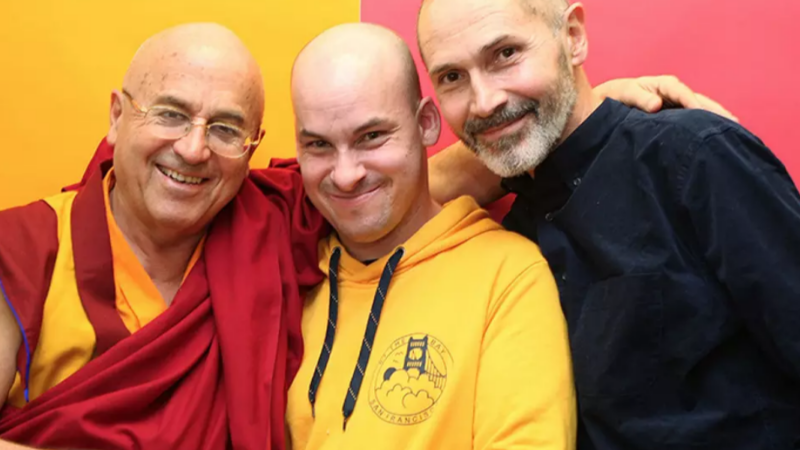
With their acclaimed book In Search of Wisdom, three gifted friends—a monk, a philosopher, and a psychiatrist—shed light on our universal quest for meaning, purpose, and understanding. Now, in this new in-depth offering, they invite us to tend to the garden of our true nature: freedom.

Filled with unexpected insights and specific strategies, Freedom for All of Us presents an inspiring guide for breaking free of the unconscious walls that confine us.


Translated from the original responses in French.

What is one unexpected thing or habit that inspires your writing practice? Is there a

playlist or album you listen to?

Sils Maria

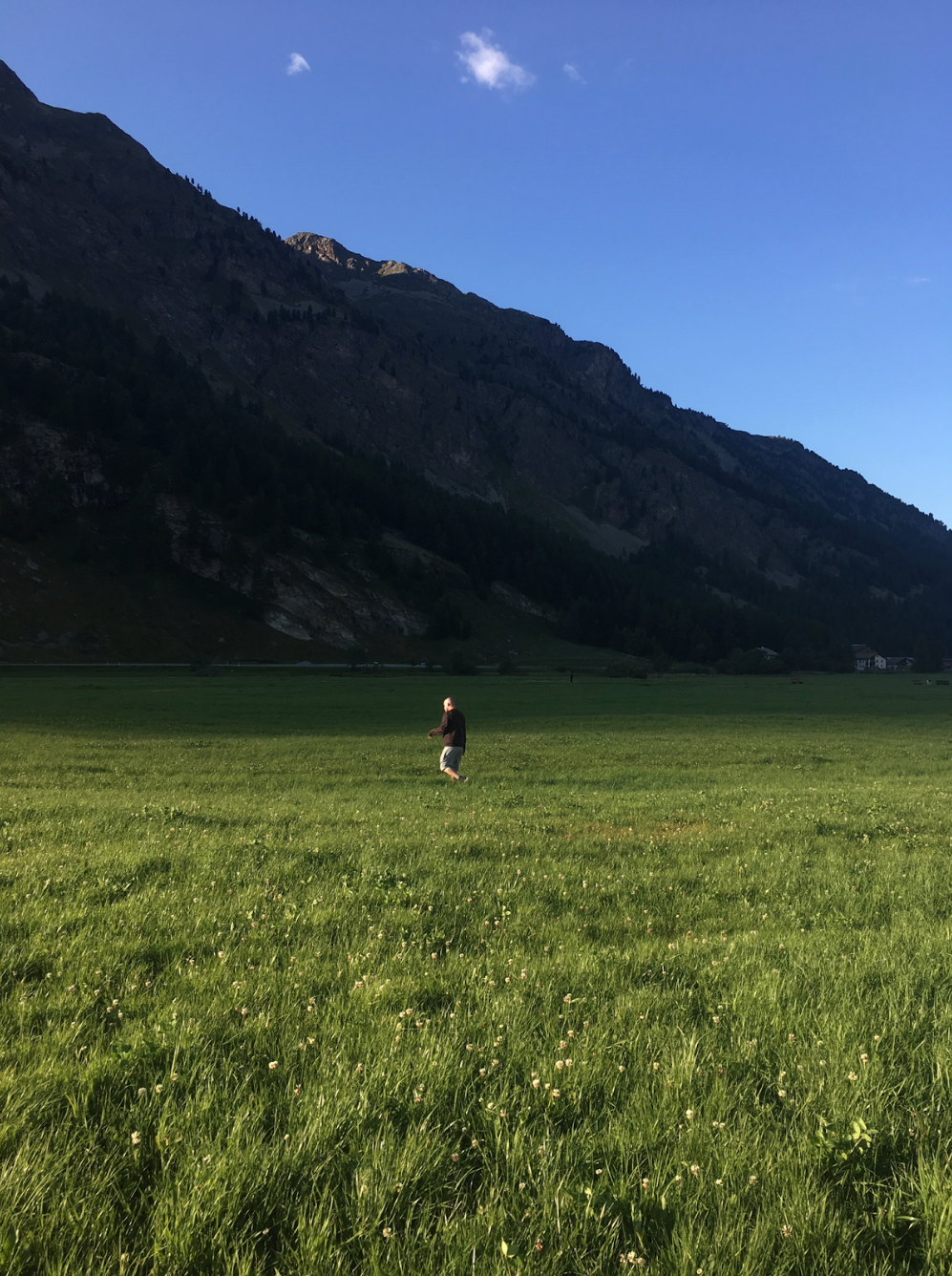
Meditation really opens me up to write. Walking too. Above is a photo of me walking in Sils Maria, Switzerland, where Friedrich Nietzsche lived at one time. However, in my eyes, writing is never systematic [or methodical]. It’s not a [mere] technique. A writer has to render themself available to messages that come—in some sense—from beyond. Conversations with friends, explorations into the mundane, family life, the readings of the great thinkers, the practice of Zazen … all these things feed my desire to pick up my pen again. I write, or rather I dictate my writings, in silence. However, sometimes I do enjoy techno music, which keeps me going and wards off anything that could poison an idea I have; “the sad passions” as the philosopher, Baruch Spinoza, called them.

Send us a photo of you and your pet (and let us know if your pet had any role in helping you write your book)!

Grisette

We have a little hamster at home, Grisette, who is our children’s little darling. For me, he embodies peace and a certain serenity. When I look at him, I see a being that isn’t deep in denial and agitated. [Although] sometimes, when he frolics on his hamster wheel, I have the impression that he’s reminding me that my mind, too, can often run in [unnecessary] circles …


If there is a book that started your spiritual journey, what was it? How old were you, and

how did you discover it? How would you describe its impact?

When I was a child, I didn’t enjoy reading and I thought that wisdom was reserved for the elite. I considered culture to be so far removed from everyday problems that I avoided it completely. One day, I accompanied a friend into a bookstore. While I was waiting for her, I flipped through pages from books by Plato and Aristotle. The book [that made an impact] was L’étonnement philosophique [“Philosophic Wonder”] by Jeanne Hersch, which traces the history of Western thought. In my adolescence, that book gave me a great foundation, a benchmark, a marker, a starting point. It’s an admirable book. Afterwards, I really fell into reading the greats, like Plato, Spinoza, Nietzsche, Epictetus, all of which still inspire me today. I was 14 years old then, and reading had changed my life.

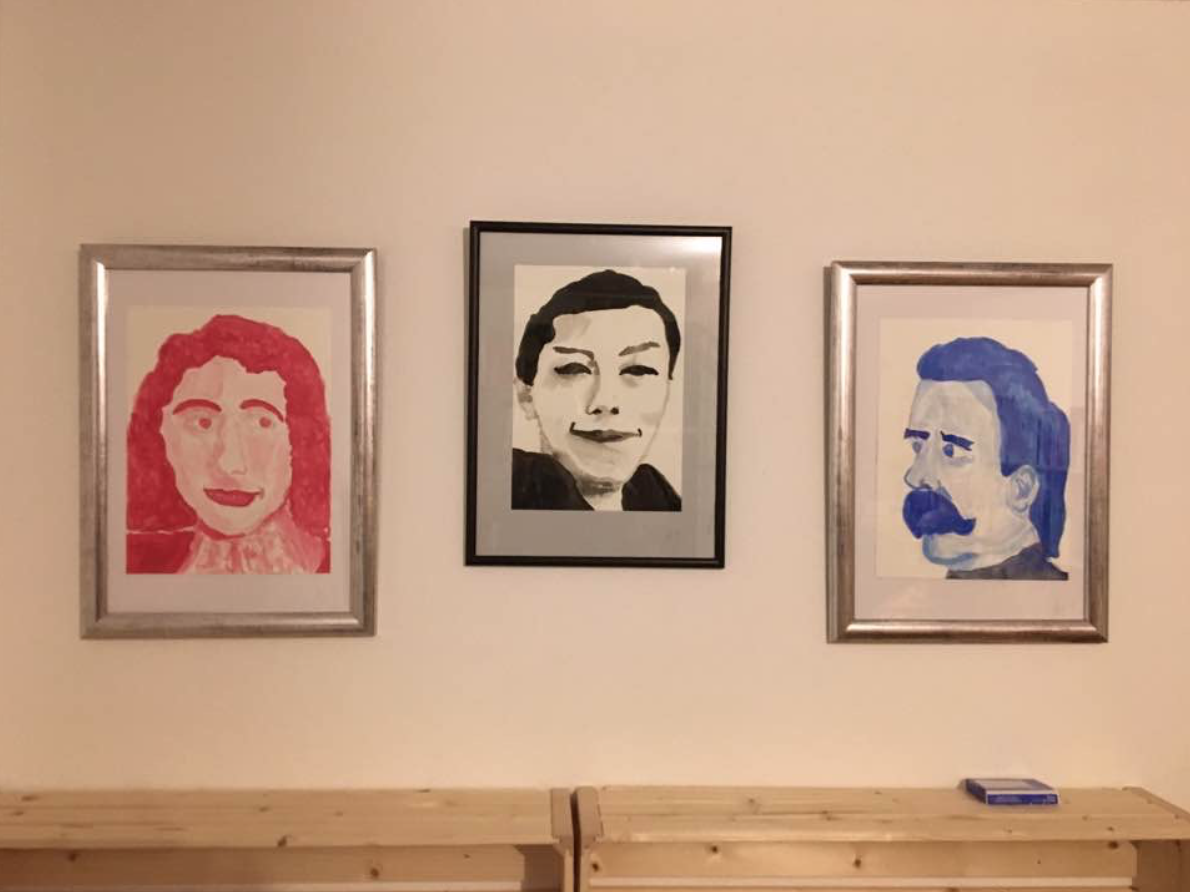
Below are portraits [of some of my favorite philosophers and spiritual teachers] painted by my son, Augustin.

portraits


Learn More

Sounds True | Amazon | Barnes & Noble | Bookshop | IndieBound


Mara Glatzel: What Do You Need?

We all have needs. Yet why is it so difficult to honor them? In this podcast, Tami Simon speaks with Mara Glatzel about her book, Needy: How to Advocate for Your Needs and Claim Your Sovereignty, and how we might begin to answer the profound question: What happens when we take radical responsibility for our needs? 

Tune in for an empowering and indeed much-needed conversation about “giving ourselves permission to take up space in the center of our lives,” exploring: building a working vocabulary around needs and feelings, the disempowering stories we carry about what it means to have needs, the daily practice of identifying your needs, the harmful habit of consistently putting your needs aside, asking for the fullness of what you want, developing a strong self-partnership, shifting from people-pleasing to setting boundaries, Mara’s practice of “staying low and open and receptive,” self-care and “staying in the game,” making commitments that matter, knowing your job and their job when it comes to conversations about needs, the fallacy that one person alone can meet another’s vast and myriad needs, accessing your body’s intelligence, working in your inner landscape, sovereignty amid relationship and interdependency, the challenge of receiving everything you’re asking for, and more.

Note: This episode originally aired on Sounds True One, where these special episodes of Insights at the Edge are available to watch live on video and with exclusive access to Q&As with our guests. Learn more at join.soundstrue.com.

A.H. Almaas: The Power of Divine Eros

A.H. Almaas—renowned as the creator of the “Diamond Approach” for spiritual and psychological inquiry—has published more than a dozen books on seeking wisdom and the true nature of reality. Most recently, he and his teaching partner Karen Johnson have released The Power of Divine Eros, which explores the pure energy behind physical desire. In this episode, Almaas is joined by Karen for a fascinating discussion with Tami Simon about how to fully connect with one’s desires. The three also talk about working with the body’s energetic centers as part of spiritual inquiry. Finally, they spoke about divine union and what it means to be a “sexy angel.” (69 minutes)