Tami Simon speaks with Robert Peng, an internationally renowned qigong master capable of generating healing energy through his hands with power equal to a potent electrical charge. Robert has helped countless people regain their optimum health and vitality and will be a featured teacher at Sounds True’s annual Wake Up Festival this August. He is the author of four upcoming Sounds True releases, including The Qigong Master Video Series and the book The Master Key. In this interview, Tami and Robert speak about qigong healing, “breathing like an immortal,” and Robert’s early experiences with his legendary qigong master Xiao Yao. Robert also offers a short practice for nourishing qi. (64 minutes)
See Robert Peng live in August 2013. Visit WakeUpFestival.com for more information.
Busyness, distraction, and stress have all led to the shrinking of the modern mind.
I realize that’s a strange thing to say. Most of us don’t think of our mind as something with space in it, as a thing that can either be big or small, expensive or claustrophobic.
But just think about the last time you felt overwhelmed, stressed, or out of control. Chances are, you might not even have to think that hard. You might be experiencing that state right now as you read these words.
What happens in these moments?
First, our mind wanders. It spins through all sorts of random thoughts about the past and the future. As a result, we lose touch with the direct experience of present time.
Second, we lose perspective. We can’t see the big picture anymore. Instead, it’s like we’re viewing life through a long and narrow tunnel. We become blind to possibility, fixated on problems.
Put these two together and you’ve got the perfect recipe for eradicating space in the mind. The landscape of the mind begins to feel like a calendar jammed with so many meetings, events, and obligations that these neon colored boxes cover-up even the smallest slivers of white space.
So it could be nice for our partner, for our kids, and, mostly, for our ourselves to consider: how can we create more space in the mind?
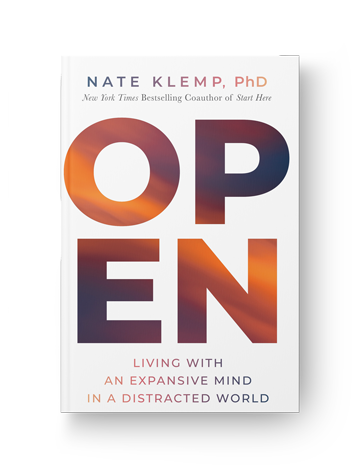
Here are five tools for creating mental space. If you want to go deeper, check out my new book with Sounds True on the topic called OPEN: Living With an Expansive Mind in a Distracted World.
1. Meditation.
You’ve no doubt heard about all of the scientifically validated benefits of this practice. It reduces stress. It boosts productivity. It enhances focus.
That is all true. But here is the real benefit of meditation: it creates more space in the mind. To get started, try it out for just a few minutes a day. Use an app or guided practice to help you.
2. Movement.
So, maybe you’re not the meditating type. That’s fine. You can still create space in the mind by setting aside time for undistracted movement.
The key word here is “undistracted.” For many of us, exercise and movement have become yet another time where our headspace gets covered over by texts, podcasts, or our favorite Netflix series.
There’s nothing wrong with this. But it can be powerful to leave the earbuds behind every once in a while and allow the mind to rest while you walk, stretch, run, bike, swim, or practice yoga.
3. Relax.
When it comes to creating headspace, we moderns, with our smartphone-flooded, overly-stimulated, minds seem to inevitably encounter a problem: we’re often too stressed, amped, and agitated to open.
Relaxation – calming the nervous system – is perhaps the best way to counter this effect and create more fertile ground for opening. When we relax – the real kind, not the Netflix or TikTok kind – the grip of difficult emotions loosens, the speed of our whirling thoughts slows, and, most important, the sense of space in our mind begins to expand.
How can you relax? Try yoga. Try extended exhale breathing, where you inhale four counts, exhale eight counts. Try yoga nidra. Or, just treat yourself to a nap.
4. See bigger.
When life gets crazy, the mind isn’t the only thing that shrinks. The size of our visual field also gets smaller. Our eyes strain. Our peripheral vision falls out of awareness.
What’s the antidote to this tunnel vision view? See bigger.
Try it right now. With a soft gaze, allow the edges of your visual field to slowly expand. Imagine you’re seeing whatever happens to be in front of you from the top of a vast mountain peak. Now bring this more expansive, panoramic, way of seeing with you for the rest of the day.
5. Do nothing.
Now for the most advanced practice. It’s advanced because it cuts against everything our culture believes in. In a world where everyone is trying desperately to get more done, one of the most radical acts is to not do — to do nothing.
Even just a few minutes of this paradoxical practice can help you experience an expansion of space in the mind.
Lie on the floor or outside on the grass. Close your eyes. Put on your favorite music if you want. Set an alarm for a few minutes so you don’t freak out too much.
Then, stop. Drop the technique. Drop the effort. Just allow yourself to savor this rare experience of doing absolutely nothing.
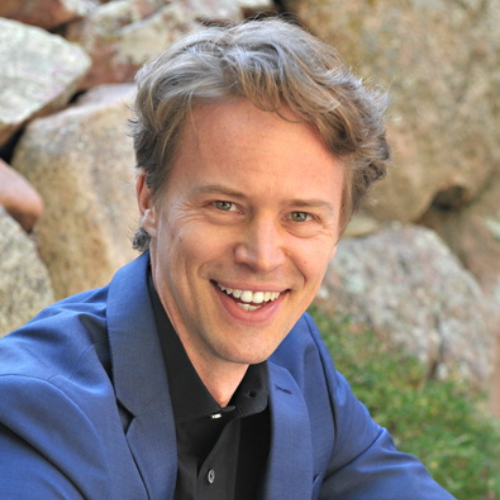
Nate Klemp, PhD, is a philosopher, writer, and mindfulness entrepreneur. He is the coauthor of the New York Times bestseller Start Here and the New York Times critics’ pick The 80/80 Marriage. His work has been featured in the LA Times, Psychology Today, the Times of London, and more, and his appearances include Good Morning America and Talks at Google. He’s a cofounder of LifeXT and founding partner at Mindful. For more, visit nateklemp.com or @Nate_Klemp on Instagram.
We suffer when reality fails to conform to what we want or gives us what we don’t want. Instead of trying to manipulate the external world, spirituality involves becoming conscious of our inner reactions, learning to relax through uncomfortable experiences, and allowing stored emotional pain to pass through rather than suppressing it. The realities of everyday life simply unfold according to natural laws, both physical and psychological, while the mind creates problems by insisting that life should be what we want based on our past experiences. Spiritual growth comes from becoming aware of the limiting effect of our preferences and gradually expanding them to include all of life so that love, joy, and inner freedom can naturally arise.
In the second half of their conversation about Your Brain on Love, Tami Simon and Stan Tatkin explore how two nervous systems get along in relationship and what it might look like to fight well in times of conflict. Discover how either party can wave a flag of friendliness during a fight, core skills and attitudes to get out of any argument in five minutes or less, and the importance of making connections we can count on no matter what. (68 minutes)
Jacqueline Suskin has composed over forty thousand poems with her ongoing improvisational writing project, Poem Store. She is the author of six books, including Help in the Dark Season. Her work has been featured in the New York Times, the Atlantic, and Yes! magazine. She lives in Northern California. For more, see jacquelinesuskin.com.
The Book
How do we deal with the heaviness of everyday living? When we are surrounded by uncertainty, distrust, and destruction, how do we sift through the chaos and enjoy being alive?
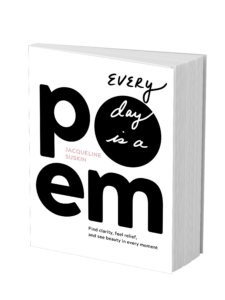
In Every Day Is a Poem, Jacqueline Suskin aims to answer these questions by using poetry as a tool for finding clarity and feeling relief. With provocative questions, writing practices, and mindset exercises, this celebrated poet shows you how to focus your senses, cultivate curiosity, and create your own document of the world’s beauty. Emphasizing that the personal is inextricable from the creative, Suskin offers specific instructions on how to make a map of your past and engage with your pain to write a healing poem.
Show us a day in your life.
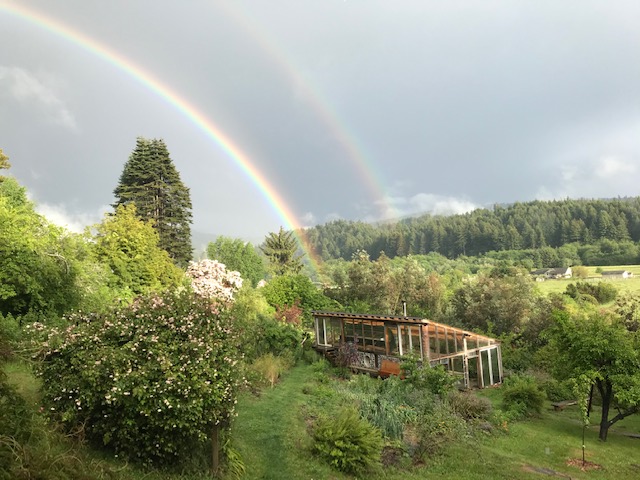
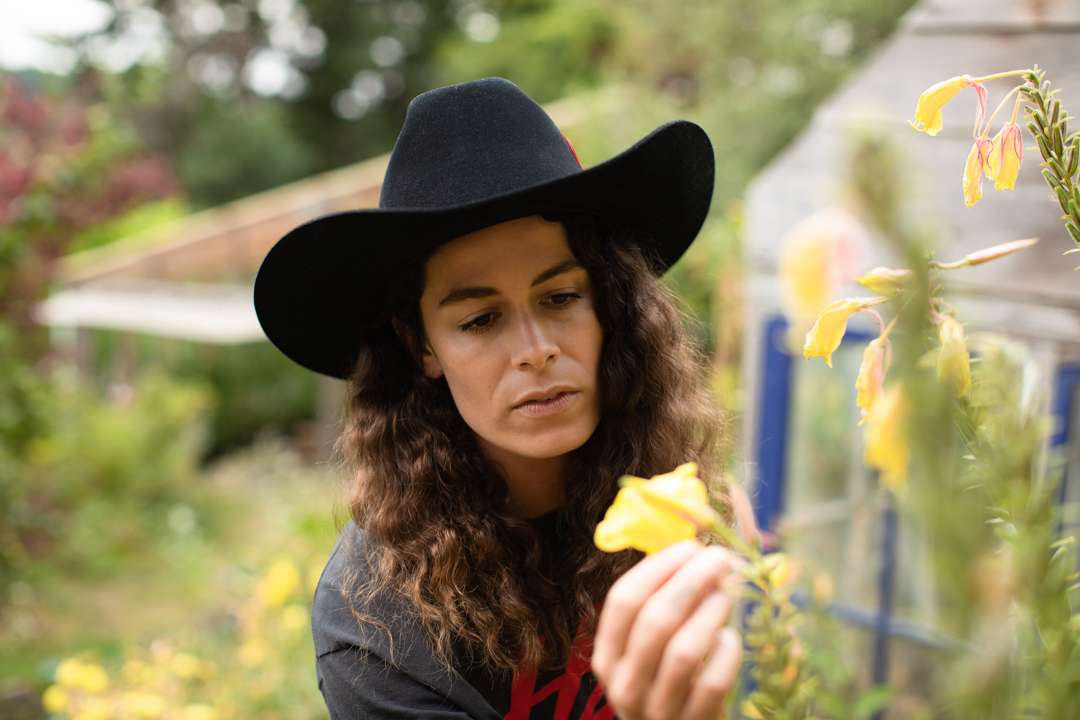
I’m currently the Artist in Residence at Folklife Farm, where I spend my days writing, reading, teaching online and working in the garden.
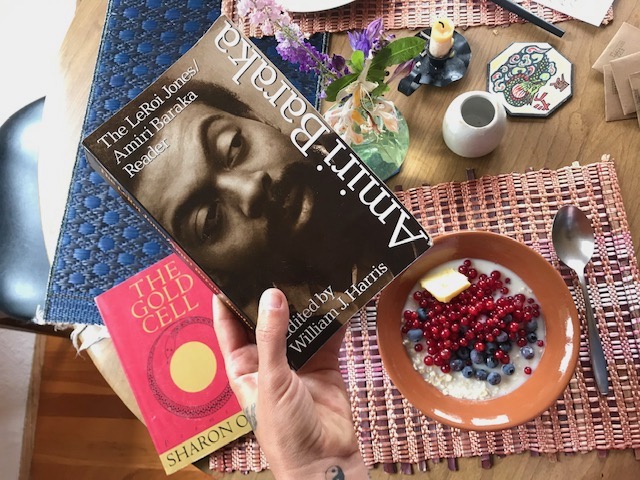
I wake up and take care of my body, dance, stretch, and harvest something for breakfast.
Then I usually work at my desk until late afternoon when I find my way back to the garden for more harvesting and chores.
When I’m working on a book, I’ll wake up around 4 am to write before anyone else is awake. I know that whenever I wake up in the dark with an idea, it’s my job as a poet to turn the light on and write it down.
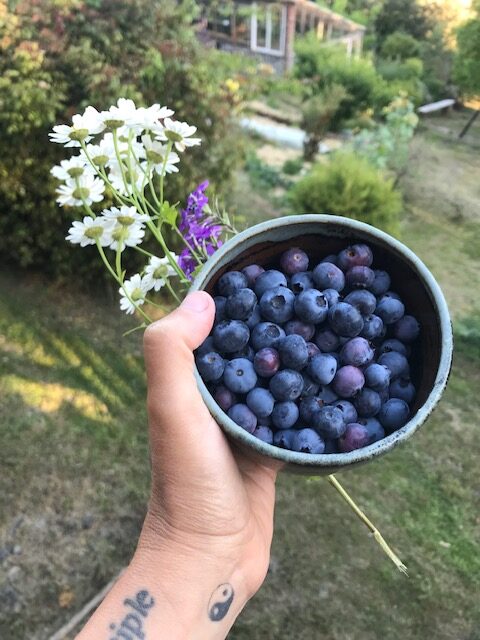
With this schedule, my days are fluid; and although I make showing up at my desk a main priority, I never forget that it’s summer and there are rivers to swim in, flowers to smell, and berries to pick.
Are you learning any new tricks or skills during this time (COVID)? What’s been hardest for you? What do you miss the most? Has your book taken on a new meaning in the world’s current circumstances? Is there anything you would have included in your book if you were writing it now?
During quarantine, I had to shut down the retreat program I was running at Folk Llife Farm. This was a sad shift, as we had folks signed up to stay for months in advance. Now that I’m not spending my time hosting or interacting with my local community in person, I’m engaging with my online community in a larger capacity. I miss sitting in front of my audience, writing for people after looking them in the eye, and I really miss browsing bookstores. I miss hugging my friends, having teatime and long conversations, and I miss going on tour. But I can’t complain. Poetry has its place in the world now more than ever. I’m here to translate the communal mood, to voice our collective pain, and find the beauty in all of it. My book will help others do this as well. And if there’s one thing COVID has taught me, it’s that we all need an outlet for our emotions, especially when we feel unseen and disconnected. Poetry is this outlet and we can still share it even if we can’t be with one another in person.
What is something about you that doesn’t make it into your author bio?
I’m an ecstatic earth worshiper. Everything I do, every word I write, is attached to the idea that when my readers discover healing through my words, when they transform and become better by way of my work, they’ll in turn treat themselves, each other, and the earth better. This planet is a perfect gift and humans have ruined so much of it. Through my efforts as a poet, I hope to pay tribute to the earth and offer up ways for humans to change their relationship to our one and only home.
Human communication, even on a good day, is really terrible. It really is. We misunderstand each other much of the time.
Do you really know whether your partner understands what you are saying? Does your partner get the nuances or understand the purpose of the words you are using? Do you think they know exactly how you feel about your words or the meaning of the words? When you’re listening to someone, do you think you really understand them? Do you understand their mind? Their context? More often than not, you are approximating each other. You’re getting close.
Most of our communication is implicit, nonverbal. Our verbal communication, which we all love and adore and depend on, is really the culprit. It gets us into a lot of trouble.
When you were dating, I’m sure you were much more careful about the words you used. How careful are you now? Many couples grow sloppy with each other in terms of their verbal communication. They take shortcuts because they think they know each other.
You’re probably taking a lot of shortcuts, assuming your partner understands the meaning of your words, and you’re getting into trouble. Do you even have each other’s attention when you are communicating? Many times, you don’t. You both are busy, you are moving, and your lives are only getting busier. And then you find yourselves saying, as many couples do, “Oh, it’s my partner’s problem. They’re not listening.” Right?
When it comes to communication, you both must take responsibility for making sure that your speech is clear and understood by the other person. As you will read in this section, just because you say something, doesn’t mean your partner is translating it as you intend.
Here’s an example:
Partner A: I want more intimacy in our relationship.
Partner B: I want that, too!
The problem here is that to Partner A intimacy means “more sex.” Partner B, on the other hand, thinks that agreeing to intimacy will mean more interpersonal talk. What is more is that sex actually means “only intercourse,” and interpersonal talk specifically means “more questions about how I’m doing.” That is how we talk to each other—as if the other person knows exactly what we mean. Much of the time, we don’t even know exactly what we mean.
Remember the good old days (of course you don’t) when speech was simpler? We would just say, “Duck!” or “Eat!” or “Sleep!” or “Run!” or “Lion!” Fast forward to today’s linguistic complexities and consider for a moment all the nuances in our talk, all the lingo, all the changing meanings for regular words. Take the word sick, for example. Today it could mean physically ill, mentally ill, disgusting, or amazing. And the language couples use with each other can seem even more confusing. “I want to know you deeply” could mean many different things. “I want you to show me your soul” could make a person’s head spin. “I want you to say what you really feel” can, for some, seem like a trick or an insurmountable task. We use a great many words and phrases that mean a great many things, none of which partners clarify with each other. This is a terrific error.
The human brain is always trying to conserve energy; it does as little as possible until it must. Most people, particularly partners, will treat clarification as unnecessary and, in fact, frustrating. “You should know what I mean,” a partner might say. “My meaning is obvious.” Or, “Everyone knows what that means.” Both speaker and listener feel persecuted by the chasm between meaning and understanding. Minds misattune, which leads to heightened arousal (faster heartbeat, higher blood pressure), which leads to threat perception, which leads to fight, flight, or freeze.
Rinse and repeat.
Check and Recheck This common and frankly annoying error is easily avoidable by returning to the formality likely present at the beginning of the relationship. Check in with simple, nonthreatening questions or requests:
“Are you saying . . . ?”
“I want your eyes because this is important . . .”
“Let me make sure I understand . . .”
“Say back what you heard . . .”
“Let me repeat that.”
“What do you think I meant by . . . ?”
“We may not be talking about the same thing. Are you saying . . . ?”
Checking and rechecking is vital to daily governance and the proper running of a two-person system. If you were two astronauts communicating out in space while tethered to the mothership, would you be incredibly careful with your communication? You bet you would. Your lives would be at stake. If you were two generals deciding a war plan, would you talk in shorthand or assume you were on the same page? If you did, people would die. You are no different. If you and your partner continue to use shoddy communication to share information, your relationship will suffer badly.
These errors, if repeated again and again, go right into your respective personal narratives about what’s wrong with the other partner and why you’re unhappy. Remember, our personal narratives form to protect our interests only and are almost always based on faulty data—like errors in communication!
Be orderly. Be precise. Be responsible. Be a two-person system.
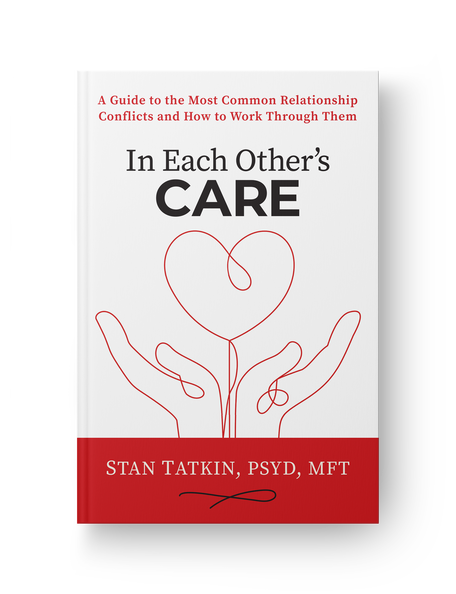
This excerpt is adapted from In Each Other’s Care: A Guide to the Most Common Relationship Conflicts and How to Work Through Them by Stan Taktin, PsyD, MFT.
Stan Tatkin, PsyD, MFT, is a clinician, researcher, teacher, and developer of A Psychobiological Approach to Couple Therapy® (PACT). He has a clinical practice in Calabasas, California, and with his wife, Dr. Tracey Tatkin, cofounded the PACT Institute for the purpose of training other psychotherapists to use this method in their clinical practices. For more information, visit thepactinstitute.com.