

Customer Favorites

Kintsugi: Filling in the Cracks of Your Life with Gold

Kintsuig Fill in the Cracks Blog Tomas Navarro Header Photo

The time has come to get started on the biggest work you will create in your life, the most important house you will ever own, the home of your soul. Let’s rebuild your life with strong materials of confidence, self-esteem, and courage. I want you to be a free and confident person, and to achieve that, we need to work hard.

Begin by getting to know yourself. You have no idea what you are like or what you are capable of achieving. During the most vulnerable years of your life, people made you believe that you weren’t capable, that you couldn’t do things, that you didn’t know how to, and that you were worthless. They ignored you, overlooked your achievements, and punished you, and all that has wreaked havoc on your self-image. Look for silence and try to reconnect with your essence. Discover yourself, and explore yourself. It’s no easy task, I know, but that’s no reason to avoid it. Observe yourself without judgment, and get to know yourself a little better each day, the same way you would with a new friend, car, or house.

Start analyzing. Stop being afraid, stop worrying, and stop running away without looking back. Forget about fear, stop reacting, and start analyzing. That is the key: to analyze instead of reacting. Life is a dynamic process, which is good news because you can grow, learn, change, and above all gain confidence.

Contextualize what happens to you without rushing in your appraisals. Now you are capable of identifying when you are carrying out partial appraisals based on fear or a negative self-image that do nothing but activate your alarm systems and generate anxiety for you. The first step toward gaining confidence is understanding, the second is detection, and the third is management. Engage in rational thinking to avoid the tunnel vision effect that a closed and imperceptive mind has tried to contaminate your soul with. Simplify reality, and eliminate the fear factor. I propose an exercise of imagination. Imagine you are at a meeting expounding your point of view on a project, and that suddenly your boss takes out a piece of paper and starts taking notes. You don’t actually know what they are writing, but if you feel afraid, you will believe they are taking notes on the things they didn’t like, when you don’t really know. Perhaps they loved it. Or perhaps they have simply remembered a task they still have to do. So when you don’t know something for sure, don’t rule out any of the options, either negative or positive. This, precisely, is what tunnel vision consists of.

You have many more virtues than the ones you imagine, and you are capable of many more things than you may believe.

Learn more about this powerful practice of healing trauma in Kintsugi: The Japanese Art of Embracing the Imperfect and Loving Your Flaws by Tomás Navarro.

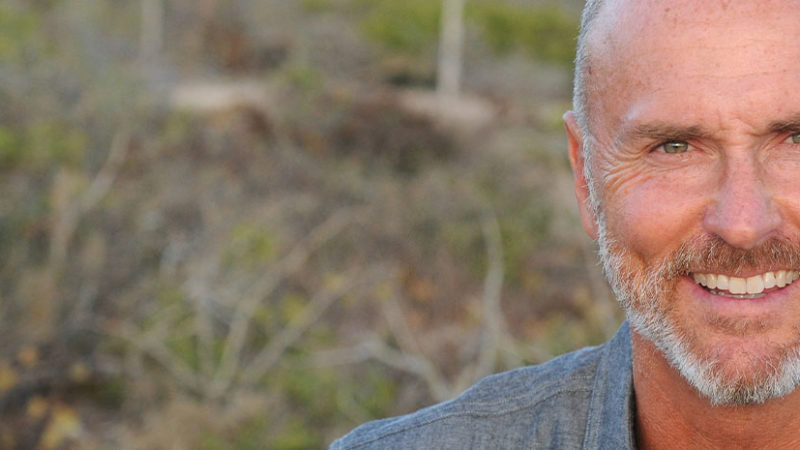
Tomás Navarro HeadshotKintsugi Book CoverTomás Navarro is a psychologist who loves people and what they feel, think, and do. He is the founder of a consultancy practice and center for emotional well-being. He currently splits his time between technical writing, training, consultancy, conferences and advisory processes, and personal and professional coaching. He lives in Gerona and Barcelona, Spain.

Read Kintsugi today!

Sounds True | Amazon | Barnes&Noble | IndieBound

Chip Conley: A Modern Elder at Work

Chip Conley is an entrepreneur and the New York Times bestselling author of Peak and Wisdom at Work. He will present during Sounds True’s upcoming Inner MBA program, a nine-month training program for bringing your full, authentic self to your workplace and career. In this episode of Insights at the Edge, Tami Simon speaks with Chip about socially responsible entrepreneurship and the movement toward making workplaces into spiritually fulfilling spaces. They talk about the modern business obsession with short-term profit and why this attitude does damage to both our culture and environment. Chip and Tami also consider what it is to pursue meaning rather than profit, as well as how to create “collective effervescence” within a work culture. Finally, Chip explains his lifelong habit of journaling each week’s accomplishments and tells the story of the biggest risk he’s ever taken.  (73 minutes)

Helen Riess: Seven Keys to Increase Empathy

Dr. Helen Riess is an associate clinical professor of psychiatry at Harvard Medical School and the director of the Empathy and Relational Science Program at Massachusetts General Hospital. With Sounds True, she has published The Empathy Effect: Seven Neuroscience-Based Keys for Transforming the Way We Live, Love, Work, and Connect Across Differences. In this episode of Insights at the Edge, Tami Simon speaks with Helen about the development of the E.M.P.A.T.H.Y. program—a method for teaching and promoting empathy that draws on neuroscience and physiology. They talk about how Helen became interested in the science of empathy and why recent research into the subject has yielded such positive results. Helen walks listeners through each step of the E.M.P.A.T.H.Y. process, highlighting the benefits of more actively attending to every social interaction. Finally, Helen and Tami discuss the active training of empathy in education, business, and the medical community, emphasizing why these skills are necessary for the survival of human civilization. (64 minutes)

Tami’s Takeaway: A very simple technique that Dr. Helen Riess teaches for establishing empathic connection with people is to mentally note the eye color of the person when you first meet. This is a technique that she teaches to doctors and medical practitioners who are often moving quickly in a task-oriented way, not pausing to make genuine contact with the people they are serving. (Sound familiar, anyone?) My takeaway is to employ this technique in the office at Sounds True with the 130 people who work here. The early reports indicate that these experiments in noting eye color (even during hallway conversations and in meetings) have quickly created a sense of real connection—moments that I cherish.

Shamini Jain: The Missing Link Between Consciousness a...

Dr. Shamini Jain is a psychologist, scientist, and social entrepreneur who is also the founder and director of the Consciousness Healing Initiative (CHI). She will be a featured presenter on Sounds True’s upcoming Energy Healing Summit, where she will speak on “Biofield Science: How Consciousness Catalyzes Healing.” In this episode of Insights at the Edge, Tami Simon and Shamini speak on how biofields are the missing link in understanding how consciousness affects our health. They also discuss biofield-centric therapies such as Reiki and acupuncture, as well as the role of belief in healing. Finally, Shamini explains her vision for the future of biofield study and how it might be the component needed to bridge the spiritual with the scientific. (65 minutes)

Michael Carroll: Mindful Leadership

Michael Carroll is the COO of Global Coaching Alliance, a former executive, and a certified meditation teacher of the Tibetan Buddhist tradition. A globally recognized expert on mindfulness in the workplace, Michael has written many books including The Mindful Leader and Fearless at Work. With Sounds True, he has created the audio series The Mindful Leadership Training. In this episode of Insights at the Edge, Michael and Tami Simon speak on using mindfulness to foster a better workplace environment—one that values openness, generosity, and fearlessness. They discuss the challenges inherent in this transformation both from the perspective of business leaders and the entirety of an organization. Finally, Michael describes an example of a mindful leader and the qualities of confidence and vulnerability this person embodies.
(64 minutes)

Diane Poole Heller: Psychotherapy 2.0

Dr. Diane Poole Heller is an expert in the fields of adult attachment theory, trauma resolution, and integrative healing. In partnership with Sounds True, she will be hosting the Psychology 2.0 online summit—a 14-day series of presentations from some of the most innovative and engaging figures in contemporary psychotherapy. In this episode of Insights at the Edge, Diane and Tami Simon talk about attachment theory and how psychotherapists can work to create a secure holding environment for the healing of attachment-based wounds. They also speak on how Diane came to attachment theory and how it relates to her previous work with trauma resolution. Finally, Tami and Diane discuss the traumatic freeze response and how to deal with its paralyzing aftermath. (64 minutes)