Tami Simon speaks with Father Thomas Keating, a Trappist monk in the Cistercian Order who has served as abbot of Saint Joseph’s Abbey Monastery in Spencer, MA, for 20 years. He now resides at Saint Benedict’s Monastery in Snowmass, CO. He is the author 20 books, as well as the Sounds True audio-learning course The Contemplative Journey. Father Keating is one of the architects of the contemporary Centering Prayer movement. In the first of a two-part series, Father Keating discusses his personal monastic path, prayer, doubt, and how he has dealt with both little deaths and big deaths in his own life. (28 minutes)
In a confessional reflection on writing his new book, Becoming Gandhi, acclaimed journalist and bestselling author Perry Garfinkel says, “It was so difficult I almost gave up twice. I thought, ‘I can’t write this book. It’s too big a subject. Who am I to try to become Gandhi?’” Garfinkel persevered, and in this podcast Tami Simon speaks with him about what he discovered along the journey—and how practicing (not perfecting) six universal principles of the Mahatma can transform each one of us.
Tune in to this highly aspirational yet very down-to-earth conversation on the poignance of the human condition and the elixir of laughter; the Tao of Gandhi; satyagraha, an insistence on and holding firm to the truth; considering “how to Gandhi” a situation you’re faced with; the notion of “good enough”; nonviolence in thought, word, and deed; the connection between words and feelings, and the step-by-step process of personal transformation; simplicity; faith as the driver of our moral compass; celibacy and making love; Gandhi’s life as his message—and making peace with his imperfections; and more.
Tami Simon speaks with Will Johnson, the founder and director of the Institute for Embodied Training. For more than 30 years, Will has taught Buddhist meditation and practiced Rolfing, and has developed a unique blend of these two techniques for having a fully embodied meditation practice. He is the author of the books The Posture of Meditation and The Spiritual Practices of Rumi, and with Sounds True he has created the audio learning course Awakening the Body: The Path of Somatic Surrender. In this episode, Tami speaks with Will about how his work as a Rolfer has shaped his approach to meditation, how we can balance all of our perceptions to open ourselves to a complete experience of life, and how the Sufi practice of gazing can lead us to embodied awakening. (63 minutes)
High-functioning codependency? That’s not an oxymoron. For psychotherapist Terri Cole, a pattern emerged in her practice that led her to take a deeper look at what we traditionally define as codependent. With her new book, Too Much, Terri introduces high-functioning codependency (or HFC)—illuminating the key traits and behaviors associated with HFC, how it gets passed from generation to generation, and how we can finally break the cycle to reclaim our time, energy, and independence.
Join Sounds True founder Tami Simon in conversation with Terri Cole about: giving unsolicited advice; the habit of auto-accommodating; the FAQ “is this codependent, controlling, or caring?”; the compulsive nature of codependency; when efforts to help backfire; allowing others to experience the consequences of their actions; giving without resentment; how to know if you’re an HFC; taking a resentment inventory; the emotional drivers of HFC; the environmental factors that propagate codependency; self-awareness on the path of recovery; tolerating the discomfort of changing our behaviors; the connection between being easily defensive and HFC; letting go of defensiveness as an HFC; getting back to your “just right”; and more.
Note: This episode originally aired on Sounds True One, where these special episodes of Insights at the Edge are available to watch live on video and with exclusive access to Q&As with our guests. Learn more at join.soundstrue.com.
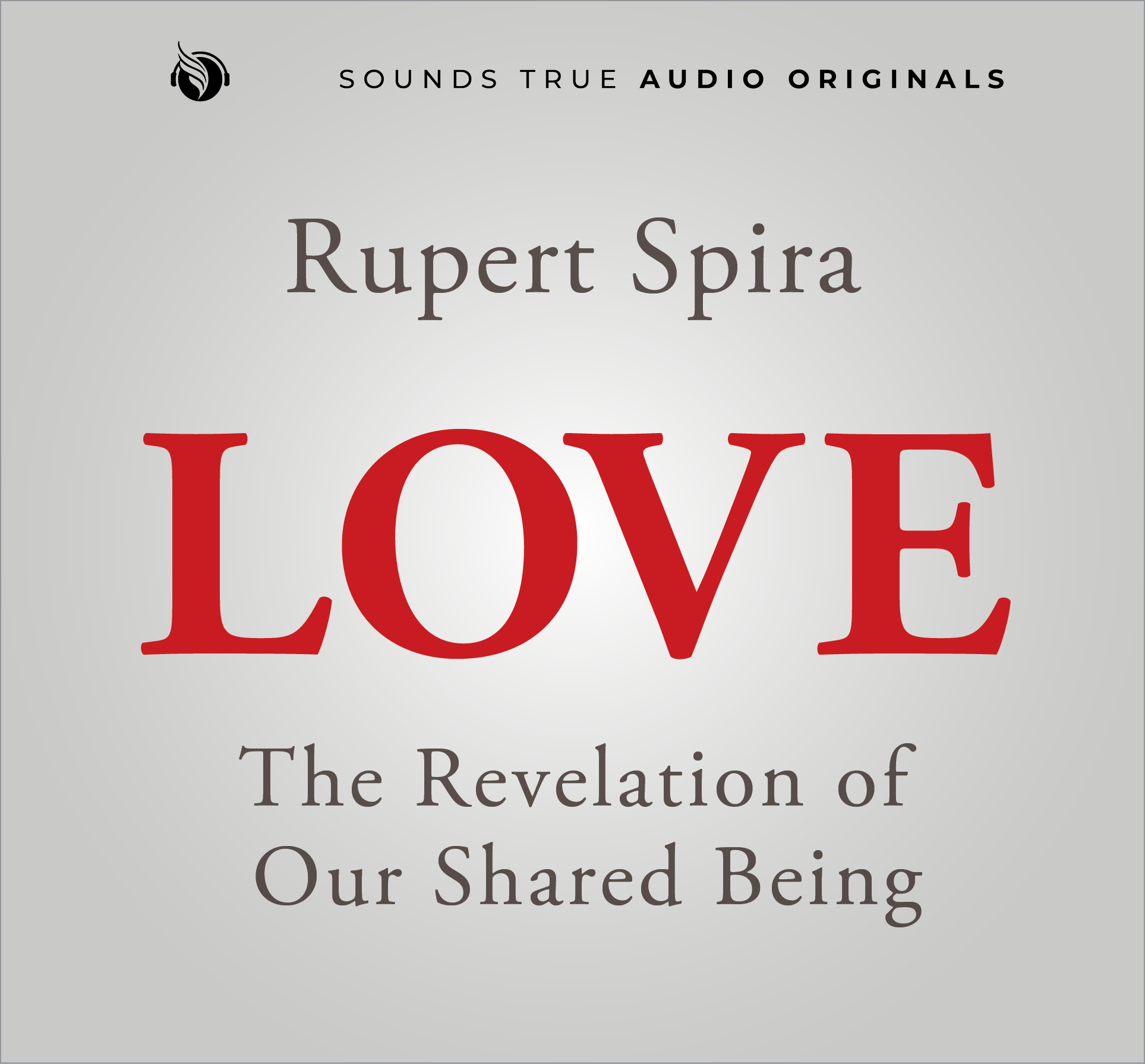
Being is the shared element in all people, animals and things. Just as there is one universal physical space that pervades all individual buildings without being limited to them, likewise there is just one unlimited being from which everyone and everything borrows its apparent existence.
Just as the space in a room is not contained within its walls but is an apparent limitation of universal space, likewise the individual being that each of us seems to be is not contained within or generated by the body but is an apparent limitation of the one infinite being.
Infinite being is felt by each of us as the amness of our self. This feeling of ‘I am-ness’ is infinite being shining in each of our finite minds. Just as universal space seems to acquire the limitations of the four walls within which it seems to be contained, but in fact always remains the universal space,likewise infinite being – God’s being – seems to acquire the limitations of the body within which it seems to be housed, without ever actually ceasing to be infinite being. The apparent mixture of infinite being plus the content of experience seems to create a temporary finite being, a separate self or ego.
As a concession to the separate self or ego that we seem to be, most spiritual teachings give us something to do to become enlightened. This is like giving the space of a room a practice in order to become universal space. But the space needs no liberation, for it was never bound. The space inside is always and already identical to the space outside.
Likewise, our self needs no liberation or enlightenment. If we go deeply into the simple experience of being, we find no limit there – it is already infinite, already free. While thoughts, memories, feelings, sensations and so on have limits, these limitations do not pertain to our being.
Even to say being is mixed with experience isn’t quite right. Just as space remains unmixed with the walls that seem to contain it and the objects that it seems to contain, our being is never really mixed with experience. It always shines in its original condition: untarnished, unmixed, unlimited, unmodified. Inherently free and at peace.
Infinite being needs no enlightenment or spiritual practice. So, for whom are the teachings and the innumerable practices that have been elaborated in the various religious and spiritual traditions? For the temporary, finite separate self we seem to be. They are, as such, compassionate concessions –legitimate ones – but ones that ultimately perpetuate the illusion of a separate self. Therefore, the highest teaching is no teaching, no teacher, no effort, no practice – just the shining of being, the one being we all are.
Imagine that the vast physical space of the universe is conscious. If you were to ask the aware space in the room in which you are sitting about its nature, it may look at the walls around it and describe itself in terms of their limitations. And it would imagine that the space outside the walls was separate from it, and might engage in various efforts to know it or unite with it. But if instead it looked only at itself, it would recognize that it contained no inherent limitation. It would recognize that it is already the vast space of the universe. All its efforts would cease with that recognition.
Similarly, our apparently finite being, seemingly located in and bound by the body, looks beyond its limitations at the vast universe and ponders the nature of its reality. It may even engage in great efforts to know that or unite with it. But all we need do is look closely, to taste the nature of our own being. If we do so, we find no limitation there – our being finds no limitation in itself. Our being is already the one infinite being, the only being there is – in religious terms, God’s being. There is just that, just this.
This utter absence of anything other than itself – this absence of otherness, separation, duality – is the experience we know as love. Love is, as such, the shining of infinite being in each of our hearts. It is the taste of God’s being in us, as us.
Rupert Spira discovered Rumi’s poetry at age fifteen, sparking a lifelong journey to understand the nature of being. He studied Advaita with Dr. Francis Roles, explored Sufism, and drew inspiration from Krishnamurti, Ramana Maharshi, and Nisargadatta Maharaj. He also pursued an interest in ceramics, training with British pioneers before opening his own studio. Meeting teacher Francis Lucille in the 1990s deepened Rupert’s understanding, integrating the teachings of Advaita and Kashmir Shaivism. Rupert holds regular in-person retreats, as well as online retreats and webinars. For more, see rupertspira.com.
Tami Simon speaks with Rabbi David Cooper, one of today’s leading teachers of Jewish meditation. Rabbi Cooper is author of many books, including God Is a Verb and The Heart of Stillness. His programs with Sounds True include Invoking Angels, The Beginner’s Guide to Kabbalah, and two six-CD audio learning courses, Mystical Kabbalah and Seeing Through the Eyes of God. In this episode, Tami speaks with David about the ability of the Sabbath to restore our soul, the power of using Hebrew mantras in our meditation, what angels are and how we can relate to them, and a guided meditation for calling on help and support at any time in our lives. (67 minutes)