Customer Favorites

Financial Healing

Tami Simon speaks with Spencer Sherman, a graduate of the Wharton School, who was named one of the top wealth advisors in the US, and is a cofounder of Abacus Wealth Partners. Spencer’s expertise in finance has landed him appearances on CNN and CNBC, and in the Wall Street Journal and the New York Times. He’s the author of the book The Cure for Money Madness, and is currently working with Sounds True on The Money and Spirit Online Workshop, an online workshop designed for integrating our spiritual and financial lives. Spencer speaks about taking back our own financial wisdom, the importance of understanding childhood messages about money, and whether it’s really best to rent or buy a home. He also shows us the practice that he calls the “money breath.” (49 minutes)

Tahini Chocolate Chunk Blondies

Tahini Chocolate Chunk Blondies

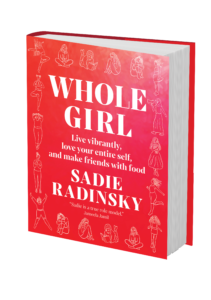
From the book, Whole Girl by Sadie Radinsky


INGREDIENTS:

  • 1 large egg
  • 1 cup tahini
  • 1/4 cup coconut sugar
  • 3 Tbsp pure maple syrup
  • 1 tsp vanilla extract
  • 3/4 tsp baking soda
  • 1/4 tsp sea salt
  • 1/2 cup chopped dark chocolate
  • 1/2 tsp flaky sea salt (optional)


  1. Preheat your oven to 350F and line the bottom and sides of an 8 x 8-inch baking dish with parchment paper.
  2. In a large bowl, whisk together the egg and tahini just until combined. Whisk in the coconut sugar, maple syrup, vanilla extract, baking soda, and sea salt. Do not overmix. Gently fold in the chopped dark chocolate.
  3. Scoop the batter evenly into the prepared baking dish. Bake the blondies for 16 to 20 minutes, or until they’re golden brown and the center is just cooked through. Sprinkle the top with flaky sea salt, if using.
  4. Let the blondies cool for 10 minutes. Slice them into 9 large squares or 16 smaller squares and serve. Store leftovers in an airtight container at room temperature for up to 3 days, or in the refrigerator for up to 2 weeks.

blondies


This recipe is featured in the young adult book, Whole Girl: Live Vibrantly, Love Your Entire Self, and Make Friends with Food by Sadie Radinsky.


sadie radinskySadie Radinsky is a 19-year-old blogger and recipe creator. For over six years, she has touched the lives of girls and women worldwide with her award-winning website, wholegirl.com, where she shares paleo treat recipes and advice for living an empowered life. She has published articles and recipes in national magazines and other platforms, including Paleo, Shape, Justine, mindbodygreen, and The Primal Kitchen Cookbook. She lives in the mountains of Los Angeles. For more, visit wholegirl.com.


whole girl book

Sounds True | Amazon | Barnes & Noble | Bookshop | Indiebound

E94: Spiritual Freedom Is Simpler than You Think

Life is fundamentally simple—we’re sitting on a tiny planet spinning through infinite space for a few years, and that’s it. We make it complicated by deciding how everything must be for us to be okay. This creates suffering, anxiety, and endless worries. Spirituality is about opening up, honoring, and appreciating life as it is. As we let go of ourselves, life becomes joyful, creative, and rich, not because it changed, but because we did.

© Sounds True Inc. Episodes: © 2025 Michael A. Singer. All Rights Reserved.

Awakening Is Endless

Tami Simon speaks with Gangaji, an American-born spiritual teacher dedicated to sharing the path of freedom through simple and direct self-inquiry. This year marks her twentieth year of teaching and sharing the essential message she received from her guru, Papaji, on the banks of the Ganges in 1990. She is the author of the Sounds True book The Diamond in your Pocket: Discovering Your True Radiance. Gangaji discusses the challenge of working with difficult emotions, the power of humiliation, and the endless nature of spiritual awakening. (47 minutes)

A Doctor’s Simple Tips on How to Get Better Sleep

Thanks to groundbreaking research, we have recently learned that every cell has its own timekeeper that can be thought of as a local clock. Deep within the brain, in the hypothalamus, lies a master clock that regulates all the local clocks, making sure that each one is set to the same time. This complex, coordinated process is in sync with the alternating cycles of day and night and with all the degrees of changing light that occur in a 24-hour period as Earth rotates on its axis. Called the “circadian rhythm”—from the Latin words circa, which means “going around,” and diem, meaning “day”—this internal process regulates the human body’s sleep-wake cycle, among many other functions. 

The master clock (think of it as circadian rhythm central) sends hormonal and nerve signals throughout the body, synchronizing the cells’ clocks to the day-night, light-dark cycle of life. On a continuous basis, the master clock can determine what time it is based on messages from photoreceptor cells in the retina that register light conditions outside and report these to the brain via specialized pathways. 

Meanwhile, the cellular clocks keep local time, making sure that various activities locally are timed right and are appropriately coordinated with other cells and organs. This is why, for example, key enzymes are produced at certain times, blood pressure and body temperature are controlled, hormones are secreted, the gut microbiome is populated with the right balance of bacteria, and gut motility is appropriate for the hour. 

Living in harmony with the way we have evolved brings physiological and emotional balance, creating a good fit between our bodies and minds, between what we’re doing and how we’re designed to function. Honoring our body’s natural rhythms helps stabilize our mood, become more resistant to stress, feel less physical pain, and generally feel and function better physically and mentally. It’s an essential step in cooling and calming emotional inflammation. 

The following are some ways you can adjust your habits so that they support your body’s inherent rhythms: 

  • Put yourself on a sleep schedule. Establish a regular sleep-wake schedule so that you go to bed at approximately the same time each night and wake up at the same time each morning. It’s fine to vary your bedtime by an hour or two occasionally, but don’t sleep in more than an extra hour on the weekends (unless you’re sick); otherwise, you will end up disrupting your sleep pattern for the next night. 
  • Identify your slumber sweet spot. Most adults need seven to nine hours of sleep per night to feel and function at their best. Once you figure out how much you need, determine what time you need to get up in the morning and work backward to set an appropriate bedtime; or, you can identify what time of night you typically feel sleepy and then set a wake-up time accordingly. 
  • Brighten your mornings. When you get up in the morning, expose yourself to bright, natural light to stimulate alertness, enhance your mood, and help calibrate your circadian rhythms. Take a brisk walk outside or have breakfast in a sunny spot. If you struggle to reset your internal clock to the “awake” setting in the morning, consider buying a commercial light box that emits 10,000 lux, which mimics a bright, sunny day. Sitting in front of such a light box for 30 minutes in the morning, perhaps while you have breakfast or read the newspaper or newsfeeds, has been found to stimulate alertness and improve mood. Alternatively, you could opt for a desk-lamp-style light box for your desk at work. 
  • Adjust your indoor lighting. Fascinating research has found that office workers who are exposed to greater amounts of light in the morning fall asleep more quickly at night. They also have better sleep quality and better moods, including less depression and stress, than those who are exposed to low light in the morning. 
  • Darken your evenings. There is another good reason to make sure that your bedroom (or wherever you sleep) is dark: When people are exposed to light during the night, their total daily melatonin production is suppressed dramatically, by as much as 50 percent. In other words, that nighttime light exposure throws the body’s 24-hour hormone production schedule off-kilter. It’s also wise to install a dimmer switch on the overhead light in the bathroom—or use a dim night-light—so that bright vanity lights don’t stimulate your senses and alertness while you’re taking care of bathroom business before hitting the sack or if you get up during the night.

Ultimately, honoring your body’s natural rhythms requires taking back control of your nights and days. It’s about putting time on your side and making conscious choices about the way you want to live so that you can restore your internal equilibrium, physiologically and psychologically. 

Yes, changing your behavior requires giving up the patterns you chose, consciously or not, in the past, and making the switch does take some effort and resolve. But if you make it a priority to stop upsetting your body’s internal rhythms and start living in sync with your body’s inherent needs, the payoffs will be well worth the effort. Your mood is likely to end up on a more even keel, and your energy will increase. Your physical health will probably improve and your emotional equilibrium will, too. Think of it this way: By respecting your body’s rhythms and doing whatever you can to maintain their regularity, you’ll be resetting your internal emotional thermostat, which will improve the way you react to and deal with the stresses and strains that are unavoidable in our modern world.

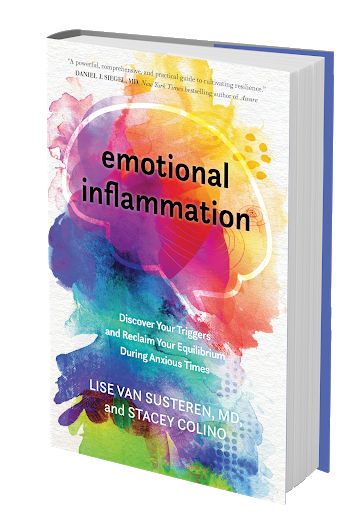
This is an excerpt from Emotional Inflammation: Discover Your Triggers and Reclaim Your Equilibrium During Anxious Times by Lise Van Susteren, MD, and Stacey Colino.

A Music Playlist for Better Sleep

To help you achieve the best night of rest, we recommend falling asleep to this relaxing music playlist, Music for Better Sleep, available through Sounds True on Spotify.


Lise Van Susteren, MD, previously served as a clinical professor of psychiatry at Georgetown University. She is a go-to commentator about anxiety and trauma for television (including CNN, Good Morning America, NBC, VOA, and Fox News), radio (NPR, Minnesota Public Radio, and others), print media (including the Washington Post, the Wall Street Journal, Newsweek, the Huffington Post, and CQ Magazine), and online outlets (such as Live Science, U.S. News & World Report, Global Health NOW, and many others).

As a thought leader and activist, Dr. Van Susteren addresses issues related to trauma and emotional inflammation through her roles at the Earth Day Network and Physicians for Social Responsibility. She is considered an expert in the psychological effects of climate change.

Stacey Colino is an award-winning writer specializing in health and psychology. In addition to her work as a book collaborator, she is a regular contributor to U.S. News & World Report and AARP.org. Her work has appeared in the Washington Post Health section, Newsweek, Parade, Cosmopolitan, Real Simple, Health, Prevention, Woman’s Day, Harper’s Bazaar, Parents, and Good Housekeeping, among other magazines and newspapers.

Buy your copy of Emotional Inflammation at your favorite bookseller!

Sounds True | Amazon | Barnes & Noble | Bookshop

How Does Meditation Liberate Us?

MATTHIEU RICARD: In the beginning, our mind is very turbulent, so it is very difficult to complete an analytical meditation and to cultivate compassion, and it’s still more difficult to observe the nature of awareness. We just have to deal with a whirligig of thoughts. The first step, therefore, as we have seen, is to achieve a certain level of calm. We don’t do this by knocking out the mind the way we would knock somebody out with a stick; rather we give it a chance to become a little clearer, a little more stable.

That’s why most meditations begin with observation of the breath. It is at the same time practical (the breath is always there), simple (a constant movement of coming and going), and subtle (it’s invisible, and if we don’t pay attention, it disappears instantly from our perceptual field). It is, therefore, an excellent object for refining our attentional faculty. This simple training is not necessarily easy, however. We can even be discouraged at the beginning by seeing that “I have more thoughts now than I had before; meditation is not for me.” There are not necessarily more of the thoughts; rather we have begun to perceive what is going on, to be able to gauge the extent of the damages. However, like a waterfall turning into a mountain torrent, and then into a river, and finally a still lake, the mind calms down with time.

After a few weeks or even a few months, I can pass on to the next stage: “Now that I have a more flexible and accessible mind and can direct it like a well-trained horse, I can say to it: ‘Apply yourself to compassion.’” This sequence of progression should be respected, and it is of no use trying to skip ahead. If you try to meditate on compassion when your mind still won’t hold still, you won’t cultivate compassion; you’ll simply be distracted.

I can also ask myself, “In the end, who is meditating? The ego? Awareness?” I can analyze the nature of all that. In a more contemplative and direct fashion, I can deepen my questioning: “What is behind all these thoughts? Is it not awakened presence, the quality of pure awareness that is behind all mental events?” At that point, I begin to glimpse that which, underlying all thoughts, is always there like the unmoving sky behind the clouds. I can then let the mind rest in this pure awareness.


A Toolbox for Meditation

CHRISTOPHE ANDRÉ:

Meditation is not only a religious or spiritual practice; it is also a form of mind training. It can help us cultivate attention, detachment, understanding, and emotional balance. It can also help us to develop our basic human virtues, which otherwise might lie dormant deep within us and not express themselves. I’m talking about kindness, compassion, generosity, and so on.

Meditation is simple. It only requires us to regularly pause and observe the nature of our experience—our breathing, sensations, emotions, thoughts. Everything starts with that.

Starting with very simple kinds of exercises like those recommended in mindfulness meditation (the kind of meditation we use in health care and education), there are many meditative traditions that are much more demanding and complex. As with the piano, we can very quickly learn to play a few little pleasant tunes; then we can go on to cultivate virtuosity for the rest of our lives.


ALEXANDRE JOLLIEN:

Let things pass. If I had to sum up the practice in three words, without hesitation, I’d go for “Let things pass.” In the midst of chaos or deep in one’s inner battlefields, dare to make the experiment of not controlling, of dropping the self. It’s mayhem, but there’s no problem! Far from giving up and far from resignation, letting things pass means distinguishing between the psychodramas (the problems created by conceptual mind) and the genuine tragedies of existence, which call for solidarity, commit- ment, and perseverance.

Meditating is stripping down, daring to live nakedly in order to give oneself, contributing to the welfare of the world, giving one’s share. Why don’t we look at the day that lies ahead of us not as a store where we can acquire things, but as a clinic, a dispensary of the soul, where together we can recover and advance?


MATTHIEU RICARD:

Meditation requires diligence, which should be nourished by enthusiasm, by joy in the virtues, by inner peace, by compassion, and by the feeling of having a clear direction in life.

Meditation, in itself, does not have harmful effects. Meditation is not contraindicated unless it is not properly understood or properly used—used in the wrong conditions or at the wrong time. Whether we like it or not, from morning till night we are dealing with our mind. Who wouldn’t want their mind to be functioning in the optimal fashion and to be providing them with inner freedom rather than playing rotten tricks on them?

This is an adapted excerpted from the newest book from Matthieu Ricard, Christophe André, and Alexandre Jollien, Freedom For All Of Us: A Monk, A Philosopher, and a Psychiatrist on Finding Inner Freedom.
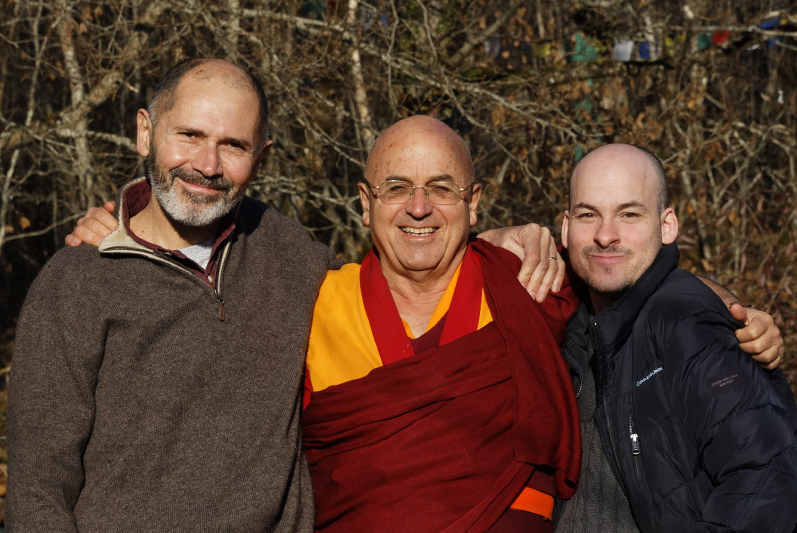
Copy of MatthieuRicard-AlexandreJollien-ChristopheAndré©PhilippeDanais2017

Matthieu Ricard is a Buddhist monk, a photographer, and a molecular geneticist who has served as an interpreter for the Dalai Lama. 

Christophe André is a psychiatrist and one of the primary French specialists in the psychology of emotions and feelings.

Alexandre Jollien is a philosopher and a writer whose work has been attracting an ever-growing readership. Together, they are the authors of In Search of Wisdom and Freedom For All of Us.
Learn More

Sounds True | Amazon | Barnes & Noble | Bookshop | IndieBound