
Customer Favorites

The Power of Mapping Your Emotions

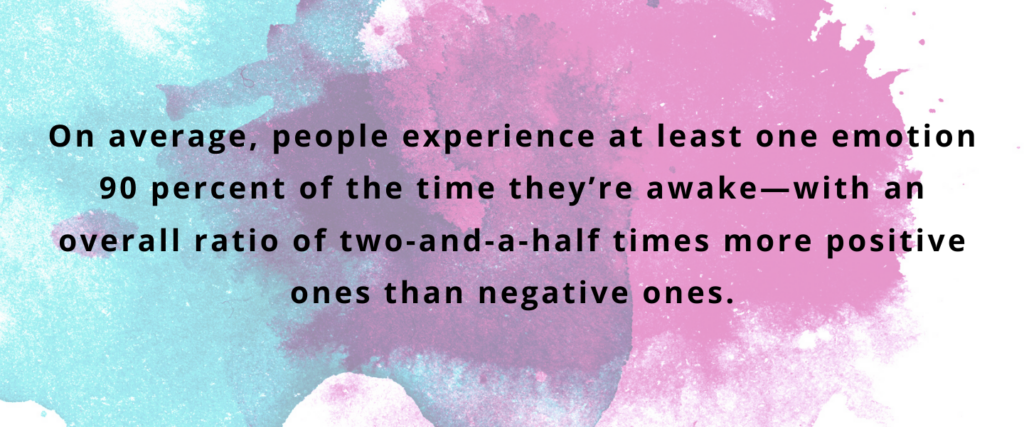
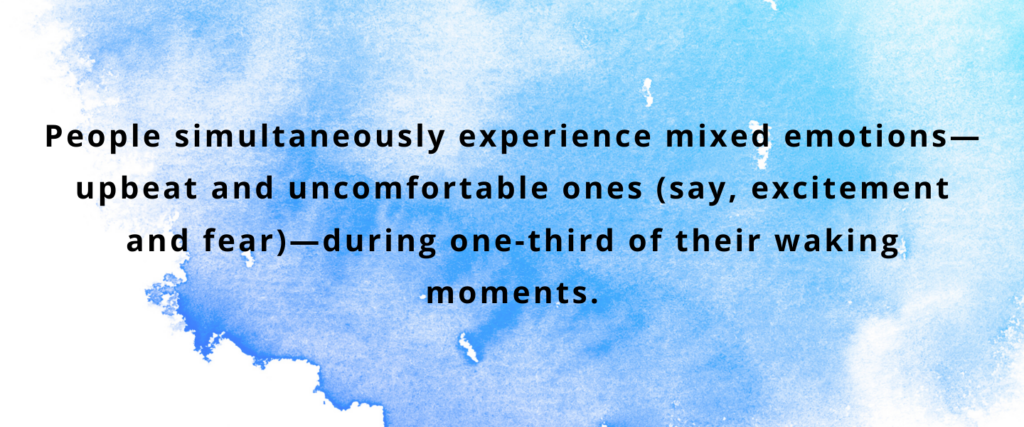
It’s in everyone’s best interest to learn to remove the emotional blinders and identify emotions accurately, both the uncomfortable and the upbeat ones. After all, unpleasant emotions are normal and natural, a fundamental part of being human. Emotions fluctuate on a daily basis, often several times in a given day. If you didn’t experience negative feelings now and then, the positive ones wouldn’t be as noteworthy or joyful; your emotional life would likely be unnaturally narrow. You would also be deprived of the opportunity to glean important insights into yourself. Feelings, both the good and the bad, are silent messages, alerting you to pay attention to something in your personal or professional life, in your behavior, or in the world around you.

Instead of separating emotions into categories such as good or bad, positive or negative, happy or sad, it’s better to view all your emotions as useful information, as “evolutionarily evolved responses that are uniquely appropriate to specific situations,” says Karla McLaren, MEd, author of The Language of Emotions. “When you stop valencing, you’ll learn to empathically respond to what’s actually going on—and you’ll learn how to observe emotions without demonizing them or glorifying them.”
Being able to recognize and express what you’re feeling helps you better understand yourself (leading to greater self-knowledge); validate your emotions and tend to your own emotional needs; and take steps to address those feelings directly by communicating and responding to them effectively. Having emotional self-awareness can motivate you to make healthy changes in your life, take action to improve the world around you, and become more psychologically resilient—that is, better able to cope with crises and rebound from setbacks.

Learning to Unpack Your Emotions

For some people, engaging in free association can clear the cobwebs from their minds, almost like opening the cellar door to a musty basement and letting in light and fresh air. To do this, you might take a break and consider how you’re feeling about what you’re doing, reading, seeing, or thinking every few hours throughout the day. If a general word comes to mind—such as stressed, anxious, or angry—dig deeper and ask yourself what other emotions you might be feeling (maybe fear or annoyance) along with it. If you do this out loud in unedited, private moments, you might find yourself blurting out what you’re really thinking or feeling, revealing the emotions that are taking a lot of energy to keep inside. This is really about unpacking your suitcase of feelings, or untangling the knot of emotions that is taking up space inside you.
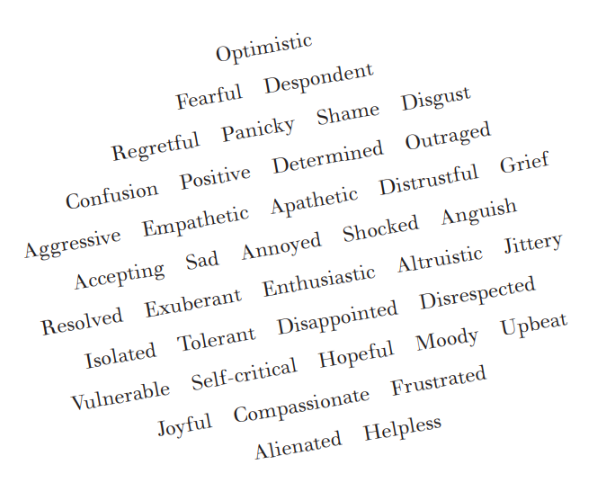
When you think about this in the abstract, it can be hard to pinpoint how you’re feeling. You may just see a swirling mass of a feeling quality such as “dread” or “foreboding” rather than recognizing the specific emotions you feel. To get to the root of your feelings, spend five minutes looking at the word cloud below—no more than five so that you don’t have time to filter your responses—and choose the emotions that resonate with your mood-state lately.
If reviewing these words evokes other feelings for you or if words or phrases that apply to you were not on this word cloud, jot these down in the blank word cloud that follows. Give yourself another five minutes to think about your recent state of mind and jot down phrases, images, or words that occur to you. This is your opportunity to personalize it without any limits or restrictions. If you feel stymied or draw a blank initially, think about your recent responses to current events or situations in your personal life or on the world stage. Try to be as honest as you can by focusing on how you’re really feeling when no one is watching—free-associate without judging, censoring, or revising what you write down.
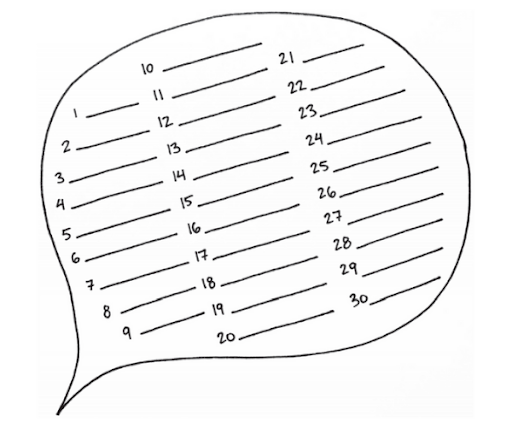
Once you’ve finished your list, look at the order of the words you wrote down: Did they progress from all negative to increasingly hopeful? Do they portray an internal tension or friction in going back and forth between various feelings? If all the words are positive, consider the possibility that you may be in some degree of denial, focusing only on the window dressing rather than the emotions that lie beneath the surface. Also, consider this: Is there a pattern of shallow, visceral reactions that came out initially, followed by more complex thoughts and feelings? If so, think about whether you’re giving yourself enough time in your life to reflect. If you came out with highly intellectualized words or phrases first, it might suggest that you put on a bit of a facade when engaging with the world, and you might benefit from striving for a deeper engagement or familiarity with your emotions.

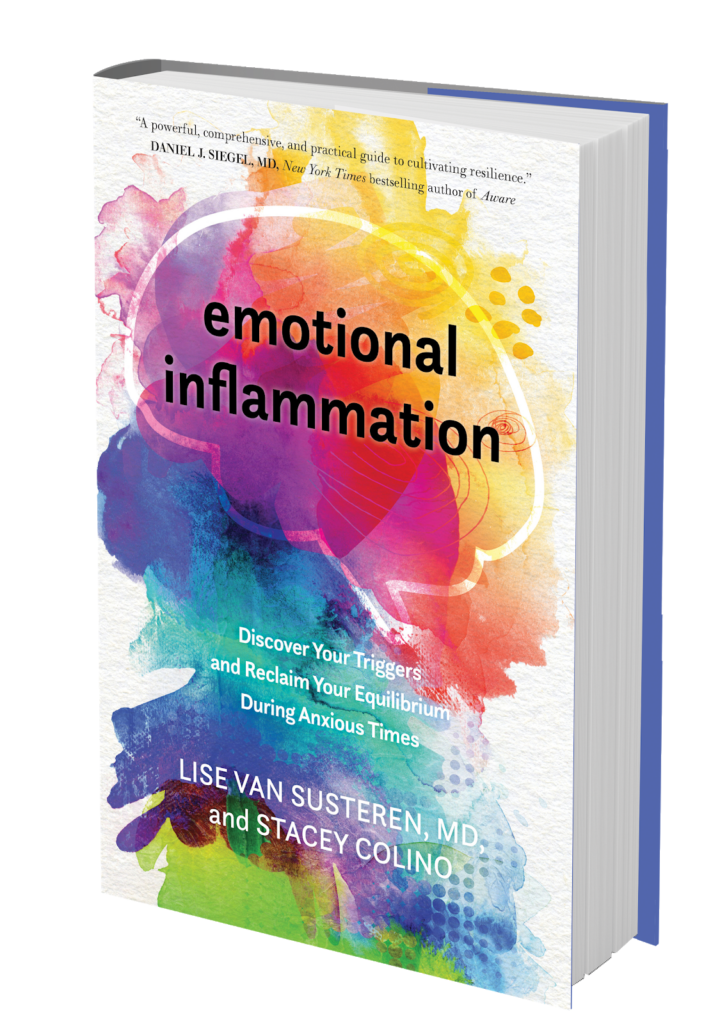
This is an excerpt from Emotional Inflammation: Discover Your Triggers and Reclaim Your Equilibrium During Anxious Times by Lise Van Susteren, MD, and Stacey Colino.

Buy your copy of Emotional Inflammation at your favorite bookseller!
Sounds True | Amazon | Barnes & Noble | Bookshop

Connor Beaton: Men’s Work

What does it look like to connect to our own masculinity, our own masculine core, in a healthy way? How as men do we welcome the parts of ourselves we dislike the most? Where can we find the validation and recognition we seek? These are the questions that Connor Beaton addresses in his new book, Men’s Work: A Practical Guide to Face Your Darkness, End Self-Sabotage, and Find Freedom

In this podcast, Tami Simon speaks with Connor about his life and work, discussing why the work of men begins with pain; the consequences of the belief that strength equals suppression; “fathering yourself” and carrying your pain more effectively; welcoming and healing a hurtful inner dialogue; breaking the erroneous rule that blocks real intimacy; transforming the spirit of competition into a positive force for mutual support; the conundrum of male vulnerability; the skill of opening up; leadership, self-respect, and how we conduct ourselves in hard times; emotional sovereignty; self-regulation and the practice of moving from rationalizing into sensation; infidelity and porn; building your own system of self-validation and recognition; and more.

Note: This episode originally aired on Sounds True One, where these special episodes of Insights at the Edge are available to watch live on video and with exclusive access to Q&As with our guests. Learn more at join.soundstrue.com.

Meet Your Subtle Body: Discover Cyndi Dale’s 12-Chak...

Meet Your Subtle Body Header Image


“I think [the 12-chakra system] is a good compilation to get us going so that we can be the entirety of the human that we are—the human divine being that we are.”


—Cyndi Dale

As seekers, instead of following set rules, we may set out to discover routes that feel uniquely true and right for us.

Cyndi Dale, a luminary writer on the subtle body and its connection to the physical world, works with a unique 12-chakra system in her healing practice.

Cyndi’s 12-chakra vision helps her pinpoint feelings and where wounds are emanating from the invisible, spiritual self.

Chakras Infographic

from Enlightened Energetics

WHAT IS THE SUBTLE BODY?

Each of us have both a physical body and a subtle body. The physical is what we think of normally: our shape, our volume, and that which we can touch. The subtle body arises from a different place: the intuition. 

The subtle body seems to be some sort of underground pathway for our physical one. It is invisible not because it doesn’t exist, but because it’s sub-observable to the five senses we normally use. I might even argue that she sees the intuition as the 6th sense, and that the creative nature of our spirits gives us the ability to wield this power for healing.

Just like quantum physicists are starting to say, our world (or, at least, some dimension of our world) is not physical at all, but actually consists of “immaterial energy waves.” These waves somehow come together and entangle to create the material world.

As I listened to Cyndi’s interview with Tami, I was struck by the idea that healers like her use the subtle body every day. In the interview, she really helps you comprehend how that’s possible by guiding you through an exercise that’s less about understanding and way more about feeling. (It made me whisper, “whoa!” out loud.)

Here’s an exercise from that part of the interview if you want to try it:

Rub your hands together until you create some friction, and then put your hands palms facing each other about three or four inches apart. You’ll feel that there’s still an energy in between those hands—because there’s chakras in the hands and because there’s fields of energy emanating from the hands.

If you start patting your hands, not touching them, but kind of patting that energy ball. Again, you can bring your consciousness into your hands and pour more energy into that ball that’s being created. All of a sudden, you’re going to feel like your hands are moving farther away from each other. If you turn the spigot down, your hands—in order to feel that friction or the energy between them—are going to move closer together. Then a really fun thing to do is imagine or turn that energy red—it’s not clear anymore; it’s red—and get a sense of how that red energy field can have a certain reaction to red, especially in comparison to blue . . . as we’re now going to turn that energy blue. It’s really different, isn’t it?

About energy workers and healers she says: “They’re consciously kind of deciding what type of energy might be useful, what might be helpful for them, for somebody else, and they’re sending that.” 

THE 12-CHAKRA SYSTEM

According to Cyndi, the western tradition of the 7-chakra system is based on a book by Sir Arthur Avalon. 

Chakras are eddies of light and sound. They interact, dance, rotate and orbit us like our very own planets.

7 Chakras Infographicfrom MindBodyGreen

THE 12 CHAKRAS

1. Root

The root chakra is about spirituality, purpose and connection, as well as our relationship to Mother Nature and the Earth. It is associated with the underlying structures (both intuitive and ordered) of our minds. It is associated with pheremones and our sense of smell

2. Sacral

This is a chakra of motion and flow, representing the water element in the body. It bears a relationship to reproduction and fertility, joy and desire, and the kind of rest that encourages immune system recovery. It is associated with our sense of taste.

3. Solar Plexus

The solar plexus is a fiery center for our unique powers and gifts. When it’s in balance, we can feel like our lives are autonomous and in harmony with our value system. It helps define the energy that guides our motivations, disposition and mood, and it expands our idea of what’s possible when we are inspired by it.

4. Heart 

The heart chakra is related to our personal and romantic relationships. When it is in balance, we might be immersed in feelings of joy and real freedom. It is strengthened through trust, non-manipulative communication, and authentic respect for ourselves and others. It is also strengthened by the exploration and implementation of personal boundaries. With the heart, we send and receive our gifts.

5. Throat 

Here is our center for speaking and listening. The throat enables expression and facilitates spiritual dawnings of both rational and emotional understanding. Balancing the throat chakra can help prevent burnout. If you have writer’s block, it can be helpful to check with this chakra.

6. Third Eye

The third eye is associated with the pineal gland and rules telepathic ability. A vortex of sublimation, it is empowered by critical thinking, especially when we seek to release fear and guilt. Through the third eye, we can become more lucid, deepening our understanding that duality is an illusion. Opening it helps us to understand symbols and receive messages in both dreams and waking life.

7. Crown

The crown chakra is related to your nervous system and brain. Tap into its power by becoming present in the body through meditation, visualization and relaxation. It can look like a circle of light around your head, and is an expansion into space where you connect with the rest of the universe. It is related to transcendence & wisdom.

8. Soul/Shaman

Located a few inches above the head, this chakra encompasses past lives and your memories of other dimensions. From Cyndi’s description, it is a beautiful, mysterious chakra that connects our physical body to our soul’s experience in its totality. It empowers our ability to transcend spacetime and engage with “the sphere of potentialities in the making.” When it’s in harmony, it becomes easier to communicate with beings in other realms, like your spirit guides.

9. Luminary

This chakra is about an arm’s length above the top of your head. Lift your hand all the way up to connect with where it is. Cyndi sees this chakra as gold, related to our connection to the divine. It is the space of the greater spirit, the “seat of the soul,” which can act as a doorway into your divine self and your archetypal patternings.

10. Earth

This chakra blooms from beneath your feet. It is how your body connects to the earth, a cord that goes through the legs and feet into the ground. It is associated with nature and the cosmos in their simple essence, and the memories that arise from it can be related to ancestral lessons and inherited traumas. Substantial healing can arise from relationship with this chakra.

11. Supernatural

This chakra is “actually around the body. It’s like this lovely rose film, like way out in our energy field, but it’s collected around the hands and the feet.” Through this chakra, you can discover your inherent connection with both natural and supernatural forces. In this part of the interview, Cyndi mentions that chakras are located in multiple dimensions, existing in different places at the same time. She observes this chakra, which is responsible for our ability to move energy, as energy balls around the hands and feet.

12. Auric

This chakra surrounds the auric field of the body like a halo. Cyndi says, “I think of [it] as the outer bounds of our own unique essence or our own spirit.” She emphasizes the uniqueness of this chakra—its defining characteristic is you, and your individual purpose as a spiritual being. There is a connection between this chakra and the ability to envision, create and become, alongside the truth of universal unity.

*

Listen to Tami’s full interview with Cyndi Dale here on Insights at the Edge.


ABOUT CYNDI

Cyndi Dale is an internationally renowned author, speaker, intuitive healer, and visionary who has taught thousands of students to access their spiritual gifts through her books and workshops. She has authored several groundbreaking books and audio programs on energy healing and the chakras, including The Subtle Body, The Subtle Body Practice Manual, Advanced Chakra Healing, Energy Clearing, Attracting Prosperity Through the Chakras, and New Chakra Healing. Her work has been translated into nine languages.

*
*
*

ABOUT THE AUTHOR

When she isn’t writing poetry or music, Dani Ferrara blogs for Sounds True and seeks to learn more about healing alchemy. Learn more about her art at daniferrarapoet.com.

Terry Real: Fierce Intimacy

Terry Real is a family therapist, author, and founder of the Relational Life Institute, which hosts workshops on family and relationships throughout the country. He has written several books, including The New Rules of Marriage: What You Need to Make Love Work. Terry will be a featured presenter during Sounds True’s upcoming online training summit Psychotherapy 2.0, which will take place September 7–13. In this episode of Insights at the Edge, Tami Simon and Terry talk about the inherent challenges of being in relationship and the many approaches to addressing those challenges in couples therapy. Terry discusses how men and women relate to one another in different ways, as well as the steps necessary when couples are badly out of sync. Finally, Terry and Tami speak on the Relational Life approach to therapy and the skills we need to develop in order to take our interpersonal relationships up to “full throttle.”
(67 minutes)

Dr. Rachael Wooten: The Liberating Power of Tara

Dr. Rachael Wooten is a Zurich-trained Jungian analyst and psychologist who has been in private practice as a therapist for more than 40 years. An enthusiastic interfaith activist, she has studied and practiced in Buddhist, Jewish, Christian, and indigenous traditions throughout her adult life. With Sounds True, Dr. Wooten has written a new book called, Tara: The Liberating Power of the Female Buddha.

In this episode of Insights at the Edge, you are invited to get to know Tara as a very real and deeply empowering presence in your own life, as Dr. Wooten introduces you to the radiant figure beloved by millions in Tibet and across the world. In conversation with Tami Simon, she also discusses the 21 traditional emanations of Tara, the first steps involved in embarking on a relationship with Tara, and how to enlist her help at this particular time in history. (1 hour, 7 minutes)

Knowing the Connection with Those We Love Survives Dea...

Saje Dyer is a writer and speaker and the author of Good-bye, Bumps!: Talking to What’s Bugging You. She was a featured speaker in the 2014 Game Changer Global Summit. She is also the daughter of the bestselling author and teacher Dr. Wayne Dyer. In this podcast, Sounds True founder Tami Simon speaks with Saje about her new book, The Knowing: 11 Lessons to Understand the Quiet Urges of Your Soul (coauthored with her sister, Serena Dyer Pisoni). Tami and Saje discuss her relationship with her “famous dad,” the lessons she learned growing up in the Dyer family, signs that Wayne knew his time on earth was coming to an end, and Saje’s deep sense of the many ways her dad is still here with her.