Customer Favorites

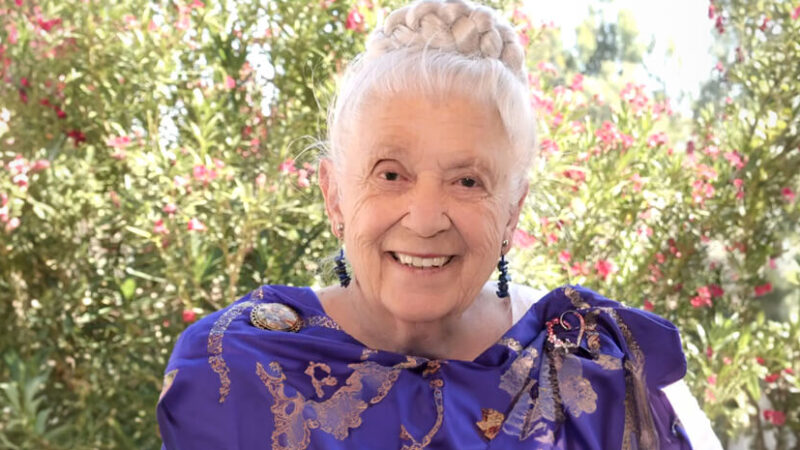
Matthieu Ricard: Finding Inner Freedom

Matthieu Ricard is a French author, photographer, translator, and Buddhist monk. With Sounds True, he has joined with coauthors Christophe André, a well-known French psychiatrist, and Swiss philosopher Alexandre Jollien to create two books: In Search of Wisdom: A Monk, a Philosopher, and a Psychiatrist on What Matters Most and, most recently, Freedom for All of Us: A Monk, a Philosopher, and a Psychiatrist on Finding Inner Peace. In this episode of Insights at the Edge, Tami Simon speaks with Matthieu about the path to inner freedom. They discuss the obstacles we encounter on the path, such as addiction or confusing our willpower with true freedom. Matthieu also explores what supports inner freedom, the nature of optimism, and the training we must go through. Finally, they move into the “harvest” that comes from cultivating deep and lasting inner freedom.


Elaine Aron: Are You a Highly Sensitive Person?

Dr. Elaine Aron is a clinical depth psychologist and the author of the seminal 1997 book The Highly Sensitive Person: How to Thrive When the World Overwhelms You. With Sounds True, she has published the new audio learning program The Highly Sensitive Person’s Complete Learning Program: Essential Insights and Tools for Navigating Your Work, Relationships, and Life. In this episode of Insights at the Edge, Tami Simon speaks with Dr. Aron about what it means to be a highly sensitive person and recent research into the phenomenon. They consider whether the trait is genetic or adaptive, as well as the various ways sensitive behaviors manifest in day-to-day life. They also discuss how best to approach romantic relationships with highly sensitive people and the possible social advantages of sensitivity. Finally, Dr. Aron shares the connection between extreme sensitivity and intuition, as well as attitudes necessary for embracing the entirety of your unique, sensitive self.(50 minutes)

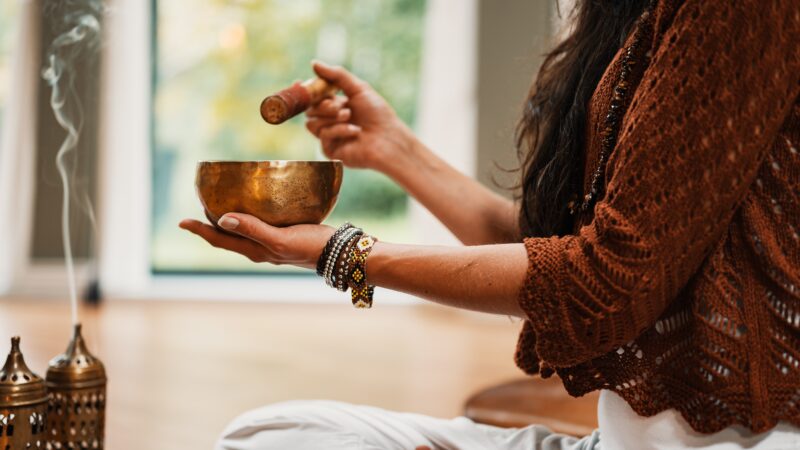
Sound Healing & Meditation: How Vocal Toning Can ...

Have you ever sat down to meditate and found it nearly impossible to relax and find the stillness you were hoping for?  There’s a little known sound healing secret that may just help you to overcome the initial restlessness when starting your practice.

The secret can actually be found in the opposite of silence, by using the sound of your voice and vocal toning to ground yourself, calm your nervous system, and clear your mind. 

How Sound Deepens the Silence

Chanting, mantra, and vocal toning have long been practiced in tandem with silent sitting meditation by both ancient and modern yogis and buddhists.  You may have experienced this yourself in a yoga class meditation that starts with three AUM’s.  There are different reasons why various types of voice are incorporated into the practice, but when it comes to preparing for silence, knowing this one concept can make all the difference.  

When we begin a practice by filling our bodies and our meditation environment with sound, whether that be our own voice, the sound of a singing bowl, gong, harmonium, or other instrument, it creates contrast with silence when the sound is gone.  There is a big difference in how we experience silence when the silence is preceded by sound, and once the sound is taken away, the silence can be experienced much more deeply.  

Peace Is A Stable Consistent Vibration

The foundational practice here is to use your own voice to create a stable consistent vibration within your body.  By repeatedly toning a vowel sound such as Eh, Ah, Oh, Uh, or AUM, on the same note, your body and mind will automatically begin to relax and become more calm and focused.  The vagus nerve, which runs through your neck, is right next to your vocal chords, and the effect of the voice on nervous system regulation is well studied.  

Vocal toning and humming increases nitric oxide, which can reduce blood pressure, slow the heart rate, and slow brain wave speeds from high functioning beta to slower meditative states of alpha, theta, delta.  You can even literally sing yourself to sleep (I know because I’ve done this myself by accident while toning!)

Singing IS Breathwork – Breathing IS Sound Healing  

Sound healing is not just about audible frequencies, but also about rhythms and the frequency of rhythms within the body.  The breath is one of the most fundamental rhythms we can access for reducing stress and restoring peace within the body.  

It is well known that extending an exhale longer than the length of the inhale will slow down the heart rate and calm the nervous system.  When we’re singing, toning, humming, and extending the length of that sound, we are essentially extending the length of the exhale to be longer than the inhale.  

This is why singing IS breathwork taken to the next level with the sound of your voice.  While it may seem a bit awkward at first, your body LOVES the sound of your own voice, and you can nourish your body in profound ways using the gift of this internal instrument.

How to Practice Vocal Toning Before Meditation

Go ahead and get into your meditative position, whether sitting or laying down.  For best results, I recommend at least 3-5 minutes of toning or humming to really give yourself time to get lost in the sound.  

  1. Using your voice, find a note that feels comfortable in the moment.  This will likely be a lower note in your normal speaking range, or maybe even slightly lower than your normal speaking voice.  It should be a note that doesn’t create any strain or tension in your voice, and can allow you to relax while maintaining the pitch.  
  2. Find a vowel sound that feels good to you.  For the most grounding and calming effect use Ah, Oh, Uh, or a combination of all three such as AUM (Ah, Oh, Um).  For more “clearing effect” EE, and Eh sounds can be effective for releasing stuck and negative thoughts or emotions.  Humming with the mouth closed is also a very effective method that can be thought of as singing down into your own body by keeping the sound inside rather than projecting it out.  
  3. At the beginning of each cycle of toning, take a long deep breath through the nose to receive as much breath as you can, and then begin to let the sound emerge from your voice in a slow and controlled manner.  Try to extend the length of your sound by releasing only enough breath to create the sound.  You may find that after a few rounds of toning you are able to take in more breath and extend your sound for longer periods of time.  
  4. If you feel any self-consciousness, awkwardness, embarrassment coming up, this is totally normal, even for experienced singers!  Let it be an opportunity for letting go of any self-judgment and try to stick with the practice.  You will find that these feelings will soon go away and will be replaced with feelings of peace and even the experience of timelessness.
  5. See if you can feel the subtle vibrations traveling through your body.  You will likely find that you can feel the sound traveling all the way to your toes, fingers, the hair on your head, various parts of your skin.  Just notice where the sound is traveling.
  6. To take things even deeper, bring in the emotions/intentions of gratitude or love and visualize those positive feelings riding on the sound waves from your voice to every cell of your body, filling yourself with beautiful vibrations.  
  7. Practice for 3-5 minutes or however long feels most comfortable to you, and when you are ready, let your final sounds dissipate into silence.  Continue to breathe normally and take notice of how much deeper the silence now feels.  You may continue your silent meditation practice from there for however long you desire.

Finding Your Homenote and Balancing Energy with the Voice

If you’re enjoying the use of your voice for stress relief and for starting your meditation practice, there are ways to get even more intentional with the voice.  We have the amazing ability to clear energetic blockages, restore balance to energetic deficiencies, and return to a state of peace using our own voices.  You can learn more on my website 1:11 Sound Healing.  

Nicholas Penn
Nicholas Penn, 1:11 Sound Healing

Nicholas Penn is a life-long musician, producer, and sound therapist with a certification in Sound Healing through Globe Sound Healing Institute.  Nicholas is passionate about educating and empowering individuals to access the gift of their own voice to restore peace and improve wellness for themselves and loved ones.  He is also a producer for Sounds True and leads strategy and content creation for the Sounds True YouTube channel and Eckhart Tolle Spotify Channel.  Learn more at 111soundhealing.com   

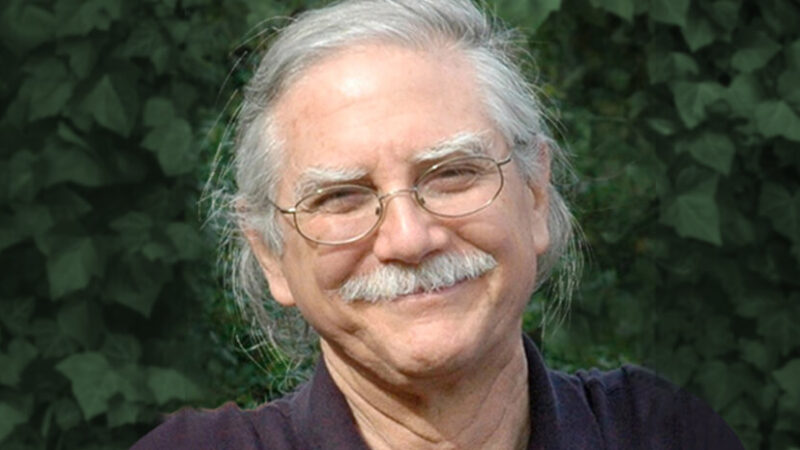
S1 E3: Giving Meaning to the Time Between Your Birth a...

The time that we have between our births and our deaths is a great gift. What we do with this time and how we give our lives meaning is the subject of this podcast with Michael Singer. Here, Singer discusses hard yet empowering truths about the fleeting nature of our lives, the inherent flaw in our most common strategies for feeling “okay inside,” why spirituality is never about getting what you want or avoiding what you don’t want, and much more.

For more information, go to michaelsingerpodcast.com.
© Sounds True Inc. Episodes: © 2024 Michael A. Singer. All Rights Reserved.

Open-Eye Meditation (And Why You Should Be Doing It)

Open-Eyed Meditation Blog Header Image

It can be helpful to begin with some retraining of the relationship between our eyes, our small mind, and our small self. We can begin to return our eyes to their natural condition and have the information move to awake awareness.

According to the American Foundation for the Blind, “vision is the product of a complex system of which the eyes are only one part. The processing of visual information—the receipt of visual stimuli through the eyes, its interpretation by various brain centers, and its translation into visual images—has been estimated to involve as much as 40 percent of the brain.”

When our eyes are darting around or scanning for a specific threat, we are on alert. Sometimes our attempts to focus ourselves by narrowing our eyes and concentrating can keep our brain in a fixed, task-positive mode. Our goal in practicing effortless mindfulness is to be able to shift to another operating system, the end point of which is open-hearted awareness, in which all our senses and systems—including vision—are functioning in their natural state: open, relaxed, clear, and integrated. To do this, we need to learn how to shift our awareness and live with our eyes open.

Here are some helpful hints for sustaining an open gaze while shifting awareness. You don’t necessarily need to experience all of them as I describe them. Use any of the following hints that work for you:

  • Relax your eyes and soften your gaze so that your eyesight is not dominant and all your senses are experienced equally.
  • Instead of looking through a narrow tunnel of vision or in a pinpointed way at one object, see the forest as well as one tree. Put your pointer fingers together up above your head in front of you and then part them to either side, drawing a big circle in front of your body. Let your gaze open to include the entire circular area all at once so that you are seeing in a more open way.
  • Rather than looking at one object, create a diffused view like a soft lens of a camera by looking to the wider scene of what’s in front of you.
  • Extend one hand in front of you with your palm facing you at the distance you would be looking at a friend’s face. Look at your hand and the space around it. Now drop your hand and look at the open space. If your eyes habitually focus on the first object you see, repeat the previous steps until you get a feel for resting your eyes on objectless space.
  • Notice that your eyes do not operate like your hands. You do not go out to see something as your hands go out to pick something up. Your eyes work in a similar way as your ears. Just as your ears are receiving sound, light is reflecting off objects and coming into your eyes. What does it feel like when seeing is receiving?
  • Rest back as the light comes to your eyes and then goes to open-hearted awareness while all your senses are open. Feel like you are equally aware of all your senses rather than focusing on seeing or thinking as primary.
  • Feel like you are receiving light as you soften your eyes while having a wide-open view of the periphery.

This is an excerpt from The Way of Effortless Mindfulness: A Revolutionary Guide for Living an Awakened Life by Loch Kelly.

Loch Kelly HeadshotWay of Effortless Loch KellyLoch Kelly, MDiv, LCSW, is a leader in the field of meditation and psychotherapy. He is author of the award-winning Shift into Freedom and founder of the Open-Hearted Awareness Institute. Loch is an emerging voice in modernizing meditation, social engagement, and collaborating with neuroscientists. For more, visit lochkelly.org.

Buy your copy of The Way of Effortless Mindfulness at your favorite bookseller!

Sounds True | Amazon | Barnes & Noble | Indiebound

James Hollis: The Goal of Life Is Meaning, Not Happine...

Dr. James Hollis is a Jungian analyst, a former executive director of the Jung Society of Washington, DC, and a professor of Jungian studies for Saybrook University of San Francisco/Houston. He is the author of 16 books including Finding Meaning in the Second Half of Life, Living an Examined Life, and, most recently, Living Between Worlds. In this podcast, Tami Simon speaks with Dr. Hollis about his latest work and the increasing sense of importance for many people around living more meaningful lives. They also discuss how to find resilience during difficult times, how our souls let us know when we’re not on the right path, the difference between “meaning” and “purpose,” and more.

>
Copy link
Powered by Social Snap