All of the myriad forms of life on our planet, whether plant or animal, predator or prey, contribute to our survival. And when any one of the fragile threads of the web of life begins to fray, all of us are threatened. Craig Foster—the Academy Award–winning creator of My Octopus Teacher—has since the age of three spent his life intimately connected to the natural world, in particular the Earth’s endangered marine ecosystems such as the Great African Seaforest. In this podcast, Tami Simon speaks with Craig about his ongoing mission to reawaken humanity to our interconnectedness—and our interdependence—with each and every living being, seen and unseen.
Tune in now to a fascinating conversation about: the community of activists behind the Sea Change Project; being part of the Great Mother; the extraordinary biodiversity we depend on; attuning to the “forest mind”; establishing a comfortable connection with the wild of nature “that your whole being is craving”; balancing the tame and the wild aspects of ourselves; getting to know the natural environment through places close to home; therianthropes and other mind-boggling images enshrined in the rock art of Indigenous peoples; the healing power of the cold; underwater tracking and learning “the oldest language on Earth”; staying relaxed in dangerous natural settings; a new understanding of the impacts of species extinction; appreciating the vast intelligence and awareness of the creatures who share our world; what nature can teach us about death and dying; the great potential for rebirth and regeneration at this time; and more.
Note: This episode originally aired on Sounds True One, where these special episodes of Insights at the Edge are available to watch live on video and with exclusive access to Q&As with our guests. Learn more at join.soundstrue.com.
Have you ever been ice-skating before? It sounds like a fun winter activity (especially if you enjoy the cold, like I do), but it can be frustrating and even downright scary if you’re new to it.
Picture this: I took my nephew ice-skating for the first time, full of excitement to see him experience some joy. At twelve years of age, he was already taller than me and had size thirteen feet thanks to his six-foot-eight-inch-tall dad (my brother). The biggest rental skates they had came with worn-out laces rather than the secure plastic bindings all of the other skates had. I could see that they were a little loose around the ankle, but we tied them as best we could and hit the ice.
If you’ve ever seen a newborn deer figuring out how to walk for the first time, you can picture my nephew’s first time on ice skates. His ankles kept knocking in, and he was reaching to hold onto anything for dear life as he wobbled around the perimeter of the rink. It was difficult to watch, not because it was embarrassing, but because I know how hard he is on himself when he’s not immediately good at new things. I wanted to see him having fun, and instead I saw him frustrated and discouraged as all he could do was attempt to remain vertical.
I figured it couldn’t get worse, so I suggested that we trade in his skates for a smaller pair with the more secure plastic buckles to see if that made any difference. He went along with it, probably just to humor me, and we stuffed his feet into some size twelves and made sure his ankle support was good as could be. When I tell you it was a night and day difference, I’m not exaggerating. Suddenly he was speeding around the ice like a pro, lapping past me and his sisters with the biggest smile on his face. He circled the rink over and over again; as his confidence grew, so did his joy, and he even began to try tricks and spins. All he had needed was one little adjustment to his foundation, and he suddenly felt safe enough to have fun.
Here’s the thing: most of us go around in our lives on rickety old skates with worn-out laces. When your only focus is doing your best to remain upright, there’s not much room for joy or play. The big shame in that is that play often is the medicine we most need.
In my experience, the crux of inner child work is reconnecting to the part of you who knows how to play. Sometimes you may first need to make some adjustments that allow you to feel safe enough to play, like practicing nervous system regulation and self-soothing. Once you’ve done that, though, your goal is to invite in as much play as possible. And not adult versions of play that are really just a facade for dissociative behaviors, but real, childlike wonder.
Invite in curiosity and awe and silliness and uninhibited joy. Start by returning to the things you loved to do when you were a kid. Maybe that means setting aside time each weekend for arts and crafts. Maybe it means participating in physical activities that feel like play, such as dancing, swimming, sports, or jumping on a trampoline. Maybe it just means giving yourself permission to skip while you walk or sing while you drive.
The point is, when you bring those younger versions of you into your present-day life, you not only have more fun, but you also experience more healing. We were never meant to lose touch with our inner child. Yes, it’s important to learn how to be self-sufficient and responsible, and aging is inevitable. But it’s equally important not to take yourself too seriously along the way.
Try This
Your homework is to set regular playdates with your inner child. Do things that sound like fun, even if they don’t make logical sense. Allow yourself to be as carefree and openhearted as possible, without judging the things that bring you joy. The sillier it feels, the more on point you likely are. Here are some examples to consider:
Take an afternoon off of work and go to an amusement park.
Schedule an evening of watching your favorite childhood movies.
Spend the weekend out in nature, frolicking with your imagination.
Try something brand new, like rock climbing or ice-skating, to tap into that feeling of beginner’s mind.
Play is an important part of our overall well-being. Consistently making time to get into that creative flow state will help you deepen your relationship with your inner child . . . and your adult self. I suggest checking in at least once per month, if not weekly, to see where you can fit more play into your life.
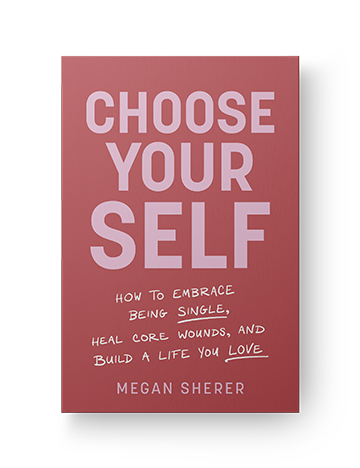
Excerpted from Choose Your Self: How to Embrace Being Single, Heal Core Wounds, and Build a Life You Love.
Megan Sherer
Megan Sherer is a certified somatic therapist and licensed hypnotherapist whose mission is to help others build healthy and fulfilling relationships, starting with self. She hosts the Well, Then podcast and founded the women’s therapy app The Self Care Space. For more, visit megansherer.com.
There is a saying that goes “hurt people hurt people.” I believe this to be true. We have been conditioned, in environments of scarcity and violence, to react more with fear and self-protection than curiosity and connection. As a result, we live in a world that is deeply in need of more kindness, more ease, more connection, more sweetness. It’s time we offer more sweetness and ease to ourselves, to one another, to our planet.
Now, this does not mean being a Pollyanna or “sickly sweet.” It does not mean being addicted to sugar and finding other ways to hurt ourselves. It means moving through the world and offering sweetness to ourselves and others. It means setting good boundaries and protecting our community and the hive from those who would “rob” us of our sweetness, of the sustenance (love, connection, inclusion, belonging) that helps us endure.
But first, we have to allow ourselves to taste and feel the sweetness on our own. We have to practice being deeply grateful for what is sweet in our life, holding it with reverence, and freely sharing it with others.
We invite you to build your own relationship with, and deep worthiness of, sweetness. We invite you to find and taste the sweetness in your life. Times of abundance and sweetness are special, and we must remember to taste them fully and live into them. We must also remember to share them.
What sweetness do you have in your life? What sweetness can you share with others? What sweetness do you crave from others? How can you cultivate more sweetness in your life? What does that look, sound, and feel like? Where do you deny yourself sweetness? How can you give yourself permission to taste and share all of the sweetness that comes to you? How can you bring sweetness into the lives of others?
Honey Tasting Meditation
For this practice, you’ll need some (ideally) local honey. If possible, find out what you can about where it came from and what was in bloom at the time it was made. This will help deepen your relationship to the place you live. If you cannot find local honey, that is okay; you can still complete the meditation as instructed.
Find a quiet spot in a quiet moment and sit with your jar of honey. Before opening it, sit in a few moments of conscious breathing to quiet your mind.
Start with your sense of sight and smell. Hold the jar of honey up in front of you and observe its color and viscosity. Take note of how it looks in the light, in the dark.
Next, open the jar of honey and bring it to your nose. Inhale deeply. Notice the sensations, images, or thoughts that come to you as you breathe in the aromatherapy of the honey.
Now, reverently taste the honey. Take a small amount on a spoon and meditatively savor the flavors, sensations, feelings, and images that come to you. Chew the honey. Hold it on your tongue. Allow yourself to indulge in its many flavors. Do this again with another spoonful (or as many as you want) but take your time.
When you’re done, write down any messages or insights you received from the experience and the nurturing and healing power of the honey. Take this moment of sweetness with you into your day.
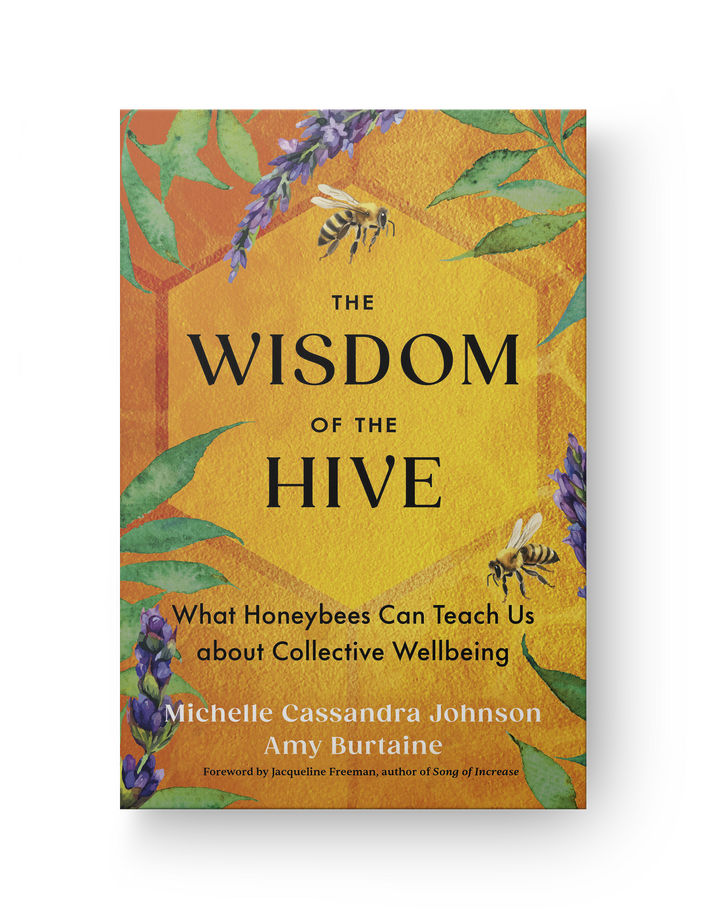
Excerpted from The Wisdom of the Hive: What Honeybees Can Teach Us about Collective Wellbeing.
Michelle Cassandra Johnson is an author, activist, spiritual teacher, racial equity consultant, and intuitive healer. She is the author of six books, including Skill in Action and Finding Refuge. Amy Burtaine is a leadership coach and racial equity trainer. With Robin DiAngelo, she is the coauthor of The Facilitator’s Guide for White Affinity Groups. For more, visit https://www.michellecjohnson.com/wisdom-of-the-hive.
Tami Simon speaks with Hank Wesselman, who has a PhD in anthropology from the University of California at Berkeley, and for many years studied the origin of the human species in the Rift Valley in East Africa. He is also a student and teacher of shamanic practices and is the coauthor of the new Sounds True book Awakening to the Spirit World. Hank discusses what he calls the coming great age in which direct spiritual revelation will take precedence over any type of organized religion, and the import role that shamans hold today in connecting the dream world with present reality. (64 minutes)
Tami Simon speaks with Caroline Myss, a pioneer in the field of energy medicine. Caroline is a medical intuitive, mystic, and author of four New York Times bestsellers, as well as the Sounds True audio learning programs Energy Anatomy, Sacred Contracts, and Transforming Trauma. In this interview, Caroline discusses the nature of the soul and what it means to heal beyond reason. (55 minutes)
Matt Kahn is an author, spiritual teacher, and highly attuned empathic healer whose intuitive abilities allow him to bridge the mystical with the mundane. With Sounds True, Matt has created the book Whatever Arises, Love That: A Love Revolution That Begins with You and an upcoming online course of the same name. In the second part of their conversation on Insights at the Edge, Tami Simon and Matt talk about the connection between a sense of safety and the ability to truly live one’s life to its fullest. They also discuss the four kinds of inflammation the ego can experience when overstimulated, and how to work with these energetic reactions. Finally, Tami and Matt speak frankly about what he means by “the love revolution” and how the practice of loving oneself can uplift the entirety of the world.
(65 minutes)