Customer Favorites

The Power of Self-Hypnosis

Tami Simon speaks with Dr. Steven Gurgevich, a licensed psychologist who specializes in medical hypnosis. He is the director of the Mind-Body Clinic at Dr. Andrew Weil’s Arizona Center for Integrative Medicine and the author of several Sounds True titles including the Self-Hypnosis Home Study Course, Deep Sleep with Medical Self-Hypnosis and The Self Hypnosis Diet. He will also be teaching an online course beginning May 5, 2010 on The Power of Self-Hypnosis. Dr. Gurgevich discusses how self-hypnosis works and the role our subconscious mind plays in healing. (56 minutes)

Raghu Markus and Parvarti Markus: Love Everyone, Serve...

Raghu Markus is a musician and artist who collaborated with Ram Dass on the groundbreaking spoken-word and world music album Love Serve Remember, and currently serves as the executive director of the Love Serve Remember Foundation. Raghu has collaborated with Sounds True and Ram Dass to create Being Here Now: The Essential Teachings of Ram Dass, a nine-week online course beginning on September 19. Parvati Markus has written and edited many nonfiction books, including the recent Love Everyone: The Transcendent Wisdom of Neem Karoli Baba Told Through the Stories of the Westerners Whose Lives He Transformed. In this episode of Insights at the Edge, Tami Simon speaks with Parvati and Raghu about the influence of Neem Karoli Baba on Western spiritual thought, as well as how Ram Dass spearheaded those changes. They also listen to and discuss an excerpt from the Being Here Now course, in which Ram Dass teaches on the essence of karma yoga and how we can maintain joy and lightness even in difficult times.
(63 minutes)

We Are Always Dreaming

Tami Simon speaks with Dr. Catherine Shainberg, a teacher who has more than 40 years experience adapting traditional practices into a modern medical context. Dr. Shainberg is the founder of the School of Imagery, and with Sounds True she has released the new book DreamBirth: Transforming the Journey of Childbirth Through Imagery. In this episode, Tami speaks with Dr. Shainberg about the Kabbalistic lineage in which she’s been trained, how imagery is the language of the body, how the style of imagery she teaches can jolt us into spontaneous insight, and the effectiveness of imagery for mothers in every phase of the journey through childbirth. (66 minutes)

Live from the Wake Up Festival!

Dear friends,

We’ve arrived in Estes Park and are preparing the ground for this year’s Wake Up Festival! We get started in just a few hours with an opening ceremony where we’ll be welcoming a few hundred friends from around the world who will be participating in one of our pre-Festival workshops. The main Festival begins on Wednesday which will feature a concert with Snatam Kaur. As a reminder, we’ll be live streaming Snatam’s concert at no cost for those of you who would like to tune in! We’re expecting upwards of 1000 people to share in the Festival with us, and are so happy to be in this field with you all!

This year’s pre-Festival workshops, which we’re quite excited about, include:

Into the Heart of Chanting with Snatam Kaur

Qigong Empowerment – Awaken the 4 Golden Wheels with Robert Peng

Energy Medicine: A Hands-On Experience with Donna Eden and David Feinstein

The Deepest Acceptance: Discovering an Effortless “Yes” to Life with Jeff Foster

Journey with No End: Writing and Spiritual Growth with Mark Nepo

Experiencing the Shamanic Journey: A Direct Path of Revelation with Sandra Ingerman

Leaving you here with a photo live from Wake Up central… sending our love to all our friends around the world.

estes

Relearning to Love Our Body

The Practice of Reconnecting


Finish the sentence: “I’ll accept my body . . .” 

For example:

“…when I lose 20 pounds.” 

“…when I have fewer wrinkles.”

“…when I reach orgasm faster.”


Determine the emotional experience you want as a result of that. If numerous emotions come to mind, write them all down, and choose one that has the most charge or intensity. 

Then complete the thought with, “As a result I’ll feel . . .”

Examples:

I’ll accept my body when I lose twenty pounds. As a result I’ll feel confident.

I’ll accept my body when I have fewer wrinkles. As a result I’ll feel relaxed.

I’ll accept my body when I reach orgasm faster. As a result I’ll feel sexual.


Now cross out the “when/as a result” statements:

I’ll accept my body when I lose 20 pounds. As a result I’ll feel confident.

I’ll accept my body when I have fewer wrinkles. As a result I’ll feel relaxed.

I’ll accept my body when I reach orgasm faster. As a result I’ll feel sexual.


Working with one statement at a time, start each morning asking yourself, “How can I have the experience of [desired emotion] today?” You might journal a few ideas to create that feeling in your day.
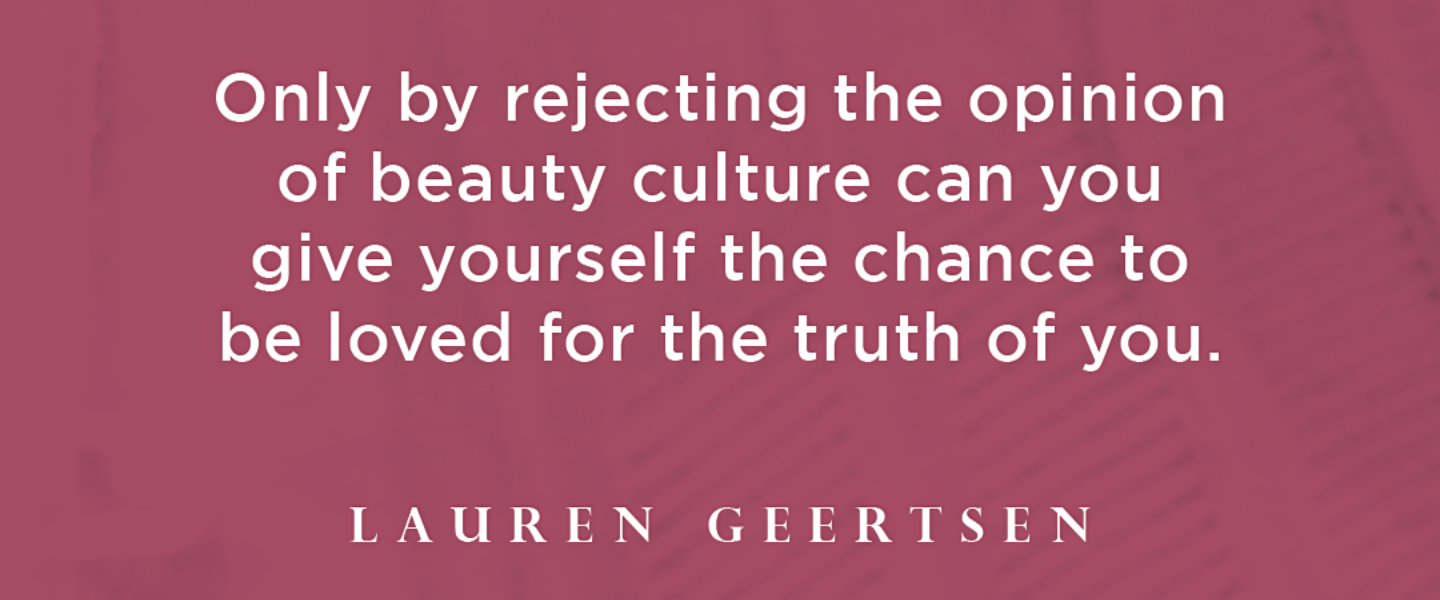
When we feel the need to change our appearance, it’s not because that’s the ultimate goal. We’re using body modification and alteration as a means to a positive emotional experience. But the means are always the end. As long as we use the mindset of body rejection, that’s the only outcome we’ll ever experience—no matter how much our body changes.

When doing this exercise, please note that words like beautiful or desirable do not describe feelings because they are statements of someone else’s perception of you. What we ultimately want is to feel good in our bodies, not to be judged positively by someone. Whenever we want someone’s positive judgment of our bodies, it’s because we think that’s the way we’re going to feel loved, safe, connected, expressive, or happy. Take the shortcut, and just go straight to creating that feeling in your life now.

Feelings are felt experiences in your body. Here are some examples:

Positive feelings: joyful, grateful, exhilarated, excited, aroused, peaceful, affectionate, inspired, hopeful, renewed, fulfilled, enchanted, delighted, calm, amazed, blissful

Negative feelings: hurt, sad, anxious, timid, angry, irritated, afraid, scared, confused, fatigued, tense, numb, helpless, uncomfortable, embarrassed, ashamed, exhausted, depleted, grief, appalled, shocked

Then there are pseudo-feelings—they’re not real feelings, but reflect your judgment of someone’s behavior or situation. Judgments are not feelings, they are mental ideas.

Pseudo-feelings include: abandoned, betrayed, invalidated, manipulated, misunderstood, disrespected, unseen, provoked, threatened, victimized, ignored.

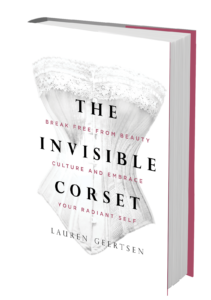
This is an excerpt from The Invisible Corset: Break Free from Beauty Culture and Embrace Your Radiant Self by Lauren Geertsen.

Lauren Geertsen is a body connection coach who helps women heal their relationship with food and body image. In her previous work as a nutrition consultant, Lauren realized the underlying problem for her clients was distrust of their bodies, which results from wearing the invisible corset. She now helps clients around the world trust their bodies and step into their soul purpose. Her website, empoweredsustenance.com, has supported over 40 million readers with holistic recipes and resources.


Sounds True | Amazon | Barnes & Noble | Bookshop | Indiebound

Pain as the Path

The wounds, scars, and pain we carry as men have a place in our lives. A function that can lead us directly to the core of deep meaning and fulfillment and provide a positive path forward. This is what initiation was supposed to teach us as men—how to descend into the depths of our own darkness and return a more complete and contributive participant in society.

However, this is where a man’s real problem resides: He has not been taught the skill or alchemy of initiation. He has not learned how to deal with his pain, or the pain of the world, and so he bucks against it.

I realized over the years of grappling with how to heal that not only was I ill-equipped to deal with the hurt I’d been given, but I also seemed to be woefully ill-equipped to reconcile with, and put a halt to, the perpetual hurt I passed on to others. Like many men, I was good at inflicting pain—and men who are good at something tend to do that thing a lot.

Not only was I undereducated in the alchemical craft of turning pain into purpose, but almost every man I knew was in relatively the same situation. Most men simply haven’t been taught how to deal with their pain and use it to become something better.

And this aspect of the journey is the missing link in male initiation, which has historically played the role of guiding a man through the transitory period between adolescence and adulthood, teaching him the skills of discipline, sovereignty, and the ability to face some of the most challenging aspects of his own life.

In fact, I began to see that not only have most men not been given the tools or resources to deal with the pain and suffering in their lives, but we as men are actively taught the opposite—the idiotic tactic of constant emotional avoidance. Not only this, but our emotional avoidance is seen as a theoretical and rational strength in certain circles.

Seeing this brings about a multitude of questions that both illuminate the foundational cracks within current masculine culture and also highlight the work we must embark on if we are to do our individual and collective parts as men in building a thriving society.

There’s more: I began to see the direct correlation between a man’s ability and willingness to face his own darkness and having a clear purpose, deep fulfillment, and clarity of contribution to the things that matter most to him.

But how can we as men give our pain a purpose in a culture where we are largely devoid of emotional permissions? Where the archetype of man, in order to be classified or quantified as a man, must do the impossible task of being brave and courageous without being vulnerable?

This is one of the biggest masculine myths—the false idea that you can be courageous without being inherently vulnerable. When we are rewarded for giving our lives, our hearts, and our emotional bodies up for sacrifice to maintain the illusion of invulnerable strength, we prioritize victory over connection. We praise ourselves for performance in the boardroom, bedroom, and bars, but we lack recognition for our performance in reconciliation, repair, and reparation.

There’s another way. A way where victory is found within the work, and part of that work is facing our own darkness.

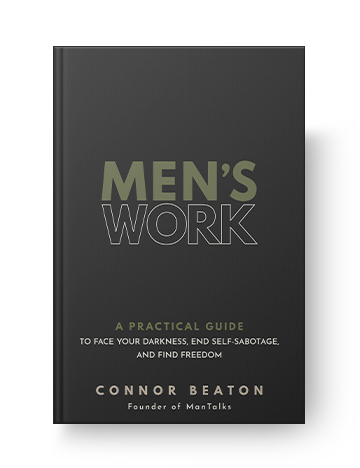
Excerpted from Men’s Work: A Practical Guide to Face Your Darkness, End Self-Sabotage, and Find Freedom by Connor Beaton.

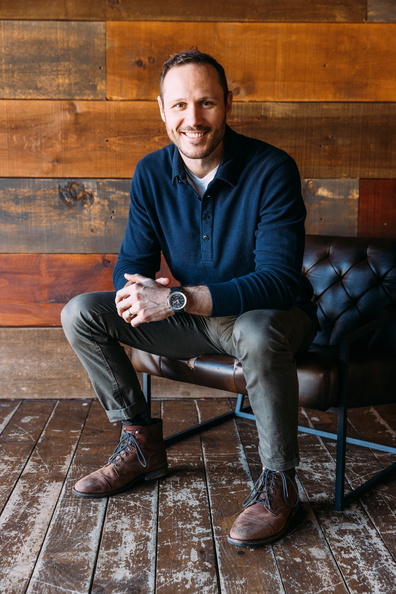
CONNOR BEATON is the founder of ManTalks, an international organization dedicated to the personal growth of men. He is a facilitator dedicated to building better men, an entrepreneur, a writer, and a keynote speaker. Connor has spoken to large corporate brands, nonprofits, schools, and international organizations such as the United Nations, Microsoft, Johnson & Johnson, Apple, TED, and Entrepreneurs’ Organization. For more, visit mantalks.com.

Learn More
Amazon | Barnes & Noble | IndieBound | Bookshop | Sounds True