Customer Favorites

E195: There Are No Problems, Only Experiences

Problems are not objective realities but labels we place on life experiences when they do not match our preferences. Suffering comes when these preferences lead to attachment to desires, expectations, and fears. In contrast, spiritual growth occurs when we stop judging and resisting life, and endeavor to learn from every experience how to participate fully in life without depending on circumstances to make us happy.

© Sounds True Inc. Episodes: © 2026 Michael A. Singer. All Rights Reserved.

Rewilding Our Spiritual Practice


Mindfulness Rewilded


“As great as the infinite space beyond is the space within the lotus of the heart. Both heaven and earth are contained in that inner space, both fire and air, sun and moon, lightning and stars. Whether we know it in this world or know it not, everything is contained in that inner space.” 

THE CHANDOGYA UPANISHAD 


As someone inside “the mindfulness industry,” I have observed that yoga has become as deprived of nature as the rest of society. With our rubber-soled shoes, yoga mats, and indoor practice spaces, modern humans move from one nature-disconnected space to another. Even during those rare moments between the car and the studio, we wear shoes that prevent contact with the ground beneath our feet. Yet the practices of yoga and meditation were born in the mountains, forests, and deserts of Asia. 


A few years ago, I attended a yoga conference in Manhattan, a few floors up at the midtown Hilton. After my second yoga class in a stuffy, windowless room, with hundreds of yogis in spandex moving about on rubber mats, I experienced a moment of cognitive dissonance. I love yoga—it is a powerful, beautiful practice—and I believe that the widespread increase in yoga and mindfulness practice is profoundly positive. However, something about this scenario didn’t seem quite right to me—or quite right for me. 


Not long after, at another yoga and recovery conference, my friend Tim Walsh, an avid outdoorsman and recovery coach, expressed my own thoughts when he said, “Folks, we’re standing on rubber mats inside a temperature-controlled room on the second floor of a giant brick building. How much more disconnected from the earth can you get!” His words rang inside me, and at that moment, something at my core woke up. I had felt this disconnect for years, and now it was time to do something about it. 


I had dreamed for many years of somehow bridging the worlds of meditation, yoga, and mindfulness with rewilding. When I finally started to research the connections between nature and mindfulness practices, I ended up creating programs for students at Kripalu that immersed us in forests and fields while practicing. I wanted to help people become conscious of their inner nature while out in nature and to help them see the importance of conserving our natural environments—the primal parts of ourselves. How did yoga and meditation, wild practices designed to awaken, empower, and enlighten, become so disconnected from the enlivening power and the beauty of the living earth? Because yoga and mindfulness have profound benefits for well-being, they have also been co-opted and commercialized. Products have proliferated—the mats and the clothing, the snacks and the food, the shoes and the hats. Our economy is driven by the consumption of things that must be extracted from the earth and produced and marketed and sold. As yoga and mindfulness became imbedded in modern culture’s mostly indoor lifestyle, these ancient practices also became cut off from the presence of the wind, sun, moon, and life of the living earth. 


When we disconnect from the living earth, we lose the life-affirming wisdom that is found outdoors. If we consider the fact that we are an evolutionary expression of the evolving earth, then our own self-awareness can be thought of as the self-awareness of the living earth itself. Which is a pretty powerful idea to ponder! And it means that human rewilding can lead to a rewilding of our spirit, a reinspiriting of our essential nature. 


Pacification or Liberation? 


Yoga and mindfulness today are often used to help people invite calm and to support greater self-regulation and impulse control in stressful situations. But just as I’m concerned about their commodification, I’m also concerned that these ancient practices are being used as pacifiers to help people put up with the negative effects of modern society, because these ancient practices are also the tools for true liberation from the root causes of our distress. 


To be clear, yoga, meditation, and mindfulness are extremely valuable practices. The abilities to take a deep breath and step back from the fight-or-flight response, to self-soothe, and to know when to practice self-care, these are all critical tools for living consciously. 


I am reminded of an episode of the old television show Kung Fu, in which a martial arts master, played by David Carradine, is taken prisoner and forced into manual labor under the blazing sun. Labeled a troublemaker, he is put into a hot box, a cast-iron oven with an unbearably fierce temperature. In the box is another man who is panicked by their dangerous situation. Carradine calmly teaches the man how to meditate, to slow his breathing and witness his thoughts. At the end of the day, they are released, and both emerge from the box alert and calm, much to the surprise of their captors. 


A more recent and real-life example is the group of boys on a soccer team in Thailand who were stranded for almost two weeks in a complex network of flooded tunnels. They learned to meditate from their coach, who had lived in a Buddhist monastery for 10 years. They sat in the darkness, not knowing if anyone would come to their aid, and they stayed calm and connected to one another. They were all ultimately saved by a team of divers who risked their own lives in the effort.


Meditation is a powerful antidote to fear and the modern daily stresses that can harm our health if left unchecked. Meditation can even save your life. But if you are under duress, the first thing to check is whether you can get out of it. See if the door to the hot box can be opened. Look for the escape route in the cave. If a change in the circumstances is possible, the wise action is to eliminate the cause of suffering first, and meditate later. 


As a species, we often don’t even know that we are in a hot box or a dangerous cave. The stress of modern life is ubiquitous, so a change of environment may not even seem like an option. And, of course, not everyone can get away from their circumstances or difficulties. Not everyone has easy access to pristine natural places. Many can’t afford to travel to a place with fresh air and water. 


I hope that the steps I teach in my book, Rewilding, for connecting with the living earth will open doors for everyone. The sunlight, the movement of air, the presence of the earth that is solid and stable even in asphalt, the dandelion coming up through a crack in the pavement, all can be entries into a wilder, more conscious, more awakened life. 


For more practices in rewilding, search for “Micah Mortali” on the Sounds True blog to read his other posts or find his book, Rewilding: Meditations, Practices, and Skills for Awakening in Nature, at your favorite bookseller!

Micah Mortali is director of the Kripalu Schools, one of the largest and most established
centers for yoga-based education in the world. An avid outdoorsman, mindful wilderness guide,
500-hour Kripalu yoga teacher, and popular meditation teacher, Mortali has been leading
groups in wilderness and retreat settings for 20 years. In 2018, he founded the Kripalu School of
Mindful Outdoor Leadership. Mortali has a passion for helping people come home to themselves
and the earth, and he is finishing his master’s at Goddard College on nature awareness and
mindfulness practices. He lives with his wife and children in the Berkshires. For more, visit
micahmortali.com.


Read Rewilding today!

Sounds True | Amazon | Barnes&Noble | IndieBound

Jill Koziol and Liz Tenety: Redefining the Motherhood ...

Jill Koziol and Liz Tenety are the founders of Motherly, a website and support network devoted to redefining modern motherhood. With Sounds True, they have created This Is Motherhood: A Motherly Collection of Reflections + Practices. In this special edition of Insights at the Edge, Sounds True associate publisher Jaime Schwalb sits down with Jill and Liz to talk about how they originally formed Motherly and their desire to create a more positive approach to modern parenting. They talk about the importance of regular self-care practices for parents and why it really does take a village (even a digital one) to raise a child. Liz and Jill explain how each parent has their own skills and “superpowers,” as well as how you can recognize them. Finally, Jaime, Jill, and Liz discuss the discipline and clear communication needed to effectively parent. (54 minutes)

Robert Wright: A Meta-Cognitive Revolution

Robert Wright is a scholar, journalist, and the author of books such as Why Buddhism Is True, Nonzero, and The Evolution of God. In this episode of Insights at the Edge, Robert and Tami Simon examine meditation from a slightly different perspective, discussing the practice as both a tool of discovery and a kind of rebellion against the hardwired instincts of natural selection. They speak on whether there is a secret order to the universe and what truly fuels moral action. Robert and Tami also talk about different ways to conceive of the arising of thought and of “enlightenment” itself. Finally, Robert comments on how stepping back from our mental processes comprises a “metacognitive revolution” that is key to the survival of the human race. (76 minutes)

Self-Love is a Superpower

Dear Sounds True friends,

I believe self-love is a superpower.

When we treat ourselves with kindness, it turns on the learning centers of the brain and gives us the resources to face challenges and learn from our mistakes. Transformation requires a compassionate mindset, not shame.

And yet, people often worry that self-love will make them lazy, self-indulgent, or self-absorbed. Science shows just the opposite: people with greater self-love are more compassionate toward others, more successful and productive, and more resilient to stress.

The best news of all: self-love can be learned. We can rewire the structure of our brain and strengthen the neural circuitry of love toward ourselves and others. Each time we practice self-love, we grow this pathway.

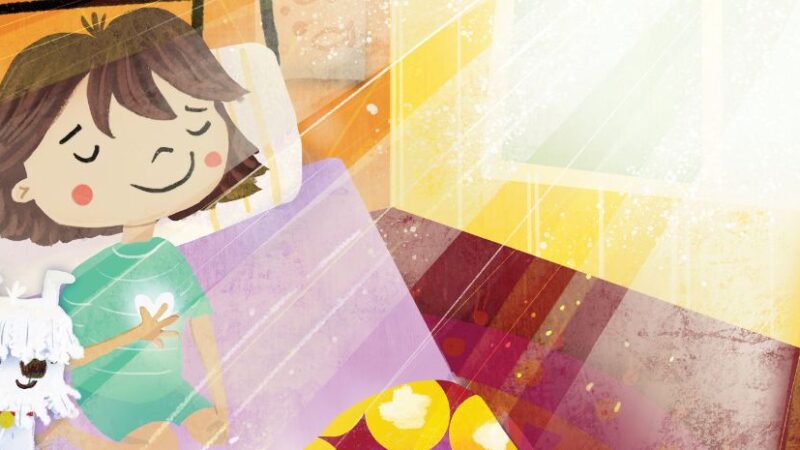
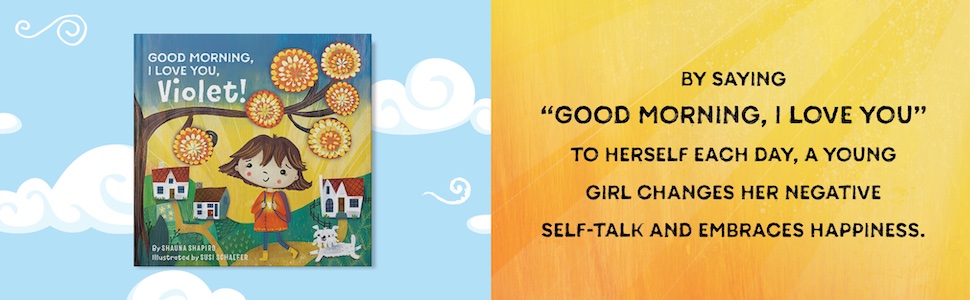
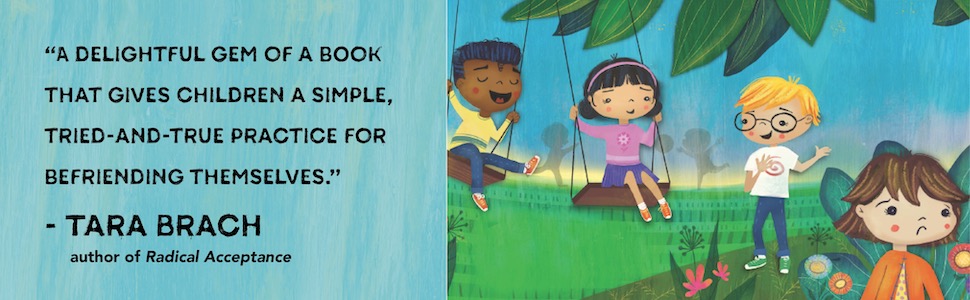
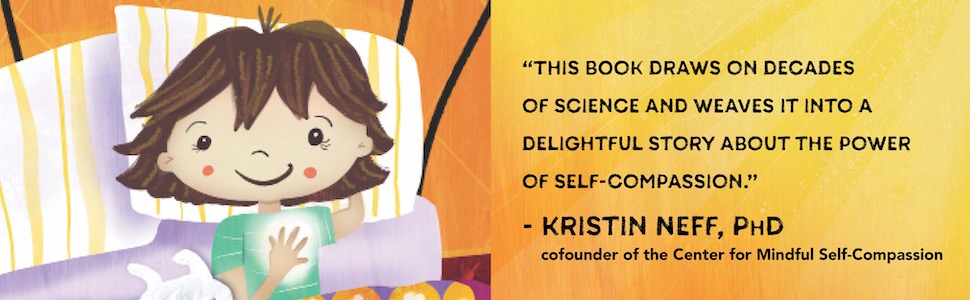
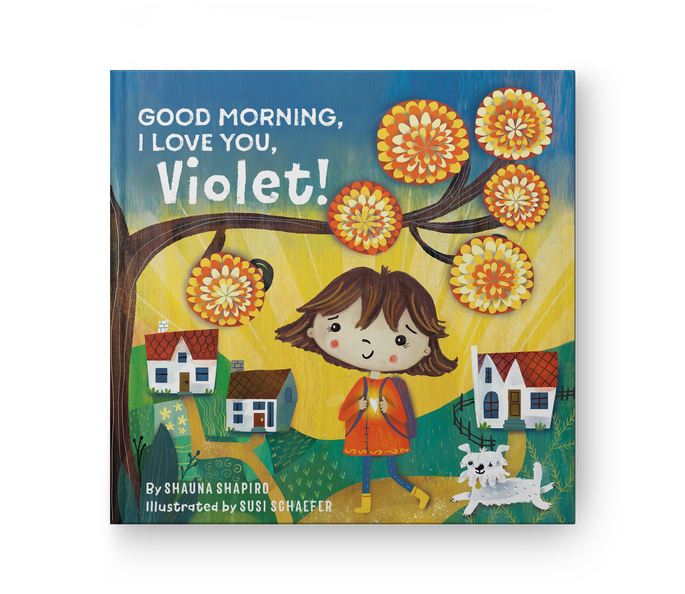
My new children’s book, Good Morning, I Love You, Violet!, offers a road map for strengthening your child’s brain circuitry of deep calm, contentment, and self-love.

It is built on principles of psychology and neuroscience and offers a simple yet powerful practice.

As a mother, when asked what I believe is the most important thing we can teach our children, I always answer “self-love.” Learning to be on our own team and to treat ourselves with kindness is life-changing. There is no greater gift we can give our children. There is no greater gift we can give ourselves.

May this book plant seeds of kindness that ripple out into the world.

Shauna's signature

Shauna Shapiro, PhD

P.S. I invite you to download a free coloring sheet from the book, created by illustrator Susi Schaefer, to enjoy with the children in your life.

Shauna Shapiro is a mother, bestselling author, professor, clinical psychologist, and internationally recognized expert in mindfulness and self-compassion. She lives in Mill Valley, California. Learn more at drshaunashapiro.com.

Learn More
Amazon | Barnes & Noble | Bookshop | Sounds True

Breaking away from the idea that there is one “right...

We live in a wild world with a wealth of information at our fingertips. This means we can read reviews, check forums, and see what other parents are saying about everything we purchase or do for our children. 

But that is not always a good thing. There is such a thing as too much research. 

I distinctly remember working with a client who had very high expectations around her child’s food. She was concerned with what ingredients were in the food, how it was prepared, how it was served—and anything less than “healthy” felt wrong to her. She was a self-proclaimed perfectionist who wanted the best for her child—she wasn’t going to “lower her standards” at the request of her partner or anyone else. 

As a result of her food concerns, she spent hours upon hours extensively researching topics related to food such as GMOs, toxins, ingredients, and safety. Through her research, she also read that stress could decrease her milk supply—so she shut down any conversations when her family tried to approach her about this or how it had taken over her life. 

This level of research was no longer about the food—postpartum anxiety was in the driver’s seat, pushing her to search for control. 

It’s also important to break away from the idea that there is one “right” way to mother. Just because we have access to information doesn’t mean there isn’t room for nuance. Take “healthy food” as an example. What constitutes a “healthy” diet has been a debated topic for decades and is often a wellness space filled with fads and extremes with each approach contradicting the next. There have been more rules prescribed to our food then I can count that cause people not to trust themselves and leave them seeing food as being good or bad. Food is not black or white. Our approach doesn’t have to be all or nothing.

In my client’s case, research had gone beyond just information-seeking. Sometimes, research is just research. But other times, research is:

  • Trying to find the “right” or “best” way to do something
  • Seeking reassurance
  • Grasping for certainty
  • Feeding your anxiety
  • An attempt to soothe your anxiety

I have seen this pattern play out many times with many of my clients. I believe that in many ways intensive mothering prevents us from seeing signs of anxiety. When we interpret perfectionism and the need to avoid mistakes at all costs as being a good mother, we have a lot of pressure to carry. It’s no wonder that so many of us find ourselves in the research rabbit hole.

Does that mean all research is bad? Of course not. But we need to learn the difference between when it’s helping and when it’s not. Researching should be used to provide you with enough information to make an informed decision. It should have boundaries—not be all-consuming. 

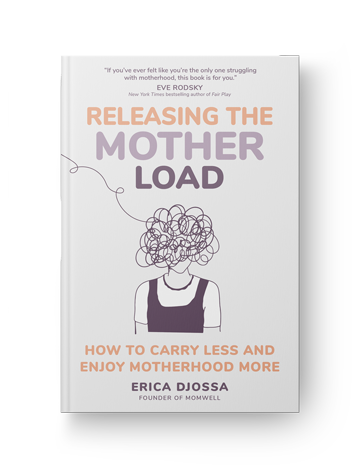
Excerpt from Releasing the Mother Load: How to Carry Less and Enjoy Motherhood More by Erica Djossa.

Erica Djossa

Erica Djossa is a registered psychotherapist, sought-after maternal mental health specialist, and the founder of wellness company Momwell. Her popular Momwell podcast has over a million downloads. Erica’s a regular contributor to publications like the Toronto Star, Scary Mommy, and Medium, and her insights have been shared by celebrities like Ashley Graham, Nia Long, Christy Turlington, and Adrienne Bosh. She lives in Toronto. For more, visit momwell.com

Learn More
Amazon | Barnes & Noble | Bookshop | Sounds True