They say that animals often come to resemble their owners. Or maybe it’s the other way around. I am not sure where that statement came from, but I would probably say there is a nugget of truth to it. Perhaps we do become more like our critters, or more likely, we simply learn from them.
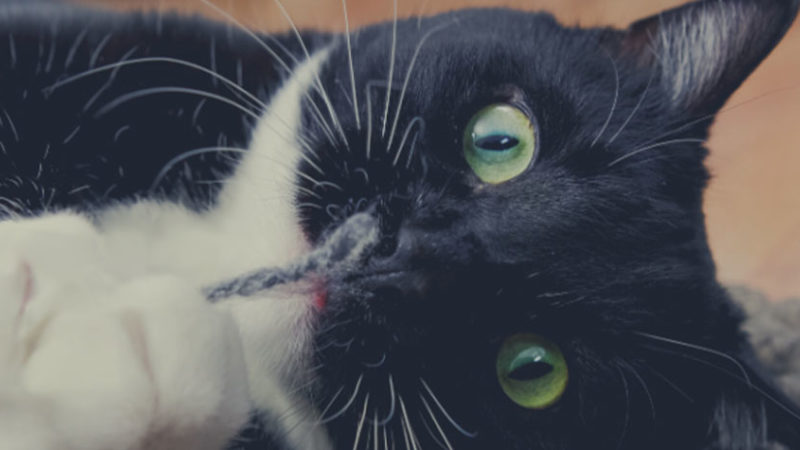
A decade ago, my husband and I adopted a little black cat from the local shelter. As soon as they plopped him in our hands, he began to purr like a motor. We bundled him up, took him home, and named him Monkey.
This name seemed to fit him much better than his original moniker, Phantom. Monkey wasn’t a cat who liked to hide away, and he wasn’t very stealthy either. Instead, he was restless, animated, and liked to play rough. Always in movement, he could barely sit still long enough for a picture. He’s got a true “monkey mind.”
I hate to admit this, but in a way we’re a lot alike.
Like Monkey, I am easily distracted. I blame this on my Gemini ways, but the truth is that’s not an excuse for having too many projects running at the same time with all the technology in the world clamoring for my attention. The blips and dings that alert me that I’ve got mail or texts or other such things keep me in a state of high alert. “What’s happening? What’s going on?” Or, more accurately, “What did I miss?”
Like a pinball whizzing around the flippers and bumpers, my brain is in constant motion. Sometimes I’ve found myself amazed that I was able to get anything done at all.
My writing sessions were punctuated by petting sessions, and cooking a meal required one hand on the spatula while another held a laser pointer to keep Monkey from biting my heels. Disruption via feline was a way of life around my house, so, as you can imagine, it wasn’t easy for a focus-challenged person like myself to remain present much of the time.
One day, I was tapping away on the computer when I noticed Monkey staring down a bug. He was poised to pounce, eyes wide, and completely still. The bug wasn’t moving. Neither was Monkey. This was a total showdown between cat and bug—and neither was going to move until the time was right.
Fascinated, I stopped what I was doing to watch this duel unfold.
The stare-down continued for a few minutes. This cat wasn’t going to flinch until he witnessed a glimmer of activity. Finally, I saw a flicker of movement as the bug slowly lifted his leg. Monkey’s eyes widened as he wriggled his bottom. Suddenly he pounced on the hapless bug, and in an instant, it was over. The bug was lying face up, with no sign of life. Monkey sniffed around it for a second, then sauntered away. The job was done and now it was time for a nap in the sun.
I found myself pondering this long after the deed was over.
How could this cat, who detests the house rules and who seems to be in constant squirm motion, remain so deeply engrossed? How is it that Monkey was able to deftly finish his work while I sat at my desk, still stuck on finding the first opening sentence for my latest project?
The truth was staring me in the face as the little familiar beep that alerted me to an incoming text pulled me away from my work.
I had created a maelstrom of technology and distraction around me. This was preventing me from effectively “killing the bug.” If I was going to be prolific, effective, and calm in both my work and my spiritual practice, I needed to set myself up for success. It was time to commit to making my world distraction-free so I could tame my own monkey mind.
This is an excerpt from a story written by Theresa Reed and featured in The Karma of Cats: Spiritual Wisdom from Our Feline Friends, a compilation of original stories by Kelly McGonigal, Alice Walker, Andrew Harvey, and many more!
Theresa Reed has been a professional, full-time tarot reader for more than 25 years. A recognized expert in the field, she has been a keynote presenter at the Readers Studio, the world’s biggest tarot conference, and coaches tarot entrepreneurs via numerous online courses and her popular podcast, Talking Shop. Theresa lives in Milwaukee, Wisconsin. For more, see thetarotlady.com.