Need some tunes for healing and self-compassion? Experience the moving compositions of music guided by the flow of prana from the Sounds True Ultimate Collection!
While many of us spend December celebrating the holidays, this is also the perfect time for reflection—and for death and rebirth. Writing as a path to awakening is an invitation and celebration—it’s your ticket back to your creative brilliance.
Life is short. Time is fleeting and invented—it’s only really ever now. Love is showing up fully with presence—open-hearted, raw, and vulnerable to the world; it’s the only thing that matters. And it’s with this that I invite you to write your own obituary.
Reflecting on our own mortality is an opportunity to assess what is truly important in our lives. To reflect on our own mortality is to enter into the community of humanity via the ultimate vulnerability around ceasing to exist. When we approach this with an open heart of curiosity, we have a chance at greater compassion, patience, and understanding with the realization that we are all in this together.
Every one of us goes through this fact of our temporary nature in physical form; there is no getting out of this world alive. And here we have a choice—we can put off that reality, ignore it, get completely freaked out about it, or we can face that fact with courage and curiosity.
It’s so easy to get caught up in the mundane details and challenges of daily life to the extent that we can forget what we are really living for—what our core purpose in this lifetime truly is! The results of such an investigation are a more awakened sense of self, a deepening compassion for yourself and others—not only those intimate in your life—but for humanity as a whole.
Begin by writing it as a list or try writing it as a poem. Tune into any fears or resistances that arise. You could try modeling your piece on a traditional obituary you might read in your favorite newspaper or online magazine. Freewrite into these questions and see what arises.
How do you want to be remembered?
What are the true highlights of your life?
Who were the people who most inspired or influenced you?
What did you learn being embodied in this life that you want to share with others?
What held the most meaning for you in your days on this earth?
A highly regarded and sought-after speaker and workshop leader, Albert Flynn DeSilver has taught and presented with several luminaries, including Elizabeth Gilbert, Cheryl Strayed, Maxine Hong Kingston, Michael McClure, and U.S. Poet Laureate Kay Ryan among many others. In addition, Albert is an internationally published poet, memoirist, and novelist. His writing has appeared in over 100 literary journals worldwide. He has published several books of poetry and the memoir, Beamish Boy. Albert teaches at the Omega Institute, Esalen, Spirit Rock, and writing conferences nationally. He lives in Northern California.
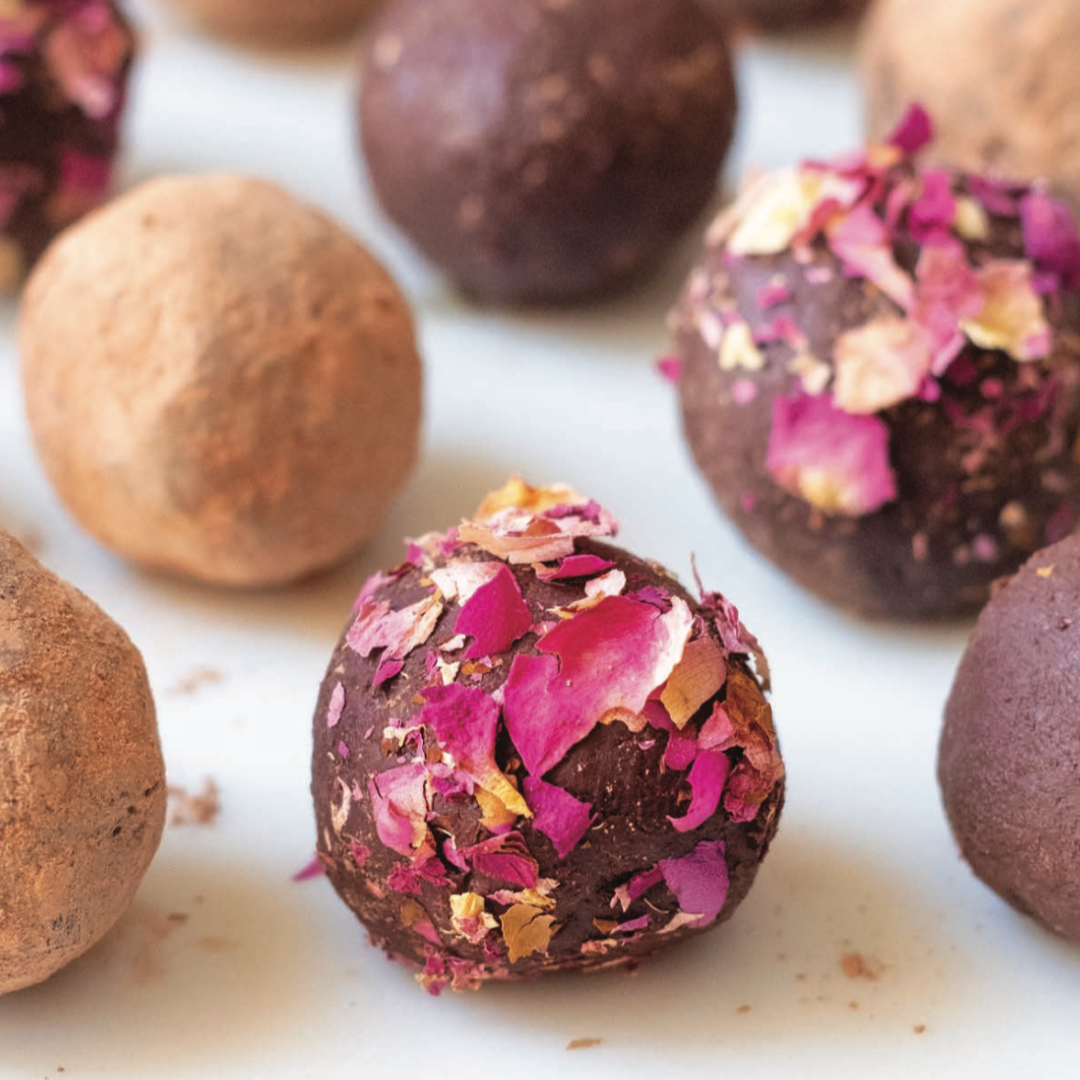
1/2 cup coconut cream, from the top of a chilled 13 1/2-ounce can of full-fat coconut milk
1 1/2 cups dark chocolate chips or chopped dark chocolate
2 drops food-grade pure lavender oil
1/4 cup cacao powder
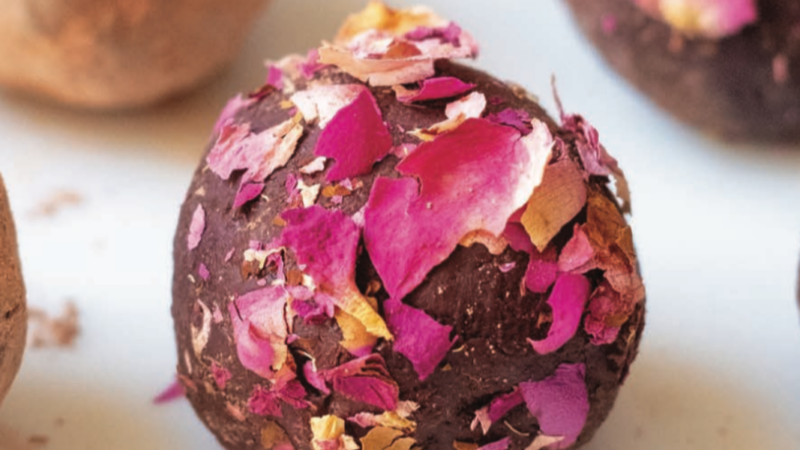
2 Tbsp dried rose petals, crushed
INSTRUCTIONS:
Scoop the coconut cream into a double boiler. Heat the coconut cream until it’s hot to the touch, then pour in the chocolate. Turn the heat down to medium-low. Stir the chocolate and coconut cream together until the chocolate is fully melted and the mixture forms a shiny ganache.
Remove the ganache from heat and stir in the lavender oil. Place the bowl of ganache in the refrigerator to chill for 2 hours, or until completely solid.
Line a plate with parchment paper. Scoop the chocolate mixture into 16 pieces using a tablespoon, and place on the plate. Don’t worry about forming the pieces into spheres yet. Place the plate back in the refrigerator for 10 minutes to firm up.
Pour the cacao powder and crushed rose petals into 2 small separate bowls. Roll the refrigerated chocolate blobs into balls, then roll them in either cacao powder, rose petals, or leave them plain. Serve.
Store leftover Lavender Rose Chocolate Truffles in an airtight container in the refrigerator for about 1 week, or freeze for up to 1 month. Defrost before serving.
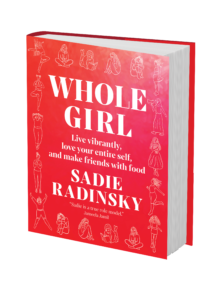
Sadie Radinsky is a 19-year-old blogger and recipe creator. For over six years, she has touched the lives of girls and women worldwide with her award-winning website, wholegirl.com, where she shares paleo treat recipes and advice for living an empowered life. She has published articles and recipes in national magazines and other platforms, including Paleo, Shape, Justine, mindbodygreen, and ThePrimal Kitchen Cookbook. She lives in the mountains of Los Angeles. For more, visit wholegirl.com.
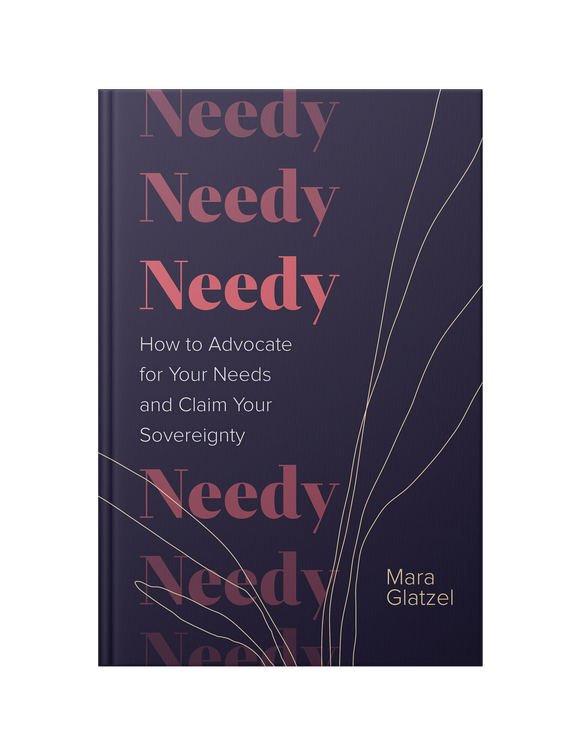
We live in a world full of deadlines. Alarms. Screaming kids. Nagging bosses. More on our to-do lists than we could accomplish in three lifetimes. It’s easy for your needs to get buried underneath the rubble of daily life, and figuring out how to reconnect with your authentic self can feel touch and go… at best.
I wrote Needy: How to Advocate for Your Needs and Claim Your Sovereignty to lovingly provide the space for you to better understand your needs, experiment with new habits that help you meet those needs each day, and build a resilient connection with yourself that you can rely upon for good.
You have needs—your needs matter. And yet, you’ve been taught that pushing your needs to the back burner is the only way to get things done, that your needs are an overwhelming burden, or that self-care is a luxury you can’t afford. But the presence of your needs is a fact and not a flaw. You can reclaim your energy and give yourself permission to take up space in the center of your own life.
In Needy, I share my unique approach to identifying, honoring, and advocating for the most tender and true parts of yourself that yearn to be acknowledged. It is an invitation to embody self-acceptance, which leads to meaningful growth in self-responsibility, self-care, self-trust, and self-love.
This book will be a delicious companion for your journey, but you actually can begin caring for yourself with greater tenderness and open communication right now.
I invite you to take the next three minutes to check in with yourself.
Put down your phone, close your computer, and put your hand on your heart.
Breath deeply into your belly and ask yourself:
How do I feel?
What do I need?
What does my body need from me?
What is ONE, doable need that I am ready, able, and willing to meet?
Real self-care is responsive, not prescriptive. The care you are aching for right now will be found in asking yourself those four questions. Give yourself permission to start with one, tangible action.
And repeat as necessary.
Need more? I will see you between the pages of Needy. I am so grateful to be able to share this book with you, and I hope you will share it with the humans in your life who struggle to take up space in this way.
xx Mara
Mara Glatzel, MSW, (she/her) is an intuitive coach, writer, and podcast host. She is a needy human who helps other needy humans stop abandoning themselves and start reclaiming their humanity through embracing their needs and honoring their natural energy cycles. Her superpower is saying what you need to hear when you need to hear it, and she is here to help you believe in yourself as much as she believes in you. Find out more at maraglatzel.com.
We have been tricked to believe that the trauma response is a sign of weakness and disorder. What science shows us is that the trauma response is in fact a sign of strength and proof of an inherent human drive to survive. We need society to catch up with science, and fast. We are no longer living in an era where we can assume that trauma impacts a minority of the population. Trauma impacts us all. This has always been true, but we can no longer pretend otherwise.
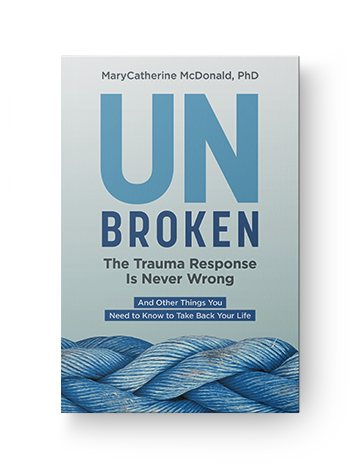
Unbroken is a book about the miracle of the trauma response, the importance of acceptance and self-compassion, and the transformative healing potential that lies within us all. Drawing on my experience as a trauma researcher, coach, as well as my own personal journey of healing, this book offers a new perspective on trauma that emphasizes the wisdom of the body and the resilience of the human spirit.
If you’re struggling with the after-effects of trauma, Unbroken can help you understand your experience in a new light. You’ll learn how trauma impacts the brain, the body, and the spirit, and how you can use this knowledge to start your journey of healing. You’ll discover practical tools and strategies for managing trauma triggers, regulating your emotions, and cultivating self-compassion. Most importantly, you’ll learn that the trauma response is never wrong – it’s a natural and adaptive response to a difficult situation.
One of the most important lessons of Unbroken is that the trauma response is never wrong. This means that even if you’re struggling with symptoms like anxiety, depression, or dissociation, your body is doing exactly what it needs to do to protect you. By embracing this truth, you can start to shift from a place of shame and self-blame to a place of self-compassion and empowerment. The book is chock full of tools that will help you understand and appreciate your trauma response and how to intervene when that response is tripped off unnecessarily. I can’t wait for you to dig in and I can’t wait to hear how this book changes you. It certainly changed me.
MaryCatherine McDonald, PhD, is a research professor and life coach who specializes in the psychology and philosophy of trauma. She has been researching, lecturing, and publishing on the neuroscience, psychology, and lived experience of trauma since the beginning of her PhD in 2009. She’s published two academic books and many research papers, and she is the creator of a trauma-based curriculum designed to serve previously incarcerated folks and veterans
My husband and I recently attended a talk that Bruce Tift gave at the Shambhala Center in Boulder titled Relationship as a Path of Awakening. Bruce Tift, LMFT, is a private-practice therapist and instructor at Naropa University here in Boulder. (In the interest of full disclosure, I must say that Bruce is also a Sounds True author with an amazing audio program titled Already Free.) In his talk, Bruce discussed at length the both magical and disturbing nature of intimate relationships and how important it is to continually nurture and accept one another, while simultaneously and unabashedly encouraging growth. He highlighted common relationship patterns that he often sees in his private practice and helped trace them back to childhood—namely survival skills that we established upon first connection with our mothers, which no longer serve us. It should be noted that Bruce was not talking about survival skills which could be considered obvious reactions to abuse or neglect from a parent. Instead, he was referring to seemingly innocent details, such as our mothers’ own self-confidence, and how those nuances come to fruition in our adult lives and inform how we ultimately view the world, connect in intimate relationships, parent our children, etc. For me, discovering how much our lives are perpetually infused by even the minutest aspects of intimate relationship was both a beautiful and terrifying realization. How can we ever be fully aware of the implications of our behavior?
In his talk, Bruce also emphasized the need for couples to develop what he calls “healthy intimacy,” which involves building a strong connection, while at the same time fostering a sense of healthy separation. In Bruce’s opinion, the juxtaposition of connection and separation encourages couples to build a sense of individual independence and to shed their own self-limiting behaviors, while also fostering a depth of adoration and understanding for one another and their collective experience. What most resonated for me in Bruce’s talk is that individual development is only as effective as collective development—for in intimate relationship, the two are ultimately one. No matter how much progress we may make individually, if we’re not progressing in step with one another, our collective experience will be perpetually fractured. While this has always been obvious to me when it comes to goals and alignment related to our outer life—finances, health, travel, family, etc.—I’ve never viewed our inner spiritual goals as those that require the most attention and ultimately make our relationship work.
As relative newlyweds, my husband and I are continually exploring relationship and the role that intimate relationships in particular play in one’s practice or personal growth. While people typically rely on those closest for nurturing and support, it is also those close to us who are best equipped to cast light on all our shadows. But how do we strike the balance between building the nest and deconstructing old patterns? How can we encourage one another to be vulnerable and to break our hearts wide open in relationship, while simultaneously using that same openness to examine and cast each others’ skeletons out of the closet? How do we prevent the very delicateness that we create within intimacy from also being used against us? In Bruce’s words, how do we negotiate the hard fact that our most beautiful and unconditional relationships can also be the most disturbing?




 Sadie Radinsky