Customer Favorites

Friedemann Schaub: Becoming the Empowered Leader of Yo...

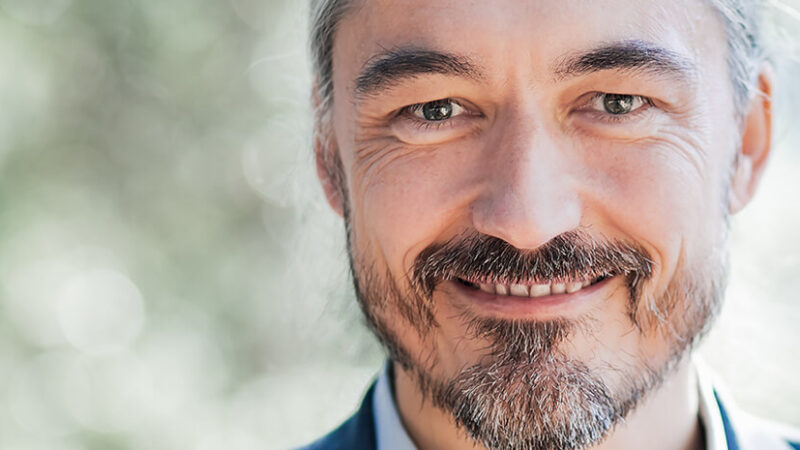
The subconscious mind has a critical role in our lives—a role that it’s always busy fulfilling. But it also has a problem, explains Dr. Friedemann Schaub: “It pretty much does whatever it started to do early in our lives.” In this podcast, the visionary physician and researcher speaks with Tami Simon about how we can begin to teach our subconscious “not just to go for safety, but to go for fulfillment, purpose, and passion.”

Listen in for insights from his Sounds True publication, The Fear and Anxiety Solution, and his new book, The Empowerment Solution, as Tami and Dr. Schaub explore consciously collaborating with your subconscious; positive and negative emotions; how the subconscious deals with a sense of conditional acceptance and love; changing the filter of not being good enough; discovering the essence of being and the peace that comes with it; the power of yoga, meditation, and other spiritual practices; a guided journey to your core self; escaping oneself versus propelling oneself forward; beliefs, the laws of our life; breaking the habit of people-pleasing; the difference between empathy and compassion; growing through our pain; setting relationship boundaries; finding the marriage between head and heart; trauma healing; learning to treat ourselves like we treat those we love; helping your subconscious trust your conscious mind; self-appreciation; stopping the pattern of defining yourself by your achievements; and more.

Note: This episode originally aired on Sounds True One, where these special episodes of Insights at the Edge are available to watch live on video and with exclusive access to Q&As with our guests. Learn more at join.soundstrue.com

The Hidden Meaning of The Belly in Yoga

The Hidden Meaning of the Belly in Yoga Blog Header ImageMost of us have lost our connection to the mysterious forces at play in the abdominal region, as well as to the appearance, function, and location of the organs and glands within it. We know that this area is responsible for digestion and assimilation, but in most Western cultures, a belly is considered healthy only according to its outer appearance: flat, “cut,” and firm. Good posture is supposed to be chest up, shoulders back, gut in. Emotionally, for many, the belly receives the brunt of our dysfunctional attempts to deal with negative feelings such as anger, fear, or low self-esteem.

In general, popular Western culture has placed more prominence on the head (objective intellect) and heart (individual soul) centers for discernment and transformation, while overlooking what many Eastern or so-called primitive cultures consider an essential step—the prerequisite descent into the depths of our being (lower centers), which is necessary before the ascent toward higher levels of awareness (upper centers). Our attention has moved away from the profound intelligence of the lower physical and emotional center of the body—our “guts.”

However, remnants of understanding are still found in common expressions in our languages, intimating a time when we recognized the power of the lower centers. In English, to have “a gut feeling” suggests a deep understanding that often is hard to explain logically, and in the past, feelings that come from deep in our center were considered more reliable than those that came from “above”: the heart or the head. Then there is someone with “guts,” which implies courage and unwavering integrity.

In Japan, the word hara can be simply translated as “belly,” but the roots of its meaning extend far beyond the physical abdomen. In Japanese culture, hara takes on a meaning that involves almost every aspect of life. It implies all that is considered essential to a person’s character and spiritual evolvement. Hara is the center of the human body, but not just of the physical body. In many idiomatic Japanese expressions where the root word is found, the meanings suggest a deeper context for the term. In his book Hara: The Vital Center of Man, Karlfried Graf Dürckheim describes one such expression: Hara no aru hito. It suggests not only one who possesses “center” physically, as in posture and balance, but also one who maintains balance in every way, including emotionally and mentally. This person is capable of tranquility in the face of strain, moves in and about the world with serenity, and possesses an inner elasticity that allows quick and decisive responses to any situation that arises. The hara is also seen as the place where the body’s vital life energies collect and are expressed, whether through physical movement or energetic presence.

Hara means an understanding of the significance of the middle of the body as the foundation of an overall feeling for life.

—Karlfried Graf Dürckheim

It is this very quality of hara that we look for in our yoga practice. What is referred to in Patanjali’s Yoga Sutras as sthira sukham is a state of unconditional calm that is not dependent on any outward circumstances. When in it, we command heightened sensitivity and an increased readiness to meet the unexpected. Here we realize that our capacity for appropriate response in the practice of asana can only come from the genuine absence of tension, coupled with the correct attitude of mind and lightness of heart. Throughout the practice of yoga poses, cultivating softness in the belly helps release a subtle downward flow and sense of fluidity that can be felt there and moving down into the pelvic floor, providing an intuitive invitation to move more deeply in all poses, especially those that turn or lengthen through the waist.

How the belly “thinks” intuitively could be a function of what science is now calling our second brain, or the enteric nervous system, which is an extensive network of neurons embedded in the lining of our gastrointestinal tract, from esophagus to anus. In addition to its handling of nearly all the digestive functions of our intestines, it is important to understand how this system of neurons intimately connects with our autonomic nervous system and, through the vagus nerve, becomes a critical component of parasympathetic control of the heart, lungs, and intestines.

The vagal channel of communication between the abdominal organs and the brain includes branches of cardiac and pulmonary ganglion, which suggests a shared relationship among these organs as well and offers a scenario in which the interrelationships are established both anatomically and energetically. The enteric system includes many of the same neurotransmitters found in the brain, including dopamine (in the intestines, it reduces peristaltic movement and maintains the inner linings of the intestinal tract; in the brain, it stimulates desire and motivation for reward response, or pleasure), serotonin (in the intestines, it stimulates peristaltic movement; in the brain, it regulates mood, appetite, and sleep), and acetylcholine (in the intestines, it stimulates peristaltic movement; in the brain, it regulates arousal, attention, memory, and motivation).

Numerous scientific studies have shown that the voluntary control of slow breathing has a substantial positive effect on our parasympathetic response. There is multidirectional communication via vagal signals to and from the brain to quiet frontal cortical activity, as well as an inhibitory influence upon the heart and sympathetic nervous system activity to and from the gastrointestinal tract that improves peristaltic function while strengthening immune system response in the gut.

Breathing is not merely an in-drawing and outstreaming of air, but a fundamental movement of a living whole, affecting the world of the body as well as the regions of the soul and mind.

—Karlfried Graf Dürckheim

This is an excerpt from Gravity & Grace: How to Awaken Your Subtle Body and the Healing Power of Yoga by Peter Sterios.


Peter Sterios is a popular yoga teacher and trainer with over four decades of experience. He’s the founder of LEVITYoGA™ and MANDUKA™, as well as KarmaNICA™, a charitable organization for underprivileged children in rural Nicaragua. Sterios taught yoga at the White House for Michelle Obama’s anti-obesity initiatives for three years, and in 2018 he was invited to the Pentagon to share yoga’s therapeutic effects with the US Marine Corps. He resides in San Luis Obispo, CA. For more, visit LEVITYoGA.com.

Read Gravity & Grace today!

Sounds True | Amazon | Barnes&Noble | Indiebound


The Hidden Meaning of the Belly In Yoga Pinterest

S2 E3: The Commitment to Stay Conscious

Even when you’ve devoted yourself to spiritual work, it can be difficult to maintain mindful awareness. In this episode, Michael speaks on the difficulty of maintaining consciousness and equanimity when we seem hardwired to be hooked by outside stimuli.

For more information, go to michaelsingerpodcast.com.
© Sounds True Inc. Episodes: © 2024 Michael A. Singer. All Rights Reserved.

James Hollis: “Find What You Love and Let It Kill Yo...


By what lights do you live your journey? What fires your imagination? What stirs your curiosity? What asks of you something that is so deep within you that perhaps it hurts, but you can’t let go of it because it won’t let go of you? These are some of the “large questions” explored by Tami Simon and her guest, Jungian teacher and author James Hollis. Hollis is one of those authors who’s beloved by everyone who works at Sounds True—especially those of us who’ve entered the second half of life—and in this podcast, you’ll discover why. 

Listen now as Tami and Jim discuss his new book, Living with Borrowed Dust, sharing thought-provoking insights about: the evanescence of our human journey; making your life luminous; asking large questions, and how we lose contact with the inquiries that serve our individuation; fate versus destiny; the independence of the psyche; the ego’s need for control; dreams as “health correctives” and an avenue to the numinous; showing up for your “appointment” in life; trusting the wisdom of nature; how psychoanalysis helps us rewrite the self-limiting narratives that hold us back; the worst damage of trauma: identifying who we are with what happened to us; why we can’t solve certain problems, but we can outgrow them; courage and perseverance; paying close attention to your inner life; living in a culture of distraction; dialoguing with your soul; the paradox of passion; facing the abyss; taking advantage of the precious moments; learning to live with ambiguity; and more.

Note: This episode originally aired on Sounds True One, where these special episodes of Insights at the Edge are available to watch live on video and with exclusive access to Q&As with our guests. Learn more at join.soundstrue.com.

Terry Real: Fierce Intimacy

Terry Real is a family therapist, author, and founder of the Relational Life Institute, which hosts workshops on family and relationships throughout the country. He has written several books, including The New Rules of Marriage: What You Need to Make Love Work. Terry will be a featured presenter during Sounds True’s upcoming online training summit Psychotherapy 2.0, which will take place September 7–13. In this episode of Insights at the Edge, Tami Simon and Terry talk about the inherent challenges of being in relationship and the many approaches to addressing those challenges in couples therapy. Terry discusses how men and women relate to one another in different ways, as well as the steps necessary when couples are badly out of sync. Finally, Terry and Tami speak on the Relational Life approach to therapy and the skills we need to develop in order to take our interpersonal relationships up to “full throttle.”
(67 minutes)

Thomas Hübl: Healing Collective Trauma

Thomas Hübl is an Austrian-born contemporary spiritual teacher and the founder of the Academy of Inner Science. With Sounds True, he has recorded the audio training The Power of We: Awakening in the Relational Field and written a book titled Healing Collective Trauma: A Process for Integrating Our Intergenerational and Cultural Wounds. In this episode of Insights at the Edge, Tami Simon speaks with Thomas about healing collective trauma as the work of our time. They discuss how we can feel and are affected by major traumas of the past, even if we didn’t directly experience them, and the ways in which this contributes to our collective separation. Thomas also explains the concept of “retrocausality,” or the potential for the healing we undertake in our lifetimes to benefit our entire family lines. At a time when so much ancestral trauma, multigenerational trauma, and cultural trauma is in our midst, Thomas invites us to turn toward it and join together to heal and integrate the pain of the past as we create a different future.