Tami Simon speaks with Reverend Deborah Johnson, the founder and president of Inner Light Ministries, an omnifaith spiritual community of more than 1,500 people in northern California. Rev. Deborah is a tireless voice for compassion, equality, coalition building, and forward-thinking public policy. With Sounds True, she has authored two volumes of the Letters from the Infinite series, titled The Sacred Yes and Your Deepest Intent. In this episode, Tami speaks with Deborah about the extraordinary “divine download” that resulted in her two books, how we can purify our intent, the importance of sincerity in spiritual unfolding, and how we might each receive our own letters from the infinite. (60 minutes)
Tami Simon speaks with Joseph M. Marshall III, a teacher, historian, writer, storyteller, and a Lakota craftsman. Joseph’s expansive body of work includes nine nonfiction books, three novels, and numerous essays, stories, and screenplays. With Sounds True, he has produced the audio programs Quiet Thunder and Keep Going, as well as the book Walking with Grandfather: The Wisdom of Lakota Elders, which includes a CD of stories. In this episode, Tami speaks with Joseph about the inheritance of wisdom he received from his grandparents, the central teachings of the Lakota people, the sense of guilt and shame that many Euro-Americans feel when reflecting on the tragedies of American history, and a story about the power of awareness and looking back. (47 minutes)
Our world of late seems to be so lacking in Grace, so pervaded with egocentricity. Yet just as a single jasmine blossom can uplift the entire room with its exquisite fragrance, whenever you relax out of fear and control, and learn to be truly present and undefended with what is, your very presence radiates noble qualities deeper into our world. I wrote The Way of Grace: The Transforming Power of Ego Relaxation to share a clearer, kinder, and more potent way to gain traction on the path of awakening. Closing the gap between what you believe spiritually and how you actually live does not have to be such a struggle. At every stage of your journey, there is Grace to help you surrender, thrive, and become a more graceful human being. I invite you into the living presence that you truly are through teaching stories, reflections, self-inquiry practices, and guided meditations, gleaned from three decades of guiding others into direct experience of the Sacred. Below, I share a practice that is part of the overarching practice of Ego Relaxation. In this video, I guide you on how you can find joy in every moment by surrendering more deeply into your own heart. May this simple message awaken the natural joy of your essential being and help you be at peace even amidst difficult circumstances.
Given how much our world needs more graceful human beings right now, I will be bold and urge you to buy a copy of the book or audiobook for yourself, but also for someone you love. Why? Because we need friends alongside us to walk the path with substance, someone who understands what it takes to stay with our practice when we may hit resistance. Many of the practices I share in all 16 chapters are ideally done with a spiritual friend, helping one another to deepen and share your insights. A heartfelt thank you to Sounds True for helping bring this book into manifestation. May this beautiful practice of Ego Relaxation bring Grace alive within you, bringing infinite richness and meaning to your life, and deeper peace to our troubled world.
P.S. I also want to extend the invitation to the global community at The Way of Grace Book Club on Facebook. Anyone with the book is welcome and encouraged to take part, for authentic awakening is never just for us alone!
Miranda Macpherson is a spiritual teacher who shares an integrated, feminine approach to nondual realization. Founder of OneSpirit Interfaith Foundation in London, where she trained and ordained over 600 ministers, today she leads the Living Grace Sangha in Northern California and leads retreats internationally. The author of Boundless Love (Ebury Press, 2002) she lives in the San Francisco Bay Area. For more, visit mirandamacpherson.com.
Buy your copy of The Way of Grace at your favorite bookseller!
People often think that “personal branding” is a dirty word. That it revolves around ego and vanity and self-promotion. After building and running my personal branding agency,SimplyBe. and reflecting on our unique approach to this space, I realized that there was something much deeper to this work.
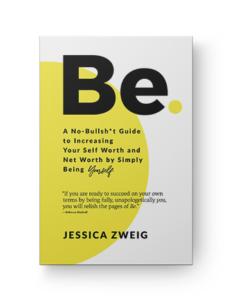
Each of us is here for a specific reason. Each of us has a light that we need to shine. And most people don’t know how to technically, practically tell their own story. Most of all, they don’t feel they have the permission, the confidence, the support, to take the leap. My book, Be: A No-Bullsh*t Guide to Increasing Your Self Worth and Net Worth by Simply Being Yourself, is that permission slip—for you to get out of your own way, to dive deep and take the journey within. Although often perceived as a practice in exterior image, personal brand is really about how you see yourself, how you know yourself, how you come to cherish yourself. That is the journey that awaits you in Be.
There are a lot of people who don’t want to be on social media or don’t want to be “famous” and therefore feel like the work of personal branding isn’t for them. But frankly, it doesn’t matter if you use social media every day or if you never touch it for the rest of your life—you have a personal brand.
Your personal brand is your value. It’s your worth. It’s the impression you leave behind in any room or crowd. It’s how you make people feel. It’s how you interface with people wherever you go—the way you treat your barista, the way you talk to your children’s teachers, the way you communicate with your team at work, how you create relationships in our community. It’s your legacy. All of these daily interactions are opportunities to hone and master your brand on your terms. That is personal branding.
My background is in marketing and branding. I’ve cut my teeth in the world of social media working with Fortune 500 brands over the last 15+ years. That said, in this book you will find frameworks and easy DIY tools to build your brand from the ground up and to take it online and leverage it to build your business, your career, your reputation, your followership. You’ll learn how to craft a message and a strategy, build PR awareness, create original content, identify your competitive landscape, and much more. It is a very tactical book in that sense. But my biggest inspiration and passion is bringing more humanity to business. Be. is a personal empowerment book at its core. Simply put, Be. is a study in the power of authenticity.
Authenticity is a unique superpower that we all have. It’s a practice in you simply being you, inclusive of all of your shadows, sh*t, failures, weaknesses, AND all of your successes, triumphs, talents, and unique gifts. That’s what Be. will really challenge you to own—your fully unapologetic YOU.
My book is far more than what meets the eye. I hope you pick it up and learn that you, indeed, have a brand and that this simply means that you have something worthy and meaningful to share with the world. Personal branding, at its core, is an act of service. It is about what we are here to give versus what we are here to get. And when we architect a personal brand from that place, we come alive.
The world needs your light.
The world needs you to shine.
Every one of us has not just the privilege but the responsibility to step forward and simply be.
Don’t let us down.
With love and light,
Jessica Zweig Bestselling author of Be. Founder & CEO,SimplyBe.
Jessica Zweig is the CEO and founder of the SimplyBe. agency, a personal branding company that helps millions of people worldwide. She’s been named a “personal branding expert” by Forbes, a Top Digital Marketer to Watch by Inc., one of 2020’s Most Notable Entrepreneurs by Crain’s Chicago Business, and the 2018 and 2019 recipient of the international Stevie® Award for Female Entrepreneur of the Year. She’s been featured on FOX, ABC, NBC, Thrive Global, Business Insider, and more as an expert on how an authentic personal brand is the key to a more successful career. For more, visit jessicazweig.com.
Vulnerability is often misunderstood. Many of us were taught to associate it with weakness, as if showing emotion or uncertainty somehow discredits our strength. But the truth is, some of our most meaningful human experiences, love, trust, connection, and creativity can’t exist without it. Vulnerability isn’t a flaw to fix. It’s the starting place for everything that gives life depth.
At Sounds True, we’ve spent decades creating teachings that support emotional wellness, spiritual depth, and authentic living. Our programs are rooted in the belief that transformation happens when we meet life as it is, with honesty and heart. We’re proud to collaborate with voices like Brené Brown, whose work opens the door to wholehearted conversations about what it means to be human.
In this piece, we’ll discuss Brené Brown’s insights into vulnerability, why it’s not only necessary but also one of the greatest strengths we can bring to our lives and relationships.
Key Takeaways:
Vulnerability Is Courage: Choosing vulnerability means facing emotional risk, not weakness. It is the foundation of authentic strength.
Connection Needs Openness: True connection requires emotional honesty, not perfection or control. Vulnerability builds trust and belonging.
Daily Practice Matters: Small, intentional acts of honesty and self-compassion help make vulnerability a sustainable part of everyday life.
What Brené Brown Teaches Us About Vulnerability
For many of us, vulnerability feels like exposure to something to avoid, something unsafe. But Brené Brown offers a different lens. Through her research and teaching, she reveals that vulnerability is the birthplace of courage, creativity, belonging, and love. It’s not a flaw to be hidden. It’s the very fabric of human connection.
Rather than defining vulnerability as weakness, Brené invites us to see it as uncertainty, risk, and emotional openness. These aren’t liabilities. They are the core of what it means to show up fully in our lives. Whether it’s sharing a hard truth, asking for help, or allowing ourselves to be truly seen, she reminds us that vulnerability is the measure of real courage.
In her programs with Sounds True, including The Power of Vulnerability, Brené breaks down years of research into stories and insights that are as relatable as they are transformative. What emerges is a message that stays with you: vulnerability isn’t something we need to fix. It’s something we can honor.
Why Vulnerability Is A Sign of Strength, Not Weakness
Vulnerability often carries a false reputation. We’re taught to hide it, control it, or overcome it, but Brené Brown reminds us that the willingness to be vulnerable is not a weakness to correct, but a strength to live by. Here’s why it holds such power:
It Takes Strength To Show Up Without Certainty
There’s nothing easy about stepping into the unknown. Whether we’re starting something new, speaking our truth, or navigating conflict, we rarely have a guaranteed outcome. Choosing to show up anyway, that’s strength.
Authenticity Is Braver Than Perfectionism
Pretending to have it all together is a defense. Authenticity is a decision. It’s vulnerable to say “this is who I really am,” and that act of truth-telling builds resilience, not fragility.
Emotional Openness Builds Inner Resilience
Brené teaches that emotional exposure isn’t the opposite of strength. It’s the training ground for it. Each time we allow ourselves to feel, to share, or to ask for support, we build a deeper kind of courage.
Letting Go Of The Armor Creates Deeper Connection
When we drop the need to appear invulnerable, we invite others to do the same. This is where true connection begins. Vulnerability becomes the bridge, not just to others, but to ourselves.
The Courage To Be Vulnerable In Everyday Life
Vulnerability isn’t reserved for big life events or dramatic turning points. It lives in the everyday, in the small, honest moments where we choose to be real instead of safe. Brené Brown reminds us that courage doesn’t always roar. Sometimes, it simply sounds like telling the truth, setting a boundary, or asking for help. Here’s how it shows up in daily life:
Speaking Honestly, Even When It’s Uncomfortable
Whether it’s a difficult conversation with a partner or sharing feedback at work, honesty often comes with risk. Vulnerability means saying what’s true, even when it might not land perfectly. Trust that honesty creates space for growth.
Letting Others See The Real You
We all carry parts of ourselves we’d rather keep hidden. Choosing to share your true feelings, stories, or struggles takes courage. It opens the door to deeper connection and trust.
Asking For Support Without Shame
One of the most human things we can do is need each other. Still, many of us hesitate to ask for help, fearing judgment or rejection. Brené’s work encourages us to see asking not as weakness, but as brave, wholehearted living.
Saying No To What Doesn’t Feel Right
Boundaries are an act of vulnerability, too. They require clarity, honesty, and a willingness to disappoint others in order to stay aligned with ourselves. It’s not always easy. But it is courageous.
How Embracing Vulnerability Deepens Connection
At the heart of every meaningful relationship is one simple truth: connection requires openness. When we allow ourselves to be seen, truly seen, we create the conditions for intimacy, trust, and belonging. Brené Brown’s research points to vulnerability as the key ingredient in relationships that feel real, grounded, and lasting. Here’s why:
We Build Trust by Letting Others In: Trust isn’t built through perfection. It’s built in moments of mutual openness. When we’re honest about our fears, hopes, or boundaries, we give others permission to meet us with the same level of care and honesty.
Vulnerability Makes Empathy Possible: When someone shares a raw, human moment with us, we don’t respond with solutions. We respond with presence. That space for empathy can only exist when we stop hiding behind a polished version of ourselves.
Belonging Grows Where Masks Come Off:True belonging isn’t about fitting in. It’s about being accepted as you are. And that can only happen when we’re willing to show who we really are. Vulnerability invites that kind of acceptance.
Relationships Thrive on Emotional Honesty: Whether it’s with a partner, friend, colleague, or family member, emotional honesty strengthens the fabric of connection. It helps us repair misunderstandings, express needs clearly, and stay grounded in compassion.
The Role Of Self-Compassion In Vulnerability
Being vulnerable with others begins with how we relate to ourselves. Without self-compassion, vulnerability can feel unbearable. Like opening a door without any sense of safety on the other side. Brené Brown often highlights that we cannot offer ourselves to the world authentically if we’re busy beating ourselves up inside. Here’s how self-compassion supports the courage to be vulnerable:
Self-Kindness Softens The Fear Of Judgment
When we’re harsh with ourselves, we naturally fear that others will be, too. Practicing self-kindness allows us to face vulnerability without bracing for shame or criticism. It builds the internal safety to take emotional risks.
Awareness Without Harshness Builds Resilience
Self-compassion isn’t about ignoring our flaws. It’s about seeing ourselves clearly, but with warmth. This kind of mindful awareness strengthens us from the inside and helps us stay open even when things feel shaky.
Letting Go Of Perfectionism Starts With Self-Acceptance
We often armor up with perfectionism to avoid being seen as “not enough.” But the more we accept ourselves as we are, the less we need that armor. Self-compassion clears the way for more honest, human moments.
Our Inner Dialogue Shapes Our Outer Courage
What we say to ourselves matters. When our internal voice is critical, we shrink. When it’s gentle, we grow. Brené speaks to this often in The Power of Self-Compassion, inviting us to cultivate a relationship with ourselves that supports our vulnerability.
Bringing Vulnerability Into Your Own Practice
Vulnerability isn’t a one-time act. It’s a daily choice to live with openness, even when it’s uncomfortable. It shows up differently for everyone, but the practice begins the same way: with intention. Brené Brown encourages us to turn toward our lives with more presence, honesty, and willingness to be seen. Here are a few ways that might look:
Start by Noticing Where You Hold Back: Awareness is the first step. Pay attention to the places where you avoid speaking up, asking for help, or showing emotion. Those quiet pullbacks often signal moments when vulnerability seeks a voice.
Practice Small Acts of Emotional Honesty: You don’t have to make sweeping changes. Try sharing how you’re feeling with someone you trust, or saying no to something that doesn’t align with you. These small, everyday choices build your capacity for wholehearted living.
Let Vulnerability Be Part of Your Spiritual Life: In Rising Strong as a Spiritual Practice, Brené explores how spiritual growth and emotional honesty go hand in hand. Your inner work deepens when you stop trying to appear invulnerable and start showing up as you are.
Remember That Vulnerability Is a Process: This is a practice, not a performance. Some days you’ll feel brave. Other days, you might want to retreat. That’s okay. Keep coming back to the intention to live more openly, gently, and honestly.
Learn More Through Brené’s Courses
Brené Brown’s teachings offer more than insights. They offer tools for living. If you’re ready to explore vulnerability not just as an idea but as a lived experience, her digital courses with Sounds True are a meaningful place to begin. Each program is rooted in research and delivered with the honesty and heart that make her work so resonant.
In The Power of Vulnerability, you’ll hear six sessions of Brené’s most essential teachings, filled with stories and guidance that bring the research to life.
Courage and Vulnerability invites you to walk the path of openness with greater clarity and compassion, an experiential course that supports real change.
If you’re working on how you treat yourself while you open up to others, The Power of Self-Compassion can be a gentle but transformative companion.
And for those who want to go deeper spiritually, Rising Strong as a Spiritual Practice offers a grounded way to explore healing, courage, and emotional honesty from within.
Each course is an invitation. Not to be perfect, but to be present.
Final Thoughts
Vulnerability isn’t about spilling everything or being unguarded with everyone. It’s about choosing to show up honestly, on purpose, and with heart. As Brené Brown reminds us, vulnerability is where our courage lives. It’s not the easy way. But it’s the real one.
Living this way doesn’t mean we won’t get hurt. It means we’re willing to be alive, to love, to try, and to keep going. And in that willingness, there is strength. Not loud or flashy, but steady, grounded, and deeply human.
At Sounds True, we hold space for that kind of living. Not perfect. But present. Not polished. But wholehearted.
Frequently Asked Questions About Brené Brown Vulnerability
What does Brené Brown say is the biggest myth about vulnerability?
She identifies the biggest myth as the idea that vulnerability equals weakness. Instead, she emphasizes that vulnerability is the most accurate measure of courage.
Is vulnerability always appropriate in every situation?
Brené notes that vulnerability involves boundaries. It’s not about oversharing or being emotionally unfiltered with everyone, but about being open with people who’ve earned your trust.
How does Brené Brown define vulnerability?
She defines it as uncertainty, risk, and emotional exposure, the willingness to show up and be seen even when there are no guarantees.
Does Brené Brown connect vulnerability with leadership?
Yes. She teaches that courageous leadership requires vulnerability. Leaders who embrace emotional honesty create environments where innovation and trust thrive.
What role does shame play in preventing vulnerability?
According to Brené, shame is a major barrier. It tells us we’re not worthy of connection, which keeps us silent and hidden. Naming and understanding shame helps us move through it.
Can vulnerability be practiced without talking about emotions?
Not really. Vulnerability often involves acknowledging emotions, even if they’re not discussed in detail. Emotional awareness is a part of wholehearted living.
How does vulnerability relate to creativity and innovation?
Brené explains that without vulnerability, there is no creativity. Trying something new always carries risk, and vulnerability is what allows us to take those creative leaps.
What practices help build vulnerability over time?
She recommends daily self-reflection, self-compassion, and building trust in small ways. These help develop the muscle to stay open over time.
Is vulnerability the same as transparency?
Not exactly. Transparency is sharing information. Vulnerability is about emotional risk. You can be transparent without being vulnerable, and vice versa.
Why does Brené Brown say vulnerability is essential to connection?
Because connection requires authenticity. Without vulnerability, relationships stay on the surface. Real connection happens when we let people see who we truly are.
Michelle Cassandra Johnson is an author, activist, spiritual teacher, racial equity consultant, and intuitive healer. She is the author of six books, including Skill in Action and Finding Refuge. Amy Burtaine is a leadership coach and racial equity trainer. With Robin DiAngelo, she is the coauthor of The Facilitator’s Guide for White Affinity Groups. For more, visit https://www.michellecjohnson.com/wisdom-of-the-hive.
Rob Bell is a former pastor and the New York Times bestselling author of books including What We Talk About When We Talk About God, What Is the Bible?, and Love Wins. Andrew Morgan is a filmmaker whose works include After the End and The True Cost. In this special episode of Insights at the Edge, Tami Simon speaks with both Andrew and Rob about the new documentary film that they collaborated on—The Heretic. In making this film, Andrew followed Rob over several years as the author challenged deeply held views of conservative (especially evangelical) Christianity and reckoned with some of the most highly charged cultural issues of our time. Here Tami, Rob, and Andrew discuss the evolving role of Christianity in the modern era and what it means to innovate through religion. They speak on heeding one’s inner call, as well as why the current revolution in spirituality will be galvanized largely on a local—and even personal—level. Finally, Tami, Andrew, and Rob talk about the connection between pain and the creation of art, and how art can be a force for great societal change. (63 minutes)